Real-world asset · Explainer
Courtyard Explained: Tokenized Collectibles Backed by Real Assets
Courtyard turns graded trading cards and other physical collectibles into tokens, with the originals held in an insured vault. This guide explains how it works, what the token represents and which risks to weigh before buying.
By the DappsAtlas editorial team · Updated
What is Courtyard and where does it fit in RWAs?
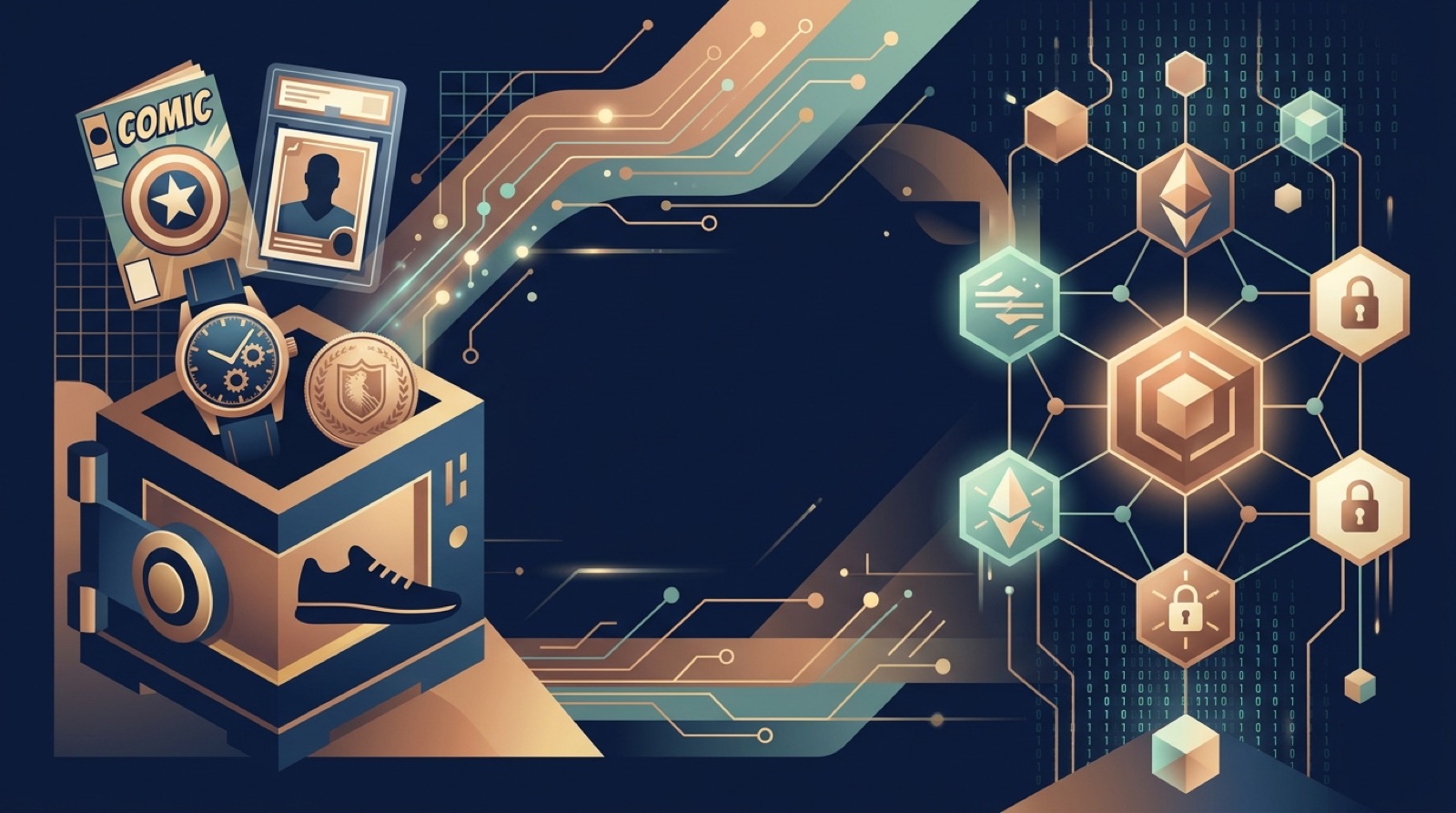
Courtyard is a marketplace and tokenization service for physical collectibles. The best-known items are graded trading cards, such as sports cards and Pokémon cards, that have been authenticated, sealed in a protective case and assigned a grade by a third-party grading company. Instead of keeping the card at home, the owner has it stored in a professional vault, where it is insured. A token on a blockchain represents the card, and that token is what people buy, sell and hold.
This sits inside the wider real-world asset (RWA) category. An RWA is any off-chain asset, such as a bond, a building or a collectible, that has a digital representation on-chain. Most RWA coverage focuses on tokenized treasuries, funds and private credit. Courtyard works in a different corner: collectibles, where value comes from collector demand and scarcity rather than interest payments.
Why collectibles suit tokenization
- High value for their size. A single card can be worth far more than its weight, which makes vaulting practical.
- Standardized identification. Graded items carry serial numbers and recorded grades, so each one can be matched to a specific token.
- An existing market. Collectors already trade through auction houses, online marketplaces and card shops, so there is a pool of buyers who understand the product.
- Costly logistics. Shipping, insuring and re-grading cards is slow and expensive. Keeping an item vaulted removes most of that friction.
The phrase "evolving digital collectibles" captures the shift from early NFTs, where the token pointed to an image with no physical counterpart, to tokens that are linked to a real object you can request in your hands.
How does tokenizing a physical collectible work?
Tokenizing a physical collectible involves several steps that connect an off-chain object to an on-chain record. Courtyard's own documentation is the authority on its exact process, but the general pattern for vaulted-collectible platforms looks like this.
- Sourcing and authentication. The item is acquired or submitted, and its authenticity and grade are confirmed. For cards, that usually means a slab from a recognized grading company with a unique certification number.
- Intake and vaulting. The item is shipped to a secure facility, checked against its record and stored. It is typically insured while it sits there.
- Minting the token. A token is created that corresponds to that single item. Its metadata normally includes details such as the description, grade and certification number so anyone can match the token to the physical piece.
- Listing or distribution. The token is either put on the marketplace for sale or placed into a digital pack.
- Ownership transfer. When the token changes wallets, the claim on the vaulted item changes hands too, without the item moving.
What the token does and does not prove
The blockchain proves who holds the token and shows its transfer history. It cannot prove that the physical item exists, is in good condition or is correctly graded. That assurance comes from the vault operator, the grading company and the platform's own controls. This is the central trust point in any RWA: the chain is transparent, but the link between chain and object depends on off-chain parties doing what they say.
What are Courtyard packs and how do they work?
Digital packs are the most distinctive part of Courtyard's product. A pack works like a sealed booster pack or mystery box, except that the contents are tokenized items already sitting in the vault. A buyer pays a set price and receives one or more tokens drawn from a pool of possible items. Packs are usually sold in tiers, with higher-priced tiers drawing from pools of more valuable items.
The appeal is simple. Opening physical packs requires buying, shipping and handling sealed product, and it carries the risk of damage. Digital packs reveal a vaulted, already-graded item immediately, and the buyer can keep, trade or redeem it.
Packs involve chance
Because the outcome is random, packs resemble a game of chance. The item you receive may be worth more or less than what you paid, and most buyers should expect that the typical result is below the top prizes advertised. Treat pack spending as entertainment money you can afford to lose, not as an investment strategy.
18+ and local laws. Chance-based products are restricted or regulated in some places, and the minimum age is 18 or higher in many jurisdictions. Check whether packs are permitted where you live and follow the platform's age and identity requirements. Do not use a VPN or any other method to get around location, age or KYC checks.
Before buying, read how the pool is described, what the odds or value ranges are if disclosed, and what the buyback terms are. If the platform does not clearly state these, that is a reason to hold back.
How do buybacks, resale and redemption work?
Once you hold a token, there are usually three paths: keep it, sell it or redeem the physical item. Each has different costs and timing, and the details are set by the platform, so confirm them on the live site.
Keeping the token
Holding a token means the item stays in the vault. You avoid shipping and handling, and you keep the option to trade or redeem later. Check whether any storage or insurance fees apply over time.
Selling
There are two routes:
- Secondary marketplace. You list the token at a price you choose, and a buyer pays you. The price depends on demand for that card, its grade and recent comparable sales. Expect a marketplace fee.
- Buyback. Platforms like this have offered to repurchase pack items at a set percentage of an estimated value for a limited time after opening. That provides fast liquidity, but the offer is below market value by design and may expire. Compare it with the going market price before accepting.
Redeeming
Redemption means exchanging the token for the physical item. The item is released from the vault and shipped to you, and the token is typically retired. Expect shipping, handling and possibly insurance costs, and check which countries are supported. Once the item leaves the vault, you take on storage and loss risk, and the token no longer exists, so you cannot sell it on-chain afterward. Some collectors redeem to display an item, while others prefer to keep everything vaulted for easier resale.
What does "backed by real assets" actually mean here?
"Backed by real assets" is a common phrase in RWA marketing, and it deserves careful reading. For a tokenized collectible, it means a specific physical item is held in custody and linked to a specific token. It does not mean the token is guaranteed to hold its value, and it does not mean the token is a government-protected deposit.
Several questions determine how solid that backing is:
- Who holds the item? The vault operator has physical custody. Find out who it is, how access is controlled and whether the item is segregated and identifiable as yours.
- What does insurance cover? Insurance typically covers loss or damage, not a fall in market price. Look at what is covered and at what valuation.
- What legal right does the token give you? Read the terms of service to see whether the token is a claim on the item, a right to redeem or something narrower. If the platform became insolvent, your position would depend on how custody and title are structured, so check that wording.
- How is the grade verified? The grading company's reputation matters, and so does whether the slab can be checked against its certification number.
- Can the platform freeze or remove items? Some terms allow restrictions in certain cases such as legal orders or disputes.
A useful habit is to separate three layers: the token (on-chain and transparent), the platform (a company with terms and operational risk) and the object (physical, subject to market value). A problem in any of the three can hurt you, even if the other two are fine.
How does Courtyard compare with other RWA types?
Real-world assets are not a single product type. Collectibles, funds, credit and commodities behave very differently, and comparing them helps you decide where Courtyard fits in a portfolio, if anywhere.
| Feature | Tokenized collectibles (Courtyard-style) | Tokenized treasuries and funds | Tokenized private credit |
|---|---|---|---|
| Source of value | Collector demand and scarcity | Interest from underlying securities | Interest from loans |
| Income while held | None | Usually yes | Usually yes |
| Price discovery | Comparable sales, thin markets | Close to net asset value | Model-based or periodic |
| Liquidity | Depends on the item and marketplace depth | Often redeemable via issuer | Often limited |
| Main risks | Price swings, illiquidity, custody, platform risk | Issuer, regulatory and custody risk | Borrower default, opacity |
Collectibles produce no yield. Your return depends entirely on the price someone else will pay later, minus fees. That makes them closer to art or memorabilia than to bonds.
Where DeFi tools fit
Other protocols in the RWA and DeFi space work on different problems. Enzyme Finance provides infrastructure for issuing and managing tokenized funds, and Symbiotic offers shared collateral that backs credit, insurance and RWA products through curated vaults. These are about structuring financial exposure, whereas Courtyard is about giving ownership of a specific physical object an on-chain form. Do not assume that a collectible token can be used as collateral in lending markets such as Aave V3 or Compound V3, since those markets only accept assets they have specifically listed.
What are the main risks of tokenized collectibles?
Tokenized collectibles bring familiar collecting risks and add the risks of crypto and custody. Weigh these before spending anything you cannot afford to lose.
- Price risk. Collectible prices rise and fall with trends, player or franchise popularity, grading population and wider market sentiment. A hot category can cool quickly.
- Liquidity risk. A token is only worth what a buyer will pay. Thinly traded items can be hard to sell near the last sale price.
- Fee drag. Marketplace fees, buyback discounts, shipping and redemption costs reduce your return. Add them up before assuming a profit.
- Platform and custody risk. You rely on the platform and its vault partners to keep items safe, keep records accurate and honor redemption requests. A failure in operations or solvency would affect you.
- Authenticity and grading risk. Graded items are generally trusted, but grading is a human judgment and disputes or re-grades can occur.
- Smart contract and wallet risk. Tokens live in a wallet. If you lose access, sign a malicious transaction or fall for a phishing link, the token can be lost or stolen.
- Regulatory risk. Rules for tokenized assets and chance-based products differ by country and can change. Availability, taxes and reporting duties depend on where you live.
- Chance risk with packs. Pack outcomes are random, and the average result is usually worth less than the headline prizes.
None of these risks makes the product unusable, but they are reasons to size positions modestly and to avoid borrowing money to buy collectibles.
How can you evaluate an item or pack before buying?
Whether you are buying a single listed item or opening packs, a short checklist keeps decisions grounded. Work through it before each purchase.
- Identify the exact item. Note the card or object, its grade, the grading company and the certification number. Make sure the listing matches.
- Check recent comparable sales. Look at what the same item in the same grade has sold for across several markets, not only on one platform. Ignore asking prices, which are only hopes.
- Calculate the full cost. Include the purchase price, marketplace fees, network fees, and, if you plan to redeem, shipping and handling.
- Know your exit. Decide whether you would sell on the secondary market, accept a buyback or redeem, and check how each works today.
- Read the terms. Find out what the token legally represents, what happens if the platform stops operating and which regions are supported.
- Set a budget. For packs, set a firm limit in advance and stick to it. Treat the money as spent on entertainment.
- Avoid urgency. Countdown timers, limited drops and social media excitement are designed to speed up decisions. Slow down.
If you cannot answer the first four questions, you are guessing. A smaller, informed purchase of a specific item is generally easier to judge than a large batch of randomized packs.
How do you get started safely?
Using any RWA marketplace means managing a wallet, payment method and personal information. A few defensive habits reduce the most common ways people lose money.
Wallet and account safety
- Use a dedicated wallet. Keep your collectible tokens in a wallet that you do not use to connect to random sites.
- Protect your recovery phrase. Never type it into a website, share it in a chat or store it in a screenshot. No legitimate support agent will ask for it.
- Consider a hardware wallet for higher-value items, and turn on two-factor authentication on any email and exchange accounts linked to your activity.
- Check signatures. Read what a transaction does before approving it. Be especially careful with approvals that grant broad access to your tokens.
Avoiding scams
- Type the platform address yourself or use a bookmark you saved. Fake sites and ads that imitate marketplaces are common.
- Be suspicious of direct messages offering a deal, a refund or free items. Impersonation of support staff is widespread.
- Verify that a token is from the official collection before buying on a secondary market, since copycat tokens can look similar.
Compliance and eligibility
Expect identity checks and regional limits, and respect them. They exist because of legal requirements around payments, age and regulated products. Keep records of purchases and sales, since tax rules for crypto and collectibles vary by country. If anything is unclear, ask a qualified tax or legal professional.
Where should you check current details?
Several parts of Courtyard change over time, so an evergreen guide cannot state them reliably. Always confirm the following on the platform's own pages and help documentation:
- Supported blockchain and wallets. The network used for tokens and any bridging or onboarding steps.
- Fee schedule. Marketplace fees, network costs, redemption and shipping charges.
- Buyback terms. The percentage offered, the time window and any conditions.
- Vault and insurance partners. Who stores the items and what coverage applies.
- Supported countries. Where you can buy, open packs and request delivery.
- Pack contents and disclosures. The categories of items in each tier and any stated odds or value ranges.
- Terms of service. What the token represents and what happens if the platform changes or closes.
For market value, check recent sold listings across several venues, plus price guides and population reports from the grading companies. Avoid relying on a single source or on screenshots shared on social media.
If you want to see how the platform sits alongside other products in the RWA and DeFi space, the Courtyard listing on this site gives a summary, and the related protocols listed with this guide cover tokenized funds, collateral and lending. Remember that Courtyard is a collectibles marketplace, not a yield product, and that all purchases carry the risk of losing some or all of what you spend.
Frequently asked questions
What is Courtyard in simple terms?
Courtyard is a marketplace and tokenization service for physical collectibles such as graded trading cards. The items are stored in an insured vault and represented by tokens that can be traded, held or exchanged for the physical item. Check the current terms on the platform for specifics.
Do I own the physical collectible if I hold the token?
The token is a digital record tied to a specific vaulted item, and holding it is generally what entitles you to claim that item. The exact legal rights depend on Courtyard's terms of service, so read them before buying. A token is not the same as owning the item outright in your own hands.
Are Courtyard packs gambling?
Packs are a chance-based product, so they carry gambling-like risk and are not suitable for anyone under 18. Availability depends on where you live, so check your local laws before buying. Never use a VPN or similar tool to get around location, age or identity checks.
Can I always sell an item back for what I paid?
Not necessarily. Resale value depends on the card or item, its grade, market demand and the fees involved. Buyback offers, where available, are typically set below full value and may expire, so compare them with the secondary market price.
How is Courtyard different from other real-world asset projects?
Tokenized collectibles are a niche corner of RWAs, which also include tokenized treasuries, funds and credit. Their value comes from collector demand, not from interest or cash flows, so they behave very differently from yield-bearing RWAs.
Where should I check current fees, chains and buyback terms?
Check Courtyard's official documentation and help pages for the supported blockchain, fee schedule, buyback terms, redemption process and vault partners. Those details change over time, so rely on the live platform and not on older articles.
Mentioned in this guide
dApps in this guide
Courtyard is a marketplace and tokenization service for vaulted, insured physical collectibles such as graded trading cards, sold via digital packs.
Enzyme Finance is infrastructure for issuing and managing tokenized funds and on-chain strategies, aimed at asset managers, institutions and DeFi builders.
Symbiotic is an Ethereum collateral-markets protocol where shared deposits back credit, insurance, stablecoin and RWA products via curated vaults.
Gauntlet is a DeFi risk manager that curates non-custodial yield vaults for fintechs, exchanges, wallets and asset managers.
OKX is a major centralized crypto exchange for spot and derivatives trading, earn products and a Web3 wallet, with its own OKB token.
Robinhood is a US brokerage app offering commission-free stocks, options, futures and custodial crypto trading for retail investors.
Aave V3 is a non-custodial DeFi lending protocol on 21 chains where users earn interest on deposits or borrow against collateral.
Compound V3 is a lending protocol on Ethereum and nine other chains where users supply a base asset for yield or borrow it against collateral.
Compound is a decentralized lending protocol where users earn interest on deposited crypto or borrow against collateral, governed by COMP holders.
Keep reading
Related guides
Real-world asset · Explainer
Tokenizing Real-World Assets: 5 Things to Look Out For
Tokenizing a house, a bond or a fund share is easy to announce and hard to do well. These five checks separate a token that represents a real claim from one that is only a picture of one.
Real-world asset · Explainer
What Is Lingo? The Gamified RWA-Powered Rewards Ecosystem
Lingo markets itself as a token that turns real-world asset yield into community rewards through points and airdrops. This guide explains the model, where the rewards are said to come from, and what to check before taking part.
DeFi · Explainer
Aave V3 and DeFi Mainstream Adoption: What It Means in 2026
Aave V3 is one of the largest non-custodial lending markets in DeFi, and its design is a serious attempt to serve ordinary users, not just traders. This guide explains what would have to change for it to reach mainstream use, and how a newcomer can judge the protocol today.
DeFi · Explainer
Jade Protocol and JADE Token Explained: A 2026 Guide
Jade Protocol is a DeFi project whose token trades under the ticker JADE. This guide explains how to identify the real token, how projects of this type usually work, and how to check every time-sensitive detail yourself.
Real-world asset · Explainer
Real-World Asset Tokenization: A 2026 Guide
Real-world asset tokenization puts claims on off-chain assets such as government bills, private credit and real estate onto a blockchain. This guide explains how the structures work, what rights a token may or may not give you, and what to check before you hold one.
Real-world asset · Explainer
Champ Association Explained: Champagne, RWA, AI and Crypto
Champ Association appears in the sources we checked only as a name, with no public detail on its products, owners or activity. This guide explains how champagne, real-world asset tokenization, AI and crypto can connect in general, and how to check any project that claims a link between them.
Real-world asset · Explainer
What Is RealtyX? A Guide to Real Estate Tokenization in 2026
RealtyX is a platform that aims to tokenize real estate and link property-backed assets to DeFi yield. This guide explains how real estate tokenization works, what the DAO label does and does not mean for RealtyX, and what to check before you take part.
Real-world asset · Explainer
What Is Asset Tokenization? How It Works and Its Risks
Asset tokenization represents rights to assets as digital tokens, often on a blockchain. Learn how the process works, what tokens do—and do not—own, and which legal, technical, and financial risks matter.