dApp basics · Explainer
What Is The Graph (GRT) and How Does the Protocol Work in 2026?
The Graph is a decentralized indexing protocol that lets apps query blockchain data quickly through GraphQL, and GRT is the token that pays and secures that network. This guide explains how it works, who takes part, and what to check before relying on it or holding the token.
By the DappsAtlas editorial team · Updated
What is The Graph and what problem does it solve?
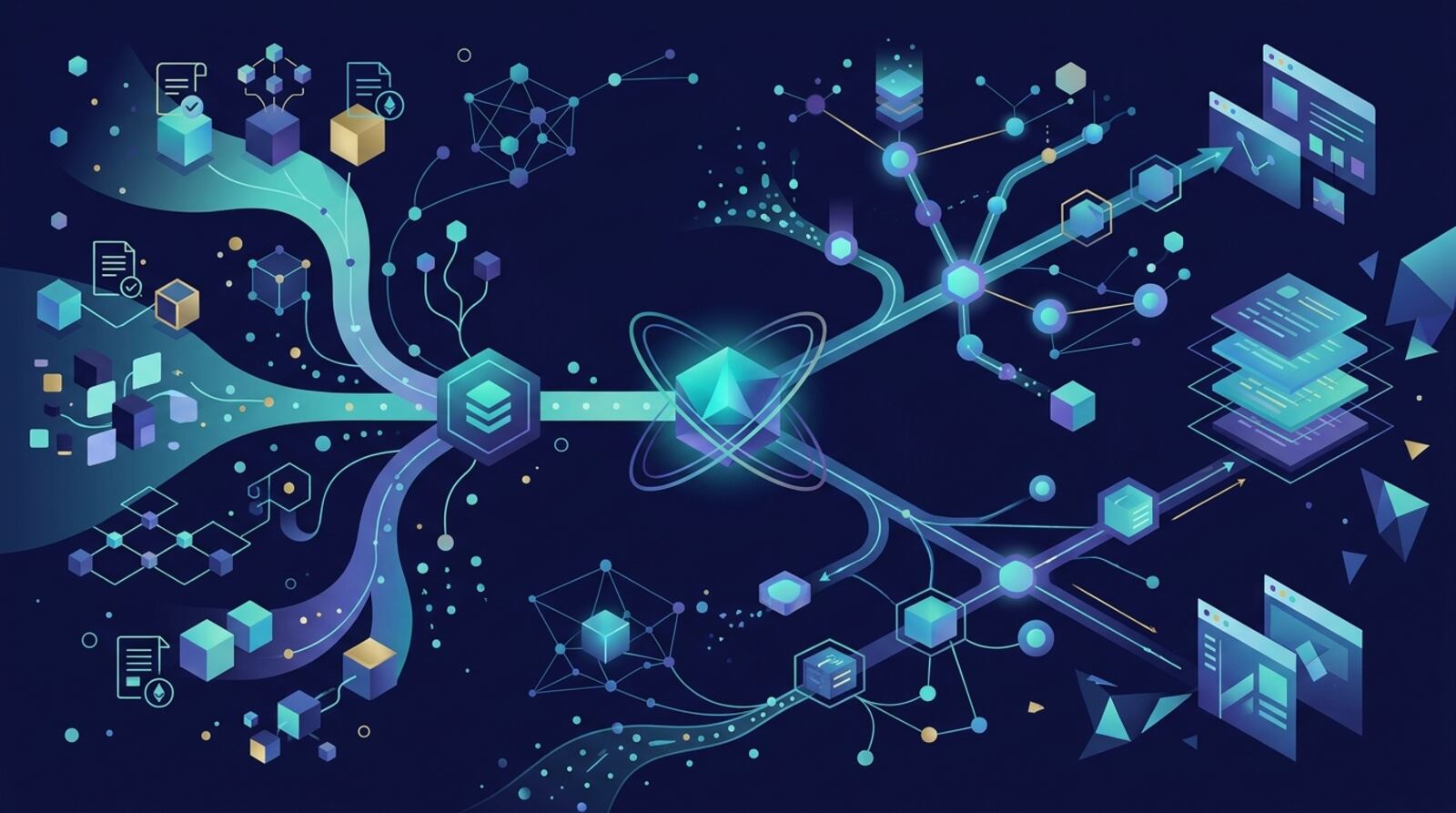
The Graph is an open, decentralized protocol for indexing and querying data from blockchains. Its main job is to make on-chain information easy for applications to read. A blockchain stores every transaction and event, but it does not organize that data in a way that is convenient for apps. Without help, a developer who wants a list of a user's trades, a token's transfer history or a lending pool's recent borrows must scan raw blocks or rely on a single company's servers.
The Graph fills that gap. It lets developers describe the data they need, then serves that data through a standard query language called GraphQL. The project was built to work first with Ethereum and has since been extended to other networks. The protocol is open source, and the software that runs indexing nodes is publicly available.
GRT is the native token of the network. It is an ERC-20 token on Ethereum, which means it can be held in wallets that support that standard. GRT has several roles in the protocol, including paying for queries, staking by indexers and signalling by curators. The token is covered in more detail below.
In short, The Graph is infrastructure. End users of a dApp rarely see it directly, but they benefit when the app loads its data quickly and reliably.
Why is blockchain data hard to query directly?
Public blockchains are built to record and verify transactions, not to answer questions. Each block contains transactions, and smart contracts emit events that record what happened during execution. Those events are accurate but raw. To answer a question such as "which wallets bought this token in the last week" a developer would normally need to read large volumes of data, decode it and store the results in a database.
Running that process is expensive and slow for many teams. Each app would need its own indexing pipeline, its own servers and its own maintenance work when a contract changes. Many small projects either skip rich features or depend on one centralized provider that can change pricing or go offline.
Indexing protocols address this by doing the work once and sharing the result. A network of independent node operators reads chain data, organizes it according to a shared schema and answers queries. Applications can then send a request and receive a structured response in a fraction of the time that a full scan would take.
This matters for end users as well. Portfolio trackers, lending dashboards and trading interfaces all depend on fast, accurate reads of on-chain state. When the data layer is slow or wrong, the front end looks broken even if the underlying contracts work correctly.
How do subgraphs work?
The Graph's central concept is the subgraph. A subgraph is a definition of what data to index from a chain and how to store and expose it. Developers usually build one for a specific contract or group of contracts, such as a decentralized exchange or a lending market.
Creating a subgraph generally involves three parts:
- A manifest, which lists the data sources, such as contract addresses and the network they live on, and the events the subgraph should watch.
- A schema, written in GraphQL, which defines the entities the subgraph will store, such as pools, positions or transfers.
- Mapping code, which tells the indexer how to turn each raw event into the entities defined in the schema.
Once a subgraph is deployed, indexers process the chain from a starting block forward and store the results. An application then queries the subgraph with GraphQL, asking only for the fields it needs. This keeps responses small and predictable.
Developers typically start in the hosted development environment, often called Subgraph Studio, to test and publish. The official documentation walks through the current steps, which can change as tooling improves, so it is the best source for the exact commands.
Who takes part in The Graph network?
The Graph network has several types of participants. Each has a defined role, and the economic design aims to reward useful work and penalize poor service. The four main roles are indexers, curators, delegators and consumers.
| Role | What they do | How they earn or pay |
|---|---|---|
| Indexer | Runs nodes that index subgraphs and serve queries | Earns query fees and indexing rewards, after staking GRT |
| Curator | Signals which subgraphs are useful and worth indexing | Earns a share of query fees from subgraphs they signal on, with risk of loss |
| Delegator | Delegates GRT to an indexer to support their work | Shares in indexer rewards without running infrastructure |
| Consumer | Developers and apps that query subgraphs | Pays query fees, usually in GRT |
Indexers are the operators of the network. They must stake GRT to participate, and their stake can be reduced if they act dishonestly or fail to serve data correctly. Curators help the market decide which subgraphs deserve attention by putting GRT behind them. Delegators help secure the network without running nodes. Consumers generate the demand that funds the whole system.
The exact parameters, such as minimum stakes, reward splits and slashing rules, are set by the protocol and can be changed through governance. Check the official documentation before taking any role, because these details matter a great deal.
What does the GRT token do?
GRT has three main functions in the protocol. First, it is the payment unit for queries on the decentralized network. Consumers use it to pay for the data they request, and indexers receive it for serving that data. Second, it is the staking asset for indexers and delegators, which ties economic value to honest behavior. Third, it is the signal asset for curators, who use it to show that a subgraph is worth indexing.
Because demand for queries drives fees, the token's use is connected to how much applications rely on the network. That link is simple in concept, but the actual flows depend on fee settings, rewards and how many subgraphs are active. These details can change, so readers should look at the current protocol documentation and governance records rather than relying on older summaries.
GRT is not a claim on a company's revenue, and holding it does not give a legal right to any specific payment. Its value comes from its use in the network and from market trading, which can be volatile. Prices can move sharply over short periods, and past movements do not indicate future results.
Anyone considering GRT should understand these points before acting. The token is a tool inside a technical system, and its market price is set by trading, not by the protocol alone.
How did The Graph network develop?
Early on, many developers used a hosted service run by the project to publish and query subgraphs. As the decentralized network matured, the team moved users toward the decentralized network and phased out the hosted service. This transition is part of the project's history and is worth knowing if you find older tutorials, because some steps or endpoints in them may no longer be current.
The decentralized network allows independent indexers to compete to serve queries. This design aims to reduce reliance on a single operator, though it also brings more moving parts, such as staking, delegation and fee markets. Users who want to verify the current state should look at the official documentation and the network's own status information.
Some commentators have described The Graph as a foundation for data-heavy applications, including analytics and, more recently, AI-related use cases that need structured on-chain data. Such claims depend on how developers actually use the network, and they should be read as descriptions of possible uses rather than guarantees of adoption.
If you are reading this to understand the project today, focus on the design principles: open indexing, staked operators and GraphQL access. Those ideas remain stable even as tools and policies change.
Who uses The Graph?
The Graph's users fall into a few groups. Application developers are the most direct users. They build subgraphs for their own contracts or for public protocols and then query them from front ends, bots or backend services. Many decentralized exchanges, lending markets and NFT projects have used subgraphs to power their interfaces.
Analysts and researchers also use subgraphs to pull structured data for dashboards and reports. Instead of writing custom scripts for each question, they can query an indexed dataset and export the results. This lowers the barrier to on-chain research, although the quality of any analysis still depends on the data definitions and the method used.
Indexers and delegators form a second group. They provide the infrastructure and capital that keep the network running. Their work is closer to running a service provider than to using an app, and it carries technical and financial risk.
For readers who only want to use a dApp built on subgraphs, you do not need to set anything up. Just be aware that a slow or empty dashboard may reflect an indexing delay or a missing subgraph, not necessarily a problem with the underlying chain.
What risks should I weigh before using or holding GRT?
Several factors can affect whether GRT or the network fits your situation. Market risk is the most obvious. GRT trades on open markets, and its price can move quickly in either direction. Liquidity, exchange availability and the wallet you use all affect how easily you can buy or sell. Any price you see on a website or in an article is a snapshot and may already be outdated.
Protocol risk is less visible. Smart contracts can contain bugs, and governance decisions can change fees, rewards or staking rules. Indexers can perform poorly, and subgraphs can contain mapping errors that give wrong results. Reading the official documentation and governance updates helps you stay informed about these changes.
Security risk is also real. Scammers often copy project names, create fake token contracts and send messages offering rewards for connecting a wallet. Use only official links from the project's documentation, check token contract addresses from trusted sources, and never enter your seed phrase or private key on any site. Be cautious with airdrop-style claims and unsolicited support contacts.
Legal and tax rules differ by country, and some jurisdictions restrict crypto activity. Check your local laws and any tax obligations before you buy, stake or trade, and only commit amounts you can afford to lose.
How can I check current GRT data and protocol status?
Because The Graph's parameters and market data change often, the most reliable approach is to check current sources yourself. Start with the project's official documentation, which describes how subgraphs, indexing and the token work today. Look for the announcements section or governance forum for recent changes to fees, rewards or staking rules.
For market data, use a reputable price aggregator or a major exchange's listing page. These sources show price, circulating supply, trading volume and historical charts. Compare more than one source if a number looks unusual, and remember that different sites may calculate supply differently.
To check on-chain activity, use a block explorer for the relevant network. You can verify the GRT token contract, view transfers and see whether a specific subgraph or contract is active. Confirm the contract address against the official documentation before you rely on it.
Finally, treat price predictions with caution. Many articles and social posts forecast future prices using short-term indicators, and their confidence often exceeds what the data supports. A better use of time is to learn how the network works, check the current protocol facts and decide based on your own risk limits.
Frequently asked questions
Is GRT the same thing as The Graph?
No. GRT is the token used to pay for queries, stake for indexing and signal on subgraphs. Ether and other chains' native tokens are separate assets, and the network itself does not hold user funds as a custodian.
Do I need to know how to code to use The Graph?
Subgraphs are open APIs that are often used for dApp frontends, dashboards and analytics. Many teams, including those building on Ethereum and other supported chains, rely on them to read event history without running their own full indexing infrastructure.
Do I need GRT to use a subgraph?
Yes, in practice. Developers often pay query fees in GRT for decentralized network queries, and indexers must stake GRT to take part. Check the official documentation for the current fee and staking mechanics, because these settings can be updated through governance.
Where can I find the current GRT price and supply?
Check the live price and circulating supply on a reputable market data site, and read the project's official documentation for the current protocol state. Price predictions and social media claims change quickly and should not be treated as reliable information.
What should I check before buying or staking GRT?
Only buy or stake amounts you can afford to lose, and check your local laws on crypto assets first. Verify any website or wallet prompt against official project links, and never share your seed phrase or private keys with anyone, including people claiming to be support staff.
Mentioned in this guide
dApps in this guide
The Graph is a decentralized indexing protocol that lets developers query blockchain data through GraphQL subgraphs, powered by the GRT token.
Uniswap V3 is a non-custodial decentralized exchange protocol for token swaps and concentrated liquidity provision across 40+ chains.
Aave V3 is a non-custodial DeFi lending protocol on 21 chains where users earn interest on deposits or borrow against collateral.
Lido is a liquid staking protocol where users stake ETH and receive stETH, a reward-earning token usable across DeFi, governed by LDO holders.
Curve is a decentralized exchange on Ethereum built for low-slippage swaps of stablecoins and similar assets, with CRV governance and a crvUSD stablecoin.
Uniswap V4 is the latest Uniswap DEX version with hooks and concentrated liquidity, running on 22 chains for self-custody token swaps and liquidity provision.
Compound V3 is a lending protocol on Ethereum and nine other chains where users supply a base asset for yield or borrow it against collateral.
PancakeSwap is a BNB Smart Chain decentralized exchange with swaps, farming, staking and CAKE governance for self-custody DeFi users.
Keep reading
Related guides
dApp basics · Explainer
How the 2021 Crypto Bull Run Shaped Dapps and What Followed
The 2021 bull run pushed dapp usage, fees and token incentives to new highs, and the downturn that followed showed which models could last. This guide explains what changed and how to check a dapp's health yourself.
dApp basics · Explainer
How dApp Detail Pages Improve Web3 Discovery in 2026
A dedicated page for each dApp puts its purpose, networks, activity and risks in one place, which makes it easier to decide whether an app is worth using. This guide explains what to check on those pages and how to read them with care.
dApp basics · Explainer
What Is a dApp Discovery Site and How Its Data Works (2026)
A dApp discovery and analytics site is an independent guide that tracks decentralized apps across blockchains and reports activity such as users, volume and transactions. This guide explains what these sites show, how to read their numbers, and where their data can mislead.
DeFi · Best list
Best DeFi Platforms in 2026: Compare Top Picks
There is no single best DeFi platform for every job. Compare leading options for swaps, lending, stablecoins and staking by what they do, where they operate and the risks you take on.
dApp basics · How-to
Where to Buy Cryptocurrency: A 2026 Guide
You can buy cryptocurrency through a centralized exchange, a brokerage app, or a decentralized exchange. The right route depends on what you want to buy, how you plan to pay, and whether you want to hold the crypto yourself.
dApp basics · Explainer
What Is Sweat Wallet? How to Earn Crypto for Walking
Sweat Wallet is the app that pays SWEAT tokens for steps, built by the team behind Sweatcoin. This guide explains how the system works, what the rewards are, and what to check before relying on them.
dApp basics · Explainer
x402 Protocol Explained: HTTP 402 Micropayments for Web3 and AI
x402 revives the long-unused HTTP 402 Payment Required status code so software can pay for web resources with stablecoins in a single request. This guide covers how it works, who it serves, and where the hype outruns the reality.
dApp basics · Explainer
What Is Streamr and How Real-Time Data Sharing Works
Streamr is a network for publishing and subscribing to live data feeds, with a token called DATA used to pay for access. This guide explains how the pieces fit together and which details to verify before you rely on them.