NFT · Explainer
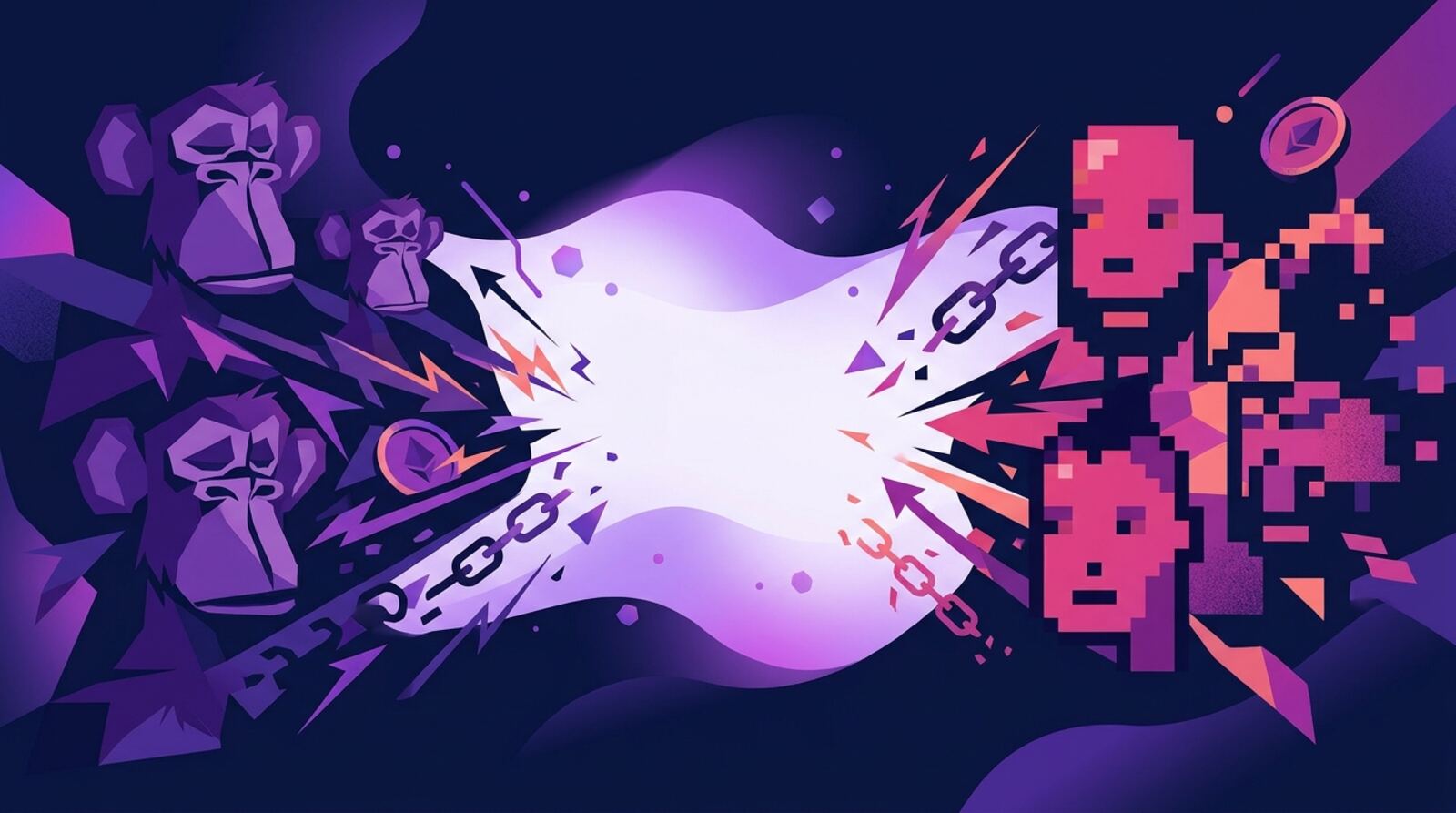
Tyga, Bored Apes and CryptoPunks: What the Feud Was About
Tyga's public jabs at CryptoPunks owners were one more round in a long-running argument about which early NFT collections deserve status. This guide explains what CryptoPunks are, how ape and punk collections differ, and how to check current value and ownership yourself.
By the DappsAtlas editorial team · Updated
What CryptoPunks are and why they matter
CryptoPunks are a set of 10,000 pixel-art characters created by Larva Labs and launched on Ethereum in 2017. Each punk is a unique image generated from a set of traits such as hair, glasses, skin tone and accessories. Most are human-looking, but the set includes a small number of rarer types, including aliens, apes and zombies.
The collection matters for two reasons. It is one of the first widely traded NFT collections, and its code and ownership history are public on the Ethereum blockchain. That makes punks a common reference point whenever people talk about the start of NFT culture.
A punk is an NFT. Ownership is recorded on-chain, and the image is tied to that record. Owning a punk does not give you copyright over the artwork in the way a traditional license would, so read the terms that come with any purchase or license offer before assuming more rights than you have.
If you are new to the topic, it helps to separate three things: the collection itself, the people who hold it, and the market that prices it. Celebrity arguments usually mix all three, which is why they can look confusing from the outside.
Where Bored Apes fit into the story
Bored Ape Yacht Club is a collection of 10,000 ape images released by Yuga Labs in 2021. It was built as a membership-style brand, with community events, merchandise and licensing ideas attached to the holder base. Its style is cartoon-like, and its visibility in pop culture grew quickly.
Yuga Labs is also the company that later acquired the CryptoPunks and Meebits intellectual property from Larva Labs. That history is part of why punks and apes are often discussed together, even though they were created by different teams at different times.
The ape-versus-punk comparison is therefore partly about aesthetics, partly about history, and partly about status. Apes were easier for mainstream audiences to recognize, while punks had the advantage of being earlier and more closely associated with the first wave of NFT collecting.
If you want to verify these facts, check the official project pages and the Ethereum contract records for each collection. Those sources are more reliable than summaries that repeat claims without links to the underlying records.
What the celebrity debate was about
Public disagreements between celebrities and NFT holders tend to follow a familiar pattern. A well-known person buys a collection, posts about it, and then compares it with another collection in a way that the other holders find dismissive. Fans and holders respond, the story is reported in entertainment and crypto media, and the argument fades after a few days.
Public reporting were unavailable while this guide was prepared, so it cannot confirm the specific wording, timing or context of any comment attributed to Tyga. It also cannot confirm whether any later remarks changed the picture. Treat secondhand summaries with caution, especially if they do not link to the original post.
What tends to make these disputes stick is the status signal attached to each collection. Holding an early, historically important item can feel like proof of taste to one group. Holding a more widely recognized item can feel like proof of cultural relevance to another. Neither signal says much about the underlying economics.
For readers, the useful takeaway is that a celebrity's preference is not a valuation method. It can shape attention for a while, but it does not replace checking trait rarity, sales history and the risks of holding any single NFT.
Why early collectors value CryptoPunks
CryptoPunks have a reputation for early-adopter status. Larva Labs created the set in 2017, and the first 10,000 punks were made available to claim for free in the early period, which means many current holders acquired them at a time when the collection had almost no market. That origin story is one reason the collection is often cited in NFT history.
Historical importance is not the same as scarcity or demand, though. Some punks sell for very different amounts depending on traits, rarity and the buyer's interest at the time. Collectors also value the story of a particular punk, including its earlier owners, but that is subjective.
Several factors commonly affect how collectors view a punk:
- Trait rarity within the set, such as the small number of aliens, apes and zombies
- Completed sales history, not just listed asking prices
- Whether the item is part of a wider trend in the NFT market
- Liquidity, meaning how quickly a buyer could find a seller
- Costs such as gas fees and marketplace charges
None of these factors can guarantee a future price. The safest approach is to read the recent record, compare multiple sources and be clear about the risk of holding an illiquid digital asset.
How to check current punk prices and rarity
Floor prices, recent sales and trait-based pricing change often, so this guide does not state any figures. To see current numbers, use the marketplace where a punk is listed and look at its activity history, not only the headline price. Dedicated CryptoPunks trading tools such as Punks Terminal allow trait-filtered bids, which can help you see what buyers are offering for specific characteristics.
When you check a price, look for these details:
- The date and price of completed sales, not only active listings
- The number of sales in the last few months, as a rough measure of activity
- Whether the item has an unusual trait combination that may explain a premium
- Fees, including marketplace fees and network costs on Ethereum
Be careful with listings that look far above the rest of the collection. A single high asking price does not prove that buyers will pay it. Similarly, a low listing can reflect a seller who wants a quick exit.
If you are comparing punks with other collections, check the same data for each one on the same day. Prices move, and comparing an old screenshot with a current listing can lead to wrong conclusions.
How to buy or trade punks without falling for scams
Scams are common around high-profile NFT collections. The most frequent problems include fake marketplace sites, phishing messages that ask you to connect a wallet, and offers that require you to sign a transaction you do not understand. Defensive habits protect you in all of these cases.
Start with these basics:
- Type the marketplace address yourself or open a bookmark you created earlier.
- Never share your seed phrase or recovery phrase with anyone, including people who claim to be support staff.
- Read what a wallet is asking you to sign. Approving a token spend or a broad permission can give a contract access to your assets.
- Confirm the contract address on a block explorer before you interact with it.
- Use a hardware wallet or a separate wallet for high-value holdings if you can.
If you receive an unexpected offer for a punk, pause before responding. Legitimate sellers do not usually need you to move funds to a new site or sign a message to prove identity. Review the transaction details carefully, and if something feels rushed, stop.
If you think you have already approved a suspicious contract, revoke the permission using a reputable wallet tool and move any remaining assets to a new wallet that you control.
Comparing CryptoPunks with other PFP collections
Comparing collections is easier when you put the basic facts side by side. The table below uses stable details from the collections' public records. It does not include prices, because those change frequently.
| Collection | Creator | Launch year | Supply | Chain |
|---|---|---|---|---|
| CryptoPunks | Larva Labs | 2017 | 10,000 | Ethereum |
| Bored Ape Yacht Club | Yuga Labs | 2021 | 10,000 | Ethereum |
| Hashmasks | Not stated here | Not stated here | 16,384 | Ethereum |
| Redacted Remilio Babies | Remilia | Not stated here | 10,000 | Ethereum |
The table shows why the punk-versus-ape debate is not only about art. Launch timing, creator structure and community design all differ. Supply size is also only one part of scarcity, since rarity depends on the traits within a collection.
For other PFP collections, check the official project page and the contract on a block explorer before relying on any summary. If a detail is not listed in a primary source, do not assume it.
Note that this guide is a general comparison, not advice about which collection to hold.
Risks to weigh before buying an NFT
Owning an NFT is a form of risk exposure. Its value depends on what another buyer will pay, and many collections have fallen far from their peaks. Even a historically important item can be hard to sell at a fair price during a slow market.
Before buying or selling, consider these questions:
- Can you afford to lose the full amount you spend?
- How long might it take to find a buyer at a price you accept?
- Are you comfortable with the fees on each transaction?
- Have you recorded the purchase and sale for tax purposes?
- Do you understand the terms of any license attached to the artwork?
NFT rules, tax treatment and consumer protections vary by country and sometimes by state or province. Check the rules that apply to you before trading, and consider speaking with a qualified tax professional if the amounts are significant.
Speculation can be fun to follow, but it should not be your only plan for financial security. Treat any NFT purchase as a decision you would be willing to see lose value.
How to follow the story and check public sources yourself
A useful way to follow the Tyga-CryptoPunks story is to focus on verifiable sources. Start with the original posts or interviews, then check whether reputable outlets reported them accurately. Look at the dates, and note whether the comments refer to a specific collection, a specific holding or a general opinion.
For the current state of CryptoPunks, check these places:
- The official CryptoPunks project information and its published history
- Ethereum block explorers, which show ownership and transfer records
- Well-known marketplaces, which show sales activity and listings
- Industry news archives, to see whether a dispute was later clarified
Do not rely on a single headline or a social media thread. Many summaries repeat each other without adding new evidence. When a claim matters to your decisions, trace it back to the earliest source you can find.
The evergreen lesson from this episode is that public opinions about NFTs change quickly, while on-chain records and project documentation are more stable. Build your understanding from those records, and treat celebrity commentary as context rather than a guide to value.
Frequently asked questions
What exactly did Tyga say about CryptoPunks?
Public reporting were unavailable while this guide was written, so it does not quote specific posts or dates. The stable point is that celebrity comments about NFT collections are often short, public and reported widely, then lose relevance quickly. Check major news archives and the rapper's verified social accounts for the exact wording and timing.
Are CryptoPunks better than Bored Apes?
CryptoPunks is one of the oldest NFT collections on Ethereum, created by Larva Labs in 2017. Bored Ape Yacht Club came from Yuga Labs in 2021. Punks were the earlier and more historically important collection, while apes became far more visible in mainstream culture and celebrity collecting.
Does owning a rare punk guarantee its value?
Not necessarily. Rarity, condition of the transaction history, and whether a sale reflects real demand all matter. Look at trait counts, recent completed sales, and listing history on a marketplace or a dedicated trading tool. Treat any single headline sale as one data point rather than a price trend.
How do I avoid scams when buying a CryptoPunk?
Start by using the official sites or well-known marketplaces you reach by typing the address yourself, not by clicking links in direct messages. Confirm the contract address on a block explorer before approving anything. Never share your seed phrase, and be cautious of anyone who asks you to sign a message to 'verify' an offer.
Is buying a CryptoPunk a safe investment?
Not financial advice, and no outcome is guaranteed. NFT values can fall sharply and may become hard to sell. Only spend what you can afford to lose, keep records of your purchases for tax purposes, and check the rules that apply where you live before you trade.
Mentioned in this guide
dApps in this guide
Punks Terminal is a CryptoPunks trading terminal from Lightyear for placing trait-filtered bids from a personal Stash contract on Ethereum.
OpenSea is a peer-to-peer NFT marketplace for buying, selling and minting digital collectibles, aimed at collectors, creators and developers.
Ethereum PFP NFT collection of up to 20,000 Mutant Apes from Yuga Labs, spun off from Bored Ape Yacht Club, for collectors and community members.
Hashmasks is a 16,384-piece NFT portrait collection on Ethereum, aimed at collectors who trade individual tokens.
Redacted Remilio Babies is a 10,000-piece Ethereum PFP NFT collection by Remilia, built on the Milady Maker style, for collectors.
Sudoswap V2 is a decentralized NFT marketplace on Ethereum, Base, Berachain and Arbitrum with on-chain royalties and ERC-1155 support, for NFT traders.
OKX NFT Marketplace is a multi-chain NFT trading platform in OKX Wallet that aggregates listings and supports minting, for collectors and OKX users.
Keep reading
Related guides
NFT · Explainer
Which NFT Collection Is on Par With Bored Apes in 2026?
No single NFT collection is objectively equal to Bored Ape Yacht Club, but several PFP projects are often compared with it on cultural reach, trading activity and community. This guide explains what 'on par' can mean, which collections come up most, and how to check current data yourself.
NFT · Explainer
CryptoPunks v1 Legal Dispute Explained for Holders
CryptoPunks v1 is the original set of early Ethereum punks, and disputes over their rights and ownership have drawn attention from holders. This guide explains the stable background, the kinds of legal questions involved, and where to check the current status.
NFT · Explainer
Is CryptoPunks the #1 NFT Collectible on Ethereum? (2026)
CryptoPunks is often described as the top NFT collectible on Ethereum, but that claim depends on which measure you use. This guide explains where the title comes from, what the evidence shows, and how to check current sales and floor prices yourself.
NFT · Review
CryptoPunks Review 2026: History, Buying Guide and Risks
CryptoPunks is one of the earliest NFT collections, made up of 10,000 pixel-art characters on Ethereum. This guide explains what the collection is, how its history shapes its market today, and how to research, buy or sell a punk with less risk.
NFT · Explainer
Ubisoft Ghost Recon NFTs on Tezos: What Happened
In December 2021 Ubisoft announced Quartz, a platform for in-game NFTs, and its first test was three cosmetic items for Ghost Recon Breakpoint on the Tezos blockchain. This guide explains what was launched, why it drew strong criticism, and what collectors and players can do with any such items today.
NFT · Explainer
Twitter NFT Profile Pictures: How They Worked and Why They Ended
Twitter's NFT profile picture feature let premium subscribers display an NFT they owned as their avatar. This guide explains how it worked, why it drew criticism, what changed in 2024, and what collectors can still do.
NFT · Explainer
Uniswap's NFT Launch and the Tokenize-Everything Debate Explained
Uniswap's 2022 move into NFT trading is the clearest example of a token exchange reaching into collectibles, and it sits inside a wider argument about whether almost any asset can be turned into a token. This guide explains what happened, what the headlines leave out, and how to check current status before you act.
NFT · Explainer
Twitter NFT Profile Picture Verification: Status and How It Worked
Twitter, now X, once let Blue subscribers show an Ethereum NFT as their profile picture with a wallet check that the account owned it. X pulled that support in January 2024, so this guide explains how the feature worked, what changed, and what NFT owners can do today.