NFT · Explainer
Twitter NFT Profile Picture Verification: Status and How It Worked
Twitter, now X, once let Blue subscribers show an Ethereum NFT as their profile picture with a wallet check that the account owned it. X pulled that support in January 2024, so this guide explains how the feature worked, what changed, and what NFT owners can do today.
By the DappsAtlas editorial team · Updated
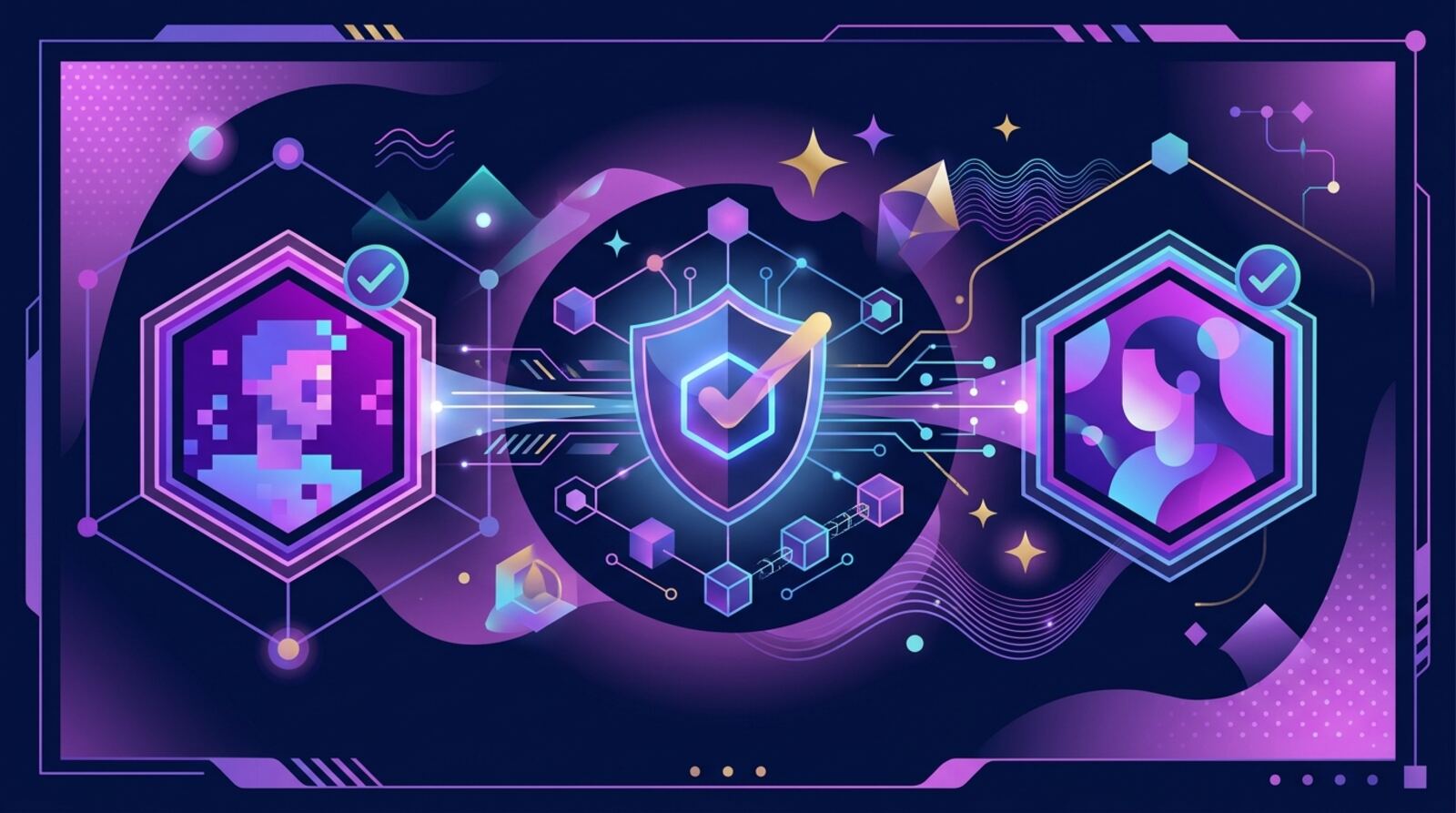
What Twitter's NFT profile picture feature was
Twitter, which was renamed X in 2023, launched a feature in January 2022 that let paying subscribers to Twitter Blue use an NFT as their profile picture. Before this, people could already paste an image of an NFT into their avatar, but that image was just a file. Anyone could save it, re-upload it, and claim it was theirs.
The new feature tried to solve that problem. Instead of a plain image, the app displayed the avatar inside a hexagon shape and connected it to a blockchain record. Viewers could see that the account was linked to a wallet that held the token shown in the picture.
The feature was limited to NFTs minted on Ethereum at launch, according to ArtNews reporting from January 2024. It was also limited to subscribers, so it was a paid add-on rather than a free profile option.
The idea drew attention because it promised a clear answer to a common question: is this person really connected to the NFT they show? The answer depended on the wallet link, not on the artwork itself, and that distinction matters for everything that follows.
How the verification step worked
The process was built around wallet ownership. Based on the steps described in public reporting and on how wallet-based sign-in generally works, the flow looked like this:
- Open the account settings and go to the profile editing screen.
- Choose the option to select an NFT as the profile picture.
- Connect a supported Ethereum wallet that holds the NFT.
- Pick the token from the list the app shows for that wallet.
- Confirm the ownership check in the wallet by signing a message.
The signature step is the key part. A signed message does not move funds or grant the app permission to spend tokens, but it proves that the holder of the private key controls the wallet. The app then compared that proof against the token records on the chain before it applied the hexagon frame.
If the wallet no longer held the NFT, the display would no longer be valid. The verification was therefore a snapshot of ownership at the time the check ran, not a permanent guarantee.
Which NFTs qualified, and on which chains
Eligibility was narrow. At launch, the reporting described Ethereum NFTs only. Other chains and many marketplace formats were not part of the early rollout, so an image stored on a different network could not be verified in the same way.
The feature also depended on the NFT being in a format the app could read. Standard Ethereum tokens with a clear contract address and token ID were the simplest case. Tokens that were wrapped, fractionalized, or held inside another contract could be harder to match to a single owner.
In practice, most users who tried the feature used profile-picture collections that were popular in the early Ethereum NFT community. These collections were often built around avatar art, which made them a natural fit for a round profile image. Owning a token from one of these sets gave a person a way to show a visible link to the collection, but the badge did not say anything about the token's price, rarity, or future value.
If you are still reading older posts about this feature, check whether they mention any chain besides Ethereum. Those claims were often tied to a specific rollout period and may no longer match what the platform offers.
Why X pulled support in January 2024
ArtNews reported on January 10, 2024, that X had pulled support for NFT profile pictures. Public reporting do not give a single, fully detailed explanation from the company, so this guide does not invent one. What the results do show is that the feature existed from January 2022 and was removed in early 2024.
Several possible reasons get discussed in community posts, including changes in platform priorities, the cost of maintaining a wallet integration, and the wider shift in how the company handled its paid subscriptions. These are speculation unless the company confirms them in its official announcements, so treat them as unconfirmed.
For readers, the practical result is what matters. A profile picture set through the wallet flow may no longer show the hexagon or the verified state, and users who set one up earlier should check their current settings rather than assume the badge is still active.
If you want the official reason, look for the company's help center notices and product announcements from early 2024. Those are the reliable sources for the timeline and for any stated policy.
Where the feature stands today
Based on public reporting, the verified NFT profile picture feature is not part of the current product as described by ArtNews reporting. That means the verification step described above should not be treated as a live option unless the official help pages say otherwise.
Two points stay true regardless of platform changes. First, the blockchain record is still public. Anyone can look up who holds a given token on the chain using a block explorer or a marketplace page. Second, ownership is a fact about a wallet and a token ID, not about the image file shown on a social profile.
You can still check ownership of an NFT on a marketplace such as OpenSea, which lists the current owner and the contract address for many Ethereum collections. A listing that shows a picture of a token is not the same as proof of ownership, so always compare the token ID and contract address against the collection's official information.
Because features change, avoid building a plan around any single social app's NFT display. Keep your records in your wallet and on the chain, and treat any profile badge as a presentation layer that the platform can remove.
Showing an NFT avatar outside the platform
If you own an NFT and want to show it outside the platform, the safest approach is to use methods that do not require you to share your wallet or sign requests from unknown sites. A plain image upload is always possible, but it carries the same limitation as before: the picture alone proves nothing about ownership.
Some readers look for third-party tools that claim to display NFT avatars with ownership checks. Before using any such tool, check who runs it, what it asks for, and whether it has a clear privacy policy. Do not grant permissions that look broader than the task needs, and do not use any tool that asks for your seed phrase.
A useful middle path is to publish the contract address and token ID in your bio or a pinned post, so viewers can verify ownership themselves on a block explorer. This shares the proof without giving any app control over your wallet.
If you collect for display rather than for social signaling, consider keeping the NFT in a dedicated wallet and using a separate, clearly labeled public address for sharing. That reduces the chance that a single signature request exposes your main holdings.
Security steps before you connect a wallet
The Twitter NFT feature asked users to connect a wallet and sign a message. That step is common across Web3 apps, and it is also where most people get into trouble. Defensive habits make a large difference.
Before you connect a wallet, confirm the website address you are on. Fake sites copy logos and layouts to trick users into signing. Type the address yourself or open the app from a bookmark you trust, rather than clicking a link in a reply or direct message.
Read every signature request. A message that asks for a login or ownership check should show plain text that makes sense. If the request asks you to approve spending, transfer tokens, or sign something you cannot read, reject it.
Keep your seed phrase offline and never type it into a website, app, or support chat. Legitimate services do not need it. If someone claiming to be support asks for it, treat that as a scam.
Finally, review and revoke token approvals you no longer need. Many wallets and block explorers offer tools to see which contracts can spend your tokens, and removing old permissions reduces exposure if a site is later compromised.
A checklist for NFT owners who want to show a profile picture
If you want a simple process to check your own NFT and decide whether to show it, use this sequence:
- Find the token on a block explorer or a marketplace and confirm the contract address and token ID.
- Check that the current owner shown on the chain matches the wallet you control.
- Compare the contract address with the collection's official project channels to avoid fakes.
- Decide whether you want to share a plain image, a link to the token record, or neither.
- Make sure the wallet you use for public activity holds only what you are comfortable exposing.
- Review your connected sites and revoke any permissions you do not recognize.
This checklist works whether or not a social platform offers an NFT display feature. It keeps the proof on the chain, where it can be checked, and keeps your private keys under your control.
If you plan to buy an NFT to use as an avatar, verify the collection before you spend money. Be wary of listings that look far below typical prices, because those are common in scam campaigns. Only buy from marketplaces you have checked independently.
If you are unsure, wait. Ownership is not going anywhere, and you can always share the proof later.
How to judge future NFT profile features
This topic is a good example of why evergreen guides should avoid promising features that a platform might remove. The Twitter case started with a clear product, drew coverage, and then saw support withdrawn in early 2024. Readers who search for it now need the full timeline and the current status.
When you read about a social platform adding or changing NFT features, check four things. Look for the date of the announcement, the chain or chains involved, whether the feature is open to all users or limited to paid tiers, and whether the company has confirmed the change in an official channel.
Be careful with posts that describe verification as proof of artistic rights or proof of rarity. The wallet check in this feature only showed that a wallet held a token. It did not confirm the image's creator, licensing, or market value.
Also check for updates. Coverage from a past period may describe a rollout that has since ended. Search for the platform's help center and official posts before relying on old tutorials or screenshots.
For readers who follow NFT culture more broadly, the lesson is that on-chain records and social display are separate things. The chain is the stable reference, and the social profile is a presentation that can change without notice.
Key takeaways
A profile picture is a small image, but it attracted a lot of attention because it tried to connect an image to a verifiable record. That idea still matters for NFT collectors, creators, and everyone who wants to know whether a claimed token is real.
Twitter's NFT profile picture verification began in January 2022 for Twitter Blue subscribers, supported Ethereum NFTs at launch, and used a wallet signature to show that the linked wallet held the token. X pulled support in January 2024, according to ArtNews reporting, and public reporting do not show the feature as a current option.
For readers today, the useful steps are to verify ownership on the chain, protect your wallet, read every signature request, and treat any social badge as a display choice rather than a proof of value. The record that counts sits on the blockchain and in your wallet, not in the profile frame.
If you want to learn more about the NFT side of this topic, read the marketplace and collection guides on this site and check the official pages of any platform before you connect a wallet or buy an NFT.
Frequently asked questions
Can I still set an NFT as my X profile picture in 2026?
No, not as of the most recent reporting in public reporting. ArtNews reported in January 2024 that X had pulled support for NFT profile pictures. Check the official X help pages before relying on any older guide, because platform features change.
Did the verification prove the image was original?
The wallet check proved that a particular wallet held the NFT at the time of verification. It did not prove who created the image, whether the file was copied, or whether the owner had rights to the artwork. Anyone can save and reuse an image, so the badge only meant the linked wallet held the token.
Is it safe to connect a wallet to check NFT ownership?
Signing a message can be safe when the request comes from a site you typed in yourself and the message text is clear and limited to a login or ownership check. Never sign a message you do not understand, and never share your seed phrase or private key, because no legitimate verification needs them.
What should I do to protect my wallet if I connected it to a social account?
Use a separate wallet for public-facing activity, check the domain before every connection, read each signature request in full, and revoke token approvals you no longer need. If you think a wallet has been compromised, move remaining assets to a new wallet you control.
How can I confirm that I own a specific NFT before showing it anywhere?
Use the marketplace to check the current owner and the contract address, then compare that with the collection's official project channels. A listing photo or a screenshot is not proof of ownership. Records on the chain are the reference point.
Mentioned in this guide
dApps in this guide
OpenSea is a peer-to-peer NFT marketplace for buying, selling and minting digital collectibles, aimed at collectors, creators and developers.
Ethereum PFP NFT collection of up to 20,000 Mutant Apes from Yuga Labs, spun off from Bored Ape Yacht Club, for collectors and community members.
Hashmasks is a 16,384-piece NFT portrait collection on Ethereum, aimed at collectors who trade individual tokens.
Redacted Remilio Babies is a 10,000-piece Ethereum PFP NFT collection by Remilia, built on the Milady Maker style, for collectors.
Punks Terminal is a CryptoPunks trading terminal from Lightyear for placing trait-filtered bids from a personal Stash contract on Ethereum.
An affiliate review site that ranks 10 crypto casinos and explains KYC tiers, wallets, networks and payment rails for crypto gamblers.
Keep reading
Related guides
NFT · Explainer
Is CryptoPunks the #1 NFT Collectible on Ethereum? (2026)
CryptoPunks is often described as the top NFT collectible on Ethereum, but that claim depends on which measure you use. This guide explains where the title comes from, what the evidence shows, and how to check current sales and floor prices yourself.
NFT · Explainer
Which NFT Collection Is on Par With Bored Apes in 2026?
No single NFT collection is objectively equal to Bored Ape Yacht Club, but several PFP projects are often compared with it on cultural reach, trading activity and community. This guide explains what 'on par' can mean, which collections come up most, and how to check current data yourself.
NFT · Explainer
Cool Cats Rise, Fall and Rankings: A 2026 NFT Guide
Cool Cats was one of the best-known Ethereum NFT collections of 2021 and 2022, and it reached the top of many sales charts. This guide explains how that happened, what the public results say about its status now, and how to check current NFT sales rankings yourself.
NFT · Explainer
What Are Blue-Chip NFT Collections? A Plain-English Guide for 2026
Blue-chip NFT collections are the best-known, most widely held NFT projects, judged on track record, trading depth and community. This guide explains what the label means, how people assess it, and the risks that still apply.
NFT · Explainer
Twitter NFT Profile Pictures: How They Worked and Why They Ended
Twitter's NFT profile picture feature let premium subscribers display an NFT they owned as their avatar. This guide explains how it worked, why it drew criticism, what changed in 2024, and what collectors can still do.
NFT · Explainer
TRC-721 Explained: Tron's NFT Standard for 2026
TRC-721 is the non-fungible token standard Tron introduced in late 2020, and it gives each NFT a unique ID that wallets and marketplaces can read. This guide explains what the standard does, how it compares with Ethereum's ERC-721, and what to check before you mint, buy or transfer one.
NFT · Explainer
Tyga, Bored Apes and CryptoPunks: What the Feud Was About
Tyga's public jabs at CryptoPunks owners were one more round in a long-running argument about which early NFT collections deserve status. This guide explains what CryptoPunks are, how ape and punk collections differ, and how to check current value and ownership yourself.
NFT · Explainer
Trading Pokémon Cards on Courtyard: How It Works in 2026
Courtyard turns graded Pokémon cards held in a vault into tokens you can trade on-chain. This guide covers how that works, what you own, how packs and redemption work, and what to check before you buy.