Blockchain · Best list
Lisk L2 and the OP Superchain: Which dApps to Check in 2026
Lisk is an Ethereum layer-2 built on the OP Stack and positioned within the OP Superchain. This guide explains what that means for dApp users and gives a practical method for judging which protocols to research first.
By the DappsAtlas editorial team · Updated
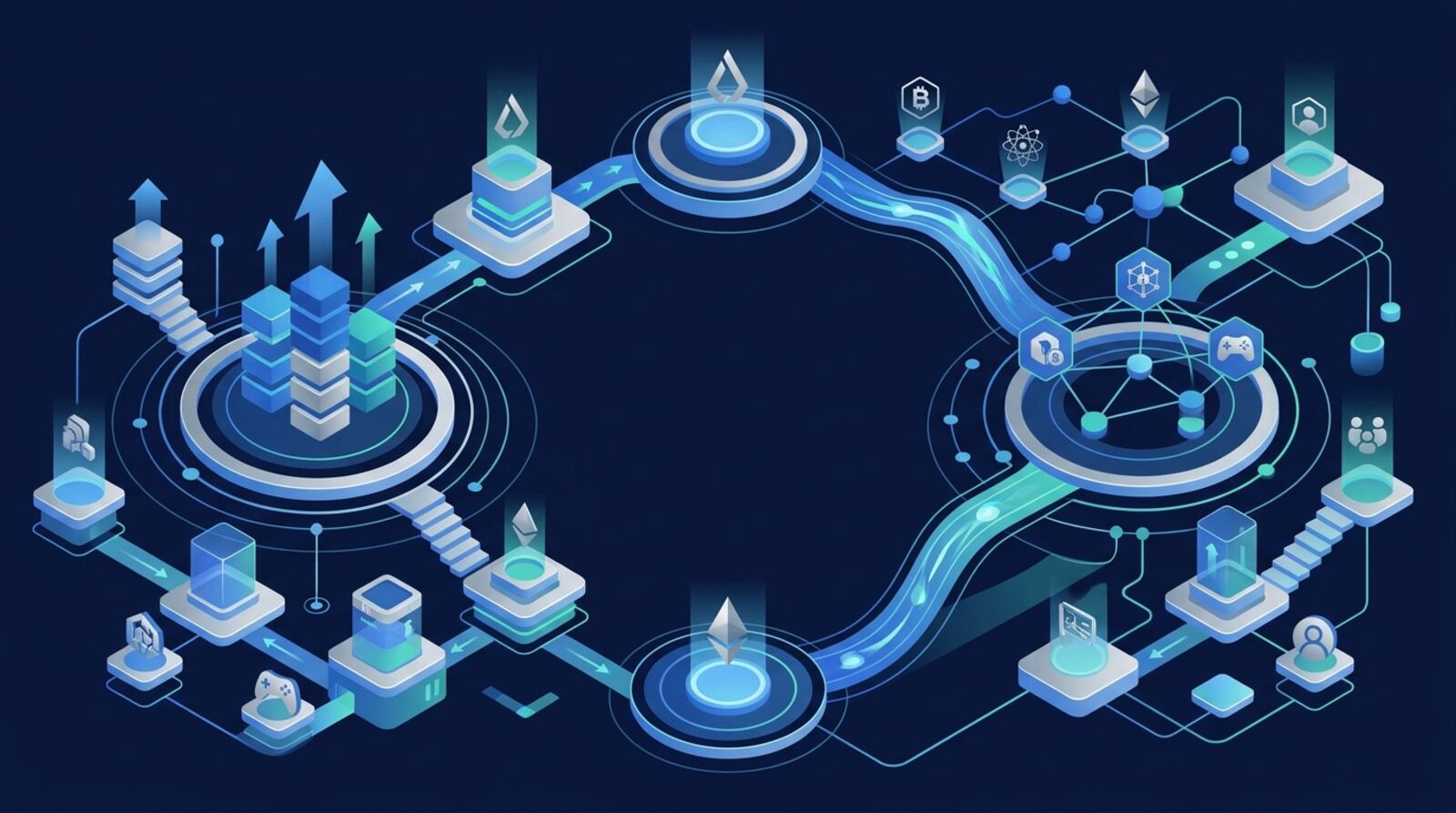
What is Lisk L2 and how does it fit the OP Superchain?
Lisk is a blockchain network that began as its own sidechain-style platform and has since moved to a layer-2 design built on the OP Stack, the open-source framework developed by Optimism. A layer-2 network processes transactions off the main Ethereum chain for speed and lower fees, then posts its data back to Ethereum so that settlement relies on Ethereum's security.
The OP Superchain is the wider network of chains that use the OP Stack and share common standards, such as messaging and bridging designs and a common approach to upgrades. Lisk's membership means it sits inside that shared design, which can make movement between Superchain chains simpler than between unrelated networks. The exact tooling depends on which interoperability features are live at the time you check.
Some basic terms help when reading about Lisk:
- Layer 2: a network that runs on top of Ethereum and inherits its settlement security.
- Sequencer: the component that orders transactions before they are posted to Ethereum.
- Bridge: a system that moves assets between two chains.
- Superchain: the group of OP Stack chains that share standards.
For current membership, migration status and upgrade paths, use Lisk's official documentation and the public pages of the Superchain. Secondhand summaries can be out of date, so treat them as a starting point only.
Why does the OP Superchain matter for dApp users?
Because OP Stack chains are EVM equivalent, the basic developer and user experience will feel familiar to anyone who has used Ethereum. Standard wallets, common token standards and the usual block explorer workflow generally carry over. That lowers the cost of trying a new protocol, but it does not guarantee that a given protocol is deployed on Lisk.
The practical effects for dApp users tend to fall into a few areas:
- Familiar tooling: many wallets and developer libraries work across EVM chains.
- Per-protocol deployment: each dApp chooses which chains to deploy on, so you must check each one.
- Bridge routes: moving assets requires a route, and routes differ in trust model, speed and cost.
- Liquidity fragmentation: the same asset may have different versions on different chains, and liquidity may be thin on newer networks.
- Shared upgrade standards: members of a common stack can adopt similar upgrade and security practices, though each chain still makes its own decisions.
The main trade-off is that a shared stack does not remove chain-specific risk. A sequencer outage, a bridge fault or a low-liquidity pool on Lisk can affect you even if the same protocol is well established elsewhere. Read each dApp's Lisk deployment page, not only its main site, before assuming it behaves the same way there.
How do I judge whether a dApp is industry leading?
"Industry leading" is a judgment rather than a fixed title, and any list of dApps can age quickly. A more reliable approach is to score each candidate against the same criteria and record your reasons. The following checks are stable and easy to repeat:
- Track record: how long the protocol has run, and whether it has survived market stress without losing user funds.
- Audits: whether the protocol publishes audit reports, and whether the audited code matches the version deployed on Lisk.
- TVL trend: look at how deposits have moved over months, not a single snapshot.
- Governance and admin keys: who can change contracts, pause markets or update parameters, and whether there is a timelock.
- Oracles: which price feeds the protocol uses and how it handles stale or manipulated prices.
- Incident history: how the team communicated about past problems and what changed afterward.
- Documentation: clear risk disclosures, parameter explanations and a published bug bounty policy.
Use a simple worksheet with one row per protocol and one column per criterion. Mark each cell with a short note and the date you checked it. This turns a vague impression into a record you can revisit, and it makes it easier to notice when a protocol's standing changes.
Which lending protocols should I research on OP Stack chains?
Lending protocols are a common starting point on any EVM chain. They let users earn interest on deposits or borrow against collateral, and their designs differ in ways that matter for risk. Three protocols that are frequently studied across chains are Aave V3, Morpho and Euler V2. Compound V3 uses a related base-asset model and is also worth reviewing.
| Protocol | Core model | What to check on a Lisk deployment |
|---|---|---|
| Aave V3 | Pooled markets with governance-set parameters | Which assets are listed on Lisk, and liquidity depth |
| Morpho | Isolated markets and curated vaults | Each market's collateral and oracle, and the vault curator |
| Euler V2 | Modular markets run by curators | Curator permissions and the risk settings of each market |
| Compound V3 | Supply a base asset, borrow against collateral | Whether the deployment exists on Lisk and its listed assets |
Pooled designs spread risk across many assets, but a problem in one market can still affect the pool. Isolated designs keep each market separate, which limits contagion but requires you to understand the specific collateral and oracle in that market. Neither design removes smart contract risk. Confirm whether the protocol is deployed on Lisk, read its risk documentation, and check liquidity before you deposit.
How do DEXes and swap routing work on Lisk?
Decentralized exchanges let you swap tokens from a self-custody wallet. Uniswap V3 is a widely studied example of concentrated liquidity, where liquidity providers choose price ranges. Uniswap V2 uses a simpler constant product design and is still used by many pools. Aggregators such as 1inch and Jupiter route swaps across pools to seek better prices, but they are built for different chains, so check whether an aggregator supports Lisk before relying on it.
A few habits reduce common swap problems:
- Confirm the token contract address on the Lisk block explorer, because scam tokens often copy names and logos.
- Set slippage deliberately and read the quote before you sign.
- Check the spender address in any approval request, and approve only the amount you need.
- Be cautious with pools that have very low liquidity, since small trades can move the price a lot.
For concentrated liquidity, providers should understand that a position can stop earning fees when the price leaves its range and may end up holding more of one token. Read the protocol's documentation on impermanent loss and fee tiers before providing liquidity.
How should I bridge assets to and from Lisk?
Moving assets onto or off Lisk usually involves one of two paths: the canonical bridge that the network provides, or a third-party bridge or messaging protocol. The canonical bridge is generally the most direct route for moving assets between a chain and its settlement layer. Third-party options can offer faster or more flexible routes, but they add their own contracts, operators and trust assumptions.
Across is an intent-based bridge and swap protocol that is often used to move tokens between Ethereum, rollups and other chains. LayerZero V2 is a cross-chain messaging infrastructure used by developers and asset issuers. Both can be useful, and both introduce different risks from a canonical bridge.
Bridge exploits have historically been a major source of user losses across the industry, so a cautious routine is worthwhile:
- Send a small test amount first.
- Confirm the destination token contract on a block explorer.
- Compare the canonical route with third-party routes on fees, time and trust assumptions.
- Read the bridge's official documentation about delays, challenge periods and supported tokens.
- Keep a small reserve of the native gas token on the destination chain so you can move your funds again.
Which data tools should I use to check TVL, volume and fees?
Data tools help you check the scale and trend of a protocol, but they measure different things. DefiLlama aggregates total value locked, trading volume and fees for DeFi protocols across many chains, which makes it useful for comparing deployments. Still, each figure depends on how the site counts assets, which chains it includes and how it prices tokens.
When you use any data source, keep these points in mind:
- TVL is a snapshot of deposited value, and it moves with token prices as well as deposits.
- Some protocols count assets held in other protocols, which can double count value.
- Volume and fee data can differ by source and methodology.
- A protocol's own dashboard and its contracts on a block explorer are the primary references.
Because prices and rankings change often, this guide does not state current figures. Check the live numbers on the data site and the protocol's own pages on the day you make a decision, and note the date alongside your research.
What security checks should I run before using a dApp on Lisk?
Before you connect a wallet or deposit funds into any protocol on Lisk, a defensive checklist can prevent many common losses:
- Never share your seed phrase or private key with anyone, including people who claim to be support staff.
- Type addresses yourself or confirm them from the protocol's official documentation rather than following a link from a message or an ad.
- Review every signature and approval request. Revoke approvals you no longer need using a reputable revocation tool.
- Use a hardware wallet for larger balances where your wallet supports it.
- Check the chain ID in your wallet matches Lisk before signing anything.
- Be cautious of unexpected airdrops, support messages and urgent calls to act.
- Keep software and wallet extensions updated, and install only the ones you trust.
Security is a continuing practice rather than a one-time setup. Revisit your approvals and connected sites regularly, and move funds you no longer use out of old contracts.
How do I research a Lisk dApp step by step?
Once you have a candidate list, a single research session can be structured to produce a usable answer:
- Confirm that the protocol is deployed on Lisk by checking its official deployment list and the Lisk block explorer.
- Record the contract addresses from official sources and verify that they match what you see in your wallet.
- Read the audit reports and check whether they cover the deployed code version.
- Review governance, admin roles, timelocks and oracle choices in the documentation.
- Look at TVL, volume and fee trends over several months on a data site, and note the date.
- Check the protocol's incident history and how it communicated about past issues.
- Estimate your worst case, including loss of access to a bridge, a paused market or a sharp price move.
- Start with a small amount and review the position after a set period.
Write down your reasons at each step. A record makes it easier to decide later whether to add funds, reduce exposure or exit.
What risks and limits should I keep in mind?
This guide does not provide a ranking of Lisk dApps, and the candidate list is a set of protocols to study, not an endorsement. Any protocol can change its parameters, its deployments or its team, and the state of a chain can shift as its sequencer, bridges and liquidity change.
Several risks apply across the Superchain and to Lisk specifically:
- Smart contract risk: bugs can exist even in audited code.
- Oracle risk: incorrect or stale prices can trigger liquidations or unfair swaps.
- Governance and upgrade risk: privileged roles can change rules quickly.
- Bridge risk: bridges hold assets or messages that can be targeted.
- Liquidity risk: thin markets can make exits costly.
- Chain-level risk: sequencer or infrastructure outages can delay transactions.
Nothing here is financial advice. Decide how much you can afford to lose, keep records, and review your positions regularly against the current documentation rather than against this article.
Frequently asked questions
Is Lisk part of the OP Superchain?
Lisk has moved to a layer-2 design built on the OP Stack, the open-source framework developed by Optimism, and it is positioned as a Superchain member. Membership details and migration status can change, so confirm them in Lisk's official documentation before relying on them.
Does a dApp that works on Ethereum also work on Lisk?
Many Solidity contracts and standard EVM wallets work on OP Stack chains because they are EVM equivalent. However, each protocol must deploy its own contracts on Lisk, so a protocol you use on Ethereum may not be live there. Check the protocol's official deployment list and the Lisk block explorer for the correct contract address.
How do I judge whether a dApp is industry leading?
No single metric settles it. Look at the protocol's track record, published audits and the dates of the audited code, how its TVL has moved over time, how governance and admin keys are controlled, and how it handled past incidents. The list in this guide is a set of protocols to research, not a ranking.
Is TVL a good measure of safety?
No. TVL shows how many assets are deposited, not how safe a protocol is. A large TVL can coexist with smart contract, oracle or governance risk, and TVL figures can shift with token prices. Use it as one input alongside audits, design choices and incident history.
What should I do before bridging assets to Lisk?
Start with a small test amount and confirm the destination token contract on a block explorer. Use the official canonical bridge where it fits your needs, and read the bridge's own documentation for timing, fees and supported routes. Avoid any bridge link that you found through an unsolicited message or an ad.
Mentioned in this guide
dApps in this guide
Uniswap V3 is a non-custodial decentralized exchange protocol for token swaps and concentrated liquidity provision across 40+ chains.
Aave V3 is a non-custodial DeFi lending protocol on 21 chains where users earn interest on deposits or borrow against collateral.
Morpho is a decentralized lending protocol with isolated markets, curated vaults and fixed-rate loans for crypto lenders, borrowers and developers.
Euler V2 is a modular DeFi lending protocol for lenders, borrowers and market curators, with about $268M TVL across 16 chains.
Across is an intent-based cross-chain bridge and swap protocol for moving tokens between Ethereum, rollups and other chains, with an API for apps.
LayerZero V2 is a cross-chain messaging protocol and bridge infrastructure for developers and asset issuers, connecting dozens of blockchains.
DefiLlama is a data site that aggregates total value locked, trading volume and fees for DeFi protocols across many chains.
Compound V3 is a lending protocol on Ethereum and nine other chains where users supply a base asset for yield or borrow it against collateral.
1inch is a non-custodial DEX aggregator that routes swaps across many exchanges for better prices, with its own wallet and 1INCH token.
Keep reading
Related guides
Blockchain · Review
How to Discover dApps on the Kroma Network in 2026
Kroma is an Ethereum layer-2 network, so finding dApps on it means combining a few stable checks: confirm the network details, confirm each app's deployment, and verify contract addresses before connecting a wallet. This guide explains a repeatable method that stays useful even as the ecosystem changes.
Blockchain · Review
How to Discover dApps and NFTs on Mantle Network in 2026
Mantle Network is an Ethereum layer-2 where you can find decentralized apps and NFT collections at lower transaction costs. This guide covers how to set up a wallet, find trustworthy sources, check contracts before you interact with them, and avoid the scams that target new networks.
Blockchain · Chain guide
Why DeFi Apps Are Adopting Optimism as an Ethereum Alternative
Optimism is an Ethereum layer-2 network that many DeFi teams now treat as a practical home for lending, trading and yield products. This guide explains what drives that shift, where the trade-offs sit, and how to check current fees, liquidity and withdrawal times yourself.
Blockchain · Explainer
Mass Adoption and the Multichain Paradigm: Are We Ready in 2026?
The multichain paradigm spreads users, assets and apps across many blockchains instead of one. Whether that model is ready for mass adoption depends on bridges, fees, wallets and liquidity working together for ordinary people.
Blockchain · Explainer
Lisk Explained: A Modular JavaScript Blockchain Platform in 2026
Lisk is a blockchain platform that lets developers build their own application chains and dApps mainly in JavaScript and TypeScript. This guide explains how its modular design, sidechains, SDK, consensus and LSK token fit together, and what to verify before you build.
Blockchain · Airdrop guide
Lisk Grant Program Wave 5: How to Apply in 2026
Lisk extended its 1.3 million grant program to a fifth wave, so this guide explains what a grant wave is, how it differs from an airdrop, and how to check whether you can apply. It also covers how to prepare and how to avoid scams while you do.
Blockchain · Explainer
Lisk Onchain Hackathon: A Guide for dApp Developers (2026)
A practical guide to entering a Lisk onchain hackathon as a dApp developer, covering how to confirm the current edition, read the rules, scope a project for a short build window, and submit a demo judges can test. It separates stable development advice from details that change between events, which you should verify on official Lisk channels.
Blockchain · Explainer
Lisk Grant Program on the OP Superchain: 2026 Guide
Lisk was an early Ethereum-linked blockchain that later joined the OP Stack and the Optimism Superchain, backing developers with accelerator support and funding. Public reporting also report that Lisk plans to shut down its blockchain on October 31, 2026, which changes what grant recipients and LSK holders should do now.