Blockchain · Explainer
Lisk Ecosystem Expansion Plans: What They Mean and How to Assess Them
Lisk has said it wants to grow its ecosystem, but announcements like this are only as useful as the details behind them. This explainer covers what such plans usually contain, how the mechanics work, and how to check current progress.
By the DappsAtlas editorial team · Updated
What is Lisk, and why does its ecosystem matter?
Lisk is a blockchain platform that has been operating since 2016, with development tools that have long been aimed at JavaScript developers. Its native token is LSK. Like any blockchain, its value depends on what people can actually do on it.
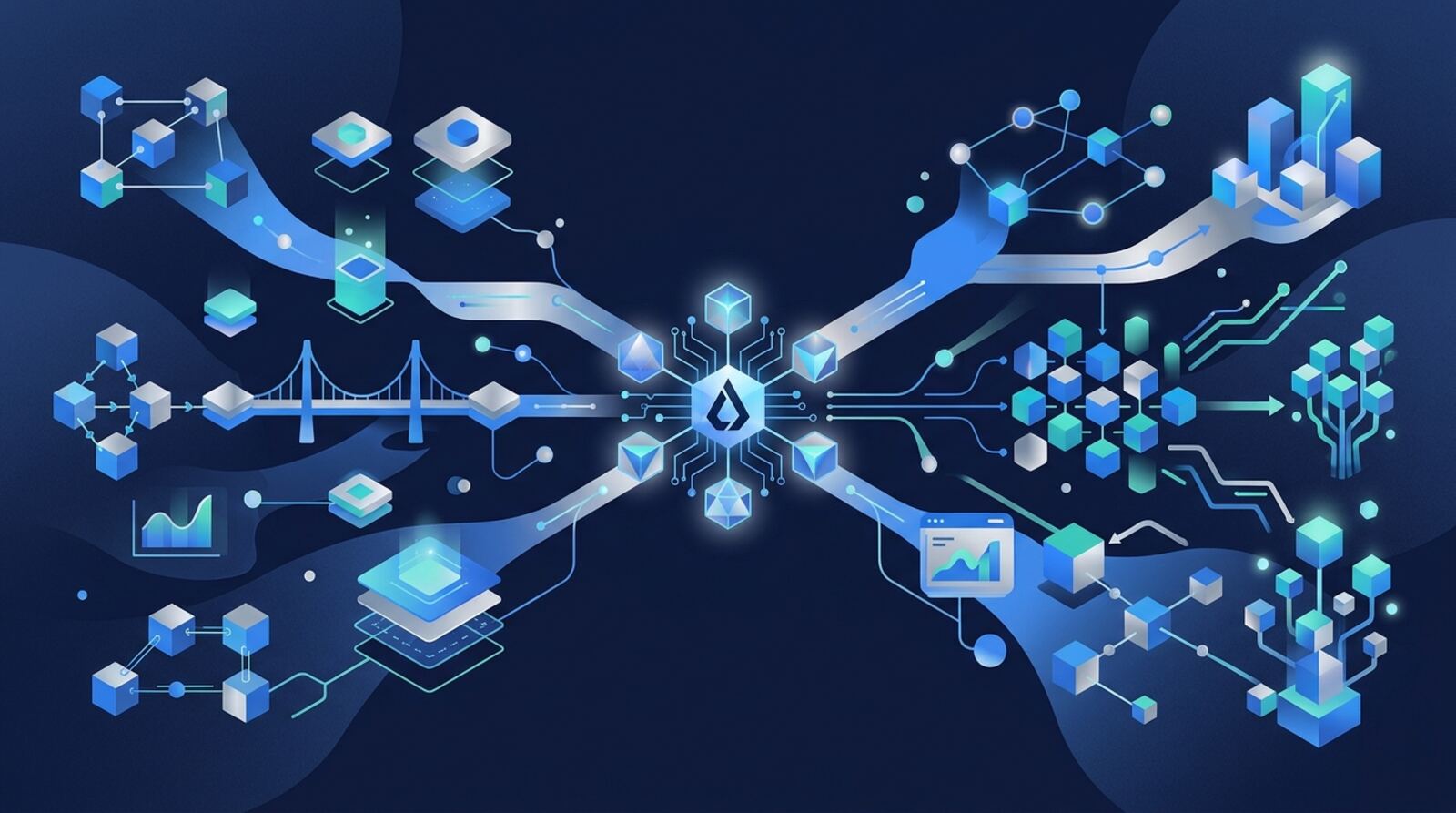
In this context, an ecosystem means the full set of parts that make a chain useful: applications, developers, validators, users, liquidity providers, bridges, wallets and data services. A chain with few applications gives users little reason to stay. Users who find few applications give developers little reason to build. Infrastructure that is slow, hard to use or poorly documented makes both problems worse.
That is why announcements about ecosystem expansion matter. They signal that a team is trying to fill specific gaps. A technical upgrade changes what the chain can do. An ecosystem plan aims to change what people actually build and use on it.
When reading any such announcement, ask which gap it targets. Is the aim to attract developers, bring in users, add liquidity, or improve tooling? Plans that name one clear goal are easier to evaluate than broad statements that try to cover everything at once.
What does an ecosystem expansion plan usually include?
Expansion plans differ, but most include a mix of the following areas:
- Developer support, such as documentation, sample code, grants and hackathons
- Incentives, such as funding for new applications or rewards for early users
- Infrastructure, such as wallets, indexers, data providers and oracles
- Partnerships with other protocols, service providers and exchanges
- Liquidity, such as bridges, market makers and lending or trading markets
- Community education, such as guides, events and regional outreach
A useful plan goes beyond these categories. It states a budget, a timeline, the people accountable for delivery and the metrics that will show whether the plan worked. Metrics might include the number of active developers, the number of deployed applications, transaction counts or total value held in apps. Each metric has weaknesses, so look for several together rather than one headline number.
Be cautious with language that promises growth without describing how it will happen. Phrases such as major partnerships coming soon or a bright future say little. Ask what has already shipped, what is scheduled and what can be checked independently.
How does Lisk's technical design affect expansion?
A chain's architecture shapes what applications can be built, how fees are paid, how assets arrive and how quickly transactions settle. For that reason, technical design is often central to expansion plans.
Lisk has described architectural changes in recent years, including a move toward a layer-2 design that uses Ethereum for security and data availability. Layer-2 networks, often called rollups, process transactions separately and post data back to a larger chain. Many rollups use a sequencer to order transactions and have withdrawal processes that can take time, depending on the design.
Compatibility matters too. When a chain supports the same development tools and smart contract standards as Ethereum, developers can reuse existing code, audits and tooling. This lowers the cost of building and makes it easier for established applications to deploy there. Whether Lisk offers this in its current form should be checked in its official documentation.
When a plan mentions a new architecture, ask three questions. What changes for developers? What changes for users, such as fees or withdrawal times? What risks does the new design introduce, and how are they handled? Answers should appear in technical documentation, not only in marketing summaries.
How do developer incentives and tooling drive growth?
Developers are the main engine of ecosystem growth. Chains that want more applications usually offer something concrete to lower the effort of building.
Common forms of support include:
- Clear documentation for setting up a development environment
- Software development kits and libraries
- Grants or funding for projects that meet defined criteria
- Testnets that let teams try their code without real money at risk
- Indexing services that organise on-chain data so apps can query it quickly
Indexing deserves special attention. Raw blockchain data is hard to use directly. Indexing services such as Envio offer tools that turn on-chain events into queryable data for applications. Chains with good indexing support are easier for teams to build on, especially for trading interfaces, dashboards and wallets.
Grants and incentives can attract attention quickly, but they also have limits. Projects funded only to receive rewards may leave when funding stops. Look for signs of lasting use, such as applications with ongoing users, maintained code and documentation that is updated over time. Ask whether the program supports developers who will stay after the first round of funding.
How do bridges move assets onto and off a chain?
Users and applications need assets on a chain, and bridges move those assets between networks. Understanding bridges is essential before moving funds to any new ecosystem.
Bridges generally work in one of several ways. Some lock tokens on the source chain and issue a representation on the destination chain. Others use liquidity pools, where a token is delivered from a pool and the pool is later rebalanced. A canonical bridge is one run by the chain or its core team to move assets to and from the main network. Third-party bridges are operated by other companies and often support more routes. Examples in the broader market include Across, which uses an intent-based model, LayerZero V2, which provides messaging infrastructure, and the Arbitrum Bridge, which is a canonical bridge for a different layer-2 network.
Bridges carry significant risk. Many large losses in crypto have come from bridge exploits, so each route should be treated with care. Before using a bridge, confirm the official address from the chain's documentation, check whether the contracts have been audited, understand the withdrawal timing and begin with a small amount.
When a plan promises easy movement of assets, ask which bridges are officially supported and how many routes exist. A small number of well-audited options is usually safer than many unfamiliar ones.
What kinds of applications and DeFi activity might follow?
Ecosystem plans often mention decentralised finance because it draws capital and activity. Common categories include:
- Decentralised exchanges, which let users swap tokens from their own wallets. Examples include Uniswap V3 and Curve.
- Lending markets, where users supply assets for yield or borrow against collateral. Examples include Aave V3 and Morpho.
- Liquid staking protocols, which issue a token representing staked assets so holders can use them elsewhere. Lido is an example for ETH.
An application may be popular on one chain and absent on another. Do not assume that a well-known protocol is available on a new network because it is on Ethereum or a major rollup. Check each protocol's own list of deployments, and check the chain's documentation for official listings.
DeFi activity carries risks that do not disappear when a chain grows. Smart contracts can contain bugs, oracles can fail, liquidity can dry up and borrowing positions can be liquidated during sharp price moves. Look for audits, bug bounty programmes, clear risk parameters and a track record over time.
For new ecosystems, the first applications are often experimental. Treat early yields with caution, because high rates frequently come from temporary incentives rather than durable demand.
How can readers judge an ecosystem expansion plan?
You can use the following checklist to judge a plan without relying on hype:
- Is there a specific budget, and is it stated in a verifiable way?
- Is there a timeline with dates or stages, rather than only a general direction?
- Who is responsible for each part of the plan?
- Which metrics will be published, and where can they be checked?
- What has already shipped, and can you confirm it independently?
- Does the plan address developers, users and infrastructure, or only one of them?
- Are risks and trade-offs discussed, or is the plan presented as risk-free?
Separate what is announced from what is delivered. An announcement is a statement of intent. Delivery means working software, live applications, published documentation or measurable activity. Plans with a track record of delivery deserve more weight than plans with many promises and little output.
Also consider whether the plan benefits the people who will use the chain or mainly supports the token. Token-focused announcements are not always negative, but they should be read differently from plans that improve tools, security or user experience.
Finally, compare the plan with similar efforts on other chains. Ask whether the approach is unusual and whether it has worked elsewhere. Familiar methods are not automatically good, but they are easier to assess.
What risks should users and builders weigh?
Every new ecosystem carries risks, and being early can make them more visible. Builders and users should weigh several factors.
For users:
- Smaller networks may have fewer validators or less decentralisation than large ones.
- Bridges and new applications may contain bugs or be targeted by attackers.
- Token prices can move sharply, and holding a token does not guarantee access to any particular service.
- Incentive-driven activity can disappear when rewards end.
- Phishing sites often imitate official announcements, wallets and bridges.
For builders:
- Dependence on a single chain can make a project vulnerable if the ecosystem loses momentum.
- Grant funding may come with conditions, deadlines or reporting requirements.
- Infrastructure providers can change pricing, features or availability.
Good security habits apply everywhere. Use a hardware wallet for significant holdings, keep your seed phrase offline and never share it. Review every transaction, including the contract you are approving and the amount. Revoke token approvals you no longer need, using a reputable approval management tool.
If you are unsure whether a message is genuine, do not act on it. Go to the official website you already know, or search for the project through its verified channels.
Where should you check the latest Lisk updates?
Because plans and details change, you should always check current information directly. Useful places to look include:
- The project's official website and blog, which should carry dated announcements
- The official technical documentation, including network details, supported assets and bridge addresses
- Governance forums or proposal records, where decisions about funding and upgrades are discussed
- The chain's block explorer, which shows live transactions, contracts and validator information
- Audit reports and the list of audited contracts, where available
- Independent news coverage that cites primary sources and includes dates
When you find an announcement, note its date and whether it describes completed work or future plans. Check whether the claims can be verified on-chain or in public records. If a figure such as total value locked, transaction volume or number of users is cited, identify the source and the time it was measured. Figures change quickly, and many data providers measure them differently.
This guide was written without access to current public reporting, so it does not describe the specific steps in any particular Lisk announcement. It explains the stable structure of ecosystem plans and the checks that apply to them. Use the official sources above to confirm what is happening now.
Frequently asked questions
Do I have to bridge assets to Lisk to use its apps?
Not necessarily. Whether you need to bridge depends on where your assets are now and which apps you want to use. Check the list of supported apps and bridges in the chain's official documentation before moving any funds, and start with a small test amount.
Is the latest Lisk expansion plan confirmed and funded?
Plans can change, and early announcements often describe goals rather than completed work. Look for a budget, a timeline, the people responsible and public metrics. Then check the official documentation, governance records or block explorer to see what is actually live. This guide does not confirm the specifics of any single announcement.
What is the LSK token used for?
LSK is the native token of the Lisk network. Historically it has been associated with transaction fees, staking and governance. Because the network design has been changing, confirm the current uses of LSK in the official documentation before relying on any description, including this one.
Does ecosystem growth mean the token will gain value?
Ecosystem growth can attract users and builders, but it does not guarantee a token's price or the safety of any app. Token prices move for many reasons, and incentive-driven activity can fade once rewards end. Treat an expansion announcement as one input, not a reason to buy.
How do I avoid fake bridges and phishing around new announcements?
Get bridge and contract addresses only from the project's official documentation or verified channels, not from ads, direct messages or search ads. Never enter your seed phrase or private key into a website, and be wary of anyone asking you to approve unlimited token spending. If something looks urgent, pause and verify first.
Mentioned in this guide
dApps in this guide
Across is an intent-based cross-chain bridge and swap protocol for moving tokens between Ethereum, rollups and other chains, with an API for apps.
LayerZero V2 is a cross-chain messaging protocol and bridge infrastructure for developers and asset issuers, connecting dozens of blockchains.
Aave V3 is a non-custodial DeFi lending protocol on 21 chains where users earn interest on deposits or borrow against collateral.
Uniswap V3 is a non-custodial decentralized exchange protocol for token swaps and concentrated liquidity provision across 40+ chains.
Curve is a decentralized exchange on Ethereum built for low-slippage swaps of stablecoins and similar assets, with CRV governance and a crvUSD stablecoin.
Envio is a blockchain indexing and data platform offering HyperIndex APIs and fast HyperSync raw data access for developers across 81+ chains.
Morpho is a decentralized lending protocol with isolated markets, curated vaults and fixed-rate loans for crypto lenders, borrowers and developers.
Arbitrum Bridge is the canonical bridge that moves ETH and ERC-20 tokens between Ethereum mainnet and the Arbitrum Layer-2 rollup.
Common is a non-custodial ZK privacy dapp on Arbitrum and Aleph Zero EVM that lets users shield funds and withdraw to a new, unlinkable wallet.
Keep reading
Related guides
Blockchain · Chain guide
Boba Network in 2026: Future of Dapps and DeFi
Boba Network is an Ethereum layer-2 whose future for dapps and DeFi depends on liquidity, bridges and its current activity. This guide covers the stable facts, the factors to watch and how to check the network's status yourself.
Blockchain · Explainer
Ethereum Scalability and Gas Fees: How It Works in 2026
Ethereum's base layer keeps transactions expensive and slow at peak demand, so most of the scaling work now happens in rollups, data-availability upgrades and a multi-year protocol roadmap. This guide explains how each piece works, what it means for your fees, and how to choose where to transact.
Blockchain · Comparison
Ethereum vs BNB Smart Chain for DeFi in 2026: Key Differences
Ethereum and BNB Smart Chain both host large DeFi markets, but they differ in liquidity depth, fees, validator design and the apps built on them. This guide explains those differences and how to check current data yourself rather than relying on headlines about a supposed battle.
Blockchain · Comparison
Ethereum vs Cardano: How the Two Blockchains Compare
Ethereum and Cardano are both proof-of-stake smart contract blockchains, but they differ in design history, developer tools, fee models, staking mechanics and ecosystem depth. This guide explains those differences and shows how to check current figures before you choose.
Blockchain · Airdrop guide
Lisk Grant and Airdrop Guide: What to Verify in 2026
Public reporting we checked do not confirm a 60,000 CHF Lisk grant program, so this guide explains what Lisk has funded and distributed so far, how to verify any grant or airdrop announcement, and how to protect yourself while you check.
Blockchain · Explainer
Lisk Blockchain Developments and How to Track Its Showcase Events
Lisk is an Ethereum-aligned layer-2 network with builder programs in Africa, Southeast Asia and Latin America. This guide explains what Lisk offers developers and how to verify the details of an Amplifire showcase, since the sources reviewed did not confirm that event's agenda or dates.
Blockchain · Airdrop guide
Lisk Grant Program Fifth Wave: How to Apply in 2026
Lisk has extended its grant program to a fifth wave with a 1.3 million grant pool. This guide explains what a grant wave is, how builders can prepare an application, and what to verify before spending time or tokens on it.
Blockchain · Airdrop guide
Lisk 4th Round Developer Grant Program: What Is Known in 2026
Lisk has run developer grant and accelerator programs for building apps on its JavaScript-based platform, but the public sources available here do not confirm the terms of a fourth round. This guide explains what is documented, how to verify a current round, and how to apply safely.