NFT · Explainer
Kings of Leon NFT Album and Lifetime Ticket Sale: What Happened
In March 2021 Kings of Leon sold its album 'When You See Yourself' as NFTs, with top tiers that included lifetime front-row seats. This guide explains what the sale was, why reported totals differ, and how to check what NFT holders own today.
By the DappsAtlas editorial team · Updated
What the Kings of Leon NFT sale was
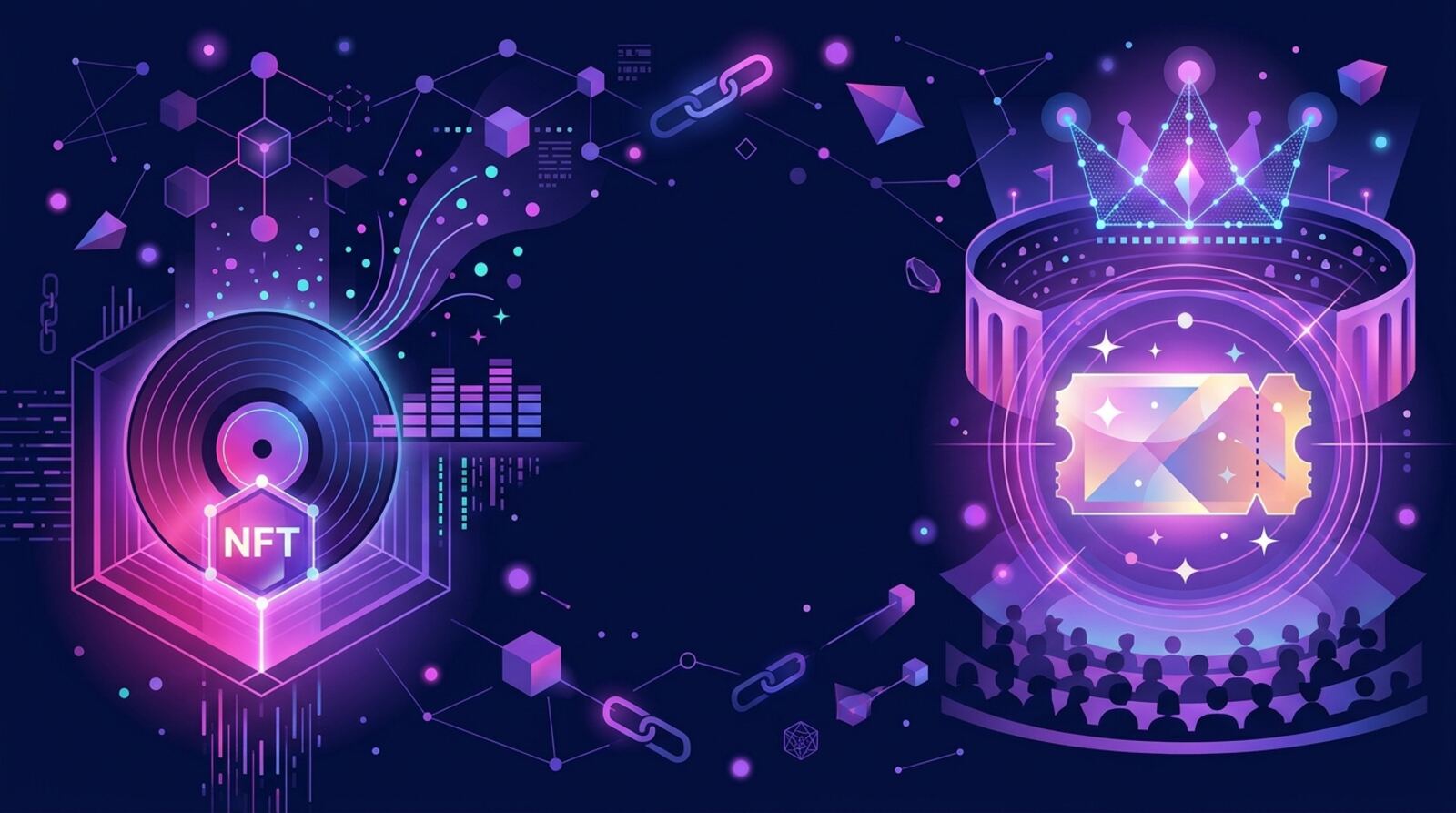
In March 2021 the rock band Kings of Leon announced that its album 'When You See Yourself' would be sold as non-fungible tokens (NFTs). It was widely described as the first full album released in this format by a major band. Buyers received a digital token recorded on a blockchain, and some higher tiers also carried live-event perks.
The sale was a limited event rather than an ongoing store. Buyers paid for their tokens during a set window, and the band and its partners described the offer as time-bound. Coverage at the time focused on three things: the album itself, the front-row ticket perks, and the amount of money raised in the first days.
The event is best understood as a historical example of how artists tested fan-ownership products in the early NFT boom. It is not a current product you can buy, so the useful questions now are what was sold, what happened to the sale, and what holders can verify today.
The NFT tiers: album, tickets and golden tickets
Reports describe several tiers. The lowest-priced item was an NFT version of the album, reported at around $50. Higher tiers included special tickets with perks. Coverage named a 'Bandit Wave' style of ticket as the highest-priced option, and described a small number of 'golden tickets' that included front-row seats to Kings of Leon concerts for life.
The tiers can be summarized as follows:
- Album NFT: the entry-level item tied to the album release.
- Concert tickets: access tokens tied to live shows, including front-row perks.
- Golden tickets: a limited number of top tiers with the strongest lifetime perks.
Because tier names and prices varied between outlets, the best source for exact terms is the original sale page or the band's own announcement from 2021. If you are researching a past sale, record which tier a token belonged to, since the perks attached to each tier were different.
Why the sales figures vary across reports
The reported totals in March 2021 changed quickly. One outlet reported that an auction for some listings was extended, with individual high-value listings priced in the range of roughly $90,000 to $150,000 at the time of writing. Other outlets later cited a cumulative figure of about $2 million from sales of the tokens.
The figure in the original research topic, $441,963, does not appear in the snapshots public reporting provided, so it should not be treated as a confirmed total without a dated source. Early numbers often reflect a point in time, while later numbers reflect all sales. Sales can also be extended, paused or closed, so a total quoted on one day may not match the total on another.
When you cite a figure, include the date, the outlet, and what the figure covers, such as one listing, one tier, or the whole sale. This avoids mixing a snapshot with a final result.
How the sale was run and where it was hosted
Coverage said the sale was run through YellowHeart, a live event ticketing and NFT platform. Reports also noted that the platform's backers included well-known names in the music industry. The sale was handled as a primary offering, meaning buyers purchased directly from the sale rather than from other holders.
For a music NFT sale, the core mechanics usually include a fixed sale window, a set of tiers with defined supply, a price for each tier, and a method for delivering the token to the buyer's wallet. Some sales also use auctions for scarce items, which explains why some listings were extended while the sale was live.
If you want to understand a similar sale, look for these elements in the original terms: the supply for each tier, the start and end dates, who holds the rights to the perks, and how the token relates to the album or ticket. Those details matter more than the headline price.
Who benefited and where the proceeds went
Reports stated that some proceeds from certain NFTs would go toward a Live Nation-linked initiative. Live Nation is a large live-events company that runs ticketing and concert promotion. Coverage at the time described the arrangement as a way to support the live music industry, but the specific use of funds should be checked against the official announcement.
The band also reportedly used part of the sales in ways described as charitable in coverage. Because the exact allocation may have changed or been described differently by different sources, avoid stating percentages or recipients unless you have a primary source that names them.
For readers, the key point is that a headline sales figure does not show where the money went. Ask whether the proceeds went to the artist, the platform, a partner, or a charity, and whether those splits were fixed in the terms.
What holders own today and how perks work
A token records ownership of a specific item in a wallet. It does not automatically guarantee any perk. The value of an NFT tied to a concert depends on whether the artist, promoter and ticketing partners continue to honor the promised access, and on the exact terms the buyer accepted at purchase.
To check what you hold, follow these steps:
- Find the token in your wallet or on a blockchain explorer, and note the contract address and token ID.
- Compare the contract address with the one in the official announcement.
- Read the sale terms or the terms linked from the token metadata, and note any stated expiry or conditions.
- Check the artist's official channels for updates about perks, redemption or events.
If the token metadata or terms are unclear, contact the official support channel listed by the artist or platform. Do not rely only on messages from unknown accounts, since impersonation is common around past drops.
Buying and selling these tokens on the secondary market
Once a primary sale closes, tokens are often traded on secondary marketplaces. Prices there are set by buyers and sellers, and they can be much higher or lower than the original price. A marketplace such as OpenSea is one place where NFTs are commonly listed, but the listing page is not proof of authenticity or of any perk.
Before buying a secondary token from a past music sale, confirm the contract address and token ID against the official source. Check the seller's history and be cautious of listings that are priced far below similar items, since they may be copies, scams or tokens with no attached rights.
Also understand that a token's resale value does not change what the perks are. A buyer who purchases a resold token may receive only the rights that the original terms allow, and those rights may be non-transferable or expired. Read the terms before you pay.
Lessons for fans and artists evaluating fan NFT drops
Fan NFT drops combine several promises: ownership of a digital item, access to live events and sometimes a share of proceeds. Each promise depends on different parties. The token depends on a blockchain, the access depends on the artist and promoter, and the proceeds depend on the contract or agreement behind the sale.
A useful checklist for evaluating a similar offer:
- Is the issuer clearly identified and verifiable?
- Are the tiers, supply and dates published?
- Are the perks described in writing, with conditions and expiry dates?
- Is there an official channel for support and updates?
- Are proceeds described with named recipients and amounts?
If several of these are missing, treat the offer with caution. Tokens with no written rights may be collectible artwork, but they are not necessarily tickets.
Where to check current prices and holdings
Because this was a 2021 event, prices and holdings may have changed. Use these sources to check current information:
- The original announcement from the band and its official social channels.
- Coverage from established music and business outlets, checked for publication date.
- The blockchain explorer for the relevant network, to confirm a token's current owner and metadata.
- The marketplace or sale platform used for the drop, to see listing history.
For general NFT trading, you can compare collections on established marketplaces such as OpenSea, but treat any displayed floor price or sale history as a snapshot. Also consider the risks of NFTs: prices can fall sharply, liquidity can be low, and token rights may be limited.
Nothing in this guide is financial advice. Check your local laws on buying and reselling digital assets, and keep records of your purchases for tax purposes where that applies.
Frequently asked questions
What did Kings of Leon sell as NFTs?
Kings of Leon sold NFT versions of their 2021 album 'When You See Yourself' and related tiers. Some tiers came with perks such as front-row concert seats for life. The sale ran for a limited window and was not reopened as a standard product.
Why do the reported totals from the Kings of Leon NFT sale differ?
Early reports gave figures for individual listings, and those listings were extended and changed while the sale ran. Some outlets later reported a cumulative total near $2 million. A single number like the one in the original topic may reflect one moment in the sale, so check the date and source before quoting it.
Do NFT holders still get the concert perks?
Ownership is recorded on the blockchain, but the value and perks depend on the terms each buyer accepted when they bought. Perks such as concert access depend on the band and its ticketing partners honoring them. Check the sale terms and any official updates from the artist before assuming a perk is still available.
How can I check whether a music NFT listing is genuine?
Only buy from marketplaces you can verify, and confirm the collection's contract address against an official announcement. Be wary of unsolicited links, look-alike listings and requests to connect your wallet to unknown sites. Never share your seed phrase, and use a hardware wallet for higher-value holdings.
Where can I find reliable figures for a past NFT sale?
Read the original announcement and the sale terms, then compare the reported figures with primary sources such as the artist's official channels and the platform used for the sale. Check the dates on every figure, because totals change as sales continue or close. Treat any price you see today as a snapshot.
Mentioned in this guide
dApps in this guide
OpenSea is a peer-to-peer NFT marketplace for buying, selling and minting digital collectibles, aimed at collectors, creators and developers.
NBA Top Shot is a licensed NBA highlight NFT marketplace on Flow from Dapper Labs, built around pack drops and trading for basketball fans.
NFL All Day is the NFL and NFLPA licensed NFT platform from Dapper Labs on Flow, where fans buy and trade video highlight Moments.
Tomorrowland's three Solana NFT collections form the Medallion of Memoria, which gives holders priority access to some festival ticket pre-sales.
Endemic is an Ethereum NFT marketplace for digital artists and collectors, offering AI-assisted curation, a creator studio and artist-led collections.
Wave Digital Assets offers managed crypto funds, wealth management and treasury strategies for institutions and private-wealth clients.
Keep reading
Related guides
NFT · Explainer
Celebrity NFT Hype Explained: Why Stars Jumped In
Celebrities including musicians, athletes and actors promoted NFTs during the 2021 and 2022 boom, with very mixed results for their fans. This guide explains why stars got involved, what happened to many of their collections, and how to judge celebrity-linked NFTs before spending money on one.
NFT · Explainer
How Famous Artists Use NFTs to Benefit Their Fans in 2026
Some well-known artists have used NFTs to share sale income, offer presale access and sell collectibles that give fans a closer link to their work. The benefits vary a lot, and this guide explains how to tell a real fan benefit from a marketing line.
NFT · Explainer
Celebrities and the NFT Hype: What Happened and What It Means in 2026
Celebrity involvement drove a lot of the NFT attention in 2021 and 2022, with August often cited as a peak of buzz. This guide explains what happened, what is left of those trends, and how to judge a celebrity-linked NFT before you buy.
NFT · Explainer
What Is NFT Utility? Types, Examples and How to Check It
NFT utility is any right or benefit attached to owning an NFT beyond the image itself, such as access, membership, in-game items or physical redemption. Its value depends on what the issuer actually delivers and on the terms behind the token.
NFT · Explainer
Kinguin and Immutable X: What the NFT Marketplace Plan Means in 2026
The sources provided do not confirm that Kinguin is building an NFT marketplace on Immutable X. This guide explains what is verifiable about Immutable X, its marketplace history, and how to check any new launch before you take part.
NFT · Explainer
Kevin Hart and Bored Ape Yacht Club: What Is Confirmed
No search result confirms that Kevin Hart has joined Bored Ape Yacht Club. This explainer covers what the collection is, what a celebrity 'joining' could mean, and how to verify any such claim before you act on it.
NFT · Explainer
What Is laCollection? How Museum Art Becomes NFTs in 2026
laCollection is a French technology service that helps museums and cultural institutions issue certified NFTs as digital twins of physical artworks. This guide explains how the model works, what a buyer actually receives, and what to check before buying.
NFT · Explainer
Kalamint and Tezos NFTs: How Top Collections Are Found and Checked in 2026
Kalamint is one of the older NFT marketplaces on Tezos, focused on art and collectibles. This guide explains what it is, how Tezos collections are bought and checked, and how to verify claims about top collections before you spend anything.