NFT · Explainer
What Is laCollection? How Museum Art Becomes NFTs in 2026
laCollection is a French technology service that helps museums and cultural institutions issue certified NFTs as digital twins of physical artworks. This guide explains how the model works, what a buyer actually receives, and what to check before buying.
By the DappsAtlas editorial team · Updated
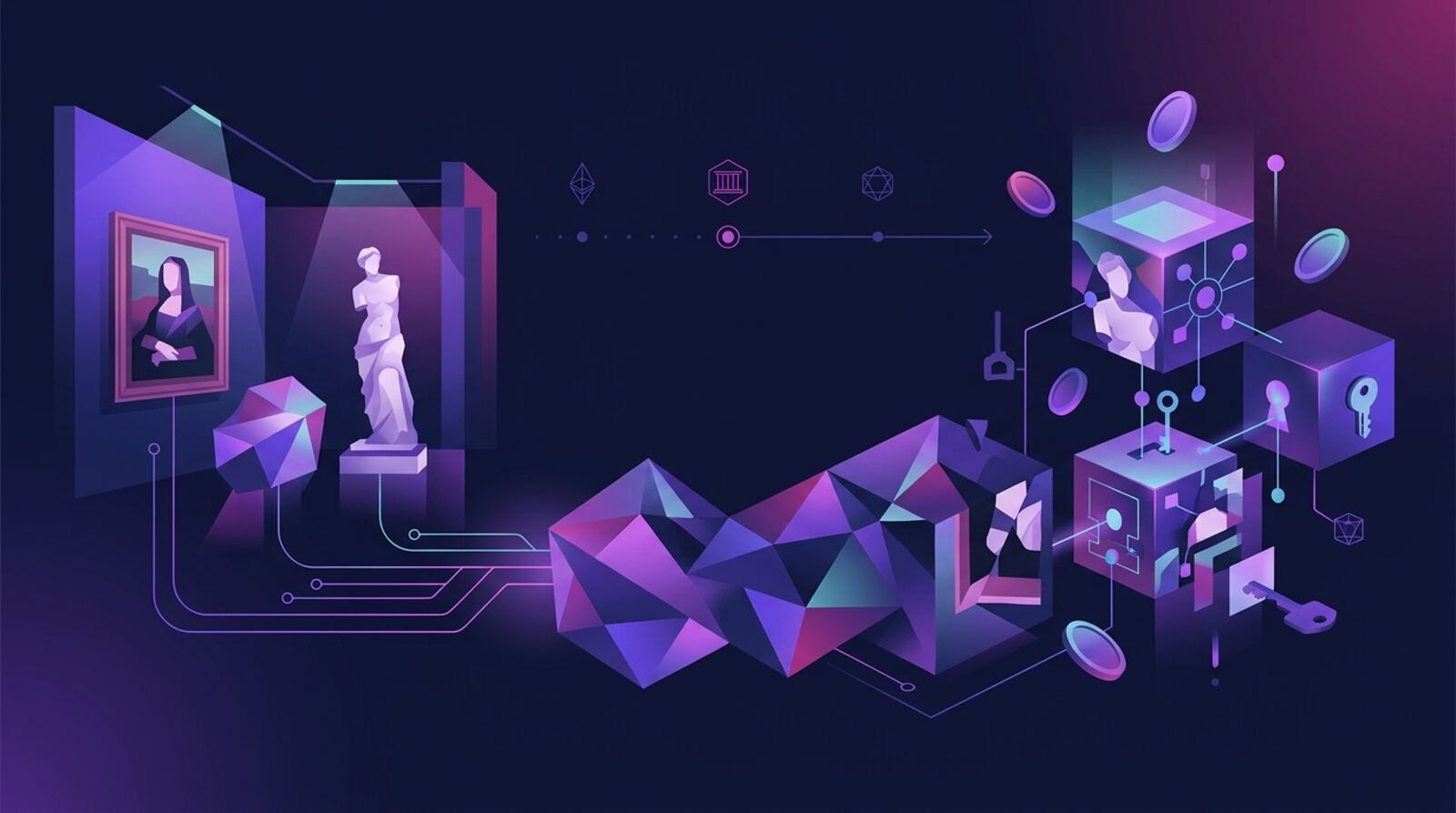
What is laCollection?
laCollection is a French company that provides a turnkey service for cultural institutions. Its aim is to help museums, galleries and similar bodies take part in Web3 without building their own blockchain systems.
The core product is a certified NFT that acts as a digital twin of a physical artwork. The token sits on a blockchain and points to a digital record that describes the work and its issuing institution. Buyers receive a collectible item tied to an object held or licensed by a museum.
The model is different from a general NFT marketplace. Here the institution is the source of the item, and the platform handles the technical side: minting, certification, listing and sales. This matters for buyers, because the question is less about a token's popularity and more about who issued it and what rights come with it.
The company was reported in late 2021 as launching with The British Museum, and later reports describe partnerships with other institutions. Check the current list on the company's own site, because partnerships change over time.
How does a museum NFT get created?
At a high level, the process has four stages. Each one is a point where a buyer can check something.
- The institution selects an artwork from its collection or from works it is authorised to represent.
- The platform creates a digital record and an NFT that refers to that record.
- The institution sets a sale format, such as a fixed price, a drop or an auction.
- The buyer receives the token in a wallet, along with whatever documents the terms describe.
The certificate is the central idea. A certified NFT is meant to show that the item came from the named institution and matches a given artwork. Because the record lives on a blockchain, anyone can check that a token exists and who holds it. What the record cannot do is prove the physical object is safe, insured or displayed. Those facts depend on the institution.
When you read a listing, look for the issuing institution's name, a description of the source artwork, the terms of the sale and any clear statement about what is and is not included.
Which museums have taken part?
Several museums have been linked with NFT projects in recent years, and the results show a range of approaches. For example, the Museum of Fine Arts, Boston was reported to be creating an NFT collection of rarely exhibited Impressionist pastels, with proceeds aimed at funding conservation and other needs. The institution's announcement is the best source for the details of that sale.
Other institutions have used different providers. Some have worked with encryption firms to make NFTs of famous paintings with certificates attached, and some have studied the topic through research programmes and public discussions about digital preservation.
This variety means you should not treat every museum NFT the same way. Ask who issued it, whether the institution confirmed the sale, and whether the item is part of a formal programme or a one-off project.
The key pattern across these examples is that the institution, not the NFT platform, is the authority on the artwork. A trustworthy listing will say so plainly.
What do you actually receive when you buy?
A common misunderstanding is that a token equals ownership of a famous painting. In most museum NFT sales, the buyer acquires a digital item with defined terms. The physical work stays in the institution's care.
Before buying, check these points in the terms:
- Whether the purchase includes any rights to the physical object (usually it does not)
- Whether it includes image or reproduction rights, and any limits on commercial use
- Whether the record can be updated or revoked by the issuer
- What happens if the institution or platform stops operating
- Which blockchain the token uses and what wallet you need
The value of the item depends on the buyer's view of the institution, the rarity of the drop, the quality of the record and the liquidity of the resale market. None of these are guaranteed. Museum NFTs are collectibles with terms, not a substitute for owning the artwork or a standard investment.
If the terms are unclear, do not buy until you have an answer from the institution in writing.
How do I verify a museum NFT is genuine?
Verifying a museum NFT is mostly about the source. Follow these steps before you connect a wallet or send any funds.
- Open the institution's official website by typing the address yourself or using a bookmark you already trust.
- Find the announcement of the sale and confirm the date, the artwork and the platform named.
- Check that the listing page you use is linked from that official announcement.
- Compare the token details, such as contract address and token identifier, with what the institution published.
- Be wary of unsolicited messages, sponsored posts or pages that create urgency.
Never enter your seed phrase or private key on any site. A legitimate sale does not need your recovery phrase. If a page asks for it, close the page and check your wallet's security settings.
Also keep records of your purchase, including the transaction hash, the terms you accepted and any emails from the institution. These documents help if you later need to prove what you bought.
How are these NFTs resold, and do royalties apply?
Resale depends on the marketplace and the terms set for the token. Some marketplaces show creator royalties, but royalty enforcement varies by platform and by how the token contract is built. Read the terms to see whether any royalty for the institution applies to secondary sales and how it is paid.
Platforms that trade NFTs broadly include OpenSea, Rarible and Element Market. Art-focused marketplaces such as SuperRare and Endemic may suit artwork-linked items better, though their rules and curation differ. Always confirm that the token you are looking at is the same one the institution issued, because copycat listings can use similar names and images.
Prices on these platforms move with demand and can be far below the primary sale price. Check recent sales on the platform rather than relying on a headline figure. Any price or volume statistic changes quickly, so look it up at the time you need it.
If you plan to sell, check the marketplace's fee structure and withdrawal process before you list. Keep in mind that gas fees and platform fees reduce what you receive.
What are the main risks?
Museum NFTs carry several risks that are separate from the artwork itself.
- Issuer risk: the institution or platform may change its plans, stop supporting the item or fail to provide promised documents.
- Market risk: resale demand may be thin, and the value may fall well below what you paid.
- Scam risk: fake drops, cloned websites and phishing messages often copy real museum names.
- Wallet risk: a compromised wallet can lose tokens quickly, and blockchain transfers are usually irreversible.
- Legal risk: taxes, reporting duties and rules on collectibles vary by country.
To reduce these risks, use a hardware wallet or a well-known self-custody wallet, keep your recovery phrase offline, and never approve token permissions you do not understand. Revoke old approvals in your wallet settings when you are finished with a site.
If you are unsure about any of these points, pause the purchase. A reputable sale will still be there after you have read the terms and checked the source.
How does laCollection compare with other art NFTs?
laCollection is one of several ways museums and galleries have approached NFTs. Other parts of the market are more general or focus on digital art and physical-backed collectibles.
If you are interested in artwork-linked NFTs, these categories are worth comparing:
| Type | Typical use | Example platforms |
|---|---|---|
| Institution-issued certified NFTs | Museum or cultural item records | laCollection (issuer service) |
| Curated digital art marketplaces | Artist works and collector sales | SuperRare, Endemic |
| General NFT marketplaces | Broad trading of many collections | OpenSea, Rarible, Element Market |
| Physical-backed collectibles | Vaulted or graded items with digital tokens | Courtyard |
Each model has different rights, fees and resale rules. The right choice depends on whether you want a museum-linked record, digital art, or an item backed by a physical asset.
Whatever category you choose, the same questions apply: who issued the item, what the terms say, and where it can be resold.
How can I check what is current before I buy?
Because listings, partners and platforms change, check the current situation before you act.
- Visit the company's official site and read the list of partner institutions and any current sales.
- Confirm each sale on the institution's own website or press page.
- Look up the token's details on the blockchain explorer for the network it uses.
- Read the terms, privacy policy and any refund or resale conditions.
- Check the legal and tax rules in your country, and seek advice if you are unsure.
For general information about NFTs, the institution's own publications and reputable educational resources are better sources than advertisements. Be sceptical of any claim that a museum NFT guarantees a return.
If you decide to buy, only use funds you can afford to lose, and remember that gambling-style speculation is not the purpose of these collectibles. Whatever you do, confirm you meet any age and residency requirements that apply to the sale.
Frequently asked questions
Does buying a museum NFT mean I own the artwork?
Not necessarily. A museum NFT usually links to a certified digital record of a work, and its terms set out what the buyer receives. Ownership of the physical object, the image rights and any reproduction rights stay with the institution or its licensors unless the terms explicitly say otherwise. Read the terms before buying.
How can I tell a real museum NFT from a fake one?
Start from the institution's own website or official announcement, not from a link in a social post or direct message. Then confirm the contract address or listing details match what the institution published. If the seller's page only exists on a platform you found through an unsolicited message, treat it as unverified.
Are museum NFTs a good investment?
The NFT is a blockchain token. Its value depends on what the collector expects to get from it, how liquid the market is, and what the terms say. Prices for these items can move a lot and may fall to very little. Only spend what you can afford to lose, and consider the item a collectible rather than a savings product.
Where can I buy and resell these NFTs?
Museum NFT drops are often limited, and the institution or platform may sell through its own page or through partner marketplaces. Check the listing on the official site first, then confirm the marketplace matches the one the institution names. Secondary trading happens on general NFT marketplaces, so resale terms can differ from the primary sale.
Do I need to check local rules before buying?
Confirm the legal rules in your country before you buy any NFT, including how it is taxed and whether it is treated as a security, a collectible or something else. Rules vary by jurisdiction and change over time, so check current guidance from a qualified adviser or your local regulator.
Mentioned in this guide
dApps in this guide
SuperRare is a curated Ethereum NFT marketplace for digital art and works paired with physical pieces, aimed at collectors and vetted artists.
Endemic is an Ethereum NFT marketplace for digital artists and collectors, offering AI-assisted curation, a creator studio and artist-led collections.
OpenSea is a peer-to-peer NFT marketplace for buying, selling and minting digital collectibles, aimed at collectors, creators and developers.
Objkt is a non-custodial NFT marketplace on Tezos where creators mint, collectors trade and anyone can make offers on tokens.
Courtyard is a marketplace and tokenization service for vaulted, insured physical collectibles such as graded trading cards, sold via digital packs.
Rarible is a multichain NFT marketplace whose RARI token governs the protocol, RARI Chain and Foundation treasury, for creators, collectors and token holders.
Element Market is a multi-chain NFT marketplace and aggregator for collectors and traders buying NFTs, collectibles and GameFi assets across many blockchains.
An affiliate review site that ranks 10 crypto casinos and explains KYC tiers, wallets, networks and payment rails for crypto gamblers.
Keep reading
Related guides
NFT · Review
SuperRare Review 2026: Curated Ethereum Art NFT Marketplace
SuperRare is a curated Ethereum marketplace for single-edition digital art, aimed at collectors and vetted artists. This review explains how it works, what it costs in practice, and what to check before you buy or sell.
NFT · Explainer
Tezos Digital NFT Art at Art Basel: A Visitor's Guide
Tezos brought NFT art into public-facing exhibitions at several Art Basel events between 2021 and 2022, from interactive booths to a presented show in Paris. This explainer covers what visitors saw, why the format mattered, and how to follow digital art shown at fairs today.
NFT · Explainer
How Car Makers Have Used NFTs and What Changed by 2026
Several car brands have sold or announced NFTs since 2021, mostly as collectibles, licensed artwork or virtual vehicles. This guide explains what those projects were, what happened to the market, and how to check an automotive NFT before you consider buying one.
NFT · Explainer
LG Art Lab NFT Marketplace: What Happened and What Comes Next
LG Electronics briefly ran an NFT marketplace on its smart TVs. This guide explains how LG Art Lab worked, why it shut down in June 2025, and what anyone who used it should check now.
NFT · Explainer
Kinguin and Immutable X: What the NFT Marketplace Plan Means in 2026
The sources provided do not confirm that Kinguin is building an NFT marketplace on Immutable X. This guide explains what is verifiable about Immutable X, its marketplace history, and how to check any new launch before you take part.
NFT · Explainer
Lil Baby at BAYC ApeFest: What Happened and What It Means
A Lil Baby set at a Bored Ape Yacht Club ApeFest became a shorthand for how NFT communities use live events. This explainer covers what ApeFest is, how access works, what a concert does and does not mean for NFT value, and how to stay safe around these events.
NFT · Explainer
Kings of Leon NFT Album and Lifetime Ticket Sale: What Happened
In March 2021 Kings of Leon sold its album 'When You See Yourself' as NFTs, with top tiers that included lifetime front-row seats. This guide explains what the sale was, why reported totals differ, and how to check what NFT holders own today.
NFT · Explainer
LimeWire NFT Marketplace on Algorand: What Happened and What It Means
LimeWire, once a file-sharing service, announced in 2022 that it would return as an NFT marketplace, with Algorand at the center of its early plans. This guide explains what was announced, what changed, and how to check the project's status before you interact with it.