NFT · Explainer
Digital Fashion NFT Wearables: How Brands Use the Metaverse
Luxury houses, sportswear giants and digital-only studios have all sold wearables for avatars and games. This guide explains how the tokens work, what buyers actually own, and how to judge a drop before spending.
By the DappsAtlas editorial team · Updated
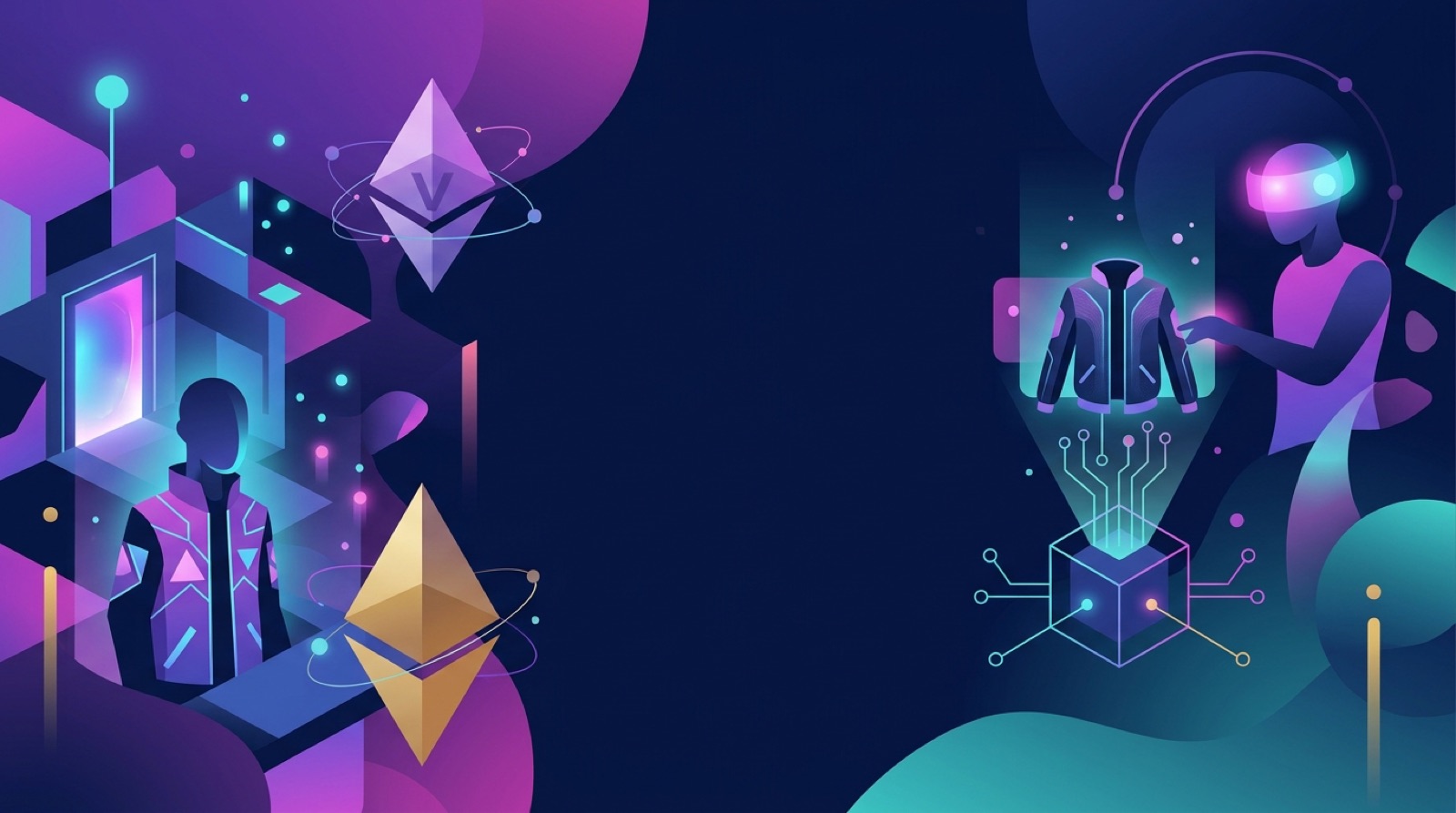
What are digital fashion NFT wearables?
A digital fashion NFT wearable is a non-fungible token that represents a garment, pair of shoes, accessory or skin designed to be worn by an avatar or shown in a digital space. The token lives on a blockchain, most often Ethereum or a network compatible with it, and records who owns it. The artwork or 3D model is usually stored elsewhere, and the token's metadata points to it.
The category covers several different things that are often lumped together:
- Avatar clothing designed for virtual worlds, games or social platforms.
- Collectible sneakers and apparel that are mainly displayed or traded.
- Phygital items, where a token is paired with a physical product, or can be redeemed for one.
- Digital-only couture, garments that never existed in physical form and are made to be worn in images, video or augmented reality.
Two ideas separate NFT wearables from ordinary in-game cosmetics. First, the token can be transferred or sold to another wallet, which makes resale possible without the brand's permission, subject to the platform's rules. Second, ownership is recorded publicly, so anyone can check who holds an item and when it moved.
It helps to be clear about what an NFT does not do. It does not guarantee that the item works in every game, that it keeps its value, or that the brand will keep supporting it. Those depend on the project, the platform and the licence terms. This guide explains each of those layers so you can read a fashion drop critically, whether you are a collector, a designer or simply curious about why fashion houses spent money on digital clothing.
How did fashion brands enter the metaverse?
Fashion's interest in digital goods grew out of video games, where players had long paid for cosmetic skins. Around 2021, as NFT trading surged, established brands began to test whether the same behaviour would extend to blockchain-based items.
Some widely reported milestones:
- Digital-only studios: The Fabricant sold a digital dress called Iridescence at auction in 2019, an early example often cited in this field.
- Dolce & Gabbana auctioned its Collezione Genesi in 2021, a set of digital and physical pieces sold through an NFT platform for a headline figure in the millions of dollars.
- Gucci ran experiences on Roblox and sold virtual items, including a digital sneaker priced as a low-cost in-app purchase.
- Nike acquired the digital studio RTFKT in late 2021 and later launched a platform for digital products and community.
- Adidas released an NFT collection in partnership with Bored Ape Yacht Club and other creators, with a linked physical merchandise line.
- Louis Vuitton, Burberry and Ralph Lauren all tried games, collectibles or Roblox spaces.
- Metaverse fashion weeks held in virtual worlds such as Decentraland showcased digital collections from many labels.
The common thread was experimentation. Brands tested audiences, tools and revenue models at small cost compared with physical production. Since then, interest has cooled, and several programs have been scaled back, relaunched or ended. Because that status changes, check each brand's current announcements rather than relying on launch-era coverage. The lasting legacy is less about individual collections and more about the techniques and customer habits that brands carried forward.
What types of digital wearables exist?
Not every digital garment is an NFT, and not every NFT garment is wearable in the same way. Knowing the format tells you what you can actually do with the item.
| Type | Where it works | Blockchain token? | Typical buyer motive |
|---|---|---|---|
| In-game skin or avatar item | Inside one game or platform | Often no | Self-expression in that world |
| NFT collectible wearable | Marketplaces, sometimes a partner game | Yes | Collecting, status, trading |
| Phygital item | Real world plus digital display | Yes | Authenticity and a physical product |
| Digital-only couture | Photos, video, AR try-on | Sometimes | Social content and art |
| AR filter or lens | Social apps and cameras | Rarely | Short-term fun |
A few points follow from this table. In-game items are the simplest and cheapest, but you cannot usually sell them. NFT collectibles give you transferability, but their usefulness depends on whether a game or app reads that token. Phygital items add a physical object whose quality and shipping terms are separate from the token. Digital-only couture is closer to commissioned digital art than to clothing, and is often bought to be photographed onto the buyer's image.
When reading a drop, ask which of these categories it falls into, because the answer determines the real benefits. A glossy announcement may blur the line between a collectible you can only hold and an item you can actually wear in a named, working environment.
How do NFT wearables work technically?
When you buy a wearable NFT, three separate things are involved: the token, the metadata and the media file. The token is an entry in a smart contract, usually following the ERC-721 standard for unique items or ERC-1155 for items that come in multiple copies. The metadata is a small record naming the item and pointing to its image or 3D model. The media file is the artwork or model itself.
Where the media is stored matters. Decentralised storage systems keep files addressable by their content, while a company server can change or remove a file. If metadata points to a regular web address controlled by the brand, the item can change or vanish if that server goes offline. Reading the project documentation for its storage approach is a reasonable first check.
Interoperability is the biggest gap. A token is portable between wallets, but a 3D asset needs a game or tool that understands it. Open formats such as glTF for 3D models and VRM for humanoid avatars exist, and some avatar tools try to support them, but each platform has its own rigging, polygon limits and art style. An item designed for one engine often needs conversion or manual work before it fits another.
So the technical answer to what you own is: a transferable record of ownership, a licence defined by the terms, and access to whichever environments the creator supports. It is not a guarantee of universal use. Browsing the contract on a blockchain explorer lets you confirm the collection's supply, the creator address and whether the contract can be changed by the issuer.
Why do fashion brands issue wearables, and why have many scaled back?
For brands, the early appeal was clear. Digital items have no fabric, factory or shipping costs, and they reach younger buyers who already spend on cosmetics in games. NFTs added secondary-market royalties, a public record of scarcity, and a way to identify loyal customers by wallet. Digital drops also work as marketing, generating press and social content around a brand.
Brands also used tokens as a gateway to community perks, such as access to events, early product releases or redemption for physical goods. In that model the NFT acts as a membership key as much as a garment.
The reasons many programs slowed are equally instructive:
- Speculative demand faded. Many buyers were traders, not wearers, so when prices fell the audience shrank.
- Limited places to wear items. Without broad platform support, a wearable had few uses beyond display.
- Complexity for mainstream customers. Wallets, gas fees and seed phrases put off ordinary shoppers.
- Reputation risk. Brands became wary of association with scams, volatile markets and environmental criticism, even after Ethereum moved to proof of stake.
- Shifting priorities. Some companies redirected spending to AI, gaming partnerships or loyalty apps.
The outcome is a more selective market. Brands that continue tend to use blockchain quietly, for example for authentication or membership, rather than leading with the word NFT. For a buyer, this means a brand name alone is not evidence of long-term support. Check whether the issuer is still maintaining the platform, honouring perks and responding to its community before treating an item as anything other than a collectible.
Where can you buy and trade digital wearables?
Digital wearables are sold through a mix of brand-run storefronts, games and general NFT marketplaces. The right venue depends on the item.
Brand and platform stores sell items directly, often through a minting page tied to a specific game or collection. These are the safest place to buy primary releases, because the address and listing come from the issuer.
General marketplaces handle resale. AtomicHub is a multichain marketplace for gaming items, collectibles and digital art, centred on WAX and EOS-family chains, so it suits gaming-style items and collectibles on those networks. NFTX takes a different approach: it turns NFT collections into vault-backed ERC20 tokens, letting users buy or sell items at floor price against a pool. That can offer faster exits for collections that have a vault, though you generally get the pool's price rather than a negotiated one, and you may receive a random item from the vault.
Marketplace availability changes. Foundation, an Ethereum art marketplace for creators, was taken offline indefinitely by its team on April 27, 2026, a reminder that a venue holding your listing history can disappear. If you buy art or fashion pieces on any platform, keep records of the contract address and token ID, and know how to view the item through a blockchain explorer independent of the marketplace.
Before choosing a venue, check live details yourself: which collections it supports, fees, royalty handling, liquidity and the current state of the platform. Prices and volumes move constantly, so look at live data instead of relying on any article.
What are the main risks, and how do you evaluate a drop?
Digital fashion mixes the usual NFT hazards with fashion-specific ones. A short checklist before any purchase:
- Verify the source. Confirm the collection address through the brand's official channels, not through a link in a message or an ad. Copycat collections often use real brand names and artwork.
- Read the licence. Look for terms on personal use, commercial use, resale and display. Some licences end if the project closes.
- Check where the files live. Metadata hosted on a changeable server can be altered or removed.
- Look at liquidity. A low number of active buyers means you may not be able to sell, whatever the listed price says.
- Test the utility claim. If the item is said to work in a game, find the game's own documentation or announcement that it does.
- Review the contract. Check who deployed it, whether the issuer can mint more, and whether the contract is verified on an explorer.
- Understand total cost. Account for network fees, marketplace fees and creator royalties.
On the security side, use a dedicated wallet with only the funds you plan to spend, never share your seed phrase, and be careful with signature requests that grant permission to move all your tokens. Revoke old approvals periodically using a reputable permissions tool.
Finally, treat price as uncertain. Digital fashion trades on attention, and attention shifts. Spend only discretionary money, and do not borrow to buy. Automated strategies that trade or burn NFTs, such as those run by TokenWorks, are aimed at experienced, risk-tolerant users and add further complexity.
What rights do you get, and how is authenticity proved?
Ownership of a token does not equal ownership of the underlying intellectual property. Fashion brands protect their names, logos and designs through trademark and copyright, and most NFT terms grant buyers only a limited licence.
Typical licence patterns include:
- Personal, non-commercial use. You can display and wear the item, but not put the design on merchandise.
- Limited commercial rights. Some projects allow small-scale use up to a revenue cap, or for specific purposes.
- Broader creator-friendly terms. A few collections release art under open licences, which is the exception for luxury brands.
If a licence matters to you, read it before buying and save a copy, since web pages change.
Authenticity runs in two directions. For digital items, counterfeits are separate contracts that copy the images. The on-chain creator address and the brand's official announcements are the reliable checks. For phygital products, a token can act as a digital certificate for a physical item. The luxury industry has worked on this through initiatives such as the Aura Blockchain Consortium, which includes major houses and aims to provide product provenance records. These systems are mostly used for authentication and customer care rather than speculation.
Secondary-market royalties are another rights question. Creators set a royalty percentage, but enforcement varies by marketplace, and some platforms made it optional. Check how a marketplace handles royalties if you care about supporting the original designer. Finally, laws on trademarks, consumer rights and digital goods differ by country, so if a purchase is large, consider seeking local legal advice.
How do you get started with digital fashion safely?
If you want to try digital fashion without large exposure, a measured approach works best.
- Decide your goal. Wearing items in a specific game, collecting art, or buying a phygital product each point to different purchases.
- Start with non-blockchain options. Many platforms sell avatar clothing as ordinary in-app purchases. This shows whether you enjoy digital fashion before touching a wallet.
- Set up a fresh wallet. Use a hardware wallet where you can, store the recovery phrase offline, and fund it with a small amount.
- Research the collection. Read the brand's announcements, the licence, the storage method and the contract page on a block explorer.
- Check live market data. Look at floor price, number of holders, recent sales and listing depth on a current marketplace.
- Buy one item first. Confirm that you can view it in your wallet, display it in the target platform and, if needed, list it.
- Keep records. Save transaction hashes, licence terms and screenshots of the utility claims you relied on.
- Review periodically. Check whether the issuer still supports the item, and revoke unused token approvals.
For designers, the entry points differ: 3D tools such as Blender and dedicated clothing software produce the models, while avatar platforms publish guidelines on formats, polygon limits and submission. Making items for an established platform usually reaches more wearers than minting a standalone collection.
Any purchase involving crypto carries a risk of total loss, and rules on selling or taxing digital assets vary by country. Check your local requirements, and if a marketplace or promotion involves chance-based mechanics, such as mystery boxes, confirm that it is legal where you live and that you meet the minimum age of 18.
What is the outlook for brand wearables and the metaverse?
The strongest long-term case for digital fashion does not rest on speculation. People already spend on how their avatars look in games, social apps and virtual worlds, and that behaviour is unlikely to disappear. What remains open is how ownership will be recorded and whether items will travel between platforms.
Several developments are worth following:
- Open standards. Wider adoption of common 3D and avatar formats would make a single item usable in more places.
- Platform partnerships. Wearables that are built with a game developer from the start tend to be more useful than standalone collections.
- Quiet blockchain use. Brands increasingly use tokens behind the scenes for authentication, membership and loyalty rather than as headline products.
- AI-generated design. Tools that create clothing from prompts may lower costs for designers and flood markets with supply, which affects scarcity.
- Regulation. Consumer protection, advertising and digital asset rules continue to develop and may shape how brands market tokens.
A sensible way to follow the field is to track official brand and platform announcements, read project documentation and look at on-chain activity yourself. Avoid conclusions from old press releases, since this area has seen launches, rebrands and closures. Where an article gives a status, treat it as a starting point and verify on the issuer's current channels.
For most readers, the practical takeaway is simple. Digital fashion NFTs are best approached as collectibles or creative tools with limited, platform-specific utility. If you buy, do so with clear goals, small amounts and careful verification.
Frequently asked questions
What is a digital fashion NFT wearable?
A digital fashion NFT wearable is a token on a blockchain that points to a digital garment or accessory, such as a jacket, sneakers or a handbag for an avatar. Holding the token proves ownership of that item according to the project's rules. Whether you can actually use it depends on which game, platform or tool supports the file.
Can I wear one NFT item across every metaverse and game?
Usually no. Most wearables work only on the platform or inside the ecosystem that built them. A few projects publish files in open 3D formats or partner with avatar tools, but cross-platform use is the exception. Check the supported platforms before buying, since this is the main gap between marketing and reality.
Do I own the brand's design when I buy a wearable?
Not necessarily. Owning the token typically grants a licence to display and use the item, while the brand keeps the copyright and trademarks. Read the project's terms to see whether commercial use, resale and display are allowed, and whether any physical item comes with it.
How do I avoid fake brand collections?
Check the contract address through the brand's official channels, confirm the platform is the one the brand announced, and be wary of unsolicited messages and surprise mints. Use a separate wallet for minting and keep your main holdings elsewhere. Fakes often copy brand names, so verification matters before every purchase.
Are fashion NFTs a good investment?
Prices vary widely and are speculative, and many collections trade far below launch levels or have little liquidity. Treat purchases as discretionary spending on digital goods, not as an investment, and only spend what you can lose. Check current floor prices and volume on a live marketplace rather than relying on old headlines.
Do digital wearables always need to be NFTs?
Yes. Many brands sell avatar items inside games and platforms as ordinary in-app purchases with no blockchain involved. These are cheaper and easier but are not transferable or resellable in the same way. The trade-off is simplicity against true ownership and the ability to sell.
Mentioned in this guide
dApps in this guide
AtomicHub is a multichain NFT marketplace for gaming items, collectibles and digital art, centered on WAX and EOS-family chains.
NFTX turns NFT collections into vault-backed ERC20 tokens so users can buy and sell NFTs instantly at floor price against a pool.
Foundation was an Ethereum NFT art marketplace for creators; the team took it offline indefinitely on April 27, 2026 after a failed sale.
TokenWorks runs NFTStrategy, an Ethereum protocol of tokens that use trading fees to buy, relist and burn NFTs, aimed at experienced, risk-tolerant users.
Aura Finance is a Balancer-based yield and governance booster for liquidity providers and BAL stakers, using the AURA token across nine chains.
Save, formerly Solend, is a Solana lending and borrowing protocol where users earn interest on deposits or borrow against collateral.
Decentraland is an Ethereum-based virtual world for attending events, creating experiences and using MANA, including around NFT land.
C4 offers Bitcoin, Ethereum and crypto-security certifications, training and a security standard for learners and organizations.
The Real Review is a wine and food publication for readers seeking reviews, winery rankings and regional wine classifications.
Keep reading
Related guides
NFT · Explainer
Christie's Nine CryptoPunks Auction: What Was Sold and Why
Christie's sold nine CryptoPunks in 2021, and the total is widely reported as about $16.9 million, not $169 million. This guide covers what was sold, why it mattered, and how to read Punk prices today.
NFT · Explainer
Cool Cats NFT Guide: How the Collection Works and How to Buy
Cool Cats is one of the best-known Ethereum profile-picture collections. This guide covers what it is, how the 9,999 cats work, how to buy one safely and what risks to weigh first.
NFT · Explainer
How Jack Butcher's NFT Vision Shaped Opepen's Value
Opepen is one of the best-known collections tied to designer Jack Butcher and his Visualize Value brand. This guide covers what the project is, which design choices shaped its reputation, and why price and value are not the same thing.
NFT · Explainer
Global NFT Financial Regulations Explained for 2026
NFTs do not have one global rulebook. Whether an NFT is treated as a collectible, a security, a payment tool or property depends on how it is built, sold and marketed, and on where buyers and platforms are located.
NFT · Explainer
Fidenza NFT Art: Why a $1M Sale Happened and What Drives Value
Fidenza by Tyler Hobbs is a generative NFT series whose top piece sold for about $1 million in 2023. This guide explains where that price came from, what the sale does and does not show about the wider market, and how to research generative art before you spend money.
NFT · Explainer
How Legendary Fantasy Art Becomes a Vulcanverse Character
A plain explanation of how a fantasy artwork can become a playable character in Vulcanverse, what the NFT layer does, and how to check current details before you buy or play.
NFT · Explainer
Fidenza NFT Explained: Tyler Hobbs's Generative Art Collection
Fidenza is Tyler Hobbs's 999-piece generative art project on Art Blocks, often named as the work that brought algorithmic art to a mainstream NFT audience. This guide explains how it works, why it matters, and how to research one safely.
NFT · Review
Fame Lady Squad NFTs: Why Allegations Don't Stop Buyers
Fame Lady Squad keeps attracting buyers even though it has drawn criticism. This guide explains what the public record does and does not show, why controversial NFT projects still sell, and how to check any collection before you buy.