Blockchain · Explainer
ETH Off-Ramp for Immutable X Dapps: How Selling L2 ETH Works
Immutable X has announced that developers building on the network can let users sell ETH held on its layer-2. This guide explains what that off-ramp does, how it works for developers and users, and what to check before selling.
By the DappsAtlas editorial team · Updated
What is the ETH off-ramp on Immutable X?
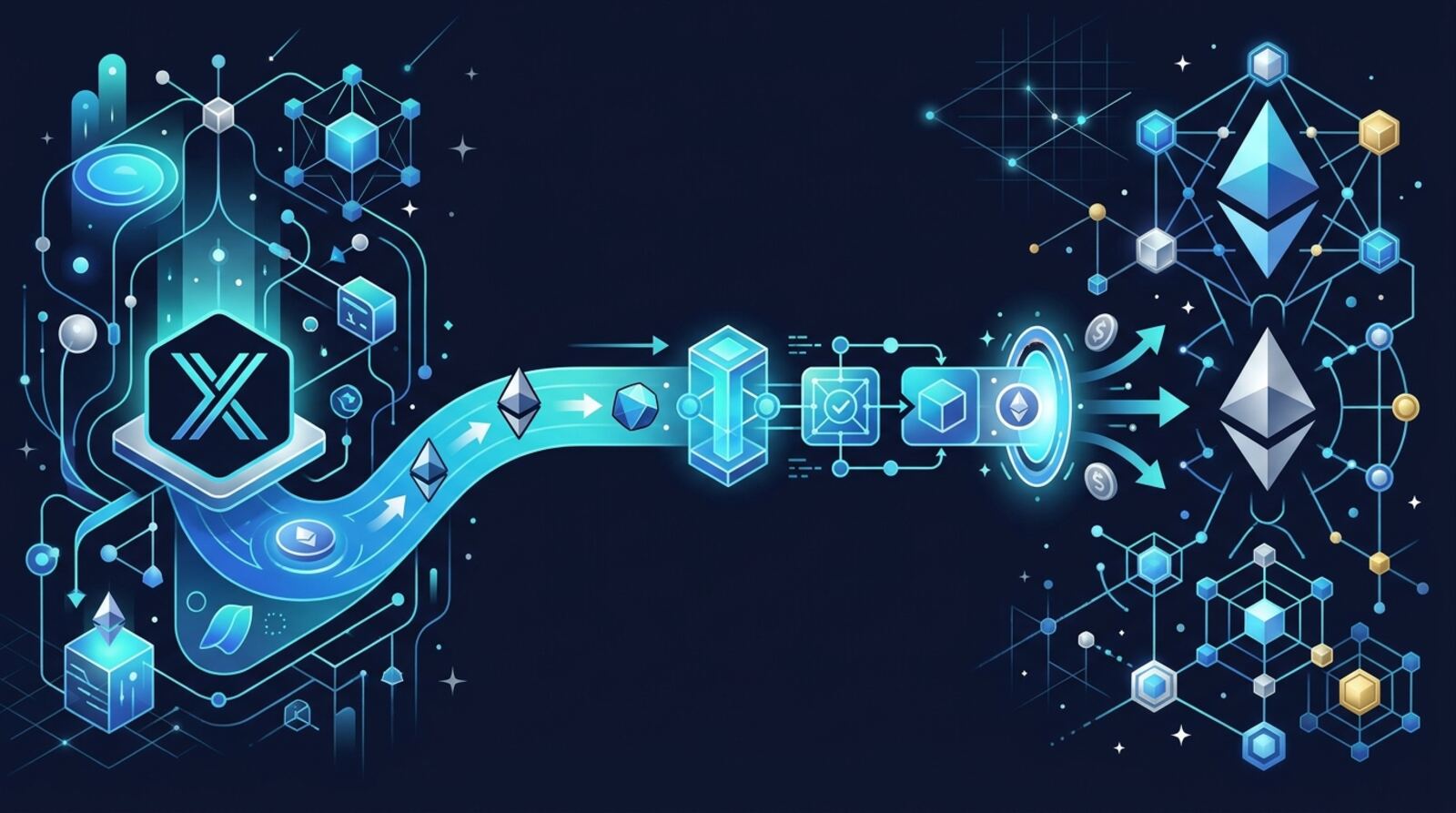
The ETH off-ramp is a feature that lets users of an Immutable X powered app convert their ETH on the Immutable X layer-2 network into a form they can sell or move out. In plain terms, it is a route from on-network ETH to a place where it can be turned into money or moved elsewhere.
A public statement attributed to an Immutable team member said the off-ramp is available to any developer building an Immutable X powered platform. Developers can enable their users to sell L2 ETH from inside their product. The off-ramp is therefore not one central service. It is a capability that individual apps can switch on.
This matters because many people who receive ETH on a layer-2 network want to cash out without first learning how bridging works. The off-ramp is meant to reduce that step, but it does not remove the basic rules of crypto. You still need an account or destination that accepts the asset, and you still face network and platform rules.
The off-ramp is a product feature, not a guarantee that every user in every country can sell. Availability depends on the app, the payment route it offers and your location. Treat the feature as one option among several and check what your specific app supports.
How ETH moves between Ethereum and Immutable X
Immutable X is a layer-2 network built on top of Ethereum. Layer-2 networks process transactions off the main Ethereum chain and then post proofs or data back to it, which lowers fees and speeds up activity. Immutable X was originally built for NFT minting and trading, and it now also supports gaming and other applications.
ETH on a layer-2 is the same asset in economic terms, but it lives on a different ledger. To move it between Ethereum mainnet and the layer-2, a user normally goes through a bridge. Bridges have their own rules for deposits and withdrawals, and withdrawals back to mainnet can take longer than deposits because of the way rollup security works.
The off-ramp adds a different path. Instead of only bridging back to mainnet, a user may be able to sell L2 ETH through a supported route. That can be convenient, but the route still ends at some service, whether a bridge, an exchange or a payment provider. Each of those has its own requirements.
For most readers, the key idea is that the layer-2 balance is not automatically spendable in your bank account. A sale or withdrawal step is always needed, and the details depend on the route that the app or network makes available.
How developers enable the off-ramp
A developer who wants to offer the off-ramp needs to choose a supported route and integrate it into their product. The exact steps depend on the tools available at the time, so the developer should follow the current official documentation. The general sequence below reflects how most of these integrations are structured.
- Confirm that the Immutable X developer tools support the ETH off-ramp for your project.
- Choose the route your users will access, such as a bridge, a centralized exchange deposit or a payment partner.
- Review the terms, supported regions and identity requirements of that route.
- Add the sell option to your interface, with clear labels for network, token and destination.
- Show users the expected fees, timing and any minimum or maximum amounts before they confirm.
- Test the full flow with small amounts, then publish help text that explains each step.
Developers should also plan for support. Users will ask why a transfer is pending, why a balance looks different on two networks, or why a sale was refused. Clear status messages and a support path reduce confusion.
If you run a platform and are unsure whether you can offer the feature, ask the network team or check the current documentation. Do not assume that a feature announced for one region applies everywhere.
How users sell layer-2 ETH step by step
Users who want to sell ETH through an app with the off-ramp should follow the app's own instructions, since the interface will differ. The steps below describe the general pattern that users should expect and check.
- Open the app and confirm you are signed in to the wallet or account that holds your Immutable X ETH.
- Look for a sell, withdraw or off-ramp option in the wallet or settings area.
- Read the supported regions and identity or verification requirements before entering any amount.
- Enter the amount you want to sell and review the rate, fees and estimated timing.
- Confirm the destination, such as a bank account, exchange deposit address or another wallet.
- Complete any identity checks the provider requires, then authorize the transaction.
- Keep the transaction record and watch for the confirmation message.
Before you confirm, check the network name and token symbol. Sending ETH on the wrong network can cause loss, and some bridges or exchanges will not recover funds sent to the wrong address. Start with a small amount to confirm that the whole path works as you expect.
If a step fails, do not repeat the transfer many times. Check the transaction history first. Many issues are pending states rather than failures, and duplicate transfers can complicate recovery.
Routes to sell or move ETH: a comparison
There is more than one way to get from L2 ETH to something usable. The best route depends on what you want at the end: fiat currency, ETH on mainnet, or another token. The table below compares common routes at a high level. Check current fees, limits and availability before choosing.
| Route | What it does | What to check |
|---|---|---|
| In-app off-ramp | Sells L2 ETH through a provider the app has enabled | Supported regions, identity checks, rate and fees |
| Bridge back to Ethereum | Moves ETH from the layer-2 to mainnet | Withdrawal timing, gas costs, bridge rules |
| Centralized exchange | Receives ETH and lets you sell for fiat | Deposit network, KYC, withdrawal limits, fees |
| Cross-chain bridge or swap | Moves value between chains and tokens | Route pricing, slippage, supported assets |
Centralized exchanges such as OKX, Bitvavo and Crypto.com are common destinations for people who want to sell crypto for fiat. Each has its own deposit networks, verification steps and regional availability. Make sure the exchange supports deposits on the same network you are sending from, or the funds may not arrive.
Bridges and cross-chain protocols such as Across can help move value between networks. These tools introduce their own risks and fees, so compare them carefully rather than assuming they are the cheapest or fastest option.
Whatever route you pick, the sale is only as good as the final step. Confirm where the money will land and how long it will take before you start.
Fees, timing and limits to check
Costs and timing can vary, and they change often. Rather than rely on a single number from an article, check the current figures at the point you transact. Look at four things: network fees, provider or exchange fees, the exchange rate spread, and the time to settle.
Network fees on a layer-2 are usually lower than on Ethereum mainnet, but they are not zero. Withdrawals from a rollup to mainnet can involve a waiting period tied to how the network posts and proves transactions. Bridges may add their own delays. Payment providers may take longer for bank transfers than for crypto transfers.
Ask these questions before you confirm a sale:
- What is the total fee in both token and fiat terms?
- What is the exchange rate, and how far does it differ from the market price?
- Is there a minimum or maximum amount?
- How long will the funds take to arrive, and what can delay them?
- What happens if the transfer fails or goes to the wrong address?
Keep in mind that the cheapest route is not always the best one. A low fee can come with a long wait, a poor rate or limited support. Balance cost, speed and the support you can get if something goes wrong.
Security checks and common mistakes
Off-ramps are a common target for scams, so defensive habits matter. The rules below apply to any transfer, not only to Immutable X.
- Only use links and app stores you reach from official sources. Bookmark the official domains you use.
- Never share your seed phrase or private keys with a person, app or support agent. No legitimate provider needs them.
- Be wary of messages that ask you to act urgently, claim your funds are locked, or offer help recovering a failed transfer.
- Verify the destination address character by character before you confirm. Address-poisoning scams rely on look-alike addresses.
- Check the network and token each time. Sending ETH to an address on the wrong network can be irreversible.
- Use a hardware wallet or a well-maintained wallet with clear transaction previews for larger amounts.
- Keep software updated and avoid signing transactions you do not understand.
If you suspect a problem, stop further transfers. Save transaction hashes, screenshots and support messages. Contact the app or provider through its official support channel, and be cautious about any contact that reaches you first.
These steps will not prevent every loss, but they reduce the most common risks. If an offer sounds unusually good, treat that as a warning sign.
Where the off-ramp fits in the Immutable ecosystem
Immutable X is one part of a wider Immutable ecosystem. Immutable has also developed Immutable zkEVM, a newer environment that supports Ethereum-compatible smart contracts and game development. Readers should not assume that every feature on one Immutable product works the same way on another. Confirm which network your assets sit on before you plan a sale.
The sources reviewed for this guide also mention earlier Immutable tools aimed at getting ETH and other assets onto the network, including a centralized exchange deposit option and a faster bridge. Those tools show a broader push to reduce friction for users, but their availability and terms can change, so check the current documentation.
For developers, the relevant question is which Immutable product the app runs on. A game on one network may have different withdrawal options from an NFT marketplace on another. Ask the team building the app which network and which off-ramp route they support.
If you want to learn more about the wider category, the generic term dapps covers decentralized applications in general. Use that term when you are comparing how different apps handle deposits and withdrawals, rather than assuming one design applies everywhere.
Who should use the off-ramp and what to do next
The ETH off-ramp is most useful for people who earn or receive ETH inside Immutable X powered games and apps, including those who buy NFTs there. Gaming users often hold small balances across many apps and may want a simple way to cash out. The off-ramp can help with that, but it is one option among several.
If your goal is to keep using the app, you may not need to sell at all. Some users prefer to leave ETH on the layer-2 for future activity. Others want to move it back to mainnet to hold it in a personal wallet. Decide which outcome you want before you start a transfer.
Here is a simple plan for a first transaction:
- Confirm the app and network you are using.
- Read the current fee and timing information from the official documentation.
- Send a small test amount and wait for it to arrive.
- Repeat the process only after the first transfer completes as expected.
Always remember that crypto values move quickly and can fall as well as rise. If you gamble or use any product that involves wagering, you must be 18 or older where you live, and you should check local laws before using any platform. Do not look for ways around geographic restrictions or identity checks, since doing so can put your funds and account at risk.
Frequently asked questions
Is the ETH off-ramp a separate app I can download?
No. The off-ramp is a feature that a developer can enable inside their own Immutable X powered app. Users access it through that app, so there is no single Immutable-run marketplace to find.
Can I sell ETH from any Immutable X game or app?
Not necessarily. Whether a sale is available depends on the app you use, the route it has enabled, and the regional rules that apply to you. Check the app's own help pages before you rely on it.
Is L2 ETH the same as ETH on Ethereum mainnet?
Usually they are different. Layer-2 ETH sits on Immutable X, while mainnet ETH sits on Ethereum. Moving between them requires a bridge, and the two versions can have different fees and withdrawal timing.
Where should I check current fees and timing?
Start with the developer or app's support documentation, then the network's official documentation for current withdrawal steps. Confirm the destination address, the network and the token before you send anything, and keep a small test amount for your first transfer.
Do I need to think about taxes or local rules?
Yes. Crypto sales can be taxable, and rules on exchanges and fiat payouts vary by country. Check local laws and the tax guidance where you live. If you are gambling-adjacent or using a platform for any wagering, you must be 18 or older where you live and follow local rules.
Mentioned in this guide
dApps in this guide
Dapps is a broad term for decentralized applications; no specific product or service is established.
OKX is a major centralized crypto exchange for spot and derivatives trading, earn products and a Web3 wallet, with its own OKB token.
Bitvavo is an Amsterdam-based, MiCA-authorized crypto exchange offering 400+ assets, euro deposits, staking and leverage trading for European users.
Crypto.com is a centralized crypto exchange and app for buying, trading and spending 400+ coins, with a Visa card, staking and a separate self-custody wallet.
Across is an intent-based cross-chain bridge and swap protocol for moving tokens between Ethereum, rollups and other chains, with an API for apps.
Immutable zkEVM is an EVM-compatible blockchain for web3 games from Immutable, aimed at game studios and players, with an IMX token.
Save, formerly Solend, is a Solana lending and borrowing protocol where users earn interest on deposits or borrow against collateral.
Keep reading
Related guides
Blockchain · How-to
How to Stake IMX on Immutable X in 2026: Step-by-Step Guide
IMX staking on Immutable moved to the Immutable zkEVM chain in 2025, so the steps and rules you may have read about earlier can be out of date. This guide explains how to stake, what to check first, and how to confirm current rewards and timing.
dApp basics · Explainer
Uphold Crypto Exchange Guide: How It Works in 2026
Uphold is a custodial platform for buying and selling crypto, with support for other asset types such as fiat currencies and precious metals. This guide explains how trading, fees, withdrawals and account risks work—and what to check before you use it in 2026.
dApp basics · Best list
Best Apps for Buying Cryptocurrency in 2026
The right app depends on where you live, how you plan to pay and whether you want a simple broker or a crypto-focused exchange. Compare four options, understand their custody and costs, and follow a safer first-purchase checklist.
DeFi · Best list
Best Crypto Staking Platforms in 2026
The best crypto staking platform depends on what you want to stake, whether you need to keep your tokens liquid, and how much control you want over custody. Compare leading liquid-staking protocols and exchange apps by their trade-offs, not by headline reward rates.
Blockchain · Explainer
Ethereum 2.0 December 1 Launch: What Happened and What It Means
Ethereum 2.0 was the name for the plan to move Ethereum from proof of work to proof of stake, and its first live piece, the Beacon Chain, launched on December 1, 2020. This guide explains what that launch was, how it led to The Merge in 2022, and how to check the network's current status.
Blockchain · Explainer
EON Horizen EVM Sidechain and Gobi Testnet: A 2026 Guide
EON was Horizen's EVM-compatible sidechain, and its Gobi testnet let developers try it before launch. A 2025 governance proposal moved Horizen toward Base, so this guide explains what EON was, what changed, and how to check the current status and any bug bounty yourself.
Blockchain · Explainer
Ethereum 2.0 Explained: Five Things You Need to Know in 2026
Ethereum 2.0 was the name for a multi-year plan to move Ethereum from proof of work to proof of stake. Most of that plan is now live, so the name is mostly historical, but the parts that affect users are still worth understanding.
Blockchain · Explainer
Enjin's Efinity on Polkadot: Gaming NFTs Explained
Efinity is the blockchain Enjin built for NFTs and blockchain games, connected to the Polkadot ecosystem. This guide explains what it is, how its history has changed, and how to check its current status before you rely on it.