NFT · Explainer
Did Jason Derulo Buy a CryptoPunk or Is He Punking Us?www.dek
Jason Derulo's name has been linked online to CryptoPunks, but a post or screenshot does not prove ownership. This guide shows how to check the public Ethereum record yourself and how to judge whether a celebrity NFT claim is real, a meme or a prank.
By the DappsAtlas editorial team · Updated
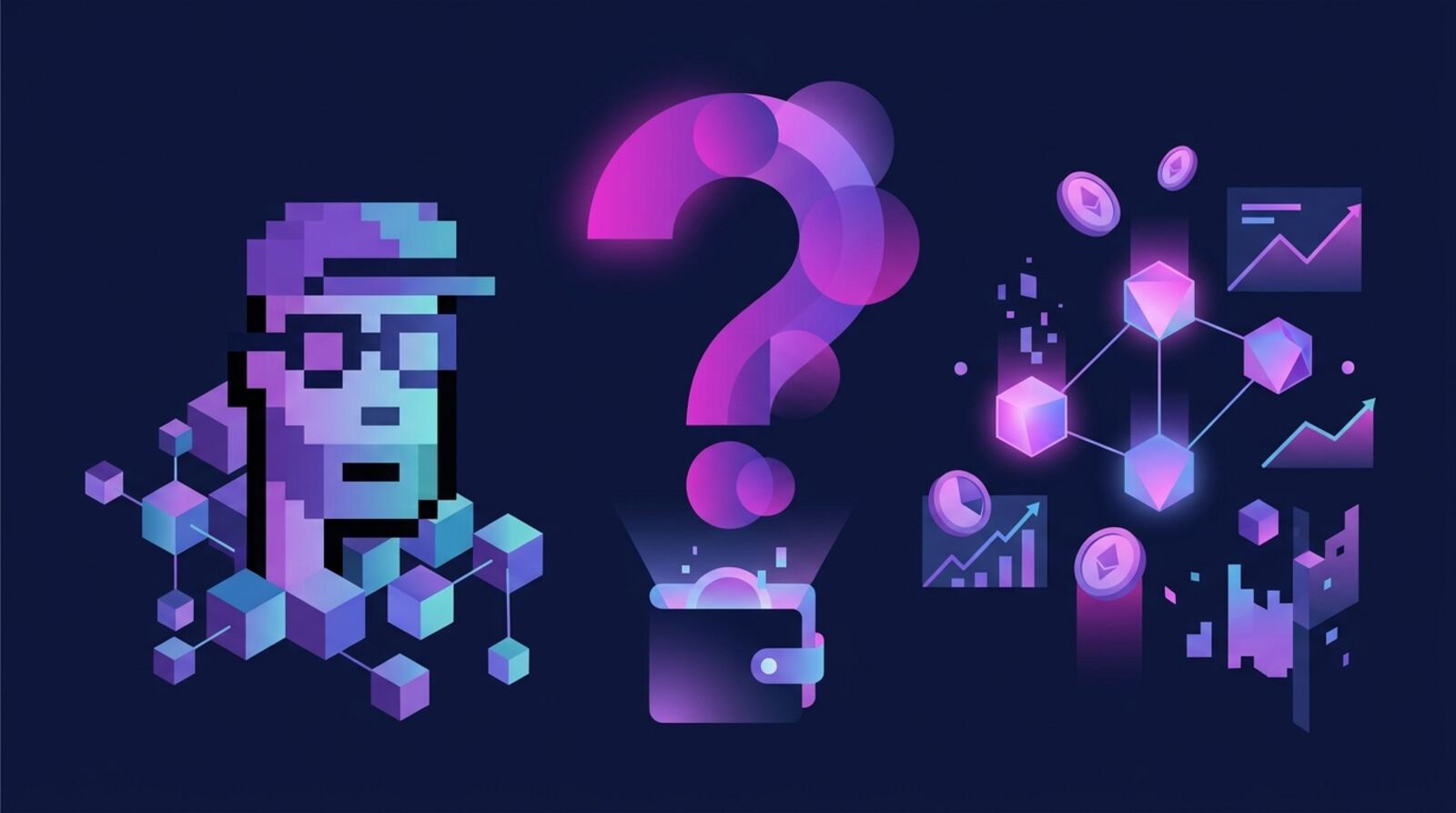
What is the Jason Derulo CryptoPunk claim?
The question usually starts with a post, a caption or a headline that says a celebrity owns a CryptoPunk, one of the pixel-art NFT collections from Larva Labs. Jason Derulo, the singer and dancer, has been part of online crypto and NFT conversations, and his name has come up in posts about punks. The phrase 'is he punking us' adds a second question: some readers suspect the whole thing is a publicity stunt, a prank or a meme.
This guide does not rely on live public reporting, so it does not state a current owner status for any punk. Instead, it gives you a method to check the answer yourself at any time. The same method works for any celebrity NFT claim, which makes it more useful than a single yes or no that could go out of date.
The short version is this: ownership of a CryptoPunk is recorded on a public blockchain. A statement by a person, a screenshot or a profile picture does not prove that a wallet holds the NFT. The steps below show how to move from a claim to a record you can verify.
What a CryptoPunk is and where it lives
CryptoPunks are a collection of 10,000 unique pixel-art characters created by Larva Labs in 2017. They live on the Ethereum blockchain, and each one has a number that identifies it. Early on, the collection was distributed free to people who claimed them with a wallet, which is one reason the set became widely discussed.
Because the collection is on Ethereum, ownership is held by wallet addresses. Some punks sit in personal wallets. Others may be held in exchange wallets or in marketplace contracts during a sale. Some punks have also been wrapped into a standard token format so that more marketplaces can list them. A wrapped version and the original can be confused, so check which asset you are looking at.
You do not need special software to see the record. Public block explorers show addresses, balances and transactions for Ethereum. Marketplaces and dedicated tools also show a punk's image, its trait details and its trading history in a more readable format.
The key point is that the image of a punk is not the same as the token. Two people can post the same picture, but only the wallet that holds the token is the owner.
How to check CryptoPunk ownership on-chain, step by step
Use this method to check any punk claim. It takes a few minutes and does not require you to buy anything.
- Get the exact claim. Write down the name, the punk's image number or token ID, and any wallet address shared with the claim.
- Find the token ID. If the post shows only a picture, use the image number to identify the punk on a marketplace or punk tool that lists the collection.
- Look up the current owner. Open the punk's item page on a marketplace or a block explorer that supports Ethereum. Note the owner address shown at the moment you check.
- Compare addresses. Match the owner address with the wallet named in the claim. Copy the address carefully, because small differences matter.
- Check the history. Look at the transfer and sale history to see when the punk last moved and whom it moved between.
- Look for a public name. Some addresses have readable names linked to them. A name can help, but it can also be set up by anyone, so do not rely on it alone.
- Save a record. Write down the date, time and owner address you saw, since ownership can change after you check.
If the owner address does not match the claim, the claim may be wrong, out of date or about a different punk. If it matches, you have verified the wallet, though you still cannot say who controls the wallet.
Reading the result: addresses, names and transfers
Once you have an owner address, you need to read it correctly. Not every address means what it appears to mean.
- A personal wallet suggests an individual holder, but it does not reveal the person's identity.
- An exchange or custodial wallet may hold assets for many customers, so the address does not identify one owner.
- A marketplace contract may hold a punk while it is listed for sale, which is not the same as a platform owning it.
- A readable name linked to an address can be helpful, but names are set by the wallet controller and can be changed.
The transfer history matters as much as the current owner. A punk that moved to the claimed wallet recently is different from one that has been there for years. A punk that has moved through several addresses in a short time may have been listed, traded or moved between accounts.
Be careful with price data. Last sale prices and floor prices change often and depend on the marketplace, so do not treat one number as a fair value. The safest conclusion is about who held the token at a specific time, not what it is worth.
Telling a real claim from a prank, meme or fan art
After you check the chain, compare the claim with the evidence. The table below shows common signals. None of them is conclusive alone, but together they help you decide how much weight to give a claim.
| Signal | Stronger evidence | Weaker evidence |
|---|---|---|
| Ownership | Owner address on-chain matches the claimed wallet | Only a screenshot or profile picture |
| Wallet link | Wallet posted from the account in a way that can be checked | Address shared by an unknown account |
| Account | Verified channel with a history of consistent posts | New account or account with few posts |
| Context | Clear statement that explains the NFT and its wallet | Joke, ad, fan art or unclear wording |
| Timing | Owner address seen before and after the claim date | Claim made with no history to compare |
A prank or meme usually has a sign of its own: the joke is in the wording, the image is clearly edited, or the post is designed to get a reaction rather than to explain facts. Fan art can look like a real claim, so check whether the image and the token ID match.
If you cannot tie a claim to a wallet that holds the token, treat it as unverified. That is a fair answer and often the most accurate one.
Where to look up CryptoPunks and their trade history
You can view CryptoPunks and their trade history on several NFT tools. Two dApps in the directory are relevant here:
- OpenSea is a general peer-to-peer NFT marketplace where you can browse collections, view item pages and see listings and past sales. It is a practical place to look up a punk's current listing and history.
- Punks Terminal is a dedicated CryptoPunks trading terminal from Lightyear. It lets users place trait-filtered bids from a personal Stash contract on Ethereum, so it is aimed at people who already understand how punk trading works.
Other marketplaces can list NFTs from several chains, but for CryptoPunks, check that the platform supports the Ethereum punks you are researching. Features, fees and supported collections can change, so read each platform's own documentation before you rely on it.
When you look at a marketplace, separate three things: the image, the owner address and the listing price. The image tells you which punk it is. The owner address tells you who holds it. The listing price only tells you what the seller is asking at that moment.
For research, use a marketplace as a viewer, not as a verdict. Confirm the owner address on a block explorer if the claim matters to you.
Risks to check before you buy a CryptoPunk or similar NFT
If a celebrity claim makes you want to buy a punk or another NFT, slow down. Scams often use attention around famous names.
Common warning signs include:
- Direct messages from unknown accounts offering a free punk, a giveaway or a 'verification' service.
- Fake sites that copy a marketplace's look and ask you to connect a wallet.
- Requests for your seed phrase or private key. No legitimate service needs these.
- Transactions that ask you to approve a contract or sign a message you do not understand.
- Pressure to act quickly before a 'limited' offer ends.
Defensive habits help:
- Type or bookmark official addresses yourself instead of clicking links in posts or messages.
- Check the contract or token ID against an independent source before you sign anything.
- Review token approvals in your wallet and revoke any you do not recognise.
- Keep your seed phrase offline and never type it into a website.
- Consider a hardware wallet for higher-value holdings.
- Start with a small amount if you are new, and confirm every transaction screen before you approve it.
NFTs can lose most or all of their market value, and resale liquidity is not guaranteed. A celebrity link does not change that risk. Only spend what you can afford to lose, and check the rules that apply where you live before you buy, sell or trade digital assets.
Summary: how to answer the question yourself
Here is a short plan you can follow to answer 'did Jason Derulo buy a punk' for yourself:
- Write down the exact claim and any wallet address or token ID it includes.
- Look up the token on a block explorer or a marketplace that shows item history.
- Compare the current owner address with the claimed wallet.
- Check the transfer history to see when the token last moved.
- Note whether any statement comes from a verified channel and whether it explains the claim.
- Record the date you checked, because ownership can change.
If the owner address matches the claimed wallet, you have verified the record on-chain. You still cannot know who controls the wallet unless the controller says so through a credible channel. If the address does not match, or you cannot find a link between the claim and a wallet, the claim is unverified.
For a bigger picture on punks, Ethereum and NFT ownership, read the marketplace and collection documentation and general guides on blockchain basics. Those sources change more slowly than any single headline, and they will still be useful after the next celebrity post.
An honest answer can be 'I cannot verify this from what I can see.' That is more useful than either a rumour or a dismissal.
Frequently asked questions
Does Jason Derulo own a CryptoPunk right now?
Not from this guide alone. Live sources were not available when this page was written, so no current owner status is stated. Check the CryptoPunk's token ID on an Ethereum block explorer or a marketplace that shows item history, then confirm that the wallet linked to the claim is the one holding it.
If an account is verified, does that prove it owns a punk?
A verified badge confirms that an account is authentic on that platform. It does not show which wallet holds an NFT. Ownership is shown by the wallet address that holds the token on the blockchain, so compare the address in the post with the current owner shown on-chain.
Can I see who owns a CryptoPunk?
Most CryptoPunks are held in Ethereum wallets, so you can see the current owner of a given punk on a public block explorer or marketplace. Owners can be individuals, collectors, custodial exchange wallets or marketplace contracts, so read the address carefully before drawing a conclusion.
What should I do if I see a celebrity claim and want to buy the same NFT?
You can check the ownership record, its transfer history and any public statements on verified channels. Be cautious of anyone who offers to send you a punk, asks for your seed phrase or pushes you to sign an unknown transaction. Those are common signs of a scam, not a verification.
Is buying a CryptoPunk a safe investment?
Check the local laws where you live before you buy or trade any NFT, because rules on digital assets vary by country and can change. NFT prices can fall sharply, so only spend what you can afford to lose and never treat a celebrity link as a reason to buy.
Mentioned in this guide
dApps in this guide
Punks Terminal is a CryptoPunks trading terminal from Lightyear for placing trait-filtered bids from a personal Stash contract on Ethereum.
OpenSea is a peer-to-peer NFT marketplace for buying, selling and minting digital collectibles, aimed at collectors, creators and developers.
Ethereum PFP NFT collection of up to 20,000 Mutant Apes from Yuga Labs, spun off from Bored Ape Yacht Club, for collectors and community members.
Hashmasks is a 16,384-piece NFT portrait collection on Ethereum, aimed at collectors who trade individual tokens.
Redacted Remilio Babies is a 10,000-piece Ethereum PFP NFT collection by Remilia, built on the Milady Maker style, for collectors.
OKX NFT Marketplace is a multi-chain NFT trading platform in OKX Wallet that aggregates listings and supports minting, for collectors and OKX users.
Common is a non-custodial ZK privacy dapp on Arbitrum and Aleph Zero EVM that lets users shield funds and withdraw to a new, unlinkable wallet.
Match-Trader is a B2B trading platform and back-end suite for forex brokers and prop trading firms, with built-in TradingView charts and CRM modules.
Save, formerly Solend, is a Solana lending and borrowing protocol where users earn interest on deposits or borrow against collateral.
Keep reading
Related guides
NFT · Explainer
Blue-Chip NFT Price Drops and the Goblin Town Surge Explained
Headlines that pair a drop in blue-chip NFT prices with a Goblin Town surge usually compress several moving parts into one number. This guide explains what the claim can and cannot show, why blue-chip floors fell in past periods, and how to check any percentage yourself.
NFT · Explainer
Celebrity NFT Endorsements: Moonbirds, Mutant Apes and Lessons
Celebrity NFT posts from 2022 are still worth understanding, because they show how endorsements, ownership claims and legal risk can get tangled. This guide explains what the public record confirms about Jimmy Fallon and Neymar, how Moonbirds and Mutant Ape Yacht Club work, and how to verify a celebrity-linked NFT before you buy.
NFT · Explainer
CryptoPunks Burned: What Happened and What to Know in 2026
A 40000 CryptoPunk does not exist, so a headline about buying and burning one needs checking. This guide explains what CryptoPunks are, what burning an NFT actually does on Ethereum, and how to verify any burn yourself.
NFT · Explainer
CryptoPunks v1 Legal Dispute Explained for Holders
CryptoPunks v1 is the original set of early Ethereum punks, and disputes over their rights and ownership have drawn attention from holders. This guide explains the stable background, the kinds of legal questions involved, and where to check the current status.
NFT · Explainer
Did TIME Magazine Cause the NFT Mania? What the Record Shows
A single magazine cannot create a market, but TIME's NFT covers and later wallet-linked collectibles were part of the 2021 wave of mainstream attention. This guide separates what TIME did from what drove the boom and bust.
NFT · Review
DeGods and y00ts Bridge Announcements: What Holders Need to Know
DeGods and y00ts are two large Solana NFT collections whose holders have followed bridge and cross-chain announcements closely. This guide explains what a bridge does, what those announcements have described, and how to check the current status yourself before moving any assets.
NFT · Explainer
Digital Trading Cards: A Nostalgic Collector's Guide for 2026
Digital trading cards bring back the feeling of sorting, swapping and opening packs as a kid, but they also carry real risks around ownership, pricing and platform rules. This guide explains the main formats and how to approach them with a clear head.
NFT · Review
DeGods Explained: How the NFT Project Rose and Where It Stands
DeGods began as a 10,000-piece Solana PFP set and became one of the most discussed NFT brands, with chain moves, a token, a team shake-up and a deliberate art downgrade along the way. This guide explains what happened, why it mattered and how to judge it now.