Security and scams · Explainer
DecentraWorld Rug Pull: How BNB Chain Token Drains Work
DecentraWorld is the kind of BNB Chain case that shows how a token project can take over a million dollars and disappear. This guide explains how rug pulls work, how to check a token before buying, and what to do if you're already affected.
By the DappsAtlas editorial team · Updated
What happened with DecentraWorld, and what is confirmed?
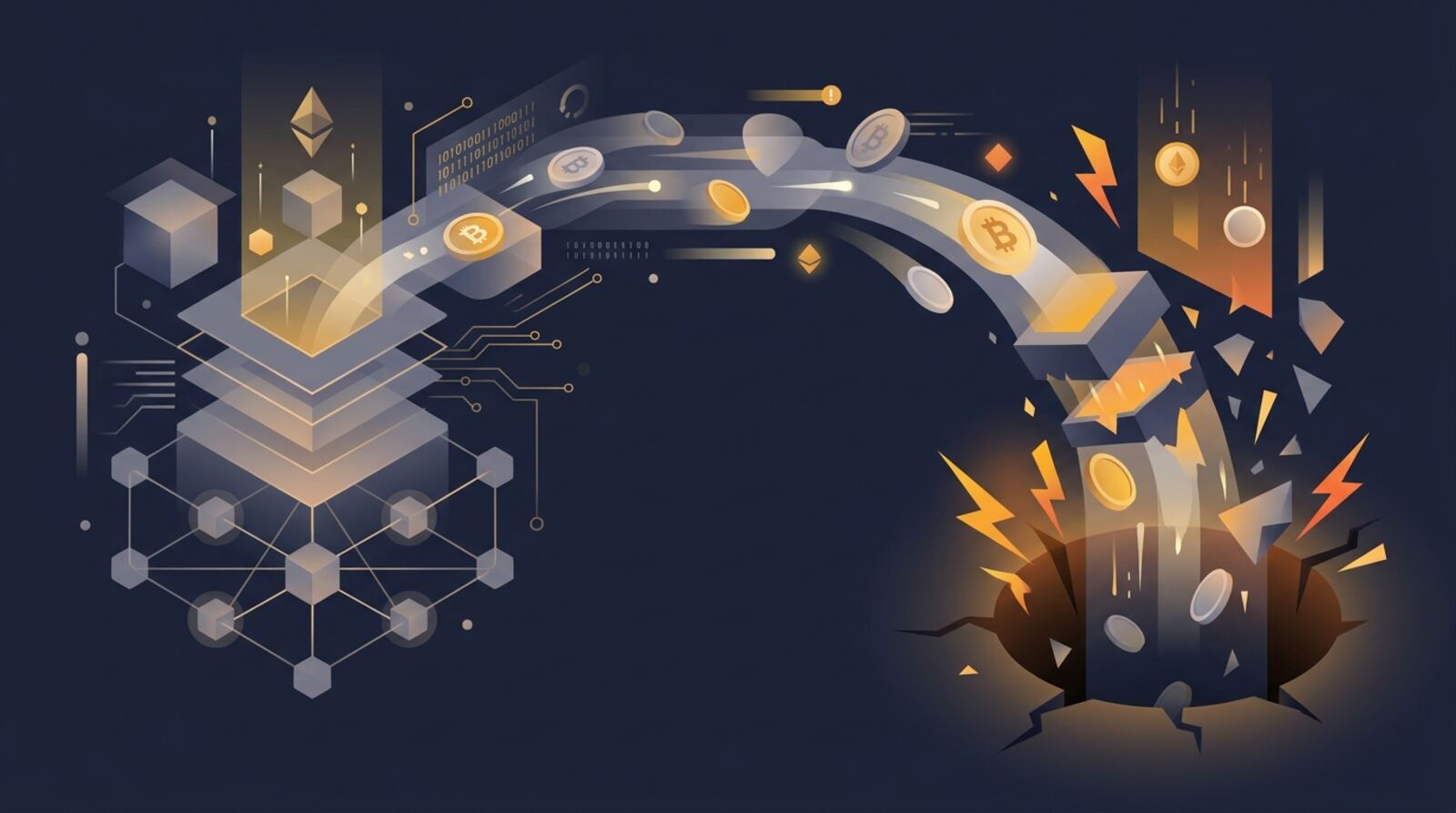
Reports described DecentraWorld as a token project on BNB Smart Chain whose developers reportedly removed funds and left holders with worthless tokens, with losses described as over $1 million in BNB. Public reporting available for this guide do not include primary coverage of DecentraWorld, so treat any specific figure, wallet address or timeline as unconfirmed until you can match it to on-chain data and to statements from reputable reporters or official law enforcement sources.
The pattern is what matters for readers. A project launches a token, attracts buyers through a website, social accounts and promotion, and builds a trading pool. At some point the people who control the contract or the liquidity remove the funds that buyers put in, and the token price collapses to near zero. Holders are left with tokens they cannot sell at a meaningful price.
This is the evergreen version of the story: a single event with a name attached, but a common mechanism that appears again and again on BNB Chain, Ethereum, Solana and other networks. The useful question is not only what happened to DecentraWorld, but how to recognise the same setup before money is committed.
What is a rug pull in crypto?
A rug pull is a scam in which the developers of a crypto project take investor funds and leave. The name comes from the image of someone pulling a rug out from under people standing on it. Binance has described rug pulls as projects that disappear with money, and early BNB Chain examples included a project that vanished with about $31 million in March 2021.
Rug pulls are not one technique. Common forms include:
- Liquidity pulls, where the team withdraws the paired asset from a trading pool, leaving the token with almost no buyers.
- Minting exploits, where the contract lets the owner create large amounts of new tokens and sell them into the pool.
- Honeypots, where the contract blocks most holders from selling while the developers can still sell.
- Exit scams, where a project raises money through presales or staking and then stops operating.
Some projects combine these. What they share is an information gap: buyers see a price chart and a promise, while the people who control the contract know how they can extract value.
How do rug pulls usually work on BNB Smart Chain?
On BNB Smart Chain, token launches are cheap and fast to deploy, so scammers can create many tokens quickly. A typical sequence looks like this:
- The team deploys a token contract, often copied from an existing template.
- They add liquidity to a decentralised exchange pool, such as one on PancakeSwap, pairing the token with BNB or a stablecoin.
- They promote the token through social accounts, paid influencers, Telegram groups or a polished website.
- Buyers push the price up, and early holders may sell into the rising price.
- The team removes the liquidity, or uses owner-only functions to block sales or mint new supply, and the pool empties.
- Remaining holders are left with a token that cannot be sold at a useful price.
Because the transactions are public, the drain can be seen on the block explorer after it happens. The difficulty is that by then the funds have usually been moved. The protection has to come before buying.
What warning signs should you check before buying a BNB Chain token?
Most rug pulls leave visible signals before the drain. None of these guarantees a scam, and some legitimate new tokens have several of them, but a combination should stop you from buying:
- The team is anonymous, with no verifiable history, and the website was created very recently.
- Promotion is heavy and urgent, with claims of guaranteed returns or 'early access' pressure.
- A large share of the supply sits in a few wallets, often the deployer's.
- Liquidity is small relative to the claimed market value, or is not locked or is locked only briefly.
- The contract owner keeps powers to mint tokens, pause trading, change fees or blacklist addresses.
- Selling is restricted in ways a normal buy does not show, which you can test only with a very small amount.
- The project asks you to connect your wallet to unfamiliar sites or to approve large spending limits.
- Recent activity is mostly buys followed by sudden large sells from the same few addresses.
Treat a project with several of these signals as off limits. If you are curious, avoid it entirely rather than trying to time an exit.
How can you check a token's contract and liquidity yourself?
You do not need specialist tools to run basic checks. Use the BNB Smart Chain block explorer to look at the token page, the holders list and the contract's source code. Check whether the source code is verified, which means the published code matches what is deployed. Unverified contracts deserve extra caution.
Next, look at the liquidity pool on the exchange where the token trades. Identify who holds the liquidity tokens and whether they are locked in a recognised locker contract, and for how long. If the liquidity provider is an ordinary wallet controlled by the team, the team can remove it.
Then review the top holders. If a few wallets control most of the supply, a single sale can crash the price. Check whether those wallets are linked to the deployer and whether they received tokens at launch.
Finally, review the contract for owner-only functions. Look for minting, blacklisting, pausing and fee changes. Ask whether any of them can be used against holders. If you cannot understand the contract, that is a reason not to buy, not a reason to assume it is safe.
What should you do if you have already lost money to a rug pull?
If you have already lost funds, the steps below can help you document what happened and avoid further losses. They do not guarantee recovery.
- Save evidence: copy wallet addresses, transaction hashes, token contract addresses, screenshots of the website and social posts, and any messages from the project.
- Stop interacting with the token and the project's website. Do not connect your wallet to anything new.
- Revoke token spending approvals you granted to the project's contract, using a reputable approval-management tool. This limits future drains from the same contract.
- Contact the exchange or wallet provider where you bought or held the tokens. If the funds passed through a centralised exchange, ask about a freeze request.
- Report the incident to local police or a cybercrime unit, and to any consumer protection body in your country.
- Be cautious of anyone who offers recovery services in exchange for upfront payment.
The sooner you act, the better your chance of a freeze on funds that reach a centralised venue. Record every step you take and the time you took it.
Can stolen crypto be recovered, and what about follow-up scams?
Recovery is rarely straightforward. Drained funds are often swapped through decentralised exchanges, moved across chains and split among many wallets. Once they reach privacy tools or unregulated venues, tracing becomes difficult. Some past incidents have involved partial recoveries, usually when stablecoin issuers or exchanges froze funds quickly, and some projects later set up refund mechanisms. Those outcomes depend on public sources of each case, and no one should assume them.
Victims are also targeted again. Scammers may offer to 'recover' funds, sell access to a fake investigation or pose as support staff from an exchange or wallet. Legitimate teams do not ask for your seed phrase, private keys or payment to release funds. Any request for these should be treated as a new scam.
In practice, the realistic goals after a drain are to limit further exposure, keep evidence for authorities and exchanges, and avoid paying anyone who promises a return. Expect slow progress and do not make decisions under pressure.
How can you reduce your risk on BNB Chain going forward?
Prevention comes down to limiting what you can lose and how many permissions you give.
- Use a dedicated wallet with small balances for new or unfamiliar tokens, and keep long-term holdings in a separate wallet.
- Buy only tokens you have checked on-chain, and never because of urgency in a chat group.
- Review token approvals regularly and revoke any you no longer need. Unlimited approvals are a common path to losses.
- Use a hardware wallet for significant holdings, and never share your seed phrase or private keys with anyone.
- Bookmark the official sites of the exchanges, DEXes and wallets you use, rather than following links from messages.
- Do not add funds to projects that promise guaranteed returns, staking bonuses for early deposits or referral payouts.
None of these steps removes all risk. They reduce the damage a single bad token can do and make it harder for a scam to reach your main funds.
How can data tools help, and what are their limits?
Data tools can help you spot trouble, but they should not replace your own judgement.
Decentralised exchanges such as PancakeSwap show a token's pool, price and trading history for BNB Chain. Use them to see liquidity depth and recent activity, but remember that a token listed there is not vetted by the exchange, and listings are permissionless.
Aggregators of total value locked and protocol data, such as DefiLlama, are useful for judging established protocols. They do not verify individual meme tokens, so a protocol listing is not a safety check for a new token.
Specialist trading intelligence tools, such as Sharpe, include rug checks and holder analysis. Use these as a starting point for research. Compare results across tools and check the on-chain data yourself where possible.
When figures are volatile, such as token prices or TVL, check the current value on the source site at the time you read it, rather than relying on a number in an article, including this one.
What have past BNB Chain rug pulls taught us?
Several past BNB Chain and multi-chain cases show the same pattern, which is why the lessons apply beyond one project.
In November 2024, reporting described the Plant Crossing team as having vanished with more than $1 million worth of BNB, leaving users with losses. In May 2023, Swaprum was reported to have lost about $3 million in a rug pull. In 2023, Binance reported that a smart contract had been launched to refund victims of the Xirtam rug pull using funds that had been frozen, which showed that partial recovery is possible when funds are caught early. Binance has also described an early BNB Chain scam that disappeared with about $31 million in March 2021.
Industry reports in 2025 described rug pull losses as rising sharply compared with earlier years. Figures from such reports vary by methodology, so check the report's own definitions before quoting totals.
For readers, the common thread is that losses are concentrated in new tokens with weak controls and strong marketing. The cases differ in size and outcome, but the warning signs and the steps after a drain are largely the same.
Frequently asked questions
Can money lost in a BNB Chain rug pull be recovered?
Usually not in a way that returns most of the money. Funds drained through a liquidity removal are typically moved through several wallets and swapped, and once they leave the project's control they are hard to trace or freeze. Some past cases have seen partial recoveries when an exchange or stablecoin issuer froze funds quickly, but that depends on timing and cooperation. Report quickly to the exchange you used and to the police, and keep every transaction hash.
What should I do if someone offers to recover my lost tokens?
Be wary of anyone who contacts you offering to recover funds for a fee, especially in advance. Recovery scams are common after a well-publicised drain. Legitimate agencies do not ask for crypto as a deposit, do not use direct messages from unknown accounts, and do not promise results. Verify any contact through official channels you find yourself.
Can rug check tools prevent rug pulls completely?
Not reliably. Rug checks and holder analysis tools can flag warning signs such as concentrated ownership, locked or missing liquidity and risky contract functions, but no tool can guarantee a token is safe. A clean result does not rule out a later drain, and a flagged result is a reason to stay away. Use tools as one input alongside your own checks and only risk money you can afford to lose.
How can I see what happened in a specific token drain on BNB Chain?
Start with the transaction history on the BNB Smart Chain block explorer, including the token contract, liquidity pool and the wallets that received funds. Look for the date and amount of liquidity removal, any unusual ownership or minting activity, and whether the same team reappears with new tokens. Compare the timeline with any announcements the project made.
Should I file a report if I lost money to a rug pull?
Yes, in many countries. Reporting a drain to local police or a cybercrime unit, and to the exchange or wallet where you bought the token, creates a record that can help with any investigation or freeze request. Check your local authority's guidance for where to file and what evidence they want.
Mentioned in this guide
dApps in this guide
PancakeSwap is a BNB Smart Chain decentralized exchange with swaps, farming, staking and CAKE governance for self-custody DeFi users.
DefiLlama is a data site that aggregates total value locked, trading volume and fees for DeFi protocols across many chains.
Sharpe is a free crypto trading intelligence terminal with derivatives data from 35 venues, rug checks, narrative tracking and an API and MCP server for agents.
Uniswap V3 is a non-custodial decentralized exchange protocol for token swaps and concentrated liquidity provision across 40+ chains.
Common is a non-custodial ZK privacy dapp on Arbitrum and Aleph Zero EVM that lets users shield funds and withdraw to a new, unlinkable wallet.
Save, formerly Solend, is a Solana lending and borrowing protocol where users earn interest on deposits or borrow against collateral.
Keep reading
Related guides
Security and scams · Explainer
Rug Pulls: How to Spot the Usual Suspects in 2026
A rug pull happens when the people behind a token drain its trading liquidity or sell their own holdings, leaving buyers with tokens that cannot be sold for anything meaningful. Most of the warning signs are visible on-chain before the exit, so a short checklist can catch many of them.
Security and scams · Explainer
Not All Rug Pulls Are Equal: Types, Red Flags and Checks for 2026
Rug pulls are not one scam but several, and each leaves different warning signs. This guide sorts the main types, shows what to check for each one, and explains what to do if you have already been hit.
Security and scams · Explainer
Blockchain Domains as an Emerging Scam Threat: A 2026 Guide
Microsoft has described blockchain domain names as an emerging threat because attackers can use them to make scam and malware pages look like trusted Web3 destinations. This guide explains how these names work, how they are abused, and what wallet users and IT teams can do now.
Security and scams · Explainer
LavaCake Rugpull: How to Spot and Avoid DeFi Exit Scams in 2026
LavaCake became a reference point for a familiar DeFi pattern: a project attracts deposits, then its operators drain or lock the funds. This guide explains how rugpulls work and the practical checks that can reduce your risk before you deposit.
Security and scams · Explainer
Flash Loan Attacks in DeFi: What Happened and How to Protect Funds
A flash loan attack uses an uncollateralized loan that is borrowed and repaid in one transaction to move prices or exploit a contract bug. This guide explains how these attacks work, what the loss data shows through 2024, and what users and protocols can do about them.
Security and scams · Explainer
What Is a Crypto Private Key? How It Works and How to Protect It
A crypto private key is the secret that lets a wallet authorize transactions. Learn how it relates to public addresses and recovery phrases, what can happen if it is lost or exposed, and how to protect it.
Security and scams · Explainer
DeFi Kingdoms Exploit and JEWEL Price Drop: What to Know in 2026
Public reporting we could check confirm how DeFi Kingdoms and its JEWEL token are built, but they do not document a specific exploit, its date, or JEWEL's current price, so this guide explains how to verify such an event, what a post-exploit price drop usually means, and what holders can do now.
Security and scams · How-to
How to Check a Crypto Wallet Address Before Sending
A wallet address can look valid and still send funds to the wrong person or network. Use this checklist to confirm the address, blockchain, asset and any required memo before you approve a transfer.