NFT · Explainer
Wrapped CryptoPunks V1: What They Are and How Wrapping Works
CryptoPunks V1 are the first-generation tokens from the original 2017 contract, and wrapping makes them tradable as ERC-721 tokens. This guide explains what a wrapped V1 Punk is, how wrapping works, how it differs from V2, and what to check before you buy or wrap one.
By the DappsAtlas editorial team · Updated
What are CryptoPunks, and why do they need wrapping?
CryptoPunks are a set of 10,000 24x24 pixel characters created by Larva Labs and released in June 2017. They were claimed for free by anyone with an Ethereum wallet, and they are widely seen as one of the earliest NFT projects. They also helped inspire the ERC-721 standard that most NFTs now use.
That timing matters. CryptoPunks launched before ERC-721 existed as a finished standard, so the original contract uses its own custom design. It records which address owns each Punk and has a built-in marketplace for offers, bids and sales. It does not behave like a normal ERC-721 collection.
The practical result is that a Punk cannot be listed on a general NFT marketplace the way an ERC-721 token can. Standard marketplaces expect functions such as transferFrom and approve, and the Punks contract does not provide them in that form.
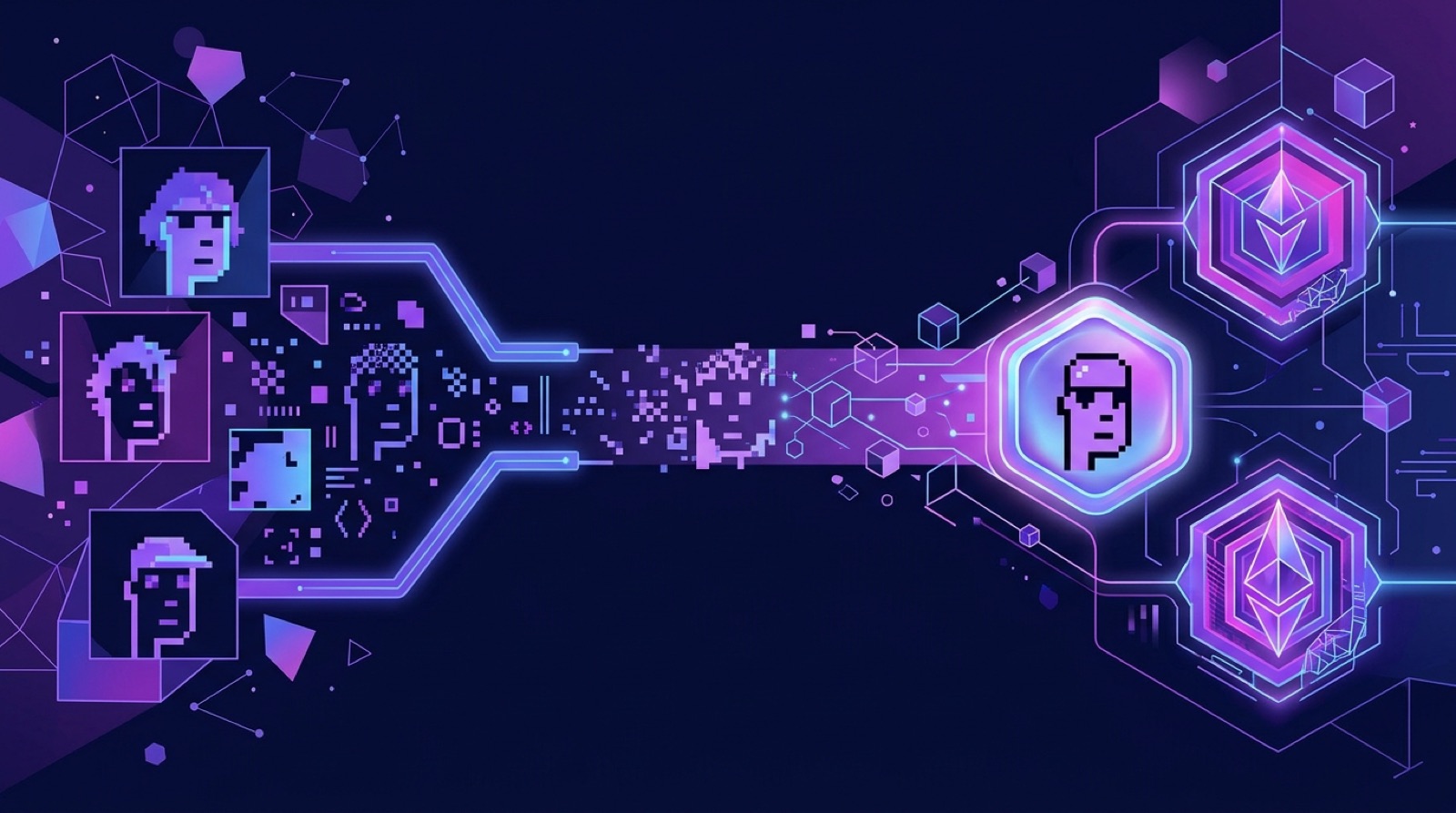
This is why wrapping exists. A wrapper is a separate contract that holds the Punk and issues a standard token in its place. The token can then move through any tool that understands ERC-721.
Key points
- There are 10,000 Punks in the main collection.
- The original contract predates the ERC-721 standard.
- Wrapping is a workaround for compatibility, not a change to the artwork or its ownership history.
- The word "wrapped" describes a token that represents another asset held in a contract.
What is the difference between CryptoPunks V1 and V2?
After the June 2017 launch, a flaw was found in the trading functions of the first contract. Larva Labs deployed a second contract with the issue fixed. That second contract is generally called V2, and it is the contract the market treats as the main CryptoPunks collection.
The first contract is called V1. Punks claimed or traded there are still recorded on-chain, because blockchain records are permanent. They did not disappear when V2 appeared. They stayed on the old contract, with ownership recorded there.
Because of this split, you can have two Punks that look identical in artwork but exist on different contracts. Collectors and marketplaces usually treat them as separate collections. Larva Labs' own published account is the best source for how it describes the V1 and V2 relationship, and you should read it before drawing conclusions about which contract matters for your purposes.
What this means in practice
- A V1 Punk is not a copy or a fake. It is an original-contract record.
- It is not listed under the same collection as V2 on most marketplaces.
- Price comparisons between V1 and V2 can mislead, because the market values them as different sets.
- Anyone claiming a V1 Punk is identical in standing to a V2 Punk should be able to point to a source.
The unusual history is part of why V1 Punks attract interest from people who care about early Ethereum collectibles.
What does wrapping V1 Punks achieve?
V1 Punks sit on a contract that has its own trading functions and is not ERC-721 compatible. That limits where they can be seen and traded. Wallets may not display them well, general marketplaces cannot list them, and tools built for standard NFTs cannot read them.
Wrapping addresses that gap. A wrapped V1 Punk is an ERC-721 token that represents a V1 Punk held inside a wrapper contract. It lets the Punk appear in wallets, be listed on marketplaces that support the wrapper's collection, and be used in contracts that expect the standard.
The wrapped form was described as a way to bring V1 Punks back into active circulation, which is the sense of "resurrected" in the topic. The artwork itself is unchanged. What changes is the interface used to hold and move it.
Benefits people usually cite
- Display in standard NFT wallets.
- Listing on general marketplaces that index the wrapper.
- Compatibility with escrow, lending and vault contracts that expect ERC-721.
- A single, familiar approval model rather than the Punks contract's own offer system.
Trade-offs
- You add a layer of contract risk on top of the original.
- The token is a claim on the underlying Punk, not the Punk itself.
- Different wrappers may exist, and only the right one will be recognised by a given marketplace.
How does wrapping and unwrapping work?
Most wrappers for Punks follow the same pattern: deposit, mint, then burn to withdraw. The exact steps depend on the contract, so always follow the instructions published by the wrapper's own interface or its authors.
General flow for wrapping
- Connect the wallet that owns the V1 Punk to the wrapper's interface.
- Confirm that the contract addresses shown match those published by an official source.
- Transfer the Punk to the wrapper or a proxy contract it creates for you. Some designs create a separate proxy per user, which holds the Punk on your behalf.
- Mint the ERC-721 token to your wallet.
- Check the new token in your wallet and on a block explorer.
General flow for unwrapping
- Hold the wrapped token in the wallet you will use to unwrap.
- Call the unwrap function. This burns the token.
- The wrapper releases the original Punk to your address.
- Confirm on the original contract's records that you are the owner.
Things to expect
- Each step is a separate transaction that costs network gas.
- Transaction costs vary with network conditions, so check an estimate before you sign.
- The Punk is held by a contract for as long as the token exists.
- If you sell the wrapped token, the buyer gains the right to unwrap it, not you.
What are the main risks of wrapped V1 Punks?
Wrapped Punks are only as safe as the contract that holds the underlying Punk and the way you interact with it. Treat wrapping as a form of custody handed to code.
Contract risk
If the wrapper has a bug, a locked state or an upgrade path controlled by someone else, the Punk could become unrecoverable or at risk. Check whether the contract is verified on a block explorer, whether it has been audited, and who can change it. Ideally it has no admin that can move the deposited Punks.
Fake collections
NFT marketplaces are full of lookalike collections. Anyone can deploy a contract and name it "Wrapped CryptoPunks V1". Compare the contract address with one from Larva Labs or the wrapper's official channels, not from a search result, a social post or a direct message.
Approval risk
Listing or lending a wrapped token usually requires an approval. A malicious site can request approval for the whole collection. Review each signature prompt, and revoke approvals you no longer use.
Wallet hygiene
- Use a hardware wallet for valuable NFTs.
- Keep the wrapping wallet separate from a wallet you use for minting and testing.
- Never share a seed phrase with anyone offering help.
This is not financial advice. Wrapped NFTs can lose value, and illiquid collections can be difficult to sell.
Where can wrapped V1 Punks be traded or used?
Wrapped V1 Punks can appear in two places: marketplaces that index the wrapper's collection, and protocols that accept ERC-721 tokens. Which ones do so changes over time, so check each platform directly.
General marketplaces
A marketplace has to index the wrapper's contract for the collection to show up. Search by contract address rather than by name, because lookalikes are common. The collection page should show the verified contract, the number of listings and recent sales.
Vault and pool protocols
NFTX turns NFT collections into vault-backed ERC20 tokens so holders can swap into a pool at the floor. Whether a given wrapped V1 collection has a vault is something to confirm in the protocol's own listing, since vaults depend on the collection being accepted and funded. A vault treats items in the pool as interchangeable, which matters for a collection where individual traits can differ in value.
Automated strategy tokens
TokenWorks runs NFTStrategy, a protocol of tokens that use trading fees to buy, relist and burn NFTs. It is aimed at experienced, risk-tolerant users. Check which collections each strategy token targets before assuming a collection is included.
Questions to ask before any listing
- Is the collection contract verified?
- Is the platform's version of the collection the V1 wrapper or something else?
- What fees and royalties apply to a sale?
- How easy is it to exit?
How are wrapped V1 Punks valued?
Because the wrapped token is a claim on the underlying Punk, its value depends on three things: the Punk's traits and rarity, the trust people place in the wrapper, and how many buyers are active.
No single price describes a collection, and any number printed in an article is out of date quickly. Check a marketplace's collection page for the floor price, the number of listings and recent sales. Compare with the V2 collection only if you understand that the two are separate sets.
Factors that usually affect value
- Traits. Punk type and attributes affect collector interest. Unusual types and rare attribute combinations tend to draw more attention than common ones.
- Provenance. Original-contract history appeals to some buyers.
- Liquidity. A collection with few listings and few buyers can be hard to sell, even if the displayed floor looks attractive.
- Trust in the wrapper. Buyers who have doubts about a wrapper contract will discount its tokens.
- Fees and gas. Wrapping and unwrapping cost gas, which affects the cost of switching form.
Practical checks
- Look at recent sales rather than only the listed floor.
- Compare similar traits, not the cheapest piece.
- Account for marketplace fees and gas.
- Confirm you are viewing the right contract.
Prices are volatile, and NFTs can fall to zero. Spend only what you can afford to lose.
How do you check a wrapped V1 Punk before buying?
A careful buyer can reduce risk by running through a short sequence before any transaction. None of this guarantees safety, but it removes the most common mistakes.
Pre-purchase checklist
- Find the official contract address. Use Larva Labs' published information or the wrapper's own channels. Do not copy an address from a social post or message.
- Match the address. Compare it character by character with the collection page on the marketplace.
- Read the contract page. On a block explorer, check that the contract is verified, see when it was deployed, and look at the holders and transactions.
- Check admin controls. Look for owner or upgrade functions and whether they are renounced or restricted.
- Inspect the listing. Check the token ID, traits and the seller's history.
- Review the signature prompt. Make sure you are buying one item, not approving a whole collection.
- Test with a small step. If a flow is unfamiliar, try a low-value action first.
- Plan your exit. Know how you would unwrap or sell.
After buying
- Move valuable tokens to a hardware wallet.
- Revoke approvals you no longer need.
- Keep records for tax purposes. Rules vary by country, so check your local requirements.
Wrapped V1 Punks: the bottom line
Wrapped V1 Punks are a technical solution to an old compatibility gap. The Punks contract from 2017 predates the ERC-721 standard, so V1 Punks cannot be listed on general marketplaces as they are. A wrapper contract holds the original and issues a standard token, which is the sense in which V1 Punks have been brought back into circulation.
The artwork and the on-chain record of the original Punk are unchanged, but you gain a dependency on the wrapper's code. That dependency is the main risk, along with fake collections, broad approvals and thin liquidity.
What to remember
- V1 and V2 are different contracts, and the market treats them as different collections.
- Wrapping is reversible only if the wrapper's contract works as intended.
- Verify contract addresses from official sources.
- Prices, floors and platform support change often, so check live data.
Where to check current facts
For contract details, use Larva Labs' published information and a block explorer. For prices and liquidity, use the collection page on the marketplace you plan to trade on. For protocol support, check the interface of the vault or strategy protocol you are considering, such as NFTX or TokenWorks.
One naming note: the platform called Wrapped on this site is an enterprise tokenization service. It has nothing to do with wrapped NFT collections, so do not confuse the two when searching.
Frequently asked questions
What is a CryptoPunks V1 token?
A V1 Punk is a CryptoPunk recorded on the first contract Larva Labs deployed in 2017. After problems with that contract's trading functions, a second contract was deployed, and that V2 contract is the one the market treats as the main collection. V1 Punks remain on the old contract.
What does wrapping a CryptoPunk actually do?
Wrapping deposits the original Punk into a smart contract and mints an ERC-721 token that represents it. Unwrapping burns the token and returns the original Punk to your address. The wrapper contract holds the underlying asset while the token exists.
Are wrapped V1 Punks the same as V2 Punks?
Not necessarily. They share artwork lineage and the same 2017 origin, but they sit on different contracts, and marketplaces and collectors usually list them as separate collections. Check how each platform labels the collection and compare the contract address with an official source.
Is wrapping risky?
Yes, in the sense that you rely on the wrapper contract's code. If it had a bug, or if you wrapped through an unofficial contract, you could lose access to the underlying Punk. Fake collections are also common, so verify contract addresses before any purchase or approval.
Where do I check the current price of a wrapped V1 Punk?
Prices, floor values and liquidity change constantly. Use a marketplace's collection page for the wrapped V1 contract, compare it with recent sales, and check the number of listings. Do not rely on a single quoted figure from an article.
Can wrapped V1 Punks be used in NFT vault protocols?
Occasionally, but it depends on whether the protocol has accepted the collection and on its current vault listings. Check the protocol's own collection list for the exact contract before assuming it is supported.
Mentioned in this guide
dApps in this guide
NFTX turns NFT collections into vault-backed ERC20 tokens so users can buy and sell NFTs instantly at floor price against a pool.
TokenWorks runs NFTStrategy, an Ethereum protocol of tokens that use trading fees to buy, relist and burn NFTs, aimed at experienced, risk-tolerant users.
Wrapped is an enterprise blockchain platform, listed as a cross-chain bridge, offering tokenized equities, RWAs and stablecoin transfers to businesses.
Match-Trader is a B2B trading platform and back-end suite for forex brokers and prop trading firms, with built-in TradingView charts and CRM modules.
Keep reading
Related guides
NFT · Explainer
What Is CryptoCats? NFT Project, Lookalikes and How to Verify
The name CryptoCats is attached to an early Ethereum collectible project and also gets confused with CryptoKitties, a messaging app and several cat tokens. This guide separates them and shows how to check what you are looking at.
NFT · Explainer
How to Value CryptoPunks: A Practical 2026 Guide
A CryptoPunk has no fixed price, only a range supported by type, traits, comparable sales and live bids. This guide explains how to build that range step by step and which mistakes distort it.
NFT · Explainer
Four-Digit ENS Names: How the NFT Trading Market Works
Numeric.eth names from 0000 to 9999 trade as a collectible set, and their prices can jump when attention returns. Here is how the market works, what moves it, and how to avoid its common traps.
NFT · Explainer
Habbo Avatars and the Early 2000s Nostalgia NFT Revival
Habbo, the pixel-art social world that launched in 2000, has a place in the NFT market through avatar collections that draw on its look. This guide explains the nostalgia trade, how to read chart claims, and how to check what you are actually buying.
NFT · Explainer
XCOPY NFT Sale Explained: How Seven-Figure Art Deals Work
A headline reports a collector paying about 3.7 million for two XCOPY artworks, placing the sale among the year's top NFT sales. This guide explains how to read figures like that, verify them on-chain, and judge what the buyer actually acquired.
NFT · Review
Wrapped CryptoPunks Review 2026: How WPUNKS Work and Risks
Wrapped CryptoPunks (WPUNKS) let collectors list and trade punk artwork as standard ERC-721 tokens on Ethereum. This review explains how wrapping works, where wrapped punks trade, and what to verify before you buy or wrap one.
NFT · Explainer
Zynga's 2022 NFT Gaming Plans: What Was Announced and What to Know
In February 2022 Zynga, the mobile game publisher behind FarmVille, said it would expand its blockchain team and pursue acquisitions, partnerships and an NFT game. This guide explains what was announced, what changed after Take-Two agreed to buy Zynga, and how to check what has happened since.
NFT · Explainer
World of Women NFTs: What They Are and How to Buy Safely
World of Women is an Ethereum collection of 10,000 illustrated portraits created by artist Yam Karkai. This guide covers what it is, how ownership works, how to buy safely and what to check before spending money.