NFT · Explainer
What Is CryptoCats? NFT Project, Lookalikes and How to Verify
The name CryptoCats is attached to an early Ethereum collectible project and also gets confused with CryptoKitties, a messaging app and several cat tokens. This guide separates them and shows how to check what you are looking at.
By the DappsAtlas editorial team · Updated
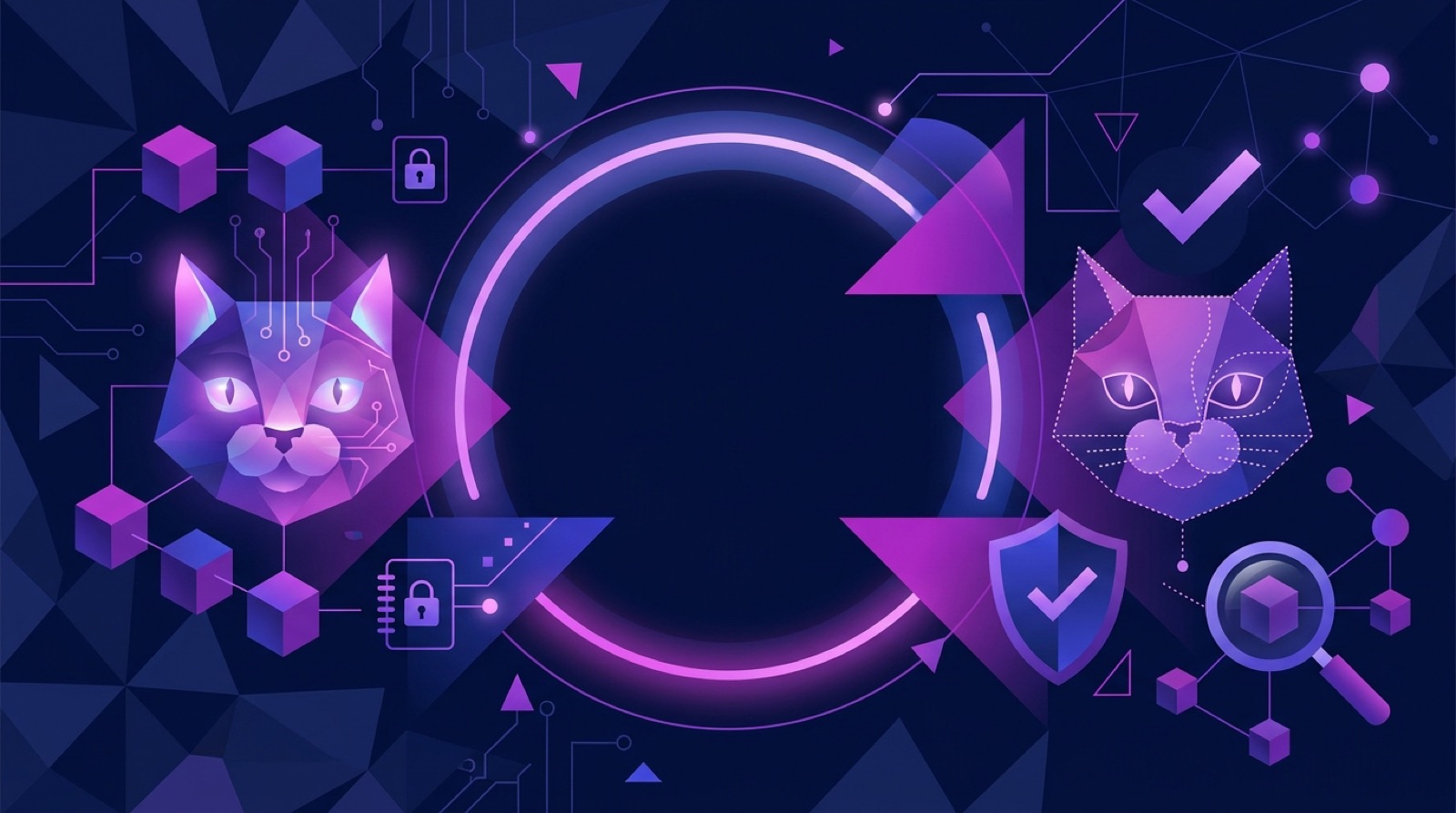
What is the CryptoCats NFT project?
As the name suggests, CryptoCats is a collection of cat characters held as tokens on the Ethereum blockchain. It is commonly grouped with the first wave of collectibles on Ethereum, from 2017, around the same period as CryptoKitties and before profile-picture collections became popular. Each cat is a digital item recorded on-chain, so ownership is tied to a wallet rather than to an account on a company's server.
Some details are worth treating carefully. Very early collectibles were built before the ERC-721 standard for NFTs was settled, so older projects can have custom contracts, unusual transfer methods or wrapped versions that make them tradable on modern marketplaces. A wrapped token is a newer token that represents the original one held in a contract. Whether you hold the original or a wrapper changes how you sell it and what risks apply.
This guide does not give supply numbers, launch dates or prices for the project, because those facts are best read from the contract and the project's own records rather than from summaries that repeat each other. Public reporting for the name mostly return CryptoKitties material, which shows how overshadowed the original name has become.
To research it properly, find the contract address through the project's official channels, open it on a block explorer, and read the creator address, the token standard and the full transfer history.
How is CryptoCats different from CryptoKitties?
The two are easy to blur because both involve cartoon cats on Ethereum from the same era. The differences matter when you are deciding what to look for.
CryptoKitties is built around breeding. Two owned cats can produce a new one with traits inherited from its parents. It was developed by Dapper Labs, launched in late 2017 and drew enough activity to slow the Ethereum network at the time. It is widely credited with showing the public what NFTs could do and helped popularise the ERC-721 standard.
CryptoCats is better thought of as a collectible set. Its identity comes from its place in early Ethereum history, not from a large game with breeding economics and a company behind it.
Practical differences for a buyer:
- Documentation: CryptoKitties has abundant press coverage, reviews and guides. CryptoCats has much less, so you do more verification yourself.
- Liquidity: a smaller, older collection often has few buyers at any moment. Selling can take a long time or require accepting a low bid.
- Tooling: older custom contracts may not display properly in wallets and marketplaces, or may need a wrapper.
- Impersonation: the less documented a name is, the easier it is for a lookalike collection to borrow it.
Neither is a guarantee of value. Historical significance can matter to collectors, but it does not create demand on its own.
How CryptoKitties works, since it is what most people find
Because most searches for the name end up at CryptoKitties, it helps to know how that game works.
Each CryptoKitty is an NFT with a set of genes that determine its appearance. Owners can buy, sell, or breed their cats. Breeding takes two cats, a fee and a waiting period, and produces a new kitty whose traits come from the parents with some chance of mutation. Certain trait combinations are treated as rarer and priced higher by collectors.
The game started on Ethereum and was developed by Dapper Labs, the same company later associated with the Flow blockchain. Cats are held in your own wallet, so you can move them between wallets or list them on marketplaces that support the collection.
Two points readers often miss:
- Rarity is a community judgment. The code produces traits, but what people will pay for depends on taste and demand, which change.
- Fees matter. On Ethereum, breeding and transfers cost gas, and gas varies a lot. Check the current cost in your wallet before confirming any action.
Current prices, activity and the state of the game change frequently. Check recent completed sales and the official game pages instead of relying on any article's snapshot, including this one.
Cryptocat and Cryptcat: the encryption tools with similar names
If you searched the name hoping to learn about the messaging software, that is a different story with no tokens involved.
Cryptocat was an open-source chat application built around encryption. Coverage from 2012, including a review in Bitcoin Magazine, described it as easy to start using because it did not require accounts or lengthy setup. It ran in the browser and as desktop software, and its aim was to make private conversation approachable for people who were not security specialists. Despite the first half of the name, it was not a cryptocurrency project, and the word crypto there refers to cryptography.
A related name, Cryptcat, is a separate network tool in the netcat family that adds encryption to data sent between machines. It is used by administrators and security testers, and has nothing to do with collectibles.
If you want a private messenger today, do not choose one from an old review. Software ages quickly, and projects get discontinued or stop receiving security fixes. Check that the app is still maintained, that its code has been independently reviewed, and what the developers say about its current status before trusting it with sensitive conversations.
Crypto Cat (CCAT) and other cat-themed tokens
Public reporting for the name also surface a token called Crypto Cat, ticker CCAT, which exchange pages describe as a frequently traded asset. A fungible token like this is not an NFT. Every unit is identical and interchangeable, in the same way that every unit of a stablecoin is, while an NFT is a single unique item.
Cat-themed tokens and collections are numerous, and many share near-identical names. That creates a few specific risks:
- Wrong asset: you intend to buy a collectible and end up holding a token, or the reverse.
- Copycat contracts: anyone can deploy a token with the same name and ticker as another. Only the contract address identifies the real one.
- Thin or manipulated markets: small tokens can have low liquidity, so buying is easy but selling at a similar price may not be.
- Marketing pages that look like analysis: exchange explainers are often promotional and do not assess risk.
Separately, Crypto.com NFT has hosted a drop called Crypto Cats, with a description about cats joining owners in a metaverse. That is a platform-specific collection, so it is a different thing from the early Ethereum project, and its rules, royalties and transferability depend on that marketplace.
Whenever a name is shared, trust the contract address or official platform page, not the name or the artwork.
How to verify a cat NFT or token before you buy
A short routine reduces most of the avoidable mistakes with any collection that shares its name with others.
- Define the target. Write down whether you want the early Ethereum collectible, CryptoKitties, a token or a platform drop.
- Find the contract from an official source. Use the project's own website or verified social account, not a search ad or a message sent to you.
- Match it on a block explorer. Confirm the contract address, token standard, creator and deployment date fit what you expect.
- Read the history. Check the transfer record of the specific item. Sudden bursts of trades between a few wallets can indicate wash trading.
- Compare marketplace listings against the contract. A matching name with a different contract is a different collection.
- Check completed sales, not asking prices. An asking price is only a wish. Sold prices and how recently they occurred show real demand.
- Test with a small transaction first if you are moving assets between wallets.
Security habits matter just as much. Never sign a transaction or approval you do not understand, and be wary of unsolicited offers, airdrops and links in direct messages. Use a wallet with only the funds you need for the purchase, and review and revoke old token approvals periodically. Nobody legitimate will ask for your seed phrase.
Where cat NFTs trade and how to think about value
Where a cat collectible trades depends on its chain and standard. Ethereum collections typically appear on general NFT marketplaces. Wrapped or modernised versions of old collectibles are the ones most likely to be listed there. Collections on WAX and related chains tend to trade on marketplaces built for those ecosystems, such as AtomicHub, which focuses on gaming items, collectibles and digital art.
Some protocols change how liquidity works. NFTX, for example, turns NFT collections into vault-backed ERC20 tokens, which lets holders buy and sell items against a pool at or near floor price instead of waiting for a specific buyer. That can be convenient for collections it supports, but you trade at pool prices and the choice of items is limited. TokenWorks runs automated strategies that use trading fees to buy, relist and burn NFTs, aimed at experienced and risk-tolerant users. Whether a given cat collection is supported by any of these changes over time, so check each platform directly.
On value, keep expectations plain:
- Old collectibles can be historically interesting and still hard to sell.
- Floor price, volume and holder numbers change daily. Check them on the marketplace or an analytics site on the day you decide.
- Fees, royalties and gas reduce what you actually receive.
Buy only what you would be comfortable holding with no resale market at all.
Is CryptoCats worth looking into now?
CryptoCats today is mostly a question of history and verification. As an early Ethereum collectible project, it holds a place in the story of NFTs, but it is far less visible than CryptoKitties. The name is shared with a messenger, tokens and exchange drops, so most of the work is making sure you are looking at the right thing.
Who it may suit: collectors interested in early Ethereum history, and researchers who want to understand how NFT standards developed. Who should be cautious: anyone expecting liquidity, a team roadmap or profit. Older collections often have little active trading, and verified documentation can be hard to find.
A sensible way forward:
- Decide which product you are researching.
- Read the contract, not the summary.
- Check recent sold prices and the number of recent sales.
- Start small, keep a separate wallet for collectibles, and sign only what you understand.
- Look for current facts, such as status, supply and fees, from the project's own records and the chain itself, because they change and third-party pages go stale.
Crypto assets are volatile, and NFTs can lose most or all of their value. Nothing here is financial advice, and you are responsible for following the tax and legal rules where you live.
Frequently asked questions
Is CryptoCats the same as CryptoKitties?
No. CryptoKitties is a separate and much better-known breeding game from Dapper Labs that launched in late 2017. CryptoCats is a different, earlier-era collectible cat project, and the two names are often mixed up in public reporting and marketplace listings.
Is CryptoCats a coin or a messaging app?
Not necessarily. Cryptocat, without the s, was an open-source encrypted messaging app with no connection to NFTs. Crypto Cat (CCAT) is listed as a token on some exchanges, and Crypto.com NFT has used the name Crypto Cats for a cat-themed drop. Each is a separate product.
How can I check that a CryptoCats NFT is genuine?
Open the contract address on a block explorer, check that it matches the address shown on the project's official channels, and read the token standard, creator and transfer history. Compare the collection name on a marketplace with the contract, because lookalike collections reuse names and artwork.
How much is a CryptoCats NFT worth?
Prices vary and change constantly, so no single figure applies. Check recent completed sales rather than asking prices on a marketplace that lists the collection, and look at how many sales happened recently. Older collectibles can have very thin trading.
Is buying early cat NFTs a safe investment?
Collecting carries real risk. Older NFT collections can be illiquid, prices can fall to little or nothing, and fakes are common. Treat any purchase as money you can afford to lose and do not rely on a project's early-history reputation for future value.
Mentioned in this guide
dApps in this guide
NFTX turns NFT collections into vault-backed ERC20 tokens so users can buy and sell NFTs instantly at floor price against a pool.
AtomicHub is a multichain NFT marketplace for gaming items, collectibles and digital art, centered on WAX and EOS-family chains.
TokenWorks runs NFTStrategy, an Ethereum protocol of tokens that use trading fees to buy, relist and burn NFTs, aimed at experienced, risk-tolerant users.
Current is a Sui-based lending protocol with isolated markets and one-click yield multiply, focused on tokenized real-economy yield.
Wrapped is an enterprise blockchain platform, listed as a cross-chain bridge, offering tokenized equities, RWAs and stablecoin transfers to businesses.
Crypto.com is a centralized crypto exchange and app for buying, trading and spending 400+ coins, with a Visa card, staking and a separate self-custody wallet.
Match-Trader is a B2B trading platform and back-end suite for forex brokers and prop trading firms, with built-in TradingView charts and CRM modules.
Keep reading
Related guides
NFT · Best list
Best NFT Marketplaces to Buy and Sell NFTs in 2026
A practical guide to six NFT trading venues and tools, from vault-backed floor-price swaps to game-item markets and domain tokens, plus how to pick one and trade safely.
NFT · Explainer
Habbo Avatars and the Early 2000s Nostalgia NFT Revival
Habbo, the pixel-art social world that launched in 2000, has a place in the NFT market through avatar collections that draw on its look. This guide explains the nostalgia trade, how to read chart claims, and how to check what you are actually buying.
NFT · Explainer
Pudgy Penguins Under Luca Netz: How the Brand Turned Around
Pudgy Penguins went from a troubled 2021 profile-picture collection to a consumer brand with toys, games and a token after Luca Netz took over in 2022. This guide explains what changed, what holders actually get and how to judge the 'thriving' claim yourself.
NFT · Explainer
Sneaky Vampire Syndicate's $26.9M Weekly Volume, Explained
A headline said Sneaky Vampire Syndicate did $26.9 million in volume in seven days. Here is what that kind of number means, why it can mislead, and how to check it yourself.
NFT · Explainer
What Is Emblem Vault? Trading Bitcoin Ordinals and Ethereum NFTs
Emblem Vault is a platform that wraps crypto assets inside NFTs so they can be traded as a single item. This guide explains how that works, how it differs from Bitcoin Ordinals and standard Ethereum NFTs, and what to check before you trade.
NFT · Explainer
What Is Crypto Land? Virtual Land NFTs Explained
Crypto land usually means a digital parcel represented by an NFT in a virtual world—not a plot of physical property. Learn what the token may let you do, how purchases work, and what to check before spending money.
NFT · Explainer
What Is Generative Art and Why It Matters in 2026
Generative art is work made by a system an artist designs, then lets run with some autonomy. This guide explains what that means, where it came from, how it connects to NFTs and AI, and what to check before you buy or collect.
NFT · Explainer
What Is Bullrun Babes? What the Name Means and How to Check It
Bullrun Babes does not appear in the sources we could check, so this guide cannot confirm what it is. It explains what the bull run term means, what a name like this usually signals in NFT markets, and how to verify any collection before you buy or trust it.