Web3 gaming · Explainer
DeFi Kingdoms on Harmony: How the GameFi Model Works
DeFi Kingdoms is a pixel-art fantasy RPG that started on the Harmony blockchain and mixes a token exchange, liquidity pools and Hero NFTs into one game. This guide explains how the GameFi model works, what players actually do, and what to check before spending any money.
By the DappsAtlas editorial team · Updated
What DeFi Kingdoms is and where it fits
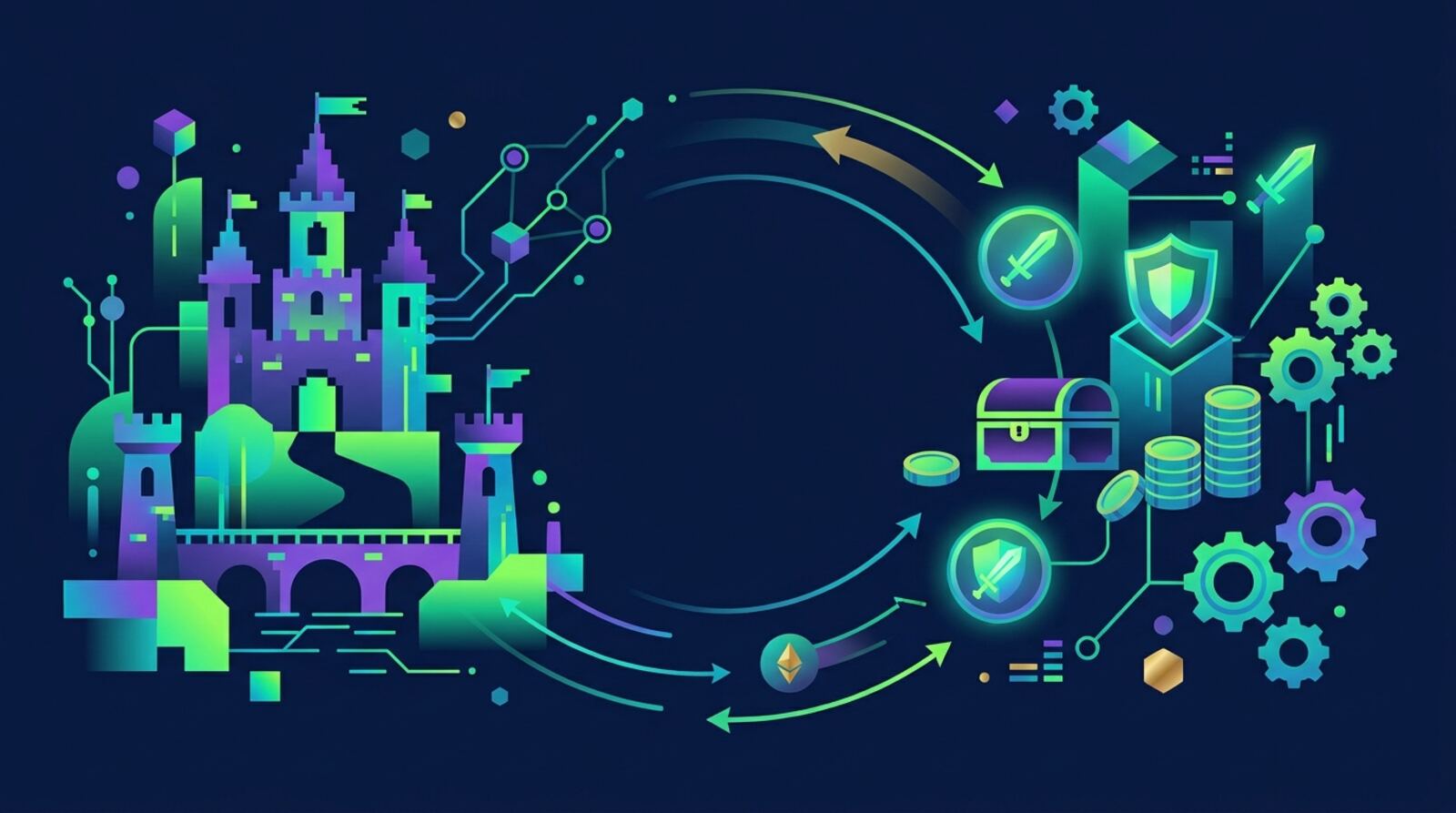
DeFi Kingdoms is a fantasy role-playing game with pixel-style art. It was built on the Harmony blockchain and sits in the category usually called GameFi, which describes games where on-chain assets and tokens are part of the core play. Players control characters called heroes, send them on quests, craft items and trade with other players.
What makes it different from a typical RPG is that the economy is not a separate layer. The game includes a decentralised exchange, liquidity pools and a market for heroes, all inside the same world. A player can therefore earn in-game tokens, add them to a pool, or swap them for other assets without leaving the game's interface.
The project is best understood as a set of connected parts: a game loop that rewards activity, a set of tokens that move through that loop, and a set of NFT characters that give players something they can own and sell. Each part can be useful on its own, but the design depends on players moving between them.
The name often causes confusion. DeFi in this context means decentralised finance, the family of lending, borrowing and trading services that run on public blockchains. DeFi Kingdoms uses some of those ideas inside a game rather than offering a standalone finance product.
How DeFi Kingdoms blends GameFi and DeFi
GameFi is a shorthand for games that connect play with on-chain value. DeFi, by contrast, is the broader set of financial tools that run without a traditional intermediary. DeFi Kingdoms sits where the two meet. Its gameplay produces tokens, and those tokens can be used in decentralised trading or pooled to earn fees.
For a reader, the practical point is that every reward and every purchase in the game has an on-chain record. Heroes, tokens and transactions are visible on a blockchain explorer, which means you can verify what you own and what you spent. The same transparency means you carry the risk of mistakes and of market moves, because there is usually no customer support that can reverse a transaction.
The game also shows the trade-offs of combining these areas. Players who enjoy the RPG loop may find the finance layer confusing. Players who understand liquidity pools may find the game slower than they would like. Understanding both halves helps you decide where your time and money should go.
If you are new to either idea, it helps to read a basic explainer on decentralised exchanges and liquidity pools first. Those concepts appear constantly in the game's menus.
Core gameplay: heroes, quests and jobs
Most activity revolves around heroes. A hero has stats, a class or profession, and abilities that determine how well it performs at tasks. Heroes are sent on quests to gather rewards, and they can also be used for crafting or other professions in the game world.
A typical session looks like this:
- Check which heroes are available and their energy or stamina
- Send heroes on quests or jobs that match their skills
- Collect the rewards once the task finishes
- Decide whether to craft, sell, pool tokens or rest heroes
Because quests take time and heroes need recovery, the pace is slower than action games. That design is intentional. It rewards planning and patience rather than constant clicking.
The specific rewards, quest difficulty and profession rules change over time as the developers update the game. Check the in-game guide or the official documentation for the current values before you decide how to allocate your heroes. Any figure you read elsewhere may be out of date by the time you see it.
Hero NFTs: what you own and what it costs
Hero NFTs are the characters at the centre of the game. Each is a non-fungible token, meaning a unique item recorded on a blockchain. Ownership is held in your wallet, which means you can usually transfer or sell the hero to another wallet holder, subject to the game's own rules.
There are two sides to owning one. The upside is that a hero can carry value beyond the game, because other players may want it for its stats or rarity. The downside is that the price of a hero depends on supply, demand and the health of the game economy, all of which can fall quickly. Heroes are not a savings product.
Before buying any NFT, check the current listing on a reputable marketplace, compare it with similar heroes, and confirm the contract address against the official source. Scam listings often copy names and artwork, so the contract address is the most reliable identifier.
Keep in mind that owning a hero also means paying ongoing costs in some cases, such as energy recovery or crafting fees. Factor these into any decision rather than looking only at the purchase price.
Tokens, liquidity pools and what they do
DeFi Kingdoms uses tokens for different jobs. The main in-game token is JEWEL, which players earn and spend and which is used in the game's exchange and pools. Some players also pool tokens with others to earn a share of trading fees. Check the official documentation for the complete list of tokens and their current roles, as the set has changed over time.
Here is a simple way to think about token use:
- Earning: tokens are paid for quests or other activity
- Spending: tokens are used for crafting, summoning or upgrades
- Providing liquidity: tokens are paired with another asset in a pool to support trading
- Holding: some players keep tokens hoping their value rises
Liquidity pools carry a risk called impermanent loss. When the price of one token in a pool moves a lot compared with the other, the value of your share can end up lower than if you had simply held the two tokens separately. Understanding this before you provide liquidity is essential.
Token prices and pool sizes change constantly. Use a reputable data service and the chain explorer to check current figures, and avoid making decisions based on screenshots or claims in chat groups.
Why the Harmony blockchain matters
Harmony is a public blockchain designed for fast transactions and low fees. Those features suited a game that involves frequent small actions, such as quests, crafting and trading, because each action needs to be recorded on-chain. This is why DeFi Kingdoms was launched there and why its early reputation was closely tied to the Harmony ecosystem.
A blockchain's features matter for players in several ways. Fees affect whether small trades are worth making. Speed affects how quickly actions confirm. Wallet support determines which tools you can use to connect. Each of these can change as networks upgrade or as the project adds other chains.
If you plan to play, confirm which network the game currently uses. Add the network to your wallet only from a trusted source, and check that the native token you need for fees is available on that network. Sending assets to the wrong chain is a common and often irreversible mistake.
The project has also discussed or pursued expansion beyond its original network. Check the official announcements for the current supported chains before moving any assets, because the answer may differ from what older articles say.
Earning potential and the real risks
Many readers ask whether they can earn real money. The honest answer is that outcomes vary widely. Earnings depend on how many heroes you own, the time you spend, the costs of heroes and gas fees, and the market price of tokens when you sell or withdraw. Some players lose money even when their in-game balance rises, because token prices fall.
The main risks to weigh include:
- Token price volatility, which can erase gains quickly
- Smart contract bugs or exploits in games and pools
- Scam listings, fake websites and phishing messages
- Liquidity risk, where you cannot sell at a fair price
- Changes to game rules that reduce rewards
Set a budget you can afford to lose and decide in advance when you will stop. Keep records of deposits and withdrawals so you can judge your results honestly. If something seems too good to be true, it usually is.
Gambling-style risk is not the goal of this game, but the same discipline applies. Check your local laws on crypto and any tax obligations where you live, and seek professional advice for larger decisions.
Current status and where to verify updates
DeFi Kingdoms has been running for several years, and the project has changed its tokens, features and chain support over that time. Any article that describes the economy as fixed should be treated with caution. Because of this, the most reliable sources are the official website, the official documentation and the project's announcement channels.
To check the current state of the game, you can:
- Read the official documentation for current mechanics
- Look up the token contract on the blockchain explorer for the network you use
- Check recent announcements about updates, chain changes or rule changes
- Read community guides, but verify any figures against official sources
This matters for how you judge older content. A guide written when the game launched may describe rewards and heroes that no longer exist. Use dates on any source you read and prefer the most recent official material.
If you already own heroes or tokens, review your position regularly, especially after major announcements. Changes to rules can affect value quickly.
Getting started safely, step by step
If you decide to explore the game, a careful approach keeps risk manageable. Start by making sure you understand the basics before connecting a wallet or spending money.
A practical sequence looks like this:
- Learn the basics of self-custody wallets and how seed phrases work
- Install a wallet from its official source and back up the seed phrase offline
- Confirm the official game website and add the correct network to your wallet
- Fund the wallet with a small amount of the native token needed for fees
- Connect to the game only after checking the URL carefully
- Approve transactions only after reading what they allow
- Start with a small purchase or a free-to-play activity before committing more
Never share your seed phrase or private keys with anyone, including people who claim to be support staff. Be wary of direct messages offering help, airdrops or wallet fixes. Real support does not need your seed phrase.
Revoke token approvals you no longer need using a reputable approval-management tool, and review your wallet activity regularly.
Is DeFi Kingdoms worth a look for GameFi readers?
DeFi Kingdoms is one of the earliest and best-known examples of combining a fantasy RPG with decentralised trading and NFT characters. For readers curious about the category, it offers a useful case study of how game loops, token economies and liquidity pools interact, and where those designs create pressure.
If you want to compare similar projects, look at how each one defines its rewards, what its tokens do, and which blockchain it runs on. Some games focus on collecting and trading, others on competitive play, and others on social or creative features. The differences matter more than the marketing.
A useful checklist when evaluating any GameFi project includes:
- Is the game enjoyable without earning anything?
- Are token rewards sustainable and clearly explained?
- Is the team and contract information publicly verifiable?
- Are the risks, fees and rule changes documented?
DeFi Kingdoms rewards careful reading and patient play. Treat it as a game first and a financial experiment second, and keep your decisions grounded in current official information.
Frequently asked questions
Is DeFi Kingdoms a play-to-earn game?
Yes, in the sense that it was built on Harmony and its main economy runs on tokens and NFTs. Whether it pays out enough to be worthwhile depends on the market, your time, the cost of heroes and gas, and token prices, which change constantly. Treat any earnings as uncertain and never play with money you cannot afford to lose.
How do I start playing DeFi Kingdoms safely?
Start by confirming the official website and social channels yourself, not through links in messages or posts. Use a self-custody wallet you control, keep your seed phrase offline, and approve only the transactions you understand. Begin with a small amount so you can learn the interface before committing more.
Do I need to buy a Hero NFT to play?
Not necessarily. Some activity, such as questing with a hero you already own, can be done without buying anything, but many players buy heroes or tokens to join the economy. Check the current requirements in the game itself before you act, because mechanics and costs can change.
Is DeFi Kingdoms still only on Harmony?
Harmony is the blockchain the game was launched on and the chain where its original contracts live. The game has discussed expansion to other networks over time, so check the official announcements for the current list of supported chains before you move assets or connect a wallet.
Where can I check current token prices and game changes?
Look up the current game guides and official documentation for the latest mechanics, token details and any changes to heroes or quests. For prices and liquidity, use a reputable market data service and check the contract address on the chain explorer. Do not rely on a single social post for either.
Mentioned in this guide
dApps in this guide
DeFi Kingdoms is a pixel-art fantasy RPG that wraps a DEX, liquidity pools and Hero NFTs into one game.
DeFipedia is an educational website for readers exploring DeFi, with articles, a glossary, protocol reviews and community Q&A.
Axie Infinity is a Ronin-based NFT game where players collect, combine and battle creatures called Axies, with its own AXS token.
Illuvium is a franchise of interconnected NFT games from Illuvium Labs, including Arena and Overworld, with the ILV token for governance.
Alien Worlds is a community-built play-to-earn metaverse on WAX where players mine and play to earn TLM tokens and NFTs.
Pixels is a web3 farming and exploration game with a PIXEL token, guilds and ecosystem staking, aimed at gamers who are comfortable with wallets and token risk.
Aavegotchi is an NFT collectibles game with a GHST token, originally DeFi-staked and powered by Aave, now moving to Base for players and builders.
Splinterlands is a blockchain collectible card game on Hive where players battle with NFT cards and earn or stake the SPS governance token.
Current is a Sui-based lending protocol with isolated markets and one-click yield multiply, focused on tokenized real-economy yield.
Keep reading
Related guides
Web3 gaming · Explainer
DeFi Kingdoms and the 2022 Gaming Token Rally: What Happened
DeFi Kingdoms drew attention in March 2022 when its JEWEL token rose sharply in a weekly ranking of gaming tokens. This guide explains what the game is, what that rally did and did not show, and how to check its current status yourself.
Web3 gaming · Explainer
DeFi Kingdoms in 2026: What the Game Is and How It Works
DeFi Kingdoms is a pixel-art fantasy RPG that combines heroes, quests and a built-in decentralized exchange in one game. This guide explains how it works, what has changed across chains, and what to weigh before you play or hold its tokens.
Web3 gaming · Explainer
DeFi Kingdoms on Harmony: What the Chart Run Meant in 2026
DeFi Kingdoms became one of the most talked-about blockchain games when it posted strong activity on the Harmony network. This guide explains what drove that attention, what it meant for players, and how to check where the game stands today.
Web3 gaming · Review
DeFi Kingdoms Review 2026: Harmony Game, Heroes and Risks
DeFi Kingdoms is a pixel-art fantasy RPG that started on the Harmony ONE blockchain and combines NFT heroes, a token exchange and liquidity pools. This guide explains how the game works, where it began, and the risks a new player should understand before spending money.
Web3 gaming · Explainer
DeFi Kingdoms vs Axie Infinity: What Dethroning Really Means in 2026
DeFi Kingdoms is a pixel-art fantasy RPG with its own DEX, liquidity pools and Hero NFTs, and it has been cast as a rival to Axie Infinity. This guide explains what a dethrone claim would actually have to measure, what each game is, and how to check current activity yourself.
Web3 gaming · Chain guide
DeFi Kingdoms' DFK Chain: Why the Game Runs Its Own Blockchain
DeFi Kingdoms moved its game to a dedicated chain, DFK Chain, built on Avalanche's subnet technology. This guide explains why a game would run its own blockchain, how it works, what it costs players in trade-offs, and how to use it safely.
Web3 gaming · Explainer
Evolving My DeFi Pets With DPET Tokens in 2026
My DeFi Pet lets you evolve pets with the DPET token as in-game currency. This explainer covers how evolution generally works, how to weigh it against buying more eggs, and how to check token data before you spend.
Web3 gaming · Explainer
GameFi 2.0 Explained: Who Leads the Crypto Gaming Battlegrounds
GameFi 2.0 is a loose label for newer blockchain games that put gameplay and sustainable in-game economies ahead of quick token payouts. This guide explains what the term means, how it differs from the first play-to-earn wave, and what to check before you spend time or money on any project.