Web3 gaming · Explainer
Casper and Play-to-Earn Games: What Readers Should Know in 2026
Casper is a public proof-of-stake blockchain, and its 2026 roadmap covers EVM support, AI payments and quantum-safe infrastructure. This guide explains what that means for play-to-earn games, what public sources do and do not show about 'Robot Cache', and how to judge any play-to-earn claim before you spend time or money.
By the DappsAtlas editorial team · Updated
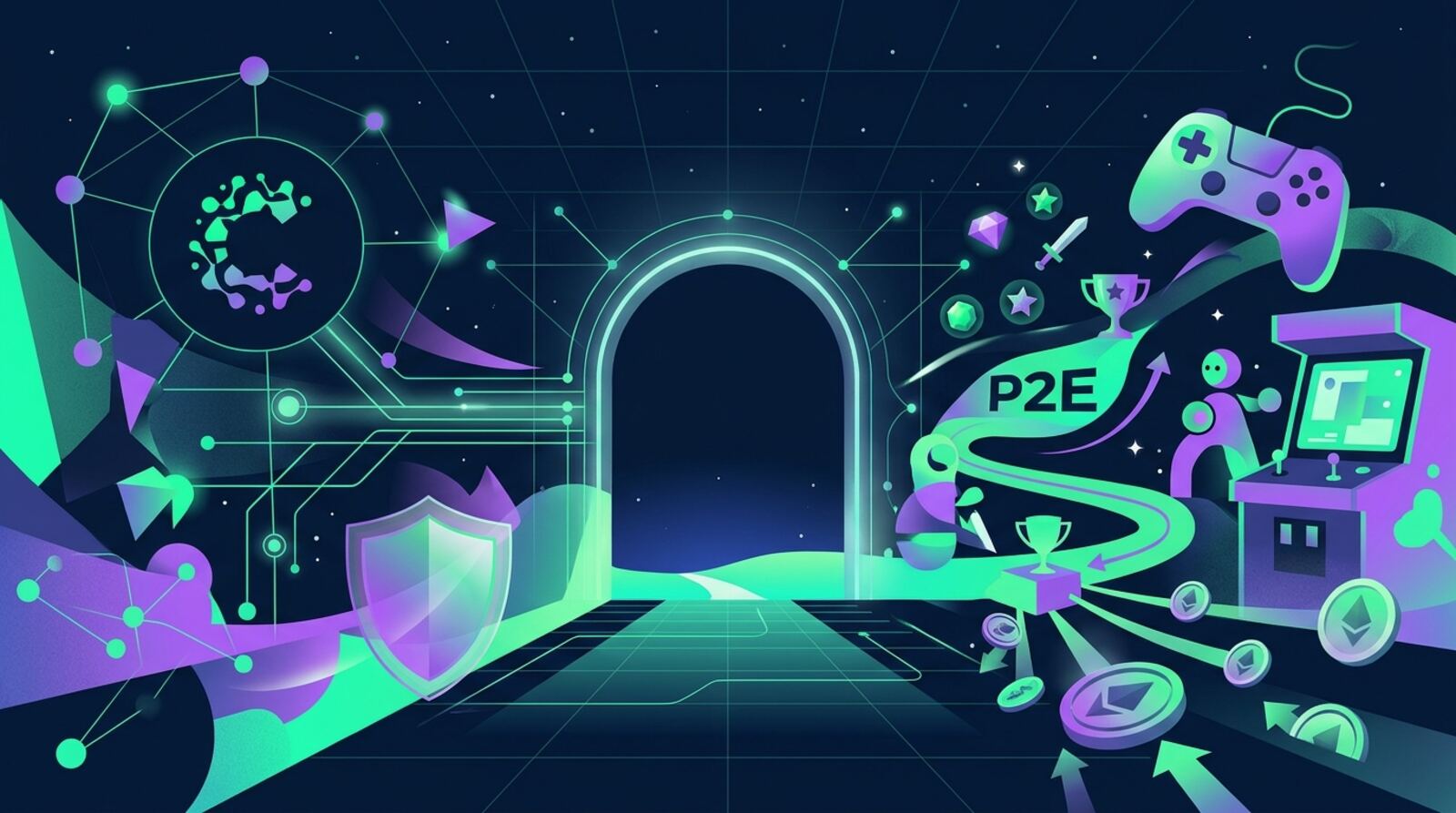
What Casper is and how it fits into web3 gaming
Casper Network is a public blockchain that uses proof-of-stake, a system where token holders lock up coins to help validate transactions. Its native token is CSPR. Casper is a general-purpose chain, which means developers can build applications on it, but a blockchain on its own is not a game. Games are separate applications that may or may not use the chain for ownership records, tokens or item trading.
When people search for Casper alongside play-to-earn, they are usually asking one of three things: whether there are games on Casper, whether Casper tokens can be earned by playing, or whether a specific promotion is legitimate. The answers are different for each question, so it helps to separate them early.
A useful way to think about Casper is as infrastructure. Its value to a game depends on whether developers choose it, whether the game's reward design holds up, and whether players can verify what they own. A strong chain does not make a weak game worth playing, and a weak chain does not automatically rule out a good one.
What Casper's 2026 roadmap says and what it does not
The roadmap reported in May 2026 describes several directions for the network. It covers support for the Ethereum Virtual Machine, often called EVM support, which would let developers use tools and contracts written for that environment. It also mentions AI-related payments, real-world asset tokenization and quantum-safe cryptography for the long term.
These are plans, not finished products. Before relying on any roadmap item, check three things:
- Whether the feature is live on the main network, not only on a test network
- Whether the project has published documentation developers can use
- Whether independent developers or applications have adopted it
For gamers, the most relevant items are EVM compatibility and payment rails, because they could affect which games can be built on Casper and how transactions happen. Quantum-safe work matters more for the long-term security of the network than for day-to-day play. None of these items, by itself, tells you whether a game is good or whether its rewards are sustainable.
What play-to-earn means and how it has changed
Play-to-earn, often shortened to P2E, describes games that pay players in tokens or NFTs that have some market value. The idea became popular during the 2021 boom, when some games offered rewards that many players treated as a source of income. Since then, the category has changed a lot. Many projects have shifted toward play-and-own or simply play-first designs, where ownership of items is optional and rewards are secondary to the game itself.
It helps to separate three things a game might offer:
- In-game currency that you earn but cannot sell outside the game
- Tradable items, usually NFTs, which you can buy, sell or rent
- Governance or utility tokens that may be traded on open markets
Each carries a different risk. In-game currency depends entirely on the game's design. Tradable items depend on demand from other players. Market tokens depend on price movements that the game does not control. A project that blends all three without clear explanations deserves extra scrutiny.
What the Robot Cache claim can and cannot show
Several public reporting mentions promotions and communities around new games and launches, but the sources reviewed for this guide do not describe a game, token or reward program called Robot Cache connected to Casper. One unrelated result discussed an AI agent that builds a physical robot body, and another discussed a Star Citizen update. Neither is evidence about a Casper-based reward program.
That gap matters. When a name appears in social posts or search snippets without an official site, team, documentation or verifiable contract, the honest status is unverified. Do not treat a name as a sign of legitimacy because it sounds technical or because others repeat it.
If you come across Robot Cache or a similar name, look for these items before taking any step:
- An official website that the project controls, reached from a link you type or find through a trusted source
- A named team with public profiles and a history you can check
- Published token contract details that match what the project says
- Clear terms on how rewards are issued and whether they can be withdrawn
If you cannot find these, the safest assumption is that the claim has not been confirmed.
How to tell whether a game actually runs on Casper
A common question is whether Casper hosts any games at all. The sources reviewed here do not list a specific game built on Casper, so this guide cannot name one. That does not mean none exist. It means you should check for yourself rather than rely on a headline.
To find out whether a game runs on Casper, look at the following:
- The game's own documentation, which should name the blockchain and the token standard it uses
- The token or NFT contract, which can be viewed on a block explorer for the relevant network
- Whether the game's rewards are paid in CSPR or in a separate token issued on Casper
- Whether the game describes its chain openly or only in vague marketing language
A game can use a blockchain for some features and not others, so ask which parts are on-chain. Ownership records and token transfers are typically on-chain. Matchmaking, graphics and most gameplay logic are usually off-chain. Knowing the split helps you understand what you actually own and what the company or studio controls.
How play-to-earn rewards are funded and why they can fall
Play-to-earn rewards come from somewhere. In most games, rewards are funded by new players buying into the game, by the project's token reserves or by fees paid when items are traded. When new players slow down, the rewards that depend on them can fall in value quickly.
This is the core economic risk. A reward that looks generous at launch may be paid from a pool that gets smaller over time, or it may be paid in a token that many holders sell at once. Some projects also issue new tokens on a schedule, which dilutes existing holders.
When you read about earnings, ask these questions:
- Where do the rewards come from, and who is paying them?
- Is there a fixed supply, an inflation schedule or an unlimited issue?
- What is the token used for inside the game, apart from being traded?
- What happens to rewards if daily players fall by half?
If the answers are vague, the reward design is probably fragile. Figures for token prices, reward rates and player counts change often, so use the project's official dashboards or documentation for current numbers instead of relying on screenshots or summaries.
Red flags that signal a play-to-earn scam
Scams in this space are common and often polished. The warning signs below appear in many failed or fraudulent projects, and any one of them is reason for caution:
- Promised returns or guaranteed income, which no honest game can offer
- Pressure to act quickly, such as countdowns or limited spots
- Rewards that depend mainly on recruiting friends or depositing more funds
- Requests for your seed phrase, private keys or remote access to your device
- Anonymous teams with no verifiable history
- Contracts or tokens that cannot be checked on a public explorer
- Claims of partnerships with well-known companies that you cannot confirm on those companies' own sites
Never share a seed phrase or private key with anyone, including people claiming to be support staff. Legitimate projects do not need it. If you have already shared credentials, move funds to a new wallet you control and secure your accounts, then report the incident to the platform and to the relevant authorities where you live.
A practical checklist before you play
A careful evaluation does not require technical expertise, only patience and a few habits. Work through the steps in order, and stop if a step fails.
- Confirm the project's identity through its official website, social accounts and documentation, and make sure the links you use came from a source you trust.
- Check the chain, token standard and contract addresses, and compare them with what the project publishes.
- Read the reward terms, including how tokens are issued, locked and withdrawn.
- Look for evidence of ongoing development, such as updates, bug fixes and active support channels.
- Estimate what you would earn if player numbers fell, and decide whether that outcome is acceptable.
- Set a spending limit you can lose without harm, and keep it separate from essential funds.
- Keep records of deposits, withdrawals and rewards for tax and personal tracking.
If you want to compare games, use the same questions for each. Consistency makes it easier to see which projects are transparent and which depend on hype.
Risks, legal checks and what this guide cannot tell you
Crypto assets and play-to-earn rewards can lose value, sometimes all of it. Token prices can move sharply in a single day, and game economies can change with little notice. Treat any play-to-earn activity as a high-risk use of money, not as a dependable source of income.
Legal status depends on where you live. Rules on crypto assets, taxation, consumer protection and online gaming differ between countries and regions, and they change over time. Some jurisdictions treat token rewards as taxable income when received, while others treat them differently. Check the rules that apply to you before participating, and consider speaking with a qualified adviser.
Many games and platforms also set minimum ages, often 18 or 21 for anything involving real-money value. Respect those limits and any local restrictions. This guide is general information rather than financial, legal or tax advice, and it cannot account for your personal circumstances.
Frequently asked questions
Is Robot Cache a real play-to-earn game on Casper?
Not from the sources reviewed for this guide. The results mention Casper's roadmap, but they do not confirm a game, token or reward program called Robot Cache on Casper. Treat any promotion under that name as unverified until you find it on the project's official site, with a named team, documentation and a live contract address you can check independently.
Does Casper's roadmap mean games can run on it now?
Not necessarily. Casper's roadmap describes plans such as EVM support, which would let some Ethereum-style software run on the network, but roadmap items take time to ship and may change. Check whether a feature is live on the network before assuming a game can use it.
How should a beginner test a play-to-earn game?
Start with a small amount you can afford to lose, and keep records of what you earn and spend. Look at whether the game still works when new player activity slows, and whether the reward token has real uses inside the game. Consider the tax treatment of token rewards where you live, and check local rules on crypto and online gaming, including the 18+ or 21+ age limits that apply in many places.
Can I rely on earnings figures I see online?
Yes. Token prices, reward rates and the number of active players change often, and a figure that is accurate today can be wrong next week. Use the project's official dashboard or documentation for current data, and check the token's supply and distribution on a block explorer or reputable market data source rather than relying on a single social media post.
What are the biggest warning signs in a play-to-earn project?
Be wary of guaranteed returns, pressure to recruit friends, requests for seed phrases or private keys, and rewards that depend mainly on new deposits. Also be cautious of any project that cannot name its team, publish its contracts or explain how its token is issued.
Mentioned in this guide
dApps in this guide
Axie Infinity is a Ronin-based NFT game where players collect, combine and battle creatures called Axies, with its own AXS token.
Splinterlands is a blockchain collectible card game on Hive where players battle with NFT cards and earn or stake the SPS governance token.
Alien Worlds is a community-built play-to-earn metaverse on WAX where players mine and play to earn TLM tokens and NFTs.
Pixels is a web3 farming and exploration game with a PIXEL token, guilds and ecosystem staking, aimed at gamers who are comfortable with wallets and token risk.
Heroes of Mavia is a mobile Web3 base-building strategy game with an earnable Ruby currency and a MAVIA governance token on Ethereum and Base.
Sweatcoin is a free move-to-earn smartphone app that rewards daily steps with coins, linked to the SWEAT token, for casual users interested in fitness rewards.
Crypto.com is a centralized crypto exchange and app for buying, trading and spending 400+ coins, with a Visa card, staking and a separate self-custody wallet.
Keep reading
Related guides
Web3 gaming · Explainer
Play to Earn vs Move to Earn: Key Differences in 2026
Play-to-earn and move-to-earn both attach crypto rewards to everyday activity, but they reward different things and carry different costs. This guide explains how each model works, where the money comes from, and what to check before you spend time or money on either.
Web3 gaming · How-to
How to Play Cradles: Origin of Species in 2026 (Beginner Guide)
Cradles: Origin of Species is a blockchain role-playing game set in a prehistoric world where the environment changes over time. This guide covers setup, safety, the time and entropy system and first steps, and explains where to confirm current access and costs.
Web3 gaming · Explainer
Daily Rewards and Expeditions in Community Games: A 2026 Guide
Daily login rewards and expedition-style missions are now common in community and Web3 games, but the details vary a lot from one title to another. This guide explains how the mechanics usually work, what to check before you commit time or money, and how to judge rewards that are paid in tokens or NFTs.
Web3 gaming · Review
Benji Bananas Review: Playing on Mobile to Earn ApeCoin in 2026
Benji Bananas is a physics-based monkey runner on iOS and Android, and its play-to-earn layer is tied to a Web3 wallet and a token called PRIMATE. This guide explains what the game offers on a phone, how the earning side works, what the sources do and do not confirm about ApeCoin, and what to check before you spend time or money.
Web3 gaming · Explainer
Why Casual Games Lead On-Chain Gaming Activity in 2026
Casual titles such as fishing, farming, idle and card games tend to produce the most wallet and transaction activity in on-chain gaming. Here is why, how that activity is counted, and how to judge it yourself.
Web3 gaming · How-to
How to Get Started With Capsule Heroes: A 2026 Beginner's Guide
Capsule Heroes is a name that the research available here does not tie to one confirmed product, so this guide explains how to identify the right game, check its official sources, and protect yourself before you play or spend anything. It is written so the steps still help after the game's details change.
Web3 gaming · Review
Chain Clash dApp Review: What Is Verifiable in 2026
Chain Clash did not match a confirmed dApp in the sources available for this review, so this guide explains what can and cannot be checked, and how to assess any blockchain game before you connect a wallet.
Web3 gaming · How-to
How to Buy PlayDapp NFTs and Claim PLA Tokens in 2026
PlayDapp sells and rewards digital items tied to its Web3 gaming platform, and PLA is its platform token. This guide explains how to buy PlayDapp NFTs safely, how PLA claims generally work, and which checks to run before you connect a wallet or send any funds.