Web3 gaming · Explainer
Daily Rewards and Expeditions in Community Games: A 2026 Guide
Daily login rewards and expedition-style missions are now common in community and Web3 games, but the details vary a lot from one title to another. This guide explains how the mechanics usually work, what to check before you commit time or money, and how to judge rewards that are paid in tokens or NFTs.
By the DappsAtlas editorial team · Updated
What daily rewards and expeditions mean in community games
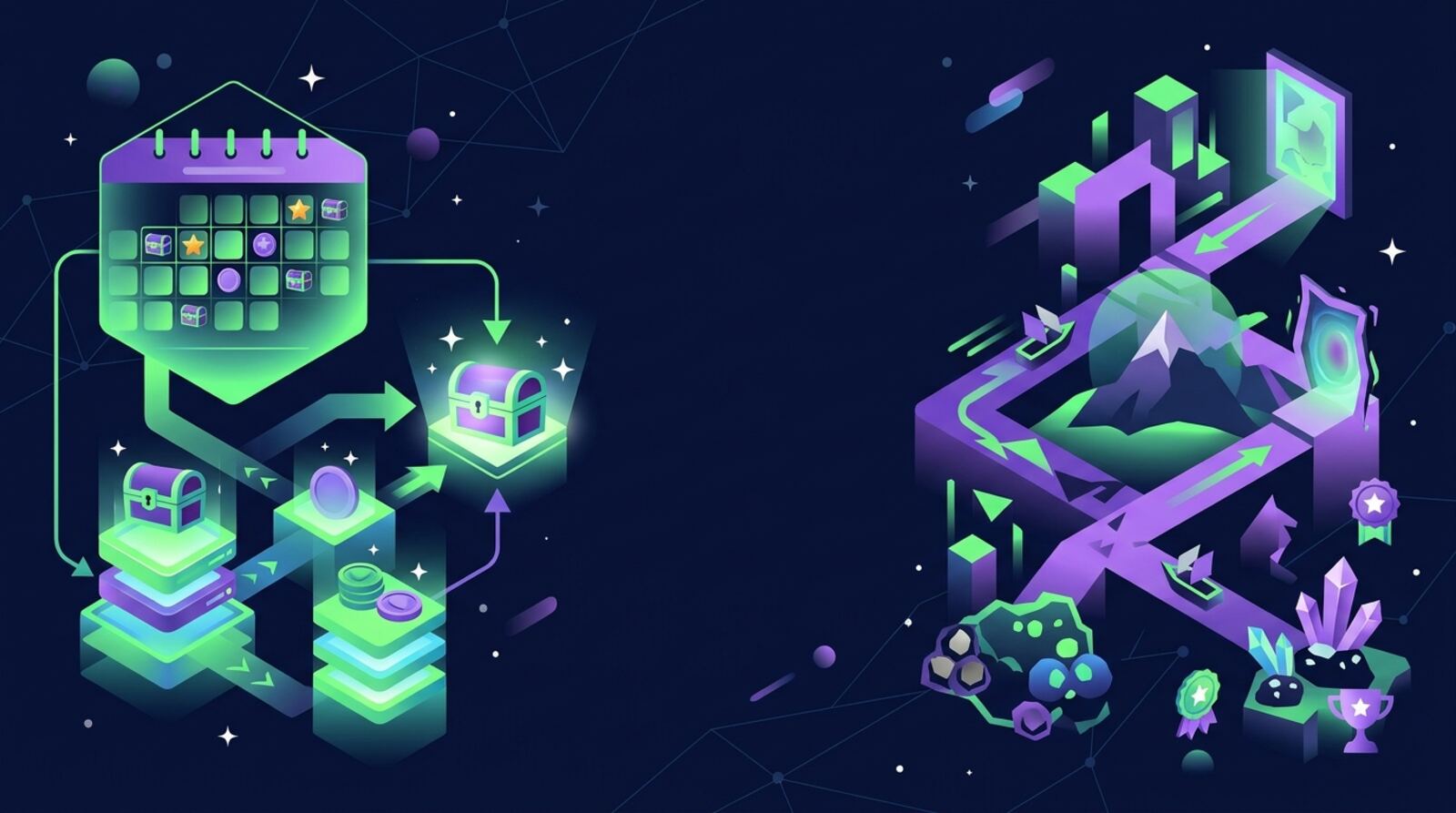
The phrase daily rewards with expeditions covers a family of mechanics that many games now share. A player logs in, completes a small task, and receives a reward. Longer tasks, sometimes called expeditions, send a character, unit or avatar away for a set period. When the timer ends, the player collects a bundle of items, currency or progress.
In community-driven and Web3 games, these loops often sit alongside tokens, collectibles and player-run economies. That is why they attract attention. The reward may be a cosmetic item in one title and a tradable digital asset in another.
We have not found a single, confirmed public program called Xpeditions in the material reviewed for this guide, so this article describes the general pattern rather than one product's exact rules. Where a specific game is mentioned, check its official channels for the current terms.
The core idea is simple. Daily rewards encourage short, regular sessions. Expeditions turn waiting time into a reason to return. Developers use both to keep a community active between major updates. Understanding that purpose helps you judge whether the reward is worth the time it asks for.
How daily reward systems usually work
Most daily reward systems follow a predictable structure. A reset time, often at a fixed time of day in UTC or server time, marks when the next reward becomes available. Missing a day may reset a streak, while consecutive logins may increase the value of the reward.
Common features include:
- A login bonus that gives a small item every day
- A streak counter that grows the reward for consecutive days
- Milestone rewards at set totals, such as seven or thirty days
- Limited-time events that add bonus rewards for a short window
The reset time is one of the most useful details to find. If you play at a time that falls near the reset, you may miss a claim without noticing. Many players set a reminder for the reset time shown in the game's settings.
Streaks deserve extra care. A long streak can feel like a loss if you miss a day, and that feeling is part of how these systems encourage return visits. Check whether the game lets you recover a missed day, and whether the recovery costs anything.
What an expedition mechanic typically asks of players
An expedition is usually a timed task. You choose a unit, character or team, set it to a mission, and wait. The length of the mission, the power of the unit and the difficulty of the destination can all change the result.
Some expeditions are passive. You start the task and come back later. Others require a choice during the run, such as picking a route or using a resource. Passive systems suit short sessions, while active systems reward attention.
Expeditions often include a risk element. A mission may fail, return less than expected, or cost a resource to launch. Read how the game handles failure before you rely on expeditions for steady income.
When a developer changes the expedition system, the rewards and costs can shift without much warning. Keep a note of the version or update that introduced the current rules so you can tell later whether a change affected your results.
What to check in a reward announcement
Before you spend time or money on a reward system, look for these details in the official documentation:
- The full reward table, including rarity and drop chances
- Whether rewards are random, fixed or tied to your progress
- The reset time and what happens to unclaimed rewards
- Whether rewards are bound to your account or can be traded
- Any fees for claiming, withdrawing or converting rewards
- Whether the game can change the reward rules without notice
A reward table that gives drop rates is more useful than a list of possible items with no odds. If the developer does not publish odds, treat the reward as unknown.
Also check how the reward is paid. In-game currency often has a fixed use inside the game. Tokens and NFTs depend on external markets, and their price can move quickly. Note whether the reward is claimed into your wallet or stays in the game's own system until you move it.
Reading a reward program: a worked example
Crypto-linked games sometimes publish reward updates as social posts. One example from the search material is a post from RollerCoin, a crypto mining game, announcing a renewed drop-reward program for its Expeditions. The post described drops of mining equipment and other rewards, but the snippet we reviewed was incomplete, so the full odds, eligibility and end dates were not visible.
This kind of announcement shows the pattern well. A developer introduces a new reward structure, names a feature, and promises items with varying value. To understand the offer, you need the full post, the official rules and the in-game explanation.
If you see a similar announcement, ask four questions. What exactly is the reward? How is it chosen? What does it cost to earn it? Can you still get the reward if you play less often?
We have not verified the current status of that program in this guide. Check the developer's official channels for up-to-date terms before you plan around it.
Tokens and NFTs: value is not guaranteed
Many players see a token or NFT reward and assume it has a fixed value. That assumption can be costly. A token's price depends on supply, demand, liquidity and market sentiment. An NFT's price depends on what another buyer will pay, which can be far below what you paid or what the game listed.
The gap between a reward's in-game value and its market value is central. A daily item may look valuable in the interface but have few buyers. A token may be listed on exchanges, but thin trading can make it hard to sell at a fair price.
For token rewards, check where the token trades, how much is in circulation and whether there is a vesting or lockup schedule. Price tools change often, so use live sources rather than figures in an article, including this one.
As a practical rule, plan your play around the enjoyment of the game first. Treat any token or NFT as a possible bonus, and avoid counting on it to cover costs. Set a budget and keep it separate from money you need for living expenses.
Daily rewards in Web3 and move-to-earn games
Several well-known games use daily loops or timed tasks as part of their design. They work differently, so compare them on their own terms.
Sweatcoin is a free smartphone app that rewards daily steps with coins linked to the SWEAT token. Its daily structure is simple, and it is aimed at casual users who want fitness rewards rather than a full game.
Splinterlands is a blockchain card game on Hive. Daily quests and seasonal rewards are part of its progression, and players can earn or stake the SPS governance token. Its rules and token details should be checked against current official documentation.
Alien Worlds is a play-to-earn metaverse on WAX where players mine and earn TLM tokens and NFTs. Mining involves timing and resource choices, which makes it closer to an expedition-style loop.
Pixels is a web3 farming and exploration game with a PIXEL token. Its daily tasks and guild features reward regular play, and it is aimed at players who understand wallets and token risk.
Slime Miner is a Web3 idle clicker RPG with a seasonal token airdrop. Idle games often use timers and daily claims, so check how the seasonal reward is defined before you expect a payout.
Axie Infinity is a Ronin-based game where players battle and collect creatures, with its own AXS token. Daily quests have been a feature of its play, but current details should be confirmed in its official materials.
Security habits before you claim rewards
Daily rewards and tokens can attract scams. Impersonators copy game names, post fake reward claim pages and ask for wallet access. Some offer a "reset" or "boost" that requires your seed phrase. Treat any such request as a sign of fraud.
Practical habits that reduce risk:
- Open games only from official app stores, the developer's website or the game's verified social accounts
- Never share your seed phrase or private keys, and do not enter them on any website
- Check the domain name carefully before connecting a wallet
- Revoke token approvals you no longer need using a reputable wallet tool
- Use a separate wallet for games, with only the funds you can afford to lose
- Be cautious with direct messages that offer prizes, support or early access
A legitimate game will not need your seed phrase to give you a daily reward. If a claim asks for it, stop, do not connect the wallet, and check the official channels for a warning.
If you think you have already shared a seed phrase or signed a suspicious transaction, move remaining funds to a new wallet you control and report the incident to the platform and to your local consumer or cybercrime authority.
How to decide if a reward-based game is worth your time
A useful test is to ask how the game would feel with no token or NFT at all. If the core loop is fun, daily rewards are a bonus. If the game only makes sense when you are earning, be more cautious.
Consider the time cost. A daily reward that takes five minutes may be reasonable. A reward that requires constant checking, multiple accounts or paid boosts can become a burden. Setting a daily time limit is a simple way to keep play balanced.
Consider the financial cost. Entry fees, boosts, guild dues and marketplace fees all reduce the net value of a reward. Add them up before you judge the offer. Watch for systems that push you to spend more to keep a streak alive.
Consider your location. Some games with tokens, prize pools or wagering features are restricted in certain countries or states. Check your local laws before you join, and do not use a VPN or any other method to get around geographic restrictions, age checks or identity verification.
Finally, consider your reasons for playing. Daily rewards can make a game more social and more regular. They can also lead to overplay. A clear limit and a plan to stop when the reward stops being fun will protect your time and money.
If you are 18 or over and choose to play games with money or token elements, gamble responsibly and set limits in advance. If you think gaming or spending is becoming a problem, seek free, confidential support from a local helpline or health service.
Frequently asked questions
Are daily rewards in community games worth claiming every day?
Usually not. Most daily reward systems are designed to keep players returning, and the value of any item, currency or token depends on in-game demand and on the market. Treat daily rewards as a bonus to the play you already enjoy, and check the game's published reward rules before assuming a payout.
How can I confirm what an expedition actually pays out?
Read the official rules, announcements and FAQ from the developer, then look for the reward table, reset time, eligibility rules and how items can be sold or withdrawn. Compare the stated rules with what players report on the game's official community channels, and keep in mind that community posts are not always accurate.
What should I do if a daily reward does not appear?
Stop claiming and check the developer's official channels for a published reset schedule or known issue. Do not share your login details or seed phrase with anyone who offers to fix the problem, and be wary of links sent in direct messages.
Is it safe to spend money on expedition boosts in a token-based game?
Only if you accept that the game is a gamble on token and NFT prices. Keep spending to an amount you can lose, avoid borrowing to play, and check the local laws where you live. Crypto-linked games may be restricted or treated differently depending on your jurisdiction, and you should confirm your eligibility before taking part.
Mentioned in this guide
dApps in this guide
Sweatcoin is a free move-to-earn smartphone app that rewards daily steps with coins, linked to the SWEAT token, for casual users interested in fitness rewards.
Splinterlands is a blockchain collectible card game on Hive where players battle with NFT cards and earn or stake the SPS governance token.
Alien Worlds is a community-built play-to-earn metaverse on WAX where players mine and play to earn TLM tokens and NFTs.
Pixels is a web3 farming and exploration game with a PIXEL token, guilds and ecosystem staking, aimed at gamers who are comfortable with wallets and token risk.
Slime Miner is a Web3 idle clicker RPG with NFTs and a seasonal SLX token airdrop, aimed at casual mobile players curious about play-to-earn rewards.
Axie Infinity is a Ronin-based NFT game where players collect, combine and battle creatures called Axies, with its own AXS token.
Common is a non-custodial ZK privacy dapp on Arbitrum and Aleph Zero EVM that lets users shield funds and withdraw to a new, unlinkable wallet.
Crypto.com is a centralized crypto exchange and app for buying, trading and spending 400+ coins, with a Visa card, staking and a separate self-custody wallet.
Infinity is a DeFi lending and borrowing protocol offering floating and fixed rates and yield curve trading, still shown as testnet or beta on its homepage.
Keep reading
Related guides
Web3 gaming · How-to
How to Make Money Playing Games Online in 2026: Realistic Options
Most ways to earn from games pay modest amounts, and some require time, skill, or upfront costs. This guide sorts the realistic options from the scams and shows how to start with low risk.
Web3 gaming · Explainer
Play to Earn vs Move to Earn: Key Differences in 2026
Play-to-earn and move-to-earn both attach crypto rewards to everyday activity, but they reward different things and carry different costs. This guide explains how each model works, where the money comes from, and what to check before you spend time or money on either.
Web3 gaming · Explainer
Ubisoft, Animoca Brands and Rebel Bots Explained (2026)
Ubisoft has invested in Animoca Brands, one of the larger Web3 game companies, and Rebel Bots is a play-to-earn title that readers often connect with that relationship. This guide separates what the public record confirms from what you should verify yourself before playing or buying anything.
Web3 gaming · Best list
Top 5 Simple Play-to-Earn Games to Try in 2026
Simple play-to-earn games let you start with a phone or browser and little or no upfront spending. This guide compares five options on how they work, what they cost to start, and where token rewards can fall in value.
Web3 gaming · Explainer
Daily Town Rewards in 2026: How They Work and Where to Earn
Daily town rewards are the login gifts, daily tasks and pass bonuses that city-building games give for returning each day. This guide explains how they usually work, why they change, how to check what you can claim, and how Web3 town and city games handle similar rewards.
Web3 gaming · Explainer
CryptoTanks Game Guide: What to Check Before Playing
CryptoTanks is a tank-themed crypto game, but its current release details are difficult to verify. This guide explains what to check before downloading, connecting a wallet, or spending money.
Web3 gaming · Explainer
Dark Country WAX Land Sale: What Is Confirmed and How to Check
Public reporting for this topic describe dark country music, not a confirmed WAX land sale. This guide explains the two meanings of the name and how to check any land sale safely.
Web3 gaming · Explainer
CryptoMines Reboot Vote: What Happened, Status and What to Know
CryptoMines, a play-to-earn game built around the ETERNAL token, moved in late 2021 to propose a reboot through a community vote after its token collapsed. This guide explains what was proposed, what public reporting shows about the outcome, and how to check the status of any similar relaunch.