Web3 gaming · Explainer
Bears and Foxes After Wolf Game: How Animal-Faction NFT Games Work
Wolf Game turned a simple predator-and-prey split into an NFT staking economy, and bear and fox games borrow that structure. This guide explains the original mechanics, why copies appear, and how to check any follow-on project before you commit funds or time.
By the DappsAtlas editorial team · Updated
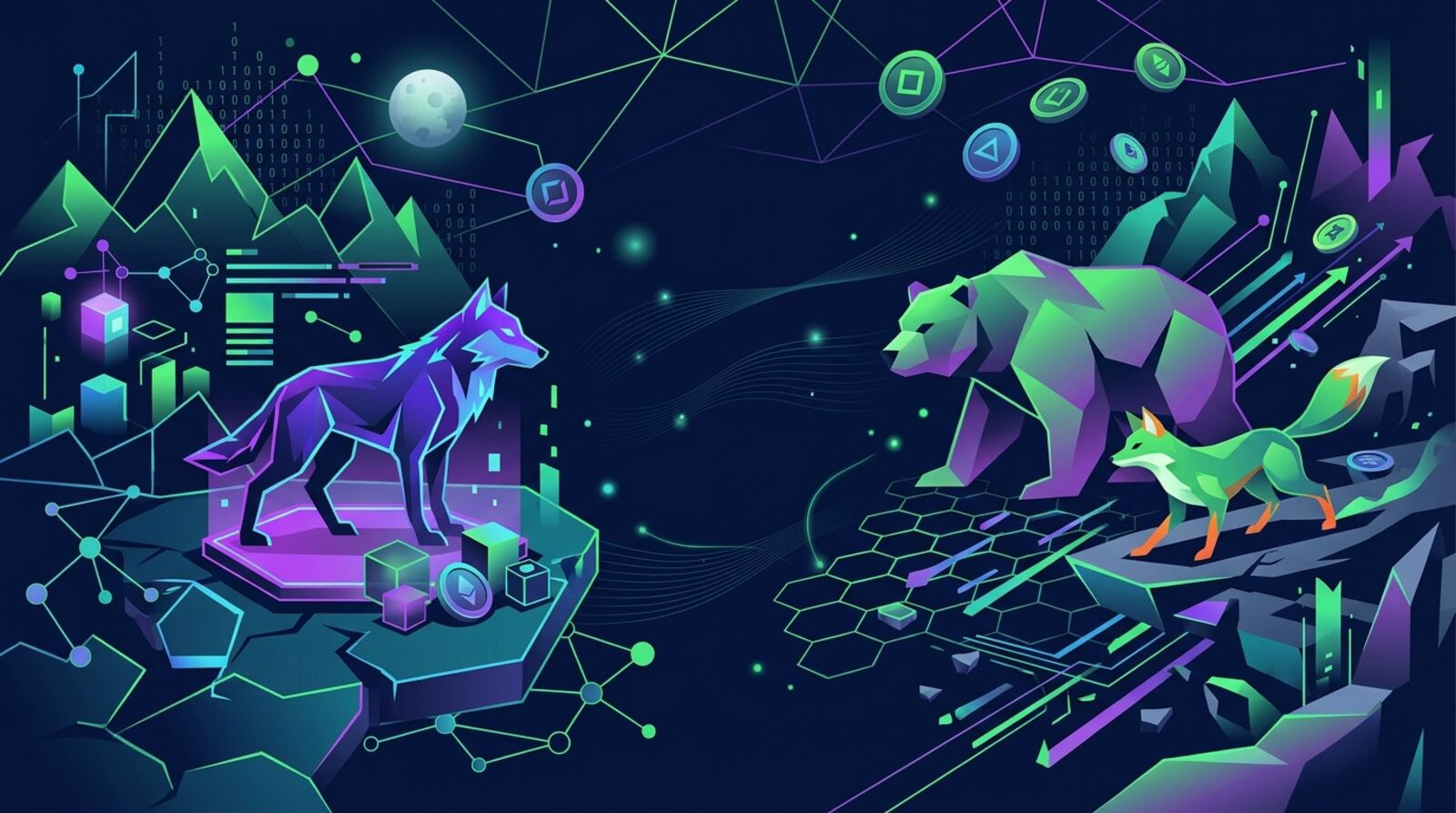
What Wolf Game was and why it matters
Wolf Game was an NFT project on Ethereum that launched in 2021. Its collection held a fixed number of characters split into two factions, wolves and sheep. The split was the core idea: each faction had a different job in the game economy, so holders were not all doing the same thing.
The project drew attention for its simple premise and its strong community around memes and role-play. It also became a reference point for many later projects that wanted to combine collectibles with token rewards. When people search for bears and foxes following Wolf Game's footsteps, they usually mean games that copy this faction structure with new animals.
Understanding the original helps you read the copies. Follow-on projects often keep the wording and visual theme but change the economics, the rules or the team behind them. Some of those changes matter a great deal for what you can earn and what you can lose.
Because activity around any NFT game moves quickly, this guide focuses on the design pattern rather than a single price or player count. Check current status from the project's own channels and from on-chain data before you rely on any claim about it.
How the wolves-and-sheep staking model worked
In the original design, sheep could be staked in a central contract to earn a reward token. Wolves did not earn in the same way. Instead, a portion of the rewards that sheep generated was taxed and distributed to wolves. This created a relationship where one faction's gain came partly from the other's flow.
That relationship is why the game was discussed as a predator-and-prey system rather than a simple staking pool. Holders who chose the wolf side were betting on a different return profile from those who chose sheep. The mechanic rewarded timing and role choice as well as the number of NFTs held.
For readers, the important point is that the rules were on-chain. The reward rates, tax logic and staking conditions were visible in the contract code. A reader can check how a faction earns and how the split is calculated rather than relying on summaries.
When you look at any faction game, ask three questions: who earns, where the earnings come from, and whether the source is sustainable. If the answer to the last question depends on new buyers joining, the design carries a higher risk than one that relies on fees or real in-game spending.
Why bear and fox games copy the wolf idea
Predator and prey is an easy story to sell. It gives collectors a clear identity, it fits well with meme culture and it offers a simple way to explain a two-sided economy. Teams that copy the structure often keep the same tension: one group creates pressure on the other, and rewards move between them.
Bear and fox versions usually swap the animal names and artwork while keeping the basic loop. The bear side might be framed as a strong, stake-heavy role, and the fox side as a quick, opportunistic role. Some projects add new traits, new maps or new minigames, but the core question remains the same: which role earns and at what cost to the other role.
Copying the structure is not the same as copying the quality of the economics. A new team may change the tax rates, the supply of reward tokens or the way players can exit. Each change can make the game better or worse, so you should evaluate each project separately.
If a project uses the faction idea mainly for marketing, check whether the on-chain rules are published and verifiable. A clear contract and open documentation are stronger signals than a theme alone.
Comparing the roles in faction-style games
A comparison table helps you see the roles side by side. The labels below describe the general pattern in faction NFT games, not one specific project, so check each contract for its actual rules.
| Aspect | Prey-style role | Predator-style role |
|---|---|---|
| Typical goal | Stake to earn a steady reward | Earn a share of pressure or tax |
| Main risk | Reward token falls or emissions rise | Returns depend on opponent activity |
| What to verify | Reward rate, lock-up or unstaking rules | Tax logic, distribution share, caps |
| Time horizon | Often longer, passive | Often shorter, more active |
| Common mistake | Ignoring token supply growth | Assuming a tax pool will stay full |
The table is a starting checklist. Before you join, confirm the exact formulas in the contract or in the published documentation. Where a project publishes no formula, you cannot reliably compare the two sides.
Readers often assume one role is safer. In practice, both depend on the same reward token and on the number of active players. The safer choice depends on your tolerance for token price swings and on how much attention you can give the game.
How to evaluate a follow-on NFT game
Start with the contract. Find the verified source code on a block explorer and check that the deployed address matches the address the team publishes. If the code is not verified, you cannot easily confirm how rewards, taxes or admin powers work.
Next, read the documentation and compare it with the code. Look for the reward rate, the distribution of taxes, the minting limits and any ability for the team to change these settings. A project that can change its own rules at will deserves more caution than one whose rules are fixed.
Then look at the team and its history. Some projects are run by identifiable people with a track record. Others are anonymous. Anonymity is not automatically a red flag, but it means you have fewer ways to hold anyone accountable if something goes wrong.
Finally, check the community channels for specific questions rather than hype. Good signals include staff answering technical questions, clear updates and published changelogs. Weak signals include pressure to buy quickly, promises of fixed returns or unclear explanations of where rewards come from.
Token economics and reward inflation
Token economics decide whether a faction game can keep paying its participants. If a reward token is issued continuously and few players spend or burn it, the supply grows and the price tends to fall. Many early blockchain games ran into this problem, and it affected both predator and prey roles.
To check the economics, look for the total and maximum supply, the emission schedule and any burn or sink mechanisms. A sink is any use that removes tokens from circulation, such as crafting, upgrades, fees or purchases. Without sinks, rewards pile up, and the value of each unit depends on new buyers.
Also check the liquidity of the reward token. A token with thin liquidity can move sharply on small trades. Use a reputable market data page to see volume and trading depth, and treat quoted prices as snapshots that change often.
Do not plan around a headline earnings figure. Projected yields and early reward numbers change with participation, token price and game rules. Make your own rough model with conservative assumptions and check that the model still works if the token price falls by half.
Security checks before you connect a wallet
NFT games carry several security risks. The most common include phishing sites that imitate the official game, malicious approval requests that give a contract access to your tokens, and fake support accounts that ask for seed phrases. Defensive habits protect you from most of these.
Use a dedicated wallet for game activity and keep only the funds you need for play in it. Review every transaction and approval request before you sign it, and revoke approvals you no longer need using a reputable approval management tool. Never share a seed phrase or private key with anyone, including someone who claims to be support.
Bookmark official addresses rather than following links from social posts or ads. Check that the contract you interact with matches the address the team publishes, and be cautious about any sign-in request that asks for more permissions than a simple connection requires.
An audit report reduces risk but does not remove it. Read the scope of any audit, note which contracts were excluded and check whether later changes were reviewed. Treat an audit as one input among several.
Collectibles, floor prices and secondary markets
Many collectors buy NFTs on secondary markets rather than at mint. Prices in these markets reflect rarity, sentiment and expected future rewards, and they can change sharply. Before you buy, look at recent sales and the listing history instead of the lowest asking price alone.
Watch for wash trading and inflated floor prices. Sales between related wallets can make a collection look busier than it is. Block explorers and marketplace activity pages can show whether a trade involved wallets that repeatedly trade with each other.
Rarity traits matter for some games but not others. In a faction game, the faction itself may matter more than individual traits, while in other games specific traits affect rewards. Check whether the game's rules tie rewards to traits and how those rules are described.
As a seller, consider the tax and fee structure on both the game and the marketplace. Fees can reduce your net proceeds, and some games apply transfer or staking rules that affect how quickly you can exit. Read these rules before you list a token for sale.
Risks, local laws and an 18+ reminder
Faction NFT games and token rewards can result in real financial loss. Token prices can fall to near zero, games can stop receiving updates and projects can be abandoned. Assume that any position could lose most of its value.
Check the rules in your country or region before you buy, sell or stake any digital asset. Some places restrict tokens or NFTs, and some treat certain reward structures as gambling or as regulated financial products. Local rules can change, so confirm them with an official source or a qualified adviser.
Keep your activity within your means. Set a fixed budget before you start, avoid borrowing to buy assets, and stop when you reach your limit. If you find that play is affecting your sleep, work or relationships, step back and seek support from a local helpline or a professional service.
This guide is for readers aged 18 or over. It describes how these designs work and how to check them. It is not financial advice, and it does not recommend buying or staking any specific asset.
Frequently asked questions
Is there an official bears and foxes game that follows Wolf Game?
Not from the sources reviewed here. Public reporting for this phrase are mostly wildlife videos, forum posts and game-camera clips, and none describe a specific bear or fox NFT game. Check the project's official channels, its contract on a block explorer and its marketplace listings directly before assuming it is live, active or safe.
What made Wolf Game different from other NFT collections?
Wolf Game is an NFT game on Ethereum that sorted its collectibles into two factions, wolves and sheep. Sheep staked in a central contract earned a reward token, while wolves received a share of rewards taxed from the sheep. The design rewarded different roles rather than only holding.
Why do follow-on faction games often struggle with their reward token?
Reward tokens can lose value quickly when many new tokens are issued and few are spent or burned. Check the total supply, the emission schedule and where tokens are actually used before you stake. Treat any projected earnings as unverified until you can see the contract rules yourself.
What should I check before connecting a wallet to a faction NFT game?
Start with the verified contract on a block explorer, read any audit report the team publishes and confirm that the report matches the deployed code. Check admin keys, upgrade rights and whether the team can change reward rates. If any of this is missing or unclear, treat that as a reason to wait.
Are these games legal to play where I live?
Gaming and NFT activity can involve real financial loss, and some token mechanics behave like speculation. Check the rules where you live before you buy or stake anything, and only use funds you can afford to lose. This content is for 18+ readers only.
Mentioned in this guide
dApps in this guide
Aavegotchi is an NFT collectibles game with a GHST token, originally DeFi-staked and powered by Aave, now moving to Base for players and builders.
Robots.Farm is an on-chain game for collectors: open crates, hatch robot eggs, reforge parts and stake robots, with very low TVL and no listed audits.
Warp is a GameFi project where NFT starships earn daily WARP credits and play battles, expeditions and minigames across several chains.
ImmutableX is a web3 gaming platform on Ethereum whose IMX token covers fees, staking, governance and gas on Immutable zkEVM, aimed at gamers and token holders.
Common is a non-custodial ZK privacy dapp on Arbitrum and Aleph Zero EVM that lets users shield funds and withdraw to a new, unlinkable wallet.
Stake is an online casino and sportsbook with crypto and local-currency payments, a VIP program and loyalty rewards, for adults where gambling is legal.
Keep reading
Related guides
Web3 gaming · Explainer
Web3 Games with Staking: How It Works and What to Check in 2026
Web3 games with staking let players lock tokens or game assets to earn rewards, but the returns depend on token design, game activity and risk. This guide explains how the mechanics work, which models to compare, and what to check before committing funds.
Web3 gaming · Best list
Best Play-to-Earn Games: Then, Now and How to Judge Them
Play-to-earn games were the headline trend in 2021, and September 2021 lists focused on a handful of titles. This guide explains what those games were, what has changed since, and how to judge any play-to-earn game today.
Web3 gaming · Explainer
Bears and Foxes After Wolf Game: How Copycat NFT Games Work changed for 2026 readers
Wolf Game's staking and predator-versus-prey design inspired a wave of copycat NFT games with bears and foxes. This guide explains what those projects borrowed, which parts carry the most risk, and how to check any of them yourself.
Web3 gaming · How-to
Crazy Defense Heroes Guide: How to Play and Earn in 2026
Crazy Defense Heroes is a mobile tower defense game from Animoca Brands with a play-and-earn layer built around TOWER tokens. This guide covers how it works, how to progress efficiently, how to claim rewards safely and what to check before you count on any payout.
Web3 gaming · Explainer
Battledome and Alien Worlds: What Connects Them in 2026
Battledome is the battle arena and card game in Neopets, and the sources found here do not show it giving any power to Alien Worlds players. This guide explains what each game is, what would need to be true for such a link, and how to check claims like this yourself.
Web3 gaming · Review
Benji Bananas Review: Playing on Mobile to Earn ApeCoin in 2026
Benji Bananas is a physics-based monkey runner on iOS and Android, and its play-to-earn layer is tied to a Web3 wallet and a token called PRIMATE. This guide explains what the game offers on a phone, how the earning side works, what the sources do and do not confirm about ApeCoin, and what to check before you spend time or money.
Web3 gaming · Best list
Battle Racers Shut Down: 5 Web3 Game Alternatives for 2026
Battle Racers has closed, so this guide covers what to do with any assets you still hold and five web3 games worth comparing as replacements. Each pick is judged on chain, token model, access and how much you need to trust the project.
Web3 gaming · Explainer
Benji Bananas and the PRIMATE Token: What Players Need to Know
Benji Bananas is a mobile monkey game whose PRIMATE token was tied to gameplay and a membership pass NFT, according to its 2022 lightpaper. This explainer covers what PRIMATE was meant to do, what the July 2023 theft report changed, and how to check the current status safely.