NFT · Explainer
Why a Bear Market Can Delay an NFT Music Drop in 2026
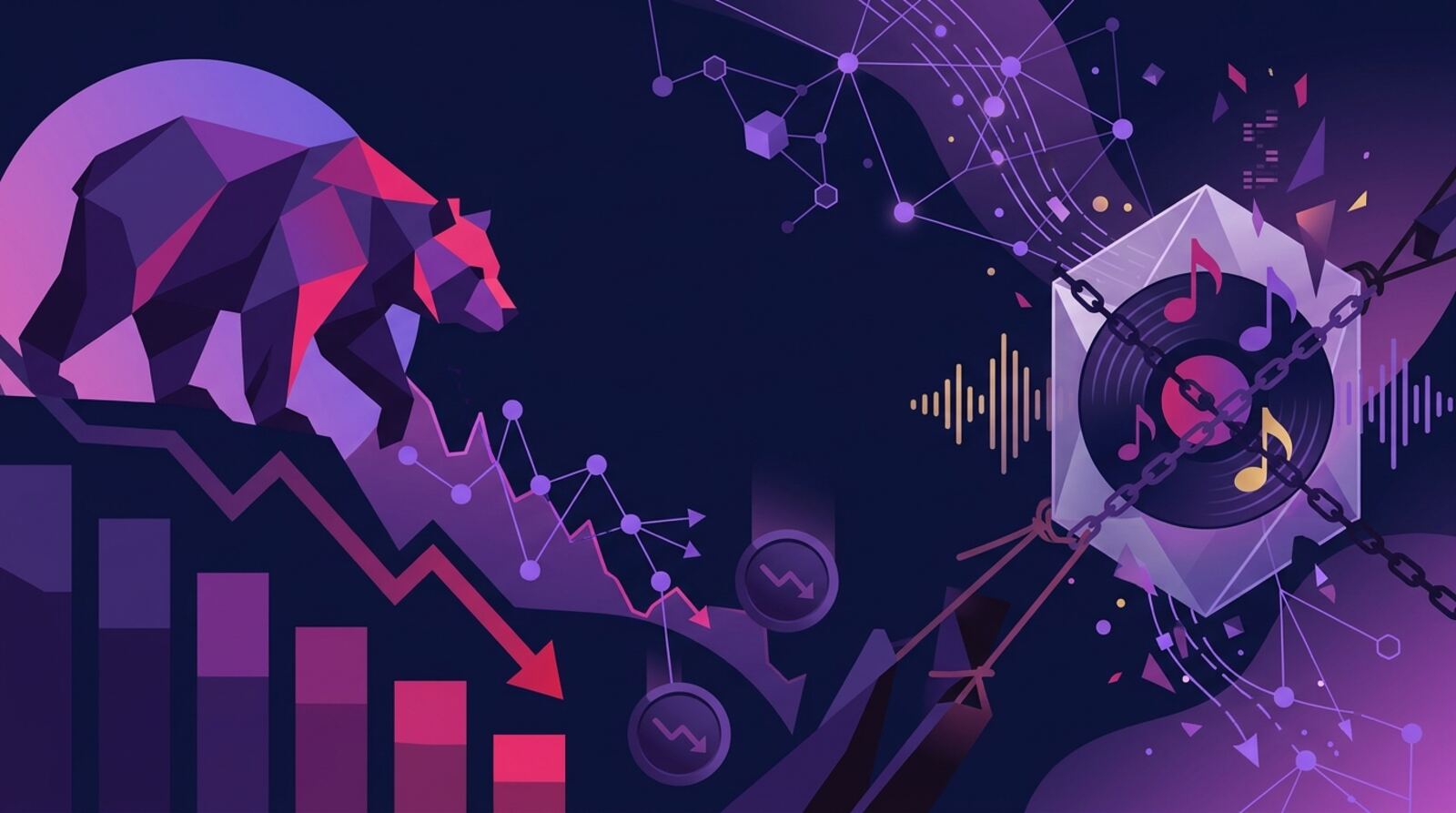
A bear market can push back an NFT music launch even when the brand is strong, because lower prices, thinner trading and weaker demand all change the economics of a drop. This guide explains the mechanics, what the public record does and does not confirm about the BAYC Music Group delay, and how readers can check status safely.
By the DappsAtlas editorial team · Updated
What BAYC Music Group is and why its first drop matters
BAYC Music Group is described in coverage as a music venture connected to the Bored Ape Yacht Club brand. Bored Ape Yacht Club is a collection of NFTs created by Yuga Labs, and it became one of the most visible NFT brands of the 2021 and 2022 cycle. A music venture built on that brand usually aims to combine fan ownership, collectible access and music releases.
A first drop matters for several reasons. It sets the price expectations for holders, tests whether buyers will pay for access, and signals how the team plans to distribute value. For a project like Kingship, the first release is often treated as a benchmark for the rest of the roadmap.
Because the brand is tied to a large NFT collection, readers often assume the music side will follow the same market patterns. That assumption is worth testing. Music and collectible sales depend on different buyers, different timing and different promotion, so the NFT market alone does not tell you how a music launch will perform.
When reading about any BAYC-linked project, separate three things: the brand history, the team's current announcements and the market conditions around the launch. Mixing them together is the most common reason readers come away with confident conclusions that the evidence does not support.
What the public record confirms about the delay
Public reporting used for this guide do not include a primary announcement from BAYC Music Group about a delay of Kingship. They also do not state a new date, a revised price or a list of reasons from the team. Any article that presents those details as settled should be checked against the team's own channels before you rely on it.
What the sources do support is the wider market context. Coverage from April 2026 describes the Bored Ape floor price as having fallen sharply from its all-time high, and it says the broader NFT market has declined by more than 90 percent since the peak of the previous bull run. That is a claim from one news outlet, so treat it as reported rather than audited.
This gap is important. A bear market can be one reason a team chooses to wait, but it is not proof of the reason in a specific case. Teams may delay for legal review, technical work, partner timing, regulatory reasons or simple scheduling. A useful reading of the situation is that market conditions make a delay plausible, while the actual cause needs an official source.
If you are following the story, keep a short log of what is confirmed, what is reported and what is still unknown. That habit makes it easier to update your view when the team speaks.
How a bear market changes NFT launch economics
NFT launches depend on demand at a fixed moment. A drop typically requires buyers to commit funds at a set price during a set window. When prices are falling, buyers are more cautious, and sellers of existing NFTs may be discounting, which makes new issuance harder to sell at the planned price.
Several effects usually appear together. Trading volume falls, so fewer buyers are active. Floor prices can drop, which makes the secondary market look less attractive to first-time buyers. Holders who wanted to flip assets may leave, and communities can shrink or become less active. Teams then face a choice between launching into weaker demand or waiting for conditions to improve.
A team may also consider the value of its own holdings. If a collection's floor has fallen, any treasury or incentive plan tied to those assets becomes harder to justify. This is one reason some projects reduce scope, change pricing or move launches to a later date.
None of this proves that a particular team made a particular choice. It does explain why a bear market is a reasonable factor to consider. For readers, the practical question is whether the team has explained its reasoning in a way you can check against public information.
Signals that show whether a drop is being delayed for market reasons
You can often learn more from patterns than from headlines. Several public signals help show whether a launch is under pressure, though none of them proves a cause on its own.
First, look at the floor price and how it has moved over months, not days. A steady decline is different from a short spike and recovery. Second, compare sales volume with the floor. If prices fall while volume also falls, buyers may be stepping back. If prices fall while volume stays high, sellers may be moving out.
Third, check the number of unique buyers and active wallets over time. A collection can have large trades from a small group of wallets, which can look healthier than it is. Fourth, watch official channels for changes in wording. A team that stops naming a date, shifts to vague language or removes earlier timelines may be signaling a change, but again the reason still needs confirmation.
Finally, compare the project with other collections in the same period. A market-wide decline suggests a general cause, while a problem limited to one project points to something more specific. Read the context before deciding what the data means.
What the BAYC floor price history tells readers
Floor price history is one of the most cited measures of the Bored Ape Yacht Club collection, so it is useful to understand what it shows and what it does not. Coverage from July 2023 reported that the BAYC floor had dropped to its lowest level since 2022. A March 2024 report described declining NFT sales and falling values across blue-chip collections, including Bored Ape and CryptoPunks.
The April 2026 report mentioned earlier describes the floor as having cratered from its all-time high. Taken together, these reports suggest that the collection has gone through several cycles of decline and partial recovery rather than one continuous slide. They are news reports, so readers should check the exact figures on a live data provider before quoting them.
A floor price is only one data point. It reflects listings, not every completed sale. It can be affected by a small number of sellers, and it can change quickly during quiet periods. Trading volume, the average sale price and the number of unique buyers give a fuller view.
For readers, the lesson is to use long-run trends with care. A bear market can depress prices for a collection without explaining every decision a team makes. The historical record is most useful as background for why a launch might be timed differently, not as a forecast.
Legal and trademark context around Bored Ape projects
Bored Ape Yacht Club has been involved in legal matters that are relevant to any new release from the brand. Coverage from October 2025 reports that a U.S. federal judge ruled that BAYC NFTs in a specific case did not meet the Howey test, which is the framework U.S. courts use to decide whether an asset is an investment contract and therefore a security. The reporting describes this as a ruling in that case, not a general answer for all NFTs.
Earlier, in 2023, a group of investors filed a lawsuit against Yuga Labs and other parties, including an auction house. Coverage described the plaintiffs as accusing the defendants of inflating prices. These are allegations in a lawsuit, so they should be read as claims that were made in court rather than as established findings.
In 2022, Yuga Labs also filed a trademark lawsuit tied to a conceptual artist, which was reported in the context of the broader NFT market. Trademark and intellectual property disputes can affect how a brand can use names, art and merchandise.
Why this matters for a delayed drop: legal review takes time, and teams sometimes wait for clarity before launching. Again, the sources do not confirm that legal issues caused this delay. Readers who want to understand the legal side should read primary court filings where available and consult a qualified lawyer for questions about their own position.
How to check official announcements and on-chain data safely
When a launch is delayed, the most reliable information usually comes from the project's own verified channels and from public data you can check yourself. Start by identifying the official accounts, websites and announcements. Confirm that a link or account is the one the team uses by checking it against several sources, not just a single post.
Next, look for dated statements. A useful announcement names what has changed, when the change takes effect and where updates will be posted. Vague statements that avoid dates are less useful, and you should treat them as incomplete rather than as confirmation of anything.
For on-chain data, use reputable public blockchain explorers and established NFT data services to check sales history, contract addresses and holder counts. Compare numbers across two providers if the figures matter to you. Note the time you checked, because data changes constantly.
Keep your own record of what you found. Writing down the source, the date and the claim makes it easier to notice when a later report contradicts an earlier one. This practice matters most when a story is moving quickly and many accounts repeat the same unverified claim.
Avoiding fake mint sites and impersonation during delays
Delays often attract scammers, because uncertainty makes people more likely to click quickly. Fake mint pages, duplicate social accounts, fake support teams and counterfeit presale offers are common. These can copy logos, artwork and wording from the real project.
Some practical defenses help. Bookmark the official site yourself rather than following links from replies or direct messages. Be wary of anyone who contacts you first offering early access, private allowlist spots or help recovering funds. Real teams rarely ask for your seed phrase, private key or recovery phrase, and you should never share those with anyone.
Before approving any wallet request, read what it allows. Some approvals give a contract ongoing permission to move tokens. Revoke unneeded permissions using a reputable wallet permission tool, and keep only the access you actually need. Use a separate wallet for new or uncertain mints if your setup allows it.
If you think you have already interacted with a fake site, disconnect the wallet, review recent approvals, move remaining funds to a new wallet you control and report the site to the platform where you found it. Speed matters, but so does checking each step carefully.
Where to look next: marketplaces and collections to compare
If you want to understand how NFT buying, selling and trading work in practice, it helps to compare several platforms rather than relying on one brand. Each has different strengths, fees, supported chains and collection coverage, so check current details on each platform before using it.
Sudoswap V2 is a decentralized NFT marketplace that supports several networks and offers on-chain royalty features and ERC-1155 support. It is aimed at NFT traders. NFTX takes a different approach by turning NFT collections into vault-backed ERC20 tokens, which lets users trade against a pool rather than matching with a specific seller. That model can be useful for understanding liquidity, but it also has its own risks and mechanics.
Courtyard focuses on vaulted, insured physical collectibles such as graded trading cards, sold through digital packs. It is a useful comparison if you are interested in how collectibles can be tokenized outside pure digital art. Pudgy Penguins is a penguin-themed brand with a meme token, a community and merchandise, which makes it a useful example of how a collection can extend beyond its NFTs.
Foundation was an Ethereum art marketplace that the team took offline indefinitely in April 2026 after a failed sale. Its case is a reminder that platforms can close, so check the current status of any service before depositing assets.
Frequently asked questions
Has BAYC Music Group officially confirmed why its first drop was delayed?
The public sources in this review do not confirm the exact reasons or timing for any delay of the Kingship launch. Treat any specific claim about the delay as unverified until it appears in an official announcement from the team or in reporting you can check against a primary source. Market conditions described in news coverage can explain why a team might choose to wait, but they do not prove that this was the cause.
Does a falling floor price always mean a collection is failing?
Not always. A floor price is the lowest listed price for an item in a collection, so it reflects only the cheapest available asset at that moment. It can fall because sellers are willing to accept lower prices, even when trading volume is also falling. Readers should look at sales volume, number of unique buyers and the spread between floor and recent sale prices before drawing a conclusion.
Does the court ruling on BAYC NFTs mean all NFTs are safe from securities rules?
No. The October 2025 ruling mentioned in news coverage was a decision by a U.S. federal judge in a specific case, and it found that the Bored Ape Yacht Club NFTs in that case did not meet the Howey test. That result does not automatically apply to every NFT, every token or every jurisdiction. Laws differ by country and change over time, so anyone with a legal question should consult a qualified professional.
How can I check whether a music drop has been delayed or changed?
Start with the official channels of the project and any verified accounts it has named. Check whether announcements are dated, whether they link to a clear timeline, and whether they are repeated in more than one place. Be cautious of posts that create urgency, ask for wallet approvals or promise guaranteed returns. If you cannot verify an announcement, do not send funds or connect a wallet to it.
What should I do if I see a mint or presale page that claims to be the delayed drop?
Be cautious. Many scams copy official branding during delays and launch fake mint sites, fake support accounts or fake presale pages. Only interact with addresses and sites you have verified through official sources, avoid signing transactions you do not understand, and never share a seed phrase or recovery phrase with anyone. If you suspect a scam, stop interacting with it and check your wallet permissions.
Mentioned in this guide
dApps in this guide
Sudoswap V2 is a decentralized NFT marketplace on Ethereum, Base, Berachain and Arbitrum with on-chain royalties and ERC-1155 support, for NFT traders.
NFTX turns NFT collections into vault-backed ERC20 tokens so users can buy and sell NFTs instantly at floor price against a pool.
Courtyard is a marketplace and tokenization service for vaulted, insured physical collectibles such as graded trading cards, sold via digital packs.
Pudgy Penguins is a penguin-themed brand with a PENGU meme token, an NFT-linked community and an official merchandise shop for fans.
Foundation was an Ethereum NFT art marketplace for creators; the team took it offline indefinitely on April 27, 2026 after a failed sale.
The Real Review is a wine and food publication for readers seeking reviews, winery rankings and regional wine classifications.
Keep reading
Related guides
NFT · How-to
How to Sell an NFT: A Step-by-Step Guide for 2026
Selling an NFT takes a few steps, but the choices you make about marketplace, price format and wallet permissions decide how much you keep and how safe the sale is. This guide covers each stage, from checking ownership to recording the sale for tax.
NFT · Explainer
BAYC Music Group and the Delayed First Drop: What to Know
A bear market can push back an NFT project's first release even when the team has a plan. This guide explains how that happens with BAYC Music Group, what public records do and do not confirm, and how holders and fans can check a launch date for themselves.
NFT · Explainer
Global NFT Financial Regulations Explained for 2026
NFTs do not have one global rulebook. Whether an NFT is treated as a collectible, a security, a payment tool or property depends on how it is built, sold and marketed, and on where buyers and platforms are located.
NFT · Explainer
Beeple's $69 Million Christie's NFT Sale: What It Shows in 2026
Beeple's 2021 Christie's sale was a single JPG-style digital file sold as an NFT for $69.3 million. Here is what was sold, why the price drew so much attention, and what the sale does and does not show about NFTs.
NFT · Explainer
Beeple B20 Explained: Fractional Beeple Art and Digital Art's Rise
Beeple's B20 token turned a basket of digital artworks into a fractional, tradable asset, at the same moment Christie's put a purely digital piece on its auction block. This guide covers what B20 was, how digital art went mainstream, and how to judge similar assets safely.
NFT · Explainer
Banksy AAChoo NFTs on Solana: What Sold Out and What to Know
A sold-out Banksy AAChoo NFT drop on Solana through the VooVoo marketplace raises questions about what was sold, how the sale works, and what buyers can check now. This guide explains the process and the verification steps that apply to any artist-linked NFT drop.
NFT · Explainer
Why Beeple and CryptoPunks Dominate Top NFT Sales Lists
A few artists and one collection account for most of the biggest NFT sales ever recorded. This guide explains why Beeple and CryptoPunks keep appearing, where cat-themed NFTs fit in, and how to check the current rankings yourself.
NFT · Explainer
Azuki NFTs Explained: What They Are and How They Work
Azuki is a 10,000-piece anime-styled NFT collection on Ethereum from Chiru Labs. This guide covers its origins, the Beanz and Elementals spin-offs, what ownership means, and how to approach buying one safely.