NFT · Explainer
Aavegotchi Wearables Explained: DeFi NFT Guide for 2026
Aavegotchi is a DeFi-backed NFT game on Polygon, and its wearables are the items that change how a Gotchi looks and performs. This guide explains how the system works, what a new wearable set typically means for players, and how to check current details before you buy.
By the DappsAtlas editorial team · Updated
What Aavegotchi is and how it fits into NFT gaming
Aavegotchi is a blockchain game built on Polygon. Players summon digital creatures called Gotchis, which are NFTs, and then raise, customize and compete with them inside the game. The project describes itself as a mix of DeFi and NFTs, and that combination is the main thing that sets it apart from a typical pet or collectible game.
Each Gotchi is an NFT that the owner holds in a personal wallet. Because the owner controls the asset, the in-game items and the Gotchi itself can be traded on secondary markets, moved between wallets, or used in other parts of the Gotchiverse ecosystem. The project has also published guides and development updates over the years, which is why the official blog and documentation are the best places to find current rules.
The game is not a single feature. It combines a creature collection, a customization layer built around wearables, and a set of DeFi mechanics that support the value of each Gotchi. Newcomers often find it easier to understand the system by splitting it into three parts: how a Gotchi is created, how its backing works, and how wearables change what it can do. The sections below follow that order.
How a Gotchi is summoned and backed by yield
Summoning a Gotchi starts with a deposit. In the Aavegotchi design, the player puts yield-bearing tokens into the protocol as collateral, and the Gotchi is connected to that deposit. The yield the deposit earns is the mechanism the project uses to support the creature, which is why the game is often described as DeFi-powered.
This structure has practical consequences. The yield is not a fixed return, so the amount available to a Gotchi depends on market conditions and the rules set by the protocol at the time. The deposit is also exposed to the risks of the underlying tokens and of the smart contracts involved. A player should read the current documentation on what is deposited, how yield is calculated, and what happens if a Gotchi is retired or traded.
It also helps to separate the Gotchi from the deposit. Owning a Gotchi is not the same as owning a savings account, and an NFT's market price can move independently of the yield it generates. Anyone who joins mainly for the yield should compare the rules and costs against other options before committing funds, and should keep track of how the protocol changes its parameters over time.
What wearables are and how they change a Gotchi
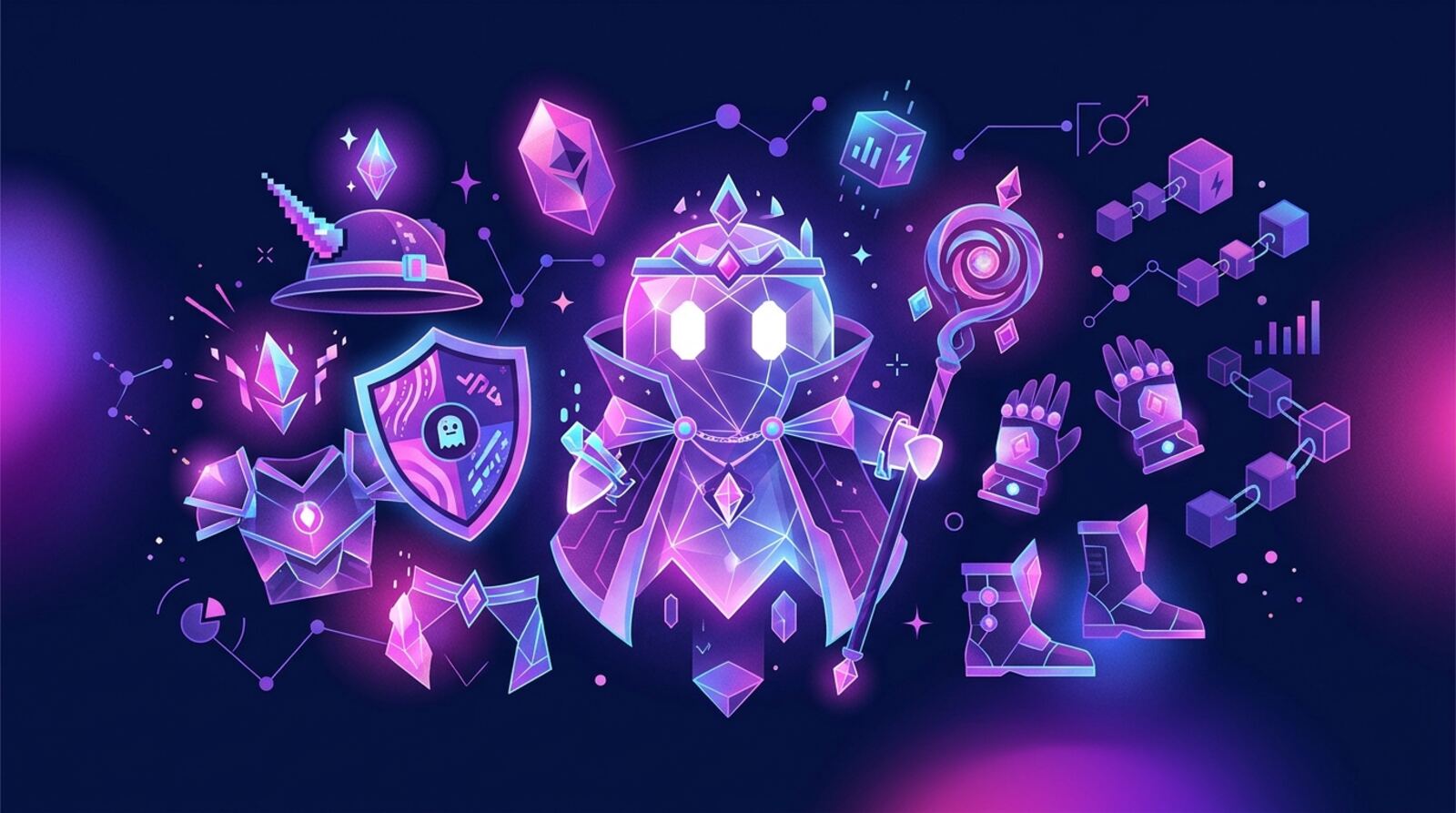
Wearables are NFT items that attach to a Gotchi. In the game, they change the creature's look, and depending on the item, they can also affect its stats, its rarity score or the activities it can join. Because wearables are tradable NFTs, they create a second market alongside the Gotchis themselves.
The project has used wearables as a central part of its visual identity and of its long-term roadmap. A 2023 post on the official blog discussed a new look for the game and new wearables, and the project has continued to publish updates through later years. Players should treat older posts as context rather than as current specifications, since items, rules and balance can change.
When you evaluate a wearable, check four things: what it changes on the Gotchi, whether it is limited in supply, which Gotchi types or traits it fits, and whether its effect is permanent or tied to a specific season or event. Those answers matter more than the artwork alone, because a cosmetic item and a stat item can trade at very different levels for different reasons.
What the new DeFi NFT wearable set means for players
A new set of DeFi-linked wearables usually arrives with a short announcement, a list of items, and a note on how they can be obtained. Public reporting used for this guide confirm that Aavegotchi is a DeFi x NFT game with an active development blog, but they do not provide the final contents, pricing, release date, supply or mint mechanics for the set in question. This guide therefore does not state those details.
What a reader should look for in the official announcement is the scope of the set. Ask whether the wearables are cosmetic only or whether they affect gameplay. Check whether they are minted once, released in batches, or earned through play. Look for the exact eligibility rules, any cap on how many one wallet can hold, and whether there is a clear end date for distribution.
It is also worth noting that a set can be presented as DeFi-related because it links to the protocol's yield or governance structure. Read what that link means in practice. A wearable tied to a DeFi mechanic may have a different value profile from one that is purely decorative, and the difference should be stated in the official material rather than assumed from the name.
How wearables are bought, equipped and traded
Most players interact with wearables through three routes: minting or purchase from the project, secondary-market trades, and in-game rewards. Each route has different costs and risks, so it helps to know which one applies before you act.
To equip an item, the wearable must be in the wallet connected to the game, and the Gotchi must be eligible to receive it. Equipping is a transaction on Polygon, so you will need a small balance of the network's gas token. Read the confirmation prompt carefully, because some actions may change the Gotchi's state or require you to unequip items first.
Secondary trading happens on NFT marketplaces. Before you buy, compare the listed price with recent sales and with the item's traits. Check the seller's history where it is visible, and confirm that the marketplace you use is the one linked from official Aavegotchi channels. Keep in mind that marketplace fees and gas costs reduce the return on any trade, and that you may need to pay the total amount in the platform's listed token.
Risks to weigh before buying a wearable
Wearables carry several kinds of risk, and a new set adds more because early prices are less tested. The first is market risk. An NFT's price depends on demand, and a popular item can fall as quickly as it rose. The second is protocol risk. Because Aavegotchi connects Gotchis to DeFi mechanics, changes to the protocol, its parameters or its underlying tokens can affect what a Gotchi is worth and what it earns.
The third is technical risk. Smart contracts can have bugs, and any game or marketplace can be targeted by scams. The fourth is liquidity risk. A rare wearable may be hard to sell at a fair price when you want to exit, especially if few buyers are active.
Finally, there is a tax and regulatory layer. Trading and earning digital items can create reporting obligations in some places. Rules on crypto assets, games with financial features, and digital collectibles differ between countries and change over time. Check your local laws and consider consulting a qualified adviser before you commit money. Participation should be limited to adults who are legally allowed to take part in these activities where they live.
How to check current prices and floor data
Because prices and market activity change constantly, this guide does not list them. Instead, use reliable sources and compare what you see across more than one.
NFT data sites publish floor prices, recent sales, historical charts and market capitalization. Forbes has a dedicated Aavegotchi page in public reporting that aggregates these figures, and similar tracking pages exist on other data services. Treat any single number as a snapshot, and check the timestamp and the collection or item filter you are viewing.
For wearables specifically, look at the trait filters on a marketplace and compare listings for the same trait. A floor price for the whole collection can hide large differences between items. Pay attention to recent sales volume as well as the price, because a single high sale can distort an average. If a set is new, expect thin data at first and wait for more trades before drawing conclusions.
For the protocol side, the official Aavegotchi blog and documentation are better sources than third-party summaries for current parameters. Compare any figures you read with those primary sources before making a decision.
Practical steps for a first wearable purchase
A careful first purchase follows a simple order. Start by reading the official announcement for the set and noting the eligibility rules, supply, and any deadlines. Then confirm the website address from an official source and bookmark it, because phishing sites often copy the look of NFT projects.
Next, set up a dedicated wallet for game activity if you can. Keep only the funds you plan to use in it, and move the rest to a separate wallet. Store your seed phrase offline and never type it into a website, an app or a chat message. A legitimate team will not ask for it.
Before you sign any transaction, read what it permits. Some approvals grant a contract ongoing access to your tokens, and you should revoke access you no longer need. Start with a small purchase to learn how the flow works, check the item and Gotchi status after each step, and keep records for your tax reporting. Only increase your exposure once you understand the mechanics and have decided what you are willing to lose.
Comparing Aavegotchi with other NFT platforms
Aavegotchi is one of several projects where digital items, collectibles and marketplaces overlap. Readers who want to compare the wider NFT market may find it useful to look at general marketplaces, where listings and trading tools vary, and at project-specific collections with their own communities and merchandise. Comparing how each platform presents fees, verification and listing data can help you spot differences that matter.
When you explore other platforms, apply the same checks used here. Confirm the official domain, read the terms, and check how the marketplace displays item history and royalties. Note whether a platform is active, paused or closed, because the status of a marketplace affects how easily you can buy or sell.
The best source for ongoing information about any NFT game or marketplace is still its official channels, backed up by independent data tools. Revisit the official blog and documentation before each major decision, since rules, item sets and protocol mechanics can change between one update and the next. A guide like this one is most useful as a starting point for asking the right questions.
Frequently asked questions
What is Aavegotchi in simple terms?
Aavegotchi is a blockchain game built on Polygon where players summon NFT pets called Gotchis. Each Gotchi is backed by a deposit of yield-bearing tokens, and the yield from that deposit is central to how the game is designed.
Do Aavegotchi wearables affect gameplay?
Wearables are NFT items that can be equipped to a Gotchi to change its appearance and, in many cases, its stats or rarity score. Because they are separate NFTs, they can be bought, sold, or moved between Gotchis according to the rules of the game.
Where can I confirm the details of the new wearable set?
The results available for this guide do not list the final contents, prices, release schedule or supply of the new set. Check the official Aavegotchi announcements and documentation for those details, and confirm that any sale page you use is linked from official channels.
Are Aavegotchi wearables a safe investment?
Yes, the value of NFTs and game items can fall sharply, and a Gotchi's backing and in-game rewards depend on protocol mechanics and market conditions. Only spend what you can afford to lose, and check your local laws on crypto and digital collectibles before buying.
How do I protect my wallet when buying wearables?
Never share your seed phrase or private keys, and do not approve transactions you do not understand. Confirm the website address yourself rather than following links from messages, and treat unexpected airdrop or wallet-connection requests as suspicious.
Mentioned in this guide
dApps in this guide
NFTX turns NFT collections into vault-backed ERC20 tokens so users can buy and sell NFTs instantly at floor price against a pool.
Stargaze is a community-owned Cosmos app chain for NFTs, offering a marketplace and launchpad for collectors and creators, with its own STARS token.
AtomicHub is a multichain NFT marketplace for gaming items, collectibles and digital art, centered on WAX and EOS-family chains.
Courtyard is a marketplace and tokenization service for vaulted, insured physical collectibles such as graded trading cards, sold via digital packs.
Pudgy Penguins is a penguin-themed brand with a PENGU meme token, an NFT-linked community and an official merchandise shop for fans.
Aavegotchi is an NFT collectibles game with a GHST token, originally DeFi-staked and powered by Aave, now moving to Base for players and builders.
Keep reading
Related guides
NFT · Explainer
Aavegotchi Ghost NFT Launch: What It Is and How to Take Part
Aavegotchi's ghost NFTs are collectible game characters, and a batch of 12,000 is a large release that needs checking before anyone buys. This guide explains what ghosts are, how to verify a launch, and how to buy and hold them safely.
NFT · How-to
How to Sell an NFT: A Step-by-Step Guide for 2026
Selling an NFT takes a few steps, but the choices you make about marketplace, price format and wallet permissions decide how much you keep and how safe the sale is. This guide covers each stage, from checking ownership to recording the sale for tax.
NFT · Explainer
Aavegotchi Community Vote for 15,000 New Gotchi NFTs Explained
The Aavegotchi community has voted on a proposal tied to minting 15,000 new gotchi NFTs. This guide explains what a supply vote means, how to verify what was approved, and what holders and buyers should weigh before acting.
NFT · Best list
Best PFP NFT Avatars in 2026: Top Collections Compared
PFP NFTs are profile-picture collections that double as membership badges. This guide covers the collections that have lasted, how to judge them yourself, and where to trade them without getting burned.
NFT · Explainer
How to Buy an NFT and Get Apartment Access in Ethereum Towers
Owning an NFT that is linked to an apartment can grant access rights, but the link between the token and the unit depends entirely on the project's own contract and terms. This guide explains how that setup usually works and what to verify before you pay for an Ethereum Towers token.
NFT · Explainer
Shared Ownership of Super Rare Aavegotchi NFTs: A 2026 Guide
Shared ownership lets several people hold a stake in one rare Aavegotchi NFT through a contract, token or pooled arrangement. This guide explains how these setups usually work, what to read before joining, and where the risks sit.
NFT · How-to
How to Scale an NFT Project Affordably in 2026
Scaling an NFT collection does not have to mean spending heavily on gas and infrastructure. This guide walks through the cost levers that matter most, from choosing a network and minting method to storage, distribution and marketplace choices.
NFT · Explainer
How Aavegotchi Land Auction Bids Work and How to Check Them in 2026
An Aavegotchi land auction bid is a commitment of tokens to buy a Realm parcel through the game's auction mechanism. This explainer covers how bids work, how to verify a live auction, and what risks to weigh before you commit funds.