NFT · Explainer
What Is Bored Ape Yacht Club? A Plain-English BAYC Guide
Bored Ape Yacht Club is a 10,000-piece NFT collection that became a status symbol, a brand and a cautionary tale. This guide explains what it is, how it works and what ownership does and does not give you.
By the DappsAtlas editorial team · Updated
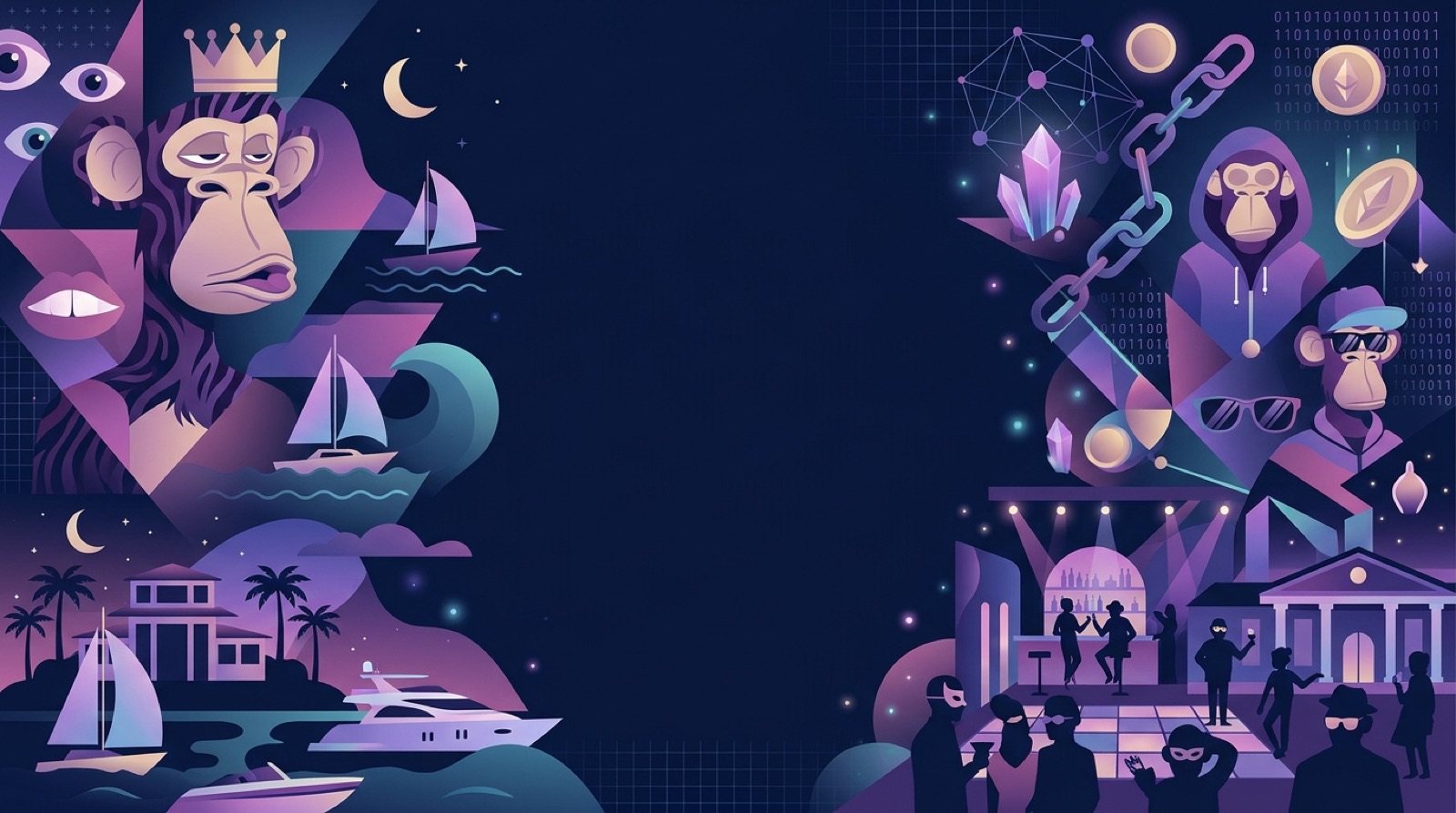
What is Bored Ape Yacht Club?
Bored Ape Yacht Club, usually shortened to BAYC, is a collection of 10,000 unique cartoon ape images. Each image is a non-fungible token (NFT) on the Ethereum blockchain, built to the ERC-721 standard. The apes were produced with generative art: a set of hand-drawn traits such as fur, clothing, headwear, eyes and mouth expressions were combined by software, so each ape is a different mix.
The name refers to two things at once. It is the collection of images, and it is the loose "club" of people who hold them. Owning an ape acts as proof of membership, which is why many holders use their ape as a profile picture on social platforms.
BAYC is often grouped with the "PFP" (profile picture) NFT category. The images are the visible part, but the project's reputation came from the idea that the token is a status marker and an access key, not only an image file.
In short:
- What it is: 10,000 generative ape avatars as ERC-721 tokens
- Blockchain: Ethereum
- Creator: Yuga Labs
- Purpose: a profile picture, a membership pass and, for some holders, a brand they can build on
Who created BAYC and how did it launch?
BAYC was created by Yuga Labs and launched in April 2021, during the surge of interest in NFTs. The collection was sold to the public in a mint, where buyers paid a fixed price in ETH and received a randomly assigned ape. Because traits were revealed after minting, buyers did not know in advance which ape they would get.
Some apes turned out to carry rarer trait combinations, and the market placed higher prices on them. That mix of scarcity, strong branding and a clear community identity helped the collection stand out from the many other 10,000-piece projects of the time.
Yuga Labs then expanded the ecosystem. Over the following months it released related collections and tokens, including Mutant Ape Yacht Club (MAYC), the Bored Ape Kennel Club (BAKC), the ApeCoin token and the Otherside metaverse project. It also took over other well-known NFT brands. Check Yuga Labs' own announcements for the current state of these projects, since ownership and plans have changed over time.
How do the NFTs work technically?
Each ape is a token recorded in a smart contract on Ethereum. The contract tracks which wallet owns which token number, from 0 to 9,999. If you own the token in your wallet, you are the recorded owner. Transfers happen on-chain, and sales usually take place on NFT marketplaces that read the same contract.
The token points to metadata, which describes the ape's traits and links to the image. The image itself is not stored in the blockchain's own data, and it is typically hosted on decentralized storage rather than on a company server. That is normal for NFTs, but it is worth knowing that the token and the artwork are separate pieces that are linked together.
Rarity comes from how uncommon an ape's traits are across the collection. Rarity tools rank apes by trait frequency, but the market also pays for taste, popular combinations and recognizable looks, so rank alone does not set price.
Because the collection is a standard ERC-721, it works with common Ethereum wallets and marketplaces. That also means the usual wallet risks apply, such as malicious approvals and fake listings.
What do owners actually get?
What a holder receives has several layers, and it helps to separate them.
The token and image. You own the ape token recorded to your wallet and can sell, transfer or display it.
Usage rights. The project's terms have given holders commercial rights to the specific ape they own, which some owners have used for merchandise, media and brand collaborations. These rights come from the terms, not from the blockchain itself, so read the current wording and any limits before relying on them.
Community access. Holding an ape has opened doors to members-only online spaces and to events organized by the community and project.
Ecosystem perks. Holders were eligible for related drops over time, such as the Kennel Club dogs, ApeCoin claims and Otherside land. These were one-off or time-limited and are not ongoing guarantees. Do not assume a future airdrop or benefit exists just because past ones did.
What you do not get is ownership of Yuga Labs, a share of its revenue, or any promised return. An ape is a collectible with rights attached, not a stake in a company.
Why did it become famous, and what has changed?
BAYC became widely known in 2021 and 2022 through celebrity holders, brand tie-ins and very high sale prices. Companies and public figures adopted apes as avatars, and Adidas, for example, made a BAYC token its social profile image in late 2021. This visibility pushed the collection into mainstream news and made it a symbol of the NFT boom.
The story has since become more complicated. NFT trading volumes fell sharply after the peak, and values for many collections, BAYC included, dropped well below their highs. Legal scrutiny also followed. Some buyers brought a class action in the United States claiming they had been wrongly induced to buy financial products created by Yuga Labs and promoted by celebrities and companies. Treat any case as an ongoing or past dispute whose current status you should verify from reliable legal reporting, because outcomes and procedural stages change.
The lasting lesson is that a famous brand does not protect a collectible's price. Demand for BAYC depends on culture, community interest and the wider crypto market, all of which move.
How to buy safely and avoid fakes
If you are considering buying an ape, check these points first:
- Use a reputable marketplace and confirm the collection is the verified, official one. Copycat collections with similar art are common.
- Verify the contract address from Yuga Labs' official channels, not from a link sent to you.
- Review the price history. Look at the floor price, recent sales and trading volume on the marketplace, since these change daily.
- Mind total cost. Include marketplace fees, creator fees where applicable, and Ethereum network fees.
- Protect your wallet. Use a hardware wallet for valuable NFTs, keep a separate wallet for experimenting with new sites, and review token approvals regularly.
The most common losses come from phishing, not from market moves. Fake mint pages, fake support accounts and direct messages offering "free" apes or giveaways are standard tactics. Never share your seed phrase, and be suspicious of any request to sign a message or approve a transaction you do not understand.
If an ape is offered far below the usual floor, assume it is a scam or a stolen asset until proven otherwise.
Is Bored Ape Yacht Club a good investment?
Nobody can promise that an ape will hold or gain value. NFT markets are thin, so a high listing price does not mean you can sell at that price. Sales can take a long time, and prices for individual apes can swing widely. BAYC saw a large boom and then a large decline, which shows both the upside that attracted buyers and the downside risk.
Before buying, ask yourself:
- Do I want the ape for use, for the community or for display, rather than only for a price rise?
- Could I afford to lose the full amount?
- Do I understand which rights come with the token and which do not?
- Am I comfortable managing a wallet securely?
For current numbers, check live marketplace data for floor price and volume, and read Yuga Labs' official announcements for the state of related projects. This guide is educational and is not financial advice. Rules on NFTs and crypto assets differ by country, so check the laws and tax treatment where you live.
Frequently asked questions
What is Bored Ape Yacht Club in simple terms?
BAYC is a collection of 10,000 unique cartoon ape avatars created by Yuga Labs. Each is an ERC-721 token on Ethereum, and holding one also works as a membership pass for the project's community and related releases.
Who made Bored Ape Yacht Club?
Yuga Labs created it, and the collection launched in April 2021. Yuga Labs later added related projects, including Mutant Ape Yacht Club, Bored Ape Kennel Club, ApeCoin and the Otherside metaverse project.
How much does a Bored Ape cost?
Price depends on the ape's traits and on market demand, and it changes constantly. Check live floor prices and recent sales on a major NFT marketplace rather than relying on any article, since values have moved a lot since the 2021-2022 peak.
Does owning a Bored Ape mean owning the copyright?
No. Owning the token generally gives you rights tied to that specific ape, including commercial usage rights under the project's terms, but the underlying brand and other intellectual property remain with Yuga Labs. Read the current terms before building a business around an ape.
Are Bored Ape NFTs safe to buy?
Real ones are not, but fakes are common. Only buy through a marketplace you trust, check the official contract address, and never sign wallet approvals or messages from unsolicited links, DMs or fake mint sites.
Is Bored Ape Yacht Club a good investment?
There is no guarantee of that. NFT prices are volatile and illiquid, and the BAYC market has been through a major boom and a sharp decline. Treat any purchase as speculative and only spend what you could afford to lose.
Mentioned in this guide
dApps in this guide
ApeCoin (APE) is an ERC-20 governance and utility token and the native gas token of ApeChain, for users of the Ape ecosystem.
Ethereum PFP NFT collection of up to 20,000 Mutant Apes from Yuga Labs, spun off from Bored Ape Yacht Club, for collectors and community members.
Keep reading
Related guides
NFT · Explainer
Bored Ape Metaverse Explained: Otherside, Land and BAYC
Bored Ape Yacht Club's metaverse plans centered on Otherside, a project from Yuga Labs that tied land, avatars and a token to BAYC holders. This guide explains what was promised, how the pieces fit together, and how to check the current status yourself.
NFT · Review
Diplo's BAYC NFT: What the Bored Ape Purchase Meant in 2026
Diplo's public move to a Bored Ape NFT in late 2021 made BAYC a talking point beyond crypto circles. This guide explains what happened, how the collection works, and how to check ownership and buy or sell with less risk in 2026.
NFT · Explainer
Bored Ape Roadmap Explained: What It Means for Mutant Apes
Interest in a renewed Bored Ape roadmap has put Mutant Apes back in focus. This guide explains what roadmaps usually promise, how the two collections are linked, and how to check any holder benefit before you act.
NFT · Explainer
Madonna's Bored Ape NFT: What It Was and What It Means
Madonna bought a Bored Ape Yacht Club NFT in 2022 and worked with the digital artist Beeple on a separate NFT series, moves that drew both fan interest and a lawsuit. This guide explains what happened, what the lawsuit alleged, and how readers can check where such assets stand today.
NFT · Explainer
What Is Bullrun Babes? What the Name Means and How to Check It
Bullrun Babes does not appear in the sources we could check, so this guide cannot confirm what it is. It explains what the bull run term means, what a name like this usually signals in NFT markets, and how to verify any collection before you buy or trust it.
NFT · How-to
What Is Artvatars and How to Buy Its NFTs on Polygon (2026)
Artvatars is a name readers search for as a set of avatar-style NFTs on Polygon, but the sources available here do not confirm its issuer, supply or mint details. This guide explains how to verify any Polygon NFT collection, set up a wallet, and buy one safely.
NFT · Explainer
What Is Crypto Land? Virtual Land NFTs Explained
Crypto land usually means a digital parcel represented by an NFT in a virtual world—not a plot of physical property. Learn what the token may let you do, how purchases work, and what to check before spending money.
NFT · Explainer
What Is Art Blocks? The Generative NFT Platform Explained
Art Blocks is a platform where artists publish generative art as code and collectors mint pieces that the code produces at the moment of purchase. This guide explains how it works, how to buy, and what to check first.