Real-world asset · Explainer
What Is Tokenization? How Tokenized Assets Work
Asset tokenization creates digital tokens that represent rights to real-world or financial assets. Learn how the process works, what tokens do—and do not—prove, and how to assess the risks.
By the DappsAtlas editorial team · Updated
What is asset tokenization?
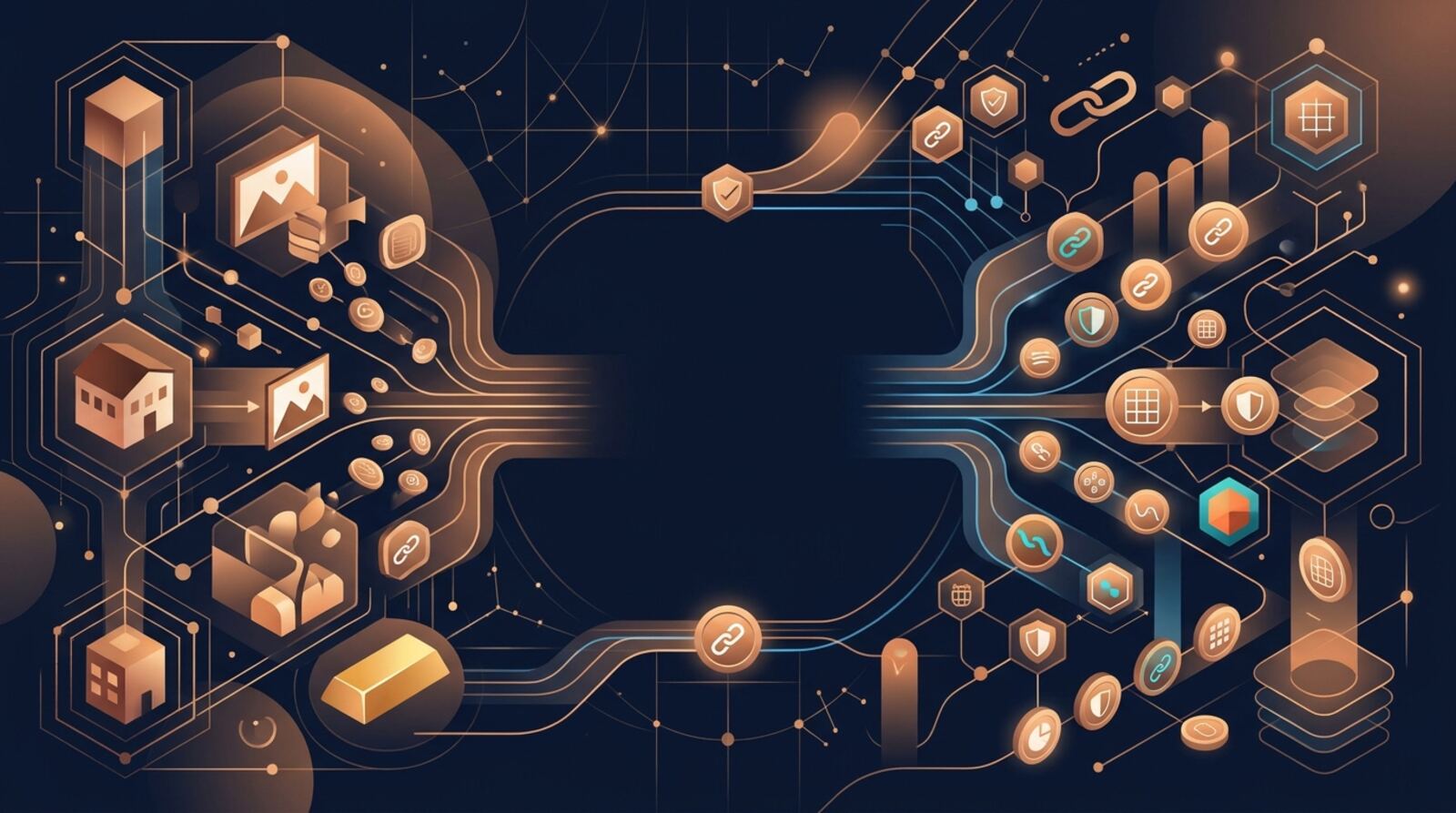
In asset tokenization, an issuer creates a digital token intended to represent an asset or a defined right connected to it. The asset might be a financial instrument, a fund interest, a commodity, or another real-world asset. The token is recorded on a blockchain, where a compatible wallet can hold it and, if the rules allow, transfer it.
The token is not necessarily the asset itself. A token that represents an interest in a fund, for example, is different from the fund’s underlying holdings. The token may instead stand for a legal claim against an issuer, a share in a vehicle that holds assets, or a record of a beneficial interest. The governing documents determine which.
The word also has other meanings. In payment security, tokenization replaces sensitive information, such as a card number, with a substitute value. In this guide, tokenization means representing assets or financial rights digitally, usually on a blockchain. That distinction matters: a payment token used to protect data is not an investment, while an asset token may carry financial and legal risks.
How does the tokenization process work?
The exact setup depends on the asset and the issuer, but most arrangements involve a few connected parts:
- An asset or right is identified. The issuer decides what the token will represent and how holders’ rights will be defined.
- A legal structure is established. An issuer, fund, company, or other entity holds the asset or issues the claim. Documents describe ownership, income, redemption, and transfer rules.
- Tokens are created on a blockchain. A smart contract records balances and may enforce rules, such as restricting transfers to approved wallets.
- The asset and token are administered. A custodian may hold the underlying asset, while an administrator handles records, reporting, payments, or redemptions.
- Eligible holders receive or transfer tokens. Transfers may happen on-chain, but they can still be limited by identity checks, jurisdiction, investor eligibility, or the issuer’s terms.
Blockchain records can make it easier to track token balances and process transfers. They do not, by themselves, prove that the underlying asset exists, is properly held, or can be redeemed. Those assurances depend on the legal structure, operational controls, and the entities responsible for the asset.
What does a token actually give its holder?
A token’s technical design tells you how it behaves on a blockchain, not necessarily what rights it gives you. To understand a tokenized asset, separate these three layers:
| Layer | What it describes | What to check |
|---|---|---|
| Asset | The thing or financial interest being represented | What is held, and by whom? |
| Legal claim | The holder’s rights and obligations | Is it ownership, a fund interest, a debt claim, or another right? |
| Token | The blockchain record used to represent or transfer that claim | Who can hold, transfer, or redeem it? |
A token can be transferable on-chain while still being subject to legal restrictions off-chain. For example, a smart contract may allow a transfer only between approved addresses. Alternatively, an issuer may have contractual rights to freeze or restrict tokens under specified circumstances.
The key documents are usually the offering materials, terms of service, fund or company documents, and redemption policy. They should explain whether holders have a direct claim on assets, a claim against an issuer, or an indirect interest through an entity. If those details are unclear, do not assume the token grants direct ownership of the asset named in its marketing.
What kinds of assets can be tokenized?
Tokenization can be used for several kinds of assets and financial interests. Common examples include:
- Government debt and money-market funds: A token may represent an interest in a fund that holds short-term government securities or similar instruments. BlackRock BUIDL is an example of a tokenized Treasury-backed fund; it is intended for eligible, mostly institutional investors. Spiko offers tokenized Treasury-bill money-market funds and cash accounts.
- Private credit and other debt: Tokens can represent interests in loans or funds that finance businesses. These products may have limited disclosure and may be difficult to sell or redeem.
- Real estate and commodities: A token may represent a share in a legal entity that owns property or a commodity, rather than direct ownership of a particular building or physical item.
- Funds and securities: Issuers can create blockchain records for interests in regulated investment products, subject to the relevant rules and investor restrictions.
These examples do not all use the same structure or offer the same protections. A tokenized fund interest, a token backed by a commodity, and a digital record of a security can have different rights, risks, eligibility rules, and redemption processes. Always assess the specific product, not just the asset category.
What are the potential benefits of tokenization?
Supporters point to quicker settlement, more automated administration, and the ability to transfer assets outside traditional market hours. A blockchain can provide a shared record of token balances, reducing some reconciliation between participants. Smart contracts can also automate certain steps, such as enforcing transfer rules or distributing payments when the required conditions are met.
Tokens may also be easier to divide into smaller units than a physical asset or conventional investment. That can change how an asset is issued or accessed, but it does not guarantee that a product is open to every investor or affordable after fees. Legal limits, minimum investment sizes, and platform rules still apply.
Tokenization can make some financial products usable with blockchain-based services. A compatible token might be transferred to a supported wallet or, where a protocol permits it, supplied as collateral. But a product being on-chain does not automatically make it liquid, widely accepted, or suitable for DeFi.
These are potential advantages, not guarantees. The quality of the underlying asset, the issuer’s processes, the legal framework, and the availability of buyers matter at least as much as the blockchain. A faster digital record cannot fix weak asset custody, unclear ownership, or poor redemption terms.
What are the risks of tokenized assets?
Tokenized assets introduce familiar investment risks alongside technology and operational risks. Start by checking what happens if an issuer, custodian, administrator, or key service provider fails. If the token depends on an issuer to recognize holders or process redemptions, the blockchain balance alone may not protect you from that failure.
Other risks include:
- Legal uncertainty: The token may not give holders the rights they expect, or those rights may be hard to enforce across jurisdictions.
- Custody and asset verification: A token’s existence does not prove that the backing asset is present, properly segregated, or available to meet claims.
- Redemption and liquidity: The issuer may impose notice periods, eligibility checks, minimums, or other limits. A token may trade at a discount if holders cannot redeem it promptly.
- Smart-contract and blockchain issues: Software bugs, compromised keys, network outages, or incorrect contract settings can disrupt transfers or affect token balances.
- Restrictions and concentration: Transfers may be limited, and the product may rely on a small number of intermediaries.
The token’s displayed price is not proof of its value or backing. Read the governing terms, understand how to exit, and consider whether you can tolerate delays or a loss of access.
Can tokenized assets be used in DeFi?
Some tokenized assets can connect to decentralized finance, but that connection is conditional. The token must be compatible with a blockchain and wallet, and the issuer must permit the relevant transfer. A DeFi protocol must also choose to support the specific token. Protocols such as Aave V3 let users supply assets or borrow against supported collateral, but that does not mean every tokenized fund or security can be used there.
Even if a token is accepted by a lending market, consider how it is priced and what happens during a market disruption. The token’s market price could diverge from its stated asset value. Redemption might depend on a separate issuer and could be slower than a DeFi liquidation. A lending protocol may therefore assign the token a conservative collateral value, limit borrowing, or stop accepting it.
Using a token across multiple services can add dependencies. A holder may rely on the issuer for legal recognition, a custodian for the asset, a blockchain for token transfers, and a protocol for lending or trading. A failure at any layer can affect access or value. Check the issuer’s terms and the protocol’s collateral rules separately; support by one service is not an endorsement or guarantee by the other.
How can you evaluate a tokenized asset?
Before buying or using a tokenized asset, answer these questions from the product’s official documents:
- What exactly does one token represent? Identify the underlying asset, issuing entity, and legal claim.
- Who holds the asset? Check the custodian, segregation arrangements, and how the issuer verifies the backing.
- Who is eligible? Find out whether residency, investor status, identity checks, or minimums apply.
- How do transfers work? Confirm which wallets or investors can receive tokens, and whether transfers can be blocked or reversed under the terms.
- How can you exit? Check redemption procedures, timing, fees, minimums, and circumstances in which redemptions can be suspended.
- What could fail? Review disclosures about the issuer, custody, smart contracts, blockchain, and service providers.
- What independent checks exist? Look for audits, financial statements, asset reports, and information about who performs them. A technical audit is not the same as verification of asset backing or legal rights.
Do not rely only on a token ticker, a price chart, or claims that an asset is backed. If you cannot determine who owes you what, how the claim is enforced, and how you can redeem or transfer it, the product’s risks may be difficult to evaluate.
What should you remember about tokenization?
Tokenization is best understood as a way to represent assets or financial rights digitally, not as a guarantee that an asset has become easier or safer to own. A blockchain can record token balances and enable certain transfers, while the underlying asset and holder protections remain governed by legal documents and off-chain processes.
When comparing products, focus on the connection between the token and the claim it represents. Find out who issues it, who holds the assets, which rights holders have, and what conditions apply to transfers and redemption. Then assess the technology and intermediaries that keep the arrangement operating.
A token may offer useful features, such as programmable rules or blockchain-based settlement. Those features do not remove investment, legal, custody, liquidity, or counterparty risk. They may also introduce new dependencies on smart contracts and digital infrastructure.
The practical question is not simply whether an asset is tokenized. It is whether the token’s rights, backing, restrictions, and exit options are clear enough for you to understand—and whether the product fits your needs and risk tolerance.
Frequently asked questions
Does owning a token mean I legally own the underlying asset?
No. A blockchain token can represent a claim on an asset, but the token itself does not establish what that claim means under law. The issuer’s documents and the laws governing the asset determine whether a holder has ownership, a right to income, a redemption claim, or something else.
Is an asset token the same as a cryptocurrency?
No. Tokens can represent many types of rights, including interests in funds, debt, commodities, or property. A token’s blockchain format does not make it a cryptocurrency with the same design, purpose, or risks as Bitcoin.
Can I trade a tokenized asset whenever I want?
Not necessarily. Some tokens can be transferred between blockchain addresses, but an issuer may limit transfers to approved holders or eligible jurisdictions. Even when transfers are permitted, buyers may be scarce and redemption may be restricted.
Can tokenized assets be used in DeFi?
It may, but a token is not automatically accepted as collateral. A lending market must support that specific token, and its price, liquidity, legal status, and redemption terms affect how it is treated. Check the protocol’s rules and risks before supplying or borrowing against it.
What should I check before buying a tokenized asset?
Look for the legal entity issuing the token, the rights attached to it, the asset custodian, and the redemption process. Also check transfer restrictions, fees, audits or other controls, and what happens if an issuer, custodian, or blockchain service fails.
Mentioned in this guide
dApps in this guide
BlackRock BUIDL is a tokenized U.S. Treasury-backed fund issued via Securitize, paying daily dividends to eligible, mostly institutional investors.
Spiko is a French-regulated platform offering T-bill money market funds and multi-currency cash accounts with daily yield for companies and individuals.
Aave V3 is a non-custodial DeFi lending protocol on 21 chains where users earn interest on deposits or borrow against collateral.
Aave is an Ethereum-based crypto lending protocol for supplying assets and borrowing against collateral.
Common is a non-custodial ZK privacy dapp on Arbitrum and Aleph Zero EVM that lets users shield funds and withdraw to a new, unlinkable wallet.
Keep reading
Related guides
Real-world asset · Explainer
What Is Asset Tokenization? How It Works and Its Risks
Asset tokenization represents rights to assets as digital tokens, often on a blockchain. Learn how the process works, what tokens do—and do not—own, and which legal, technical, and financial risks matter.
Real-world asset · Explainer
Champ Association Explained: Champagne, RWA, AI and Crypto
Champ Association appears in the sources we checked only as a name, with no public detail on its products, owners or activity. This guide explains how champagne, real-world asset tokenization, AI and crypto can connect in general, and how to check any project that claims a link between them.
DeFi · Explainer
How DeFi Projects Build Stablecoins: Designs, Risks and Examples
DeFi projects use several designs to keep a token near one dollar, including crypto-collateralized vaults, yield-bearing savings tokens and tokens backed by tokenized government debt. Each design fails in different ways, so the mechanism matters as much as the label.
dApp basics · Explainer
Types of Cryptocurrency Platforms: A 2026 Guide
Crypto platforms range from custodial exchanges to self-custody wallets and on-chain finance apps. Learn what each type does, how they differ and what to check before using one.
Real-world asset · Explainer
What Is Lingo? The Gamified RWA-Powered Rewards Ecosystem
Lingo markets itself as a token that turns real-world asset yield into community rewards through points and airdrops. This guide explains the model, where the rewards are said to come from, and what to check before taking part.
Real-world asset · Explainer
Tokenized Gold Explained: How It Works and Its Risks
Learn what tokenized gold represents, how physical backing and redemption work, and how it differs from gold ETFs and synthetic tokens. This guide also covers the main risks and checks to make before buying or using a token.
Real-world asset · Explainer
What Is Tokenization in Crypto? How It Works and What to Check
Crypto tokenization represents an asset or financial claim with a blockchain token. Learn what the token can—and cannot—prove, how issuance works, and what to check before considering a tokenized asset.
Real-world asset · Explainer
Tokel Tokenization Platform Explained: How It Works in 2026
Tokel, also written Tokels, is a platform for creating tokens and NFTs without gas fees, according to its own description. This guide explains what tokenization platforms do, what the public material does and does not confirm, and how to evaluate one before you use it.