Wallets and tools · Explainer
What Is a Crypto API? Types, Uses and Safety in 2026
A crypto API lets software request blockchain, market, or exchange services without building every connection from scratch. Learn how the main types work, what they can—and cannot—do, and how to choose one safely.
By the DappsAtlas editorial team · Updated
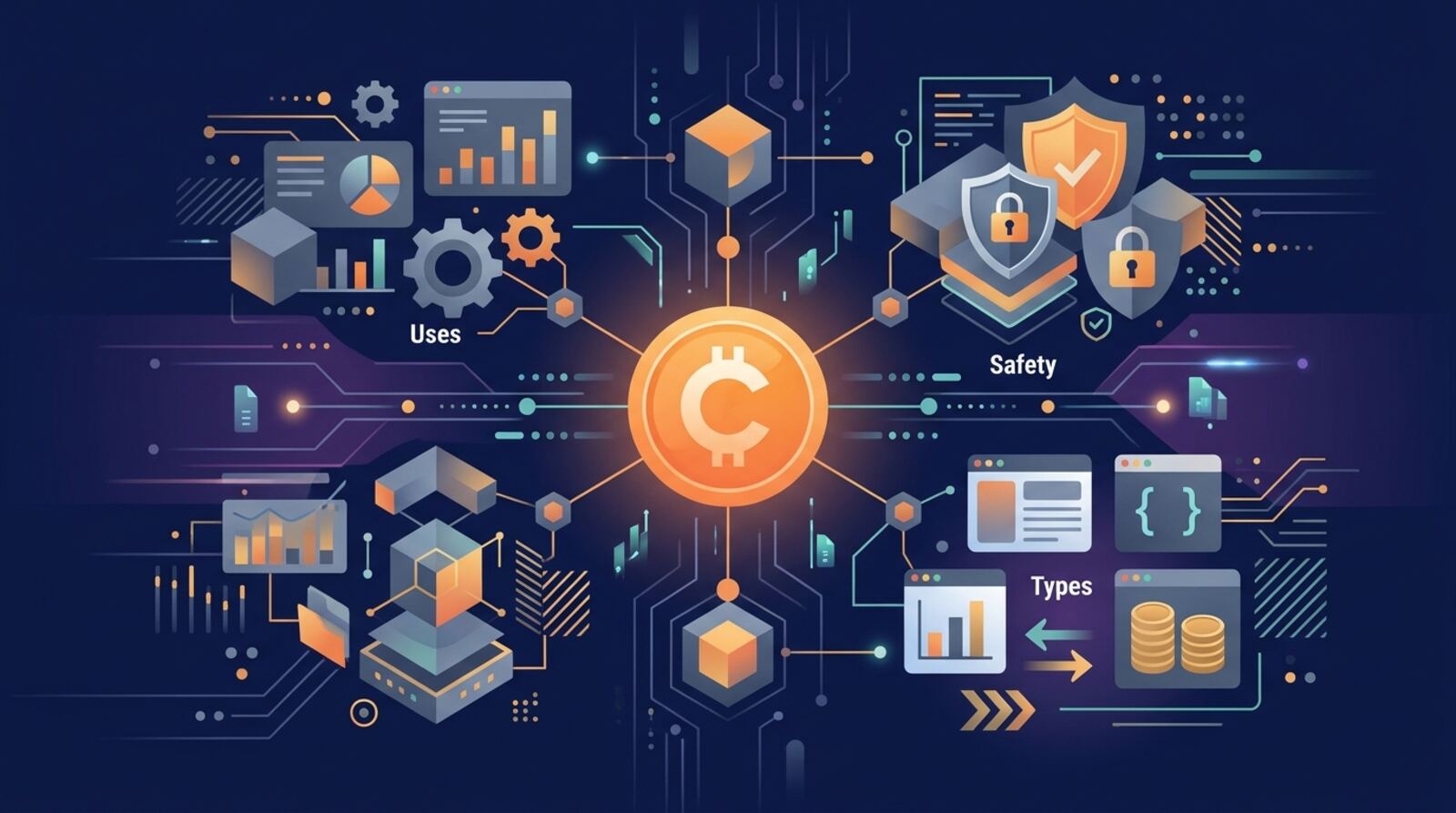
What is a crypto API?
A crypto API is a way for one piece of software to request data or an action from another system. API stands for application programming interface: a defined set of instructions that tells an app what it can ask for, how to ask, and what kind of response to expect. A crypto API applies that idea to digital assets, exchanges, wallets, or blockchains.
For example, a portfolio app might ask an API for the latest price of bitcoin. A wallet might use one to check an address’s token balance. A trading program might request an exchange to place an order. In each case, the API acts as a structured connection between the software and a service.
The API itself is not a cryptocurrency, blockchain, wallet, or investment. It does not automatically make an app decentralized, secure, or accurate. The organization or network behind it determines what data or actions it supports, and the app developer decides how to use the response.
Think of an API as a service counter: your software submits a properly formatted request, the service checks it, and returns data or a result. The details vary widely. Some APIs only provide read-only information; others can initiate trades or blockchain transactions, which makes access controls especially important.
What are the main types of crypto APIs?
Crypto APIs cover several distinct jobs. Knowing the category helps you avoid choosing a price feed when you need blockchain history, or an exchange connection when you need to submit an onchain transaction.
| API type | What it provides | Typical use |
|---|---|---|
| Blockchain node or RPC | Reads chain state and can relay transactions | Wallets, dApps, explorers |
| Indexing and query | Organizes blockchain activity into easier-to-query records | Dashboards, analytics, portfolio tools |
| Market data | Prices, trading pairs, and sometimes historical data | Charts, valuation, research |
| Exchange | Account information and trading actions | Order management and trading software |
| Wallet or transaction | Address, signing, or transaction workflows | Payments and app onboarding |
| Webhook or streaming | Pushes updates when events occur | Deposit alerts, monitoring, live interfaces |
Categories can overlap. A developer platform may combine node access, indexing, and event notifications, while a market-data provider may offer both current quotes and historical datasets. Read the product documentation to confirm exactly which chains, assets, fields, and operations are supported.
Some services are centralized businesses; others provide access to decentralized infrastructure. “Crypto API” describes the interface, not its ownership model. It also does not mean every request touches a blockchain: fetching an exchange price may only query the provider’s database.
How does a crypto API work?
Most APIs use familiar web technologies. A REST API typically receives a request at an endpoint and returns a response, often in JSON, a format software can parse. For example, an app might request a token price or address balance. REST is useful for individual queries and routine updates.
A blockchain RPC endpoint lets a program communicate with a node using supported commands. It can read information such as a block or account state, estimate transaction costs, or relay a signed transaction. RPC is a common connection method for wallets and decentralized apps. The exact commands and data differ across blockchains, so an integration for one network may not work on another.
WebSocket connections keep a live channel open, allowing a service to send updates without the app repeatedly asking for them. They can suit price tickers or transaction monitoring. Webhooks work differently: the provider sends a notification to an address your software operates when a specified event happens. Your app should still verify important events against trustworthy data.
A typical request includes an endpoint, parameters, and sometimes an API key. The service responds with the requested result or an error explaining what failed. Developers need to handle timeouts, rate limits, malformed responses, and temporary outages. One successful response does not guarantee the information will remain current, so applications should check timestamps and define how to recover when a provider is unavailable.
What can you use a crypto API for?
A crypto API can help developers build software without operating a full blockchain node, collecting every market feed, or writing custom connections to multiple exchanges. A wallet may use an RPC provider to display balances and submit transactions. A portfolio tracker can combine token prices with address activity. A payment service might watch for incoming transfers and update an order after confirming the required network activity.
Trading tools use APIs to retrieve market information, manage account data, and, when permitted, submit orders. That can support automation, but it also creates risks: a bug or compromised credential could place unintended trades. Read-only access is safer when an app only needs prices or balances.
Developers may also use indexing services to query historical events in a more convenient format than requesting raw blocks one by one. Envio and The Graph are examples of blockchain data and indexing tools. dRPC and Triton offer infrastructure for accessing blockchain networks, while Pyth Network provides market data feeds for blockchain applications. These services solve different problems; they are not interchangeable just because they use APIs.
For a small project, an API can speed up a prototype. For a production app, it can also reduce operational work, but it introduces reliance on the provider’s availability, supported networks, pricing, and data quality. Keep a clear fallback plan for critical functions.
Are crypto APIs safe, and what is an API key?
Some crypto APIs only return public information, such as a token price or blockchain block. Other APIs can access private account information or initiate actions. An API key identifies an application or account to a service; it is not the same thing as a wallet’s private key, which controls access to onchain funds.
Treat API credentials as sensitive. Store them in a secure server-side secret manager or environment configuration, not in public code repositories, browser scripts, or mobile apps that can be inspected. Use separate keys for development and production, rotate them when exposed, and remove access that is no longer needed.
When an exchange offers permission controls, grant only the minimum required. A price display does not need withdrawal permission. If the API is used for trading, limit permissions to the actions the software must perform and consider restricting where requests can originate, if the provider supports it. Never share a credential that can move funds with a third-party tool unless you understand and accept its access.
For blockchain transactions, a provider may relay a transaction, but the wallet’s signing process is a separate security step. Do not paste a seed phrase or private key into an API website or submit it to an untrusted service. Confirm the network, recipient, token, and transaction details before signing. APIs can make actions easier to automate, but they do not remove the need to verify what the software is asking you to approve.
How do you choose a crypto API provider?
Before choosing a provider, write down what the application actually needs. Specify the network, data type, update speed, history depth, and whether requests must be read-only or able to submit actions. Confirm that the API supports the exact chains and assets you need; “multi-chain” does not necessarily include every network or feature.
Then compare the practical terms:
- Coverage: Which chains, exchanges, assets, endpoints, and historical periods are included?
- Freshness: How often is data updated, and are response timestamps provided?
- Limits: How many requests can you make, and what happens when you exceed the limit?
- Reliability: Is service availability documented, and are outages or maintenance communicated?
- Security: Can keys be scoped, revoked, or restricted? Does the API require sensitive permissions?
- Cost: Is pricing based on requests, data volume, features, or a subscription? Check current terms and overage charges.
- Support and documentation: Are examples, error descriptions, and migration guidance clear?
Test likely real-world conditions, not only a successful sample request. Try invalid inputs, missing data, timeouts, busy periods, and rate-limit responses. Compare critical prices or transaction status with another reputable source where appropriate. For a business-critical integration, assess how difficult it would be to switch providers and whether a second endpoint or backup process is justified. The best option is the one that meets your requirements with manageable cost and operational risk, not necessarily the one with the longest feature list.
What are the limits and risks of crypto APIs?
A crypto API can be useful and still produce incomplete or unsuitable results. Data may be delayed, unavailable for a particular chain, or formatted differently across networks. A price feed may reflect a specific market or methodology rather than a universal price. If an application uses that value for financial decisions, it should make the source and timestamp clear and handle stale data instead of presenting it as current.
Blockchain APIs can also return errors or lag behind network activity. A transaction marked as submitted is not necessarily confirmed, and a confirmation on one chain may not mean an application’s business rule has been met. Define what counts as final for the network and use confirmation checks appropriate to the use case.
Other common constraints include request quotas, maintenance, changes to endpoints, and differences between free and paid tiers. A provider may restrict heavy usage or discontinue a feature. Avoid building an essential service around an undocumented behavior, and monitor whether requests are failing or becoming slower.
Finally, an API response is not a security audit or an investment recommendation. A token’s displayed price does not establish its legitimacy, liquidity, or future value. A successful transaction call does not prove that the recipient or contract is safe. Validate inputs, test updates, and make important failure states visible to users rather than silently substituting guesses.
How do you get started using a crypto API?
A reader who wants to build with an API can start by separating the data need from the action need. If the goal is to show a token price, look for a market-data API. If it is to read balances or send a signed transaction, look for a chain RPC or wallet infrastructure. If it is to query many historical events, an indexing API may be a better fit than repeatedly scanning raw blocks.
A sensible first integration follows a few steps:
- Choose one use case and identify the required network and data fields.
- Read the provider’s current documentation, usage rules, and pricing.
- Create a development credential with the narrowest permissions available.
- Make a basic request and check the response format, timestamps, and errors.
- Add rate-limit handling, timeouts, monitoring, and user-friendly failure states.
- Test with realistic data before allowing a production app to act on responses.
For example, an app that tracks an address could obtain chain data through a node provider and use an indexing service to organize its activity. It could separately request market prices to estimate the value of those assets. Keeping these responsibilities distinct makes it easier to check which component is responsible when a balance, history item, or valuation looks wrong.
If you are not writing software, you usually do not need to obtain a crypto API key yourself. The apps you use may rely on APIs behind the scenes. Never provide credentials or wallet secrets to a service unless you understand exactly what access it grants.
What should you remember about crypto APIs?
A crypto API is a software interface for requesting cryptocurrency-related data or actions. The useful question is not simply whether a service has an API, but whether it provides the right kind of access for the job. A wallet balance lookup, a token price, an exchange order, and a blockchain transaction are separate tasks that may require different providers.
For readers comparing tools, remember these distinctions:
- A blockchain API reads network data or relays transactions.
- An indexing API makes blockchain activity easier to query.
- A market-data API provides prices and related market information.
- An exchange API connects software to exchange accounts and trading operations.
- A key grants defined access to a provider; it is not a substitute for a wallet’s private key.
For developers, test coverage, data freshness, usage limits, security controls, costs, and recovery behavior before relying on an API. Protect keys, request only the permissions needed, and verify consequential data or actions. For non-developers, APIs are often invisible infrastructure inside a wallet, exchange, or app; there is no need to interact with one directly unless a service or project requires it.
APIs make it easier for software to connect to crypto services, but they do not remove network fees, provider risk, market risk, or the need to check transactions. Treat them as tools with defined capabilities and limitations—not as a guarantee that an app will work exactly as expected.
Frequently asked questions
What does crypto API mean?
A crypto API is a set of rules and endpoints that lets software exchange information or request services related to cryptocurrency. Depending on the API, it might return a token price, read blockchain data, or submit a trade to an exchange.
Is a crypto API the same as a blockchain API?
No. A blockchain API is one kind of crypto API, focused on reading blockchain data or sending transactions. Market-data APIs provide prices and trading APIs connect to an exchange; they may use information from blockchains but serve different purposes.
Does a crypto API need my private key?
Usually, no. Reading public blockchain data or market prices typically does not require a wallet’s private key. An API that places trades or initiates transactions may need an API key or signing permission, but those credentials should be limited to the task and kept secret.
Are crypto APIs free?
Some providers have free plans, while others charge by request volume, data access, or service level. Check the current pricing, usage limits, and overage rules directly with the provider because these terms can change.
Are crypto APIs safe to use?
A crypto API is a tool for software, not a guarantee of accurate prices, successful transactions, or investment returns. Verify data freshness and transaction status independently, protect credentials, and understand the provider’s limits before relying on it.
Mentioned in this guide
dApps in this guide
Envio is a blockchain indexing and data platform offering HyperIndex APIs and fast HyperSync raw data access for developers across 81+ chains.
The Graph is a decentralized indexing protocol that lets developers query blockchain data through GraphQL subgraphs, powered by the GRT token.
dRPC is a multichain RPC provider offering managed cloud endpoints, an open-source load balancer and chain infrastructure tools for developers and foundations.
Pyth Network is a first-party price oracle and market data provider for blockchain apps, trading venues and institutions, with its own PYTH token.
Triton One provides Solana RPC, gRPC streaming and indexed ledger data for developers, wallets and trading teams, alongside open-source tools.
Sharpe is a free crypto trading intelligence terminal with derivatives data from 35 venues, rug checks, narrative tracking and an API and MCP server for agents.
Crypto.com is a centralized crypto exchange and app for buying, trading and spending 400+ coins, with a Visa card, staking and a separate self-custody wallet.
Keep reading
Related guides
Wallets and tools · Explainer
Blockchain Notifications and Alerts: Tools and Setup
Blockchain alerts turn on-chain events, wallet activity and market movements into notifications you can act on. Learn how alert tools work, which type fits your needs, and how to set them up safely.
Wallets and tools · Explainer
Zerion DeFi SDK: What It Does and How Developers Use It
The Zerion DeFi SDK is an open-source library that helps developers read a wallet's DeFi positions without writing a separate integration for every protocol. This guide explains what it does, how it differs from Zerion's hosted API, and what to check before you build on it.
Wallets and tools · Best list
Best Crypto Tools: Wallets, Research and More
The right crypto tools depend on what you need to do: protect assets, research markets, track DeFi, move tokens across chains or build an app. Use this guide to match a tool to the task and assess the risks before connecting a wallet.
Wallets and tools · Explainer
CryptoCompare Guide: What It Does and How to Use It
CryptoCompare is a cryptocurrency market-data platform, not a wallet or exchange. Learn what its website and API can do, how to interpret the data, and what to check before relying on it.
Wallets and tools · Explainer
What Is a Crypto Heatmap? How to Read One
A crypto heatmap turns market data into a color-coded picture, but the term can mean several different tools. Learn how to read price, liquidation and order-book heatmaps—and what each one cannot tell you.
Wallets and tools · Explainer
What Is a Cold Wallet? How Offline Crypto Storage Works
A cold wallet keeps the private keys that control your crypto offline, reducing exposure to online attacks. Learn how cold storage works, what it does not protect against, and how to set it up safely.
Wallets and tools · Explainer
What Is a Crypto Onramp? How Fiat-to-Crypto Works
A crypto onramp converts government-issued money, such as dollars or euros, into cryptocurrency. Learn how purchases work, what they can cost, and how to check that your crypto reaches the right wallet or account.
Wallets and tools · Explainer
What Is a Cold Wallet for Crypto?
A cold wallet keeps the private keys used to control crypto offline, reducing exposure to online attacks. Learn how cold storage works, what it protects against, and how to use it without losing access to your funds.