Crypto gambling · Explainer
SX Bet Explained: Set Your Own Odds and Earn as a Market Maker
SX Bet is a peer-to-peer sports betting exchange where users can post their own prices instead of accepting a bookmaker's. This guide explains how that works, where any earnings come from, and what can go wrong.
By the DappsAtlas editorial team · Updated
What is SX Bet and how is it different from a normal sportsbook?
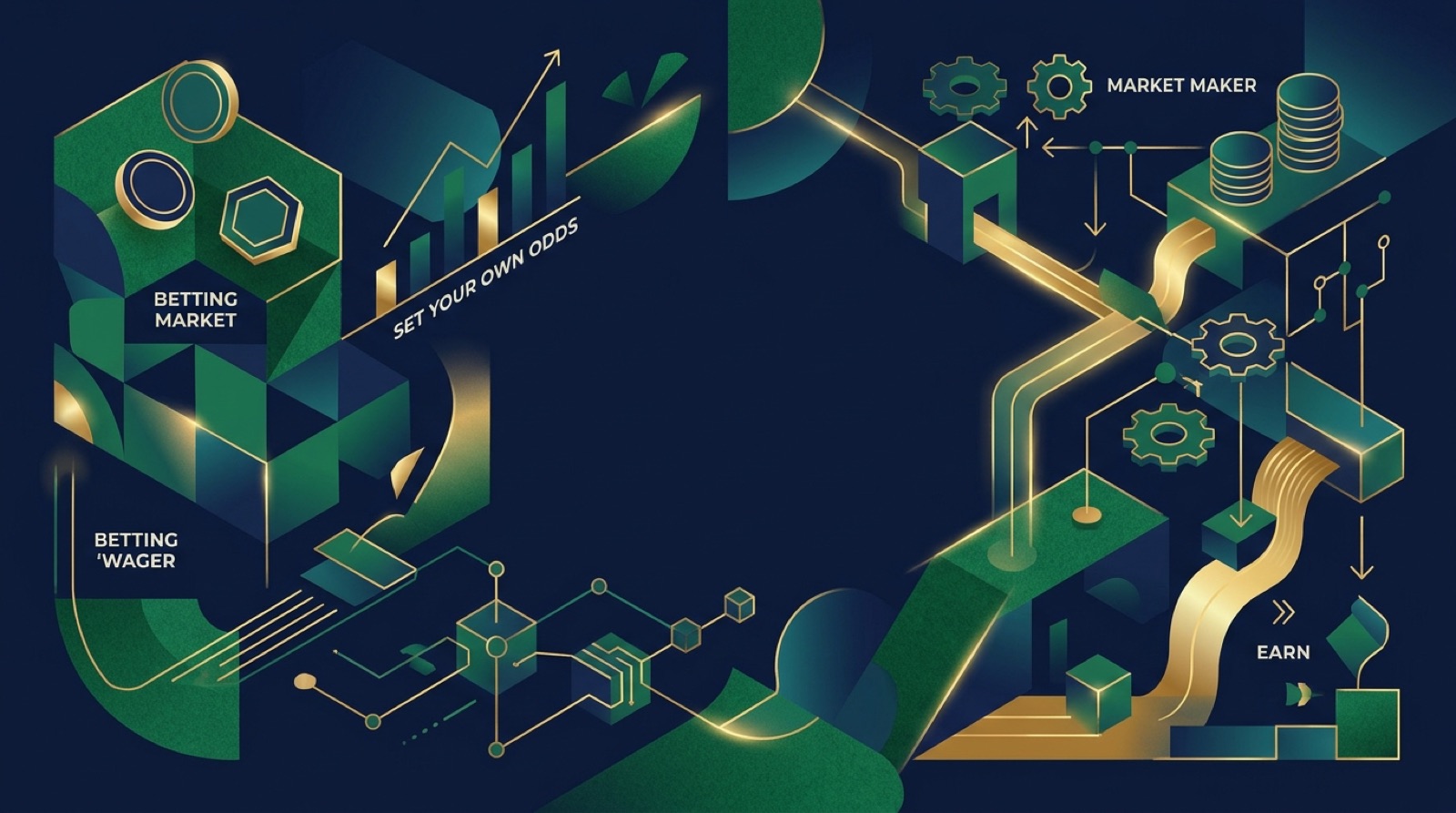
SX Bet is a decentralized sports betting exchange. Instead of a bookmaker setting prices and taking the other side of every wager, users bet against one another through an order book. Sports are the core product, though the exchange has also listed other event markets over time.
A traditional sportsbook builds a margin into its odds, often called the vig or overround. It also limits or closes accounts that win too consistently. An exchange works differently. Prices come from users, and the platform earns by charging a fee rather than by taking the opposing position. That is why prices on exchanges can sit closer to the true probability of an outcome.
SX Bet runs on SX Network, an EVM-compatible chain built for the exchange, with a native token called SX. Bets are generally placed with a stablecoin such as USDC, so the stake does not swing in value while the game is played. Check the current deposit options before sending funds.
The two things worth understanding before you start:
- Non-bookmaker model. Your counterparty is another user, not the house.
- On-chain settlement. Positions and payouts are handled by smart contracts, with results fed in by a defined resolution process.
The phrase "DeFi-fueled earnings" is marketing shorthand. In practice it means you can act like a liquidity provider in a betting market, quoting prices and earning when your pricing is better than the market's. It is not a savings account, and returns are not fixed.
How does setting your own odds work?
Every market on the exchange has an order book. There are two ways to participate, and they behave differently.
Makers post an order at a price they choose and an amount they are willing to risk. The order sits in the book until someone takes it, you cancel it, or the event starts. You decide the odds, but you wait for a counterparty.
Takers pick from the prices already posted and are matched immediately. They accept the market's price in exchange for speed.
A single wager has two sides, so a maker's order is effectively an offer to bet one outcome while the taker backs the other. If you post odds on Team B, a taker who accepts them is backing Team A at the matching price.
Why would you post your own odds?
- You think the current price undervalues an outcome and want a better price than the book offers.
- You want to offer liquidity on both sides of a market and capture the gap between them.
- You prefer to name your price and wait rather than pay the best ask.
Orders are usually limit orders, so a stake is committed only at your price or better. Partial fills are common, which means a large order may be matched in pieces. Cancelling an unfilled order before the event closes is normal practice, especially when news such as an injury changes the true price.
How do odds, implied probability and fair price relate?
To price a market you need to convert odds into implied probability. In decimal odds, implied probability is 1 divided by the odds. The example below is illustrative only and not a live market.
Suppose a taker backs Team A at decimal odds of 2.10. The implied probability is 1 / 2.10, about 47.6%. The counterparty on Team B must then be getting the complementary 52.4%, which works out to decimal odds of about 1.91.
The two sides of a matched bet always add up to 100%. There is no built-in margin in the matched price itself, unlike a bookmaker's quote where both sides add up to more than 100%. Fees are charged separately, so read the current fee schedule before judging whether a price has an edge.
A simple way to test whether your order is worth posting:
- Estimate the true probability of the outcome from your own research.
- Convert it to fair decimal odds, which is 1 divided by your probability.
- Post only at odds better than that fair price, after allowing for fees.
- Size the stake so a loss does not hurt your bankroll.
The weak point is step one. Your estimate is only valuable if it beats the information already in the market, which includes professional bettors and automated traders. If you cannot explain why the market is wrong, assume it is right and the edge belongs to the other side.
Where do the "DeFi-fueled earnings" come from?
Earnings on an exchange come from a few separate sources, and each one carries its own risk.
- Winning positions. If you back an outcome and it wins, you collect the other side's stake, minus any commission. This is ordinary betting skill, not DeFi yield.
- Market making. If you quote both sides of a market at prices that average out in your favour, you can earn consistently over many matched orders. This resembles liquidity provision on a decentralized exchange, except the risk is event outcomes rather than token prices.
- Platform incentives. Exchanges sometimes run reward programs, staking or token incentives tied to volume or liquidity. These change often and are not guaranteed. Check the official documentation for what exists now.
The important caveat on market making is adverse selection. Informed traders take your order exactly when it is mispriced, for example just after a lineup change you have not seen. Over time, a maker who updates slowly tends to lose to those who update fast. Quoting both sides does not remove the risk. If a market is lopsided, you may end up with a large position on one outcome.
Platform tokens add another layer. The SX token's value moves independently of your bets. Treat any token reward as a separately priced, volatile asset rather than part of your stake. A stablecoin balance stays steady while you wait for results, but token incentives do not.
How do you get started on SX Bet step by step?
The exact interface changes, so use this as a general path and follow the official documentation for current screens.
- Check eligibility. Confirm you are of legal gambling age and that your location is permitted under the platform's current terms. Be ready for identity checks if they apply.
- Set up a self-custody wallet. Write the recovery phrase on paper, store it offline and never share it. Use a wallet you have used before and trust.
- Get the right asset on the right network. Confirm which stablecoin and which chain the exchange supports. Sending funds to the wrong network is a common and often unrecoverable mistake.
- Send a small test amount first. Confirm it arrives before moving more.
- Read a market fully. Check the exact outcome definition, the event start time, what happens with postponements and how the result is verified.
- Start as a taker with small stakes. Learn how prices, fees and settlement look before posting your own orders.
- Move to limit orders. Once you understand the book, post orders at prices you can justify.
- Withdraw what you do not need. Keep only an active bankroll on any platform.
Be wary of anyone who messages you offering help, "support" or guaranteed returns. Official platforms do not need your recovery phrase, and approvals you sign in a wallet should be checked and revoked when no longer needed.
What are the main risks?
On-chain betting removes some risks of a bookmaker, such as an account being limited, but it creates others. Weigh these before depositing.
- Smart contract risk. Bugs or exploits in the exchange contracts or a bridge can lose funds. Audits reduce risk but do not eliminate it.
- Settlement and resolution risk. Results must be reported correctly. Ambiguous rules, postponed games or disputed outcomes can lead to voids or delayed payouts. Read the market rules every time.
- Liquidity risk. A thin book means wide gaps between the best prices, and large orders may only partly fill.
- Pricing risk. As a maker you face faster, better-informed traders. Most losses come from stale quotes.
- Token and bridge risk. If you move funds between chains or hold platform tokens, you take on extra price and technical risk.
- Wallet risk. Phishing sites, fake apps and malicious approvals cause more losses than protocol bugs.
- Regulatory risk. Availability can change by location, and an exchange can restrict access to comply with law.
Defensive habits that help: bookmark the official site and never follow links from messages, use a separate wallet with a limited balance for betting, review token approvals regularly, and avoid staking more than you could lose without consequence. Never borrow money to bet or to provide liquidity.
Is it legal, and how do you gamble responsibly?
Sports betting is regulated differently from country to country and, in some places, from region to region. Being on-chain does not exempt anyone from local law. You must be 18 or older, or the higher legal age where you live, to gamble.
Before using SX Bet or any similar service:
- Check whether online betting, and betting with crypto, is legal where you live.
- Read the platform's current terms for restricted jurisdictions and verification requirements.
- Understand your tax obligations. Gambling gains and crypto transactions may each be taxable, and rules vary.
Do not use a VPN or any other method to get around location restrictions, age checks or identity verification. Doing so can breach the terms, lead to frozen or forfeited funds, and may be illegal where you are.
Responsible gambling matters more when markets run all hours and settle quickly. Set a loss limit before you start and keep to it. Do not chase losses with larger stakes. Take breaks, and treat any amount you deposit as money you are prepared to lose. If gambling stops being fun or starts to cause stress, stop and contact a local support service. Many countries run free, confidential helplines.
How does SX Bet compare with other on-chain betting options?
SX Bet is one of several on-chain venues for sports and event wagering, and they use different designs. The table summarizes the model of each candidate based on its published description. Check each product for current availability and rules.
| Platform | Model | Notes |
|---|---|---|
| SX Bet | Peer-to-peer exchange with an order book | Users post and take prices on SX Network |
| PRED | Peer-to-peer sports prediction exchange | On-chain order book on Base |
| Overtime | Non-custodial on-chain sportsbook | Wallet-only access, markets on six networks |
| Azuro | Sportsbook infrastructure with a shared liquidity pool | Listing describes betting as paused; verify status |
| Predict Fun | Prediction market on BNB Chain | Sports, politics, crypto and esports; yield on open positions |
| OPINION | Prediction market on BNB Chain | Yes/No shares on sports, crypto, politics and macro |
| Seer | Prediction market on Gnosis and Ethereum | Users create and trade markets |
| Trueo | Prediction market on Base | Yield-bearing positions, staked oracle |
The main distinction is between exchange-style venues, where users quote prices against each other, and pool-based or sportsbook-style venues, where a shared liquidity pool takes the other side. Exchange-style models give you more control over price but rely on enough users being active. Pool-based models are simpler to use but you accept the pool's prices.
Prediction markets also tend to use Yes/No shares priced between zero and one, which is the same implied-probability idea as the odds math above.
What should you check before you deposit?
Use this list before depositing, and again whenever you return after a long break. Many details change, so confirm them from official sources instead of relying on a guide, including this one.
- Eligibility. Is your location currently allowed, and are identity checks required?
- Fees. What commission applies to winnings, to makers and takers, and are there withdrawal or bridge costs?
- Supported assets and networks. Which stablecoin and chain are accepted, and what is the correct deposit address format?
- Market rules. How are results sourced, and what happens in a postponement, abandonment or overtime?
- Audits and security. Has the code been reviewed, and is there a public bug bounty or incident history?
- Incentive programs. Are there rewards for liquidity or volume, and what are their terms and risks?
- Liquidity. Is the market you want active enough to fill orders at sensible prices?
- Token details. If a token is involved, check its function, supply schedule and current price from independent market data rather than from the platform alone.
Good places to check include the platform's own documentation and announcements, the audit reports it publishes, block explorers for contract activity, and independent data sites for token prices and trading volumes. Treat social media claims about "guaranteed" or "passive" earnings as a warning sign. A betting exchange offers a place to price your views, and whether that turns a profit depends on how good those views are.
Frequently asked questions
Is market making on SX Bet guaranteed profit?
No. On an exchange like SX Bet, a bettor's winnings come from another user who took the opposite side. Market makers can earn by pricing well, but they can also lose. Nothing is guaranteed, and a poorly priced order is simply a losing bet.
What is the difference between a maker and a taker?
A market maker posts an order at a price they choose, and it waits in the order book. A taker accepts the best available price. Makers control their price but must wait for a match. Takers get instant execution at whatever is currently posted.
Can I use SX Bet anywhere?
Generally no. SX Bet restricts some jurisdictions and may ask for verification, so check the current terms and your local law before depositing. Do not use a VPN or any other workaround, because that breaks the rules and can put your funds at risk.
Where do I find current SX Bet fees and token details?
Check the current fee page and the markets themselves. Fees, supported assets, networks and incentive programs change over time. This guide deliberately avoids quoting numbers that go out of date.
What are alternatives to SX Bet?
Overtime, PRED, Predict Fun, OPINION, Seer and Trueo all offer on-chain sports or event markets with different designs. PRED is the closest in concept, with an on-chain order book for sports positions. Azuro's listing describes betting as paused, so check its status before relying on it.
Mentioned in this guide
dApps in this guide
PRED is a peer-to-peer sports prediction exchange on Base where traders buy and sell outcome positions through an onchain order book.
Overtime is a non-custodial on-chain sportsbook for crypto users, with wallet-only access, no KYC claimed and markets on six networks.
Azuro is onchain sportsbook infrastructure with a shared liquidity pool, whose betting operations are currently paused while the team rethinks its model.
Predict Fun is a BNB Chain prediction market for trading sports, politics, crypto and esports outcomes, with yield on open positions.
OPINION is a BNB Chain prediction market for trading Yes/No shares on sports, crypto, politics and macro events.
Seer is a decentralized prediction market on Gnosis and Ethereum where users create and trade markets on real-world events, for experienced crypto users.
Trueo is a Base prediction market with yield-bearing positions and user-proposed markets, secured by a staked TRUE oracle, for experienced crypto users.
Ample is a prize-linked savings protocol where users deposit assets like USDC, keep principal with no lockups, and pooled yield funds weekly prizes.
Peer (ZKP2P) is a non-custodial peer-to-peer crypto on and off ramp on Base that verifies Venmo, PayPal and Revolut payments with zero-knowledge proofs.
Keep reading
Related guides
Crypto gambling · Review
DexSport Review: How Web3 Betting Works and What to Check
DexSport is a crypto sportsbook and casino that pitches wallet-based betting. This review explains how it works, what to verify before depositing, and how it compares with on-chain alternatives.
Crypto gambling · Best list
10 Crypto Gambling dApps With the Most Users to Check in 2026
Ten crypto gambling dApps that are widely discussed for user activity, with a method for measuring usage yourself. The sources available for this guide do not contain current user counts, so treat this list as a starting point to verify, not a final ranking.
Crypto gambling · Review
HunnyPlay Review 2026: Play, Stake and Earn at the Crypto Casino
HunnyPlay is a crypto casino that pairs slots and live games with a VIP club, staking cashback and prize races. This review covers how those features work, what to check in the bonus terms, and what the licensing question means for you.
Crypto gambling · Review
Wolf Bet Review 2026: Provably Fair Casino and Crypto Coins
Wolf Bet is a crypto-only casino and sportsbook that markets provably fair games and a wide coin list. This review explains what that means, how to verify results yourself, and what to check before depositing.
Crypto gambling · Explainer
Texas Hold'em Lockdown Poker Competitions Explained for 2026
A lockdown Texas Hold'em competition is a format term rather than a standard poker category, so the rules decide what you are actually entering. This guide explains how to read the structure, what a play royal label could mean, and how to check both before you play.
Crypto gambling · Explainer
How to Safely Navigate Crypto Online Casinos in 2026
Crypto online casinos combine gambling risk with self-custody risk, so the checks you make before depositing matter more than in a standard casino. This guide covers licences, legal access, wallet security, scams, bonus terms and money limits.
Crypto gambling · Best list
Top Crypto Casinos in 2026: 8 Picks to Compare
Compare crypto casinos by what they actually offer: game selection, sports betting, payment options and transparency. Use the shortlist as a starting point, then check local rules and the current terms before depositing.
Crypto gambling · Explainer
What Is a Provably Fair Crypto Casino?
Provably fair tools let you check whether a game result matches a casino’s published cryptographic rules. Learn how seed commitments work, what they can prove, and what they cannot.