Web3 gaming · Explainer
Sunflower Land Explained: Rebuild History, Gameplay and Token Basics
Sunflower Land is a free-to-start farming game with an SFL token and in-game items that some players trade. This guide explains what the project is, what public reporting do and do not confirm about its rebuild from the earlier Sunflower Farmers days, and how to check current facts before you play.
By the DappsAtlas editorial team · Updated
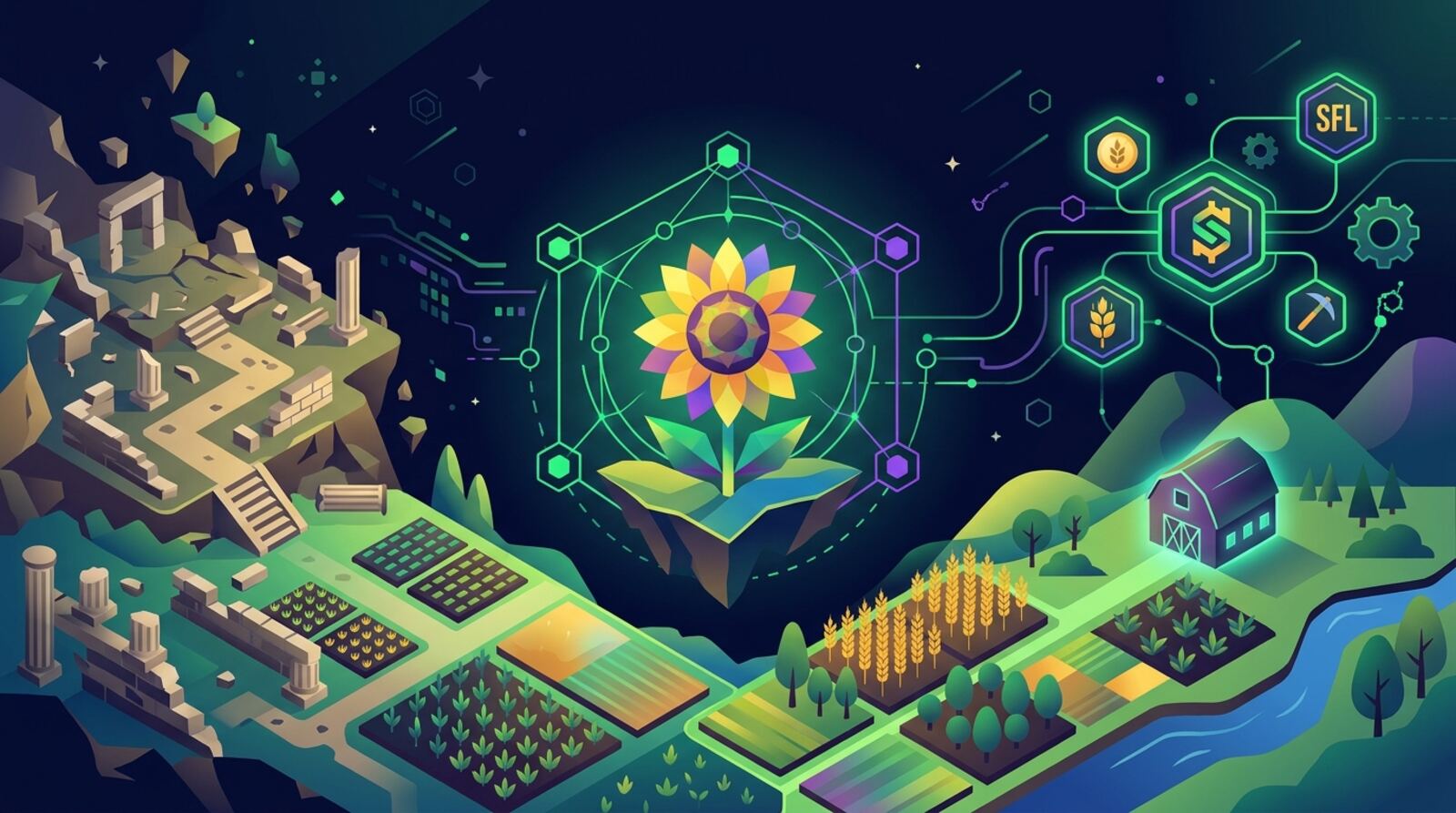
What is Sunflower Land and how does it work?
Sunflower Land is a farming game that runs in the browser and is linked to a blockchain economy. Players plant crops, harvest them, sell goods, and use in-game currency to expand their farms. The project's name comes from its signature crop, the sunflower, which appears throughout the game's skill listings and item descriptions.
The game sits in the same broad family as social farming titles. Its main draw is that some assets and the SFL token can be held in a wallet, which lets players trade or move them outside the game. That feature is also where most of the risk comes from, so it helps to understand the basics before you start.
The game is free to begin with. Progress depends on time, planning and small decisions about which crops to plant and when to harvest them. Whether that is enough to hold your interest is a personal question, and it is worth answering before you put any money in.
What was the Sunflower Farmers rebuild, and what is confirmed?
The phrase revived from the ashes of Sunflower Farmers suggests that the project was rebuilt after an earlier version or era. Rebuilds of this kind are common in web3 gaming. Teams often change the game loop, the chain, the token model or the way assets are issued, and they may bring players across through a migration or a fresh start.
Public reporting available for this guide are mostly community skill listings and item pages. They confirm the current game's mechanics in part, but they do not give a complete dated history of the earlier project or a detailed record of what carried over. Any claim about exactly what changed should be checked against the team's official announcements.
If you are reading about the rebuild because you held assets from the earlier version, look for a clear migration notice on the official site. Reputable projects explain what happened, what was converted, and what was not. Be wary of anyone offering to swap or recover old items for you, since that is a common pattern in scams.
How does the core farming loop work?
The core loop is planting, waiting, harvesting and selling. You plant a crop, the crop grows over a set time, and you harvest it for in-game resources. Those resources can be used to craft items, fill orders, expand your land or trade with others, depending on the current version of the game.
A typical session looks like this:
- Check which crops are ready and plant new ones.
- Use resources to craft tools or buildings that speed up progress.
- Complete tasks or deliveries that give rewards.
- Log off and return when the next batch is ready.
Because growth runs on timers, the game rewards regular short visits more than long binges. Many players set a simple routine and stick to it. The exact timings, costs and yields change between versions, so read the in-game details rather than relying on older guides.
What are Bumpkins, skills and rare drops?
Players in games like this often run into character or helper systems, such as Bumpkins in Sunflower Land, and into skills that change how efficient a task is. Skill listings on community sites show the chance of rare outcomes, such as a bonus gold drop from harvesting sunflowers. One listing in the results gives a 1 in 700 chance for 0.35 gold when harvesting sunflowers, excluding the Crop Machine.
Treat these numbers carefully. Community pages are copied and updated at different times, and they may describe earlier versions. Compare any figure with what the game shows you, and note the version or date if the page lists one.
Skills matter because they decide how quickly you can progress. Read each skill's description, check whether it applies to your current stage, and avoid spending scarce resources on upgrades you will not use. A simple habit is to write down what you have and what you need before each session.
How do the in-game currency and SFL token fit together?
Sunflower Land uses in-game currency and a linked token, SFL. A useful way to think about the two is that the in-game economy controls day-to-day progress, while the token adds a market layer where prices can rise and fall sharply. Not every in-game action creates value outside the game, and not every token is needed to play.
The key questions to ask are these:
- What does the token do inside the game, if anything?
- Who can mint or issue new tokens, and at what rate?
- Is there a clear, public record of supply and holder distribution?
- Does the game need ongoing new players to keep prices steady?
You can check supply, holders and price on established market data services, but those figures change constantly, so this guide does not state them. If you cannot explain the token's role in a sentence, pause before you buy any.
How do I connect a wallet and keep it safe?
Browser games that connect to a wallet ask you to approve actions. Read each prompt carefully. A transaction request should match what you intended to do. If a site asks for unlimited token approvals, a seed phrase, or a signature you do not understand, stop and leave.
Safer habits include:
- Bookmark the official site and type its address yourself.
- Keep a separate wallet for games, with only the funds you are willing to use.
- Never enter your seed phrase on any website or into any chat.
- Revoke old token approvals you no longer need, using a reputable wallet tool.
- Be skeptical of direct messages offering help, prizes or airdrops.
NFTs and in-game items can be tradable on outside marketplaces. Check that a listing is genuine by viewing the official collection page before you buy. Scam listings often copy artwork and names from real projects.
What are the main risks to weigh?
Crypto-linked games carry several risks at once. The token price can fall sharply. The team can change rules or the game can lose players. Items may lose market value if demand drops. Scams often target people who are new to a game, so an unexpected message, a fake support account or a too-good-to-be-true offer deserves extra scrutiny.
Time is also a cost. Timers and daily routines can take more attention than people expect. If you find yourself checking the game compulsively or spending money to keep up, that is a signal to step back.
If you decide to play, set limits in advance. Choose a fixed amount you can lose without affecting your finances, a fixed amount of time per week, and a date to review whether the game is still worth your attention. Keep records of what you spent and what you received.
Should you try Sunflower Land, and where do you check current facts?
Whether Sunflower Land suits you depends on what you want from a game. If you enjoy a calm farming loop and like planning around timers, the core play may be enjoyable on its own. If your main interest is token value or earning, be aware that outcomes are uncertain and that many players lose money in these markets.
A practical plan for beginners:
- Read the official site and the latest announcements before creating a wallet.
- Play with a free account or a fresh wallet holding only a small test amount.
- Check the current chain, token details and item listings on official or reputable sources.
- Review your time and spending each week.
For current game rules, token data and migration status, rely on the project's official channels and reputable market data tools. This guide intentionally avoids stating prices, supply figures or dates that change often.
Frequently asked questions
What is Sunflower Land in simple terms?
Sunflower Land is a browser-based farming game with a blockchain-linked economy. Players plant and harvest crops, earn in-game currency, and can use wallet-based items. Its token is SFL. The core loop is simple, and the game is often compared with older social farming games, with extra ownership features added on top.
Is the story of Sunflower Farmers being revived confirmed?
Public reporting do not give a full, dated account of the earlier Sunflower Farmers project or every change made during the rebuild. Treat any single summary as a starting point. Check the project's own website, official social channels and any announcement posts for the timeline, the chains used and the current token status.
Is Sunflower Land worth playing?
Not necessarily. Crypto-linked games can change tokens, chains, rules and item availability. Some players enjoy the farming loop as a casual pastime and never spend money. Others find the token price volatile and the time commitment high. Decide based on what you can afford to lose and how much time you want to spend.
How can I keep my wallet safe while playing?
Only connect a wallet you control, and only through the official site. Never share your seed phrase or private key with anyone, including people who claim to be support staff. Be cautious of messages, posts or sites that ask you to sign unknown transactions or approve token permissions. Start with a small amount, or none at all, while you learn how the game works.
Where should I check current game and token information?
Check the official website and the project's verified social accounts for current guidance. Community wiki-style skill pages may be outdated, so compare any number with the in-game information. Token prices and trading volumes change quickly, so use a reputable market data source and check it yourself.
Mentioned in this guide
dApps in this guide
Pixels is a web3 farming and exploration game with a PIXEL token, guilds and ecosystem staking, aimed at gamers who are comfortable with wallets and token risk.
Chainers is a free-to-start browser multiplayer NFT game with farming and missions, running on a Polygon Edge sidechain with a CHU token.
Aavegotchi is an NFT collectibles game with a GHST token, originally DeFi-staked and powered by Aave, now moving to Base for players and builders.
The Sandbox is a blockchain-linked virtual gaming world on Polygon and Ethereum, with token SAND and a new AI game engine in beta for creators.
Alien Worlds is a community-built play-to-earn metaverse on WAX where players mine and play to earn TLM tokens and NFTs.
Crypto.com is a centralized crypto exchange and app for buying, trading and spending 400+ coins, with a Visa card, staking and a separate self-custody wallet.
Sunflower Land is a blockchain farming game where players grow crops and earn the SFL token, suited to players who accept play-to-earn risk.
Keep reading
Related guides
Web3 gaming · Explainer
Sunflower Land After the Relaunch: What Changed in 2026
Sunflower Land's relaunch and its Chapter 9 skill revamp drew attention, but most of the praise is community-reported. This guide sets out what changed, what the evidence shows, and how to judge the game for yourself.
Web3 gaming · Explainer
Sunflower Land and the SFL Token: What the Launch Means in 2026
Sunflower Land is a long-running farming game with its own token economy, and recent public reporting points to a launch-related surge in attention. This guide explains what the SFL token does, what the announced move to FLOWER means, and how to check current figures yourself.
Web3 gaming · Explainer
Sunflower Land and SFL: How the Farming Game Token Works
Sunflower Land is a blockchain farming game in which crops and other in-game actions connect to the SFL token. This guide explains how the game and token fit together, how SFL is traded, what the play-to-earn risks are, and where to check facts that change over time.
Web3 gaming · Explainer
StarSharks and the SSS Token: How the Game Works in 2026
StarSharks is a blockchain game built around collectible sharks, with the SSS native token and the SEA in-game currency. This guide explains how the pieces fit, what the token does, and how to check its current status and price before you act.
Web3 gaming · Explainer
Sunflower Farmers on Polygon: How the Farming Game Worked
Sunflower Farmers was a pixel-art farming game on Polygon that showed how cheap fees and simple gameplay can pull in new web3 players. Here is how it worked, what it taught the genre, and how to check its current status safely.
Web3 gaming · How-to
Sugartown Gaming Guide: Which Game Is Which in 2026
Sugar Town is the name of several unrelated games, from a mobile match-3 puzzle to online slot machines, and this guide explains how to tell which one you mean. It also covers how to play, what to check before installing or wagering, and why none of the current listings describe a blockchain version.
Web3 gaming · Explainer
Stradall Game Earnings: How Earn-While-You-Race Works in 2026
Stradall is presented as a game where racing can turn into income, but this guide could not verify its mechanics, token or payout rates from available sources. It explains how earn-while-you-race games typically work and how to check any such claim before you spend time or money.
Web3 gaming · Best list
Bullish Polygon Gaming Dapps in 2026: What to Check
Only two titles on our list are clearly tied to Polygon, so this guide explains how to judge whether a Polygon gaming dapp deserves a bullish view, and what to check before believing it. It also shows where the other titles in our list are deployed.