Web3 gaming · Review
Splinterlands Review 2026: How the Hive Card Battle Game Works
Splinterlands is a blockchain card battle game that runs on the Hive network, with NFT cards and the SPS and DEC tokens. This guide explains how it works, what to check before playing, and the main risks.
By the DappsAtlas editorial team · Updated
What Splinterlands is and how it plays
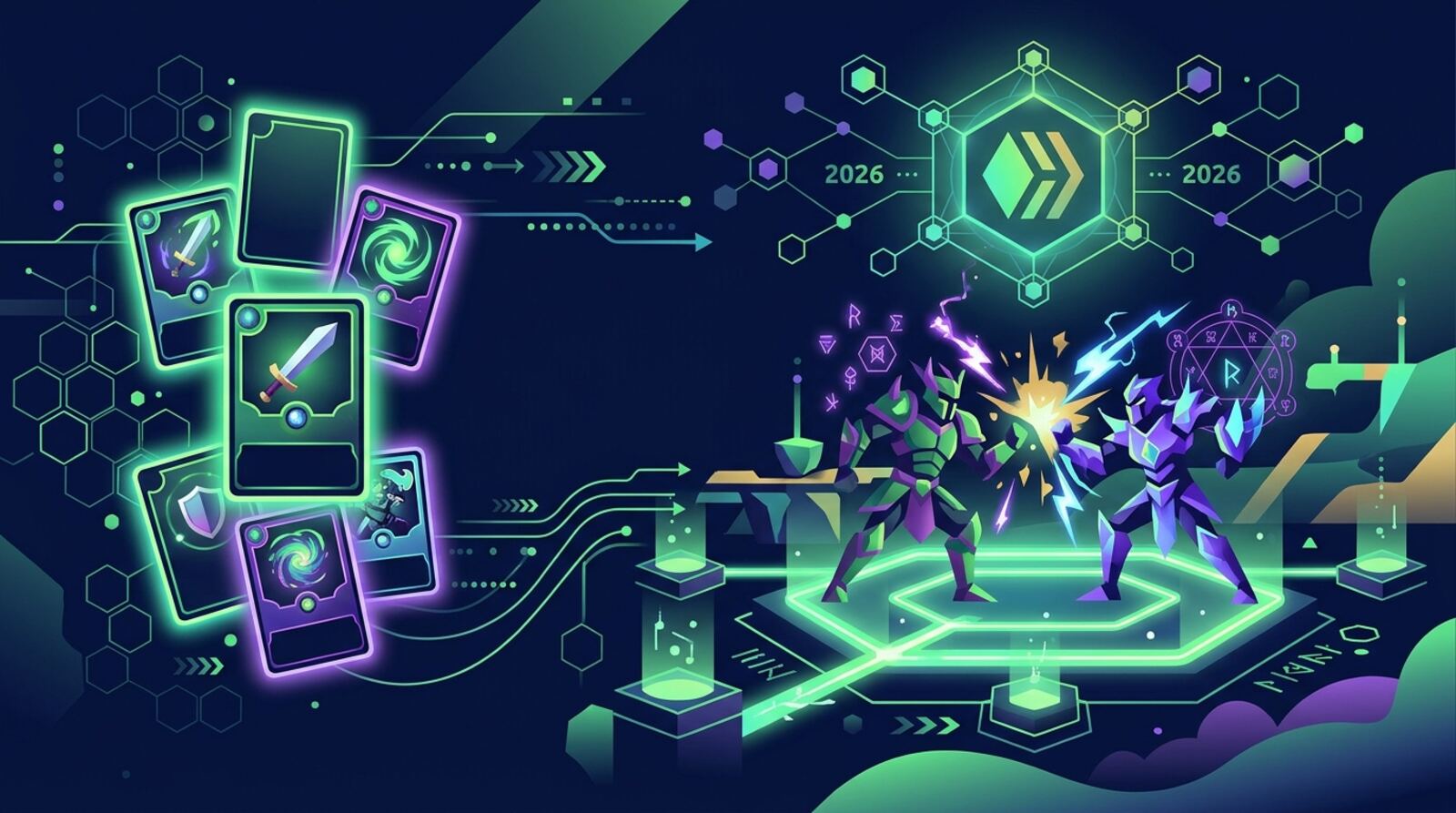
Splinterlands is a collectible card game where players build teams from digital cards and fight other players in turn-based battles. Each card represents a creature, spell or other unit, and the cards are stored as NFTs on the Hive blockchain. The game has been running since the late 2010s and is one of the longer-running examples of a blockchain card game.
The core loop is familiar to anyone who has played a digital card game. You pick a team, choose a battle format and play matches to climb ranks, complete quests and earn rewards. The blockchain part sits underneath: card ownership, some in-game assets and the main tokens are recorded on Hive, so players can hold and transfer them outside the game.
Splinterlands is usually described as a play-to-earn game, but that label covers a wide range of outcomes. Some players mainly enjoy the strategy, some collect cards, and others treat the token side as a financial activity. This review treats the game as a card game first and explains the token and asset layer so you can judge it for yourself.
How the Hive blockchain fits in
Hive is a proof-of-stake blockchain. Splinterlands moved onto Hive after a split in the Steem community, and the game's accounts, card records and token balances are tied to Hive accounts. You will need a Hive account to hold SPS or certain assets, and many players sign in using a Hive-compatible login or wallet.
The practical effect is that the game's economy depends on a second network. Transactions on Hive are generally low cost and fast compared with some older chains, but the network itself carries its own risks, including changes to its governance, outages and wallet compatibility issues. Read the current Hive documentation before you rely on it for anything important.
You do not need to be a blockchain expert to play. What matters is knowing which account you are using, where your keys are stored and which wallet supports your assets. Mixing up accounts or sending assets to the wrong address are common ways to lose value in any blockchain game, so take those steps slowly.
Cards, collections and NFT ownership
Cards are the centre of the game. Each card has attributes such as mana cost, attack, health and abilities, and some cards are more common or more powerful than others. Cards come from booster packs, rewards and trades. Some cards are tradable on-chain as NFTs, which means ownership can be verified and the card can be moved between accounts.
Collections matter because they affect what teams you can field. Many battle formats restrict which cards are allowed, and a rule set can make certain cards strong or weak. A large collection gives you more options, but it is not required to compete at a basic level, and skill with a smaller set often counts for more than owning every card.
Because cards are assets, their market value depends on demand, rule changes and supply. A card that is strong in one season may fall in value after a balance update. Before buying cards for resale, look at how the game and its markets handle listings, fees and card releases, and confirm current details in the official documentation and marketplace pages.
How battles, rule sets and leagues work
Battles are played in rounds. Each side places units on a battlefield, spends mana to play cards and uses abilities to damage or weaken the opposing team. Rule sets can change which elements are active, so your strategy shifts from match to match. Good play depends on reading the rule set, building a balanced team and making sensible choices with limited mana.
The game offers several ways to play. Ranked modes place you in leagues and reward progress, while other formats and events vary in structure. Quests give daily or weekly objectives, which are a common way new players learn the rules and earn starter rewards.
To get started in a structured way, follow these steps:
- Create or sign in to the account you plan to use, and confirm the login method.
- Read the tutorial and the current rule sets before entering ranked play.
- Build a small, balanced team from the cards you already have.
- Complete daily quests to learn the mana system and card abilities.
- Review your losses to see which choices cost you the match.
The exact list of formats and rewards changes, so check the in-game menus and official announcements for what is currently available.
The SPS and DEC tokens explained
Splinterlands uses several digital items, and beginners often mix them up. SPS is the main governance and staking token. Holders can stake it to take part in governance and to receive certain rewards, and its rules are set out in the game's documentation. DEC is an in-game currency used for purchases and some game actions. Other items, such as potions and rewards, may appear in the game with their own uses.
Tokens have their own markets. Their prices move with demand, game changes and wider crypto conditions. A token that is useful in-game is not guaranteed to hold value, and rewards paid in tokens can be worth very different amounts over time. Treat any income expectation as uncertain.
Before relying on any token for income or planning, look up its current supply rules, staking terms, unlock schedules and where it trades. Those details are updated by the game and by market data sites, so check them directly rather than trusting a figure from an older article.
Costs, fees and where to check current figures
The main costs in Splinterlands are card purchases, optional spending on packs or items, network transaction costs on Hive, and any fees charged by marketplaces when you sell or trade. Some actions may have small costs in tokens or in-game currency. Exact fees and rates change, so they should be checked before you act.
The table below shows the kinds of costs to look for and where to check them. It does not list figures, because those change.
| Cost type | When it applies | Where to check |
|---|---|---|
| Card purchases | Buying packs or single cards | In-game store and official announcements |
| Hive transaction fees | Moving tokens or assets on-chain | Hive documentation and your wallet |
| Marketplace fees | Selling or trading cards | Marketplace fee pages |
| Token staking terms | Locking SPS for rewards or governance | Official game documentation |
| Withdrawal or conversion costs | Moving value out of the game | Current exchange and wallet fee schedules |
Before spending, add up the total cost of a plan, including the time you spend. A free-to-start game can still be expensive if you buy many packs or trade often.
Staking and governance with SPS
Staking is a common feature in blockchain games. In Splinterlands, staking SPS is tied to governance participation and certain reward mechanics. Staking usually means locking tokens for a period, which can limit your ability to sell quickly. Read the lock-up terms, any unstaking delays and how rewards are calculated before you commit.
Governance lets token holders have a say in certain decisions about the game. The influence you get is usually proportional to the tokens you hold or stake, which means larger holders often carry more weight. Proposals and votes are posted in official channels, and you should read them if you plan to take part.
A careful approach is to stake only an amount you can leave locked without stress, and to keep a record of when you staked and when rewards arrived. Tax treatment of token rewards and staking income varies by country, so keep records and consider speaking with a local tax professional if the amounts are meaningful.
Risks, security and checking local laws
Splinterlands carries the usual risks of blockchain gaming. Token prices can fall quickly, card values can drop after balance changes, and rules or economic settings can be updated by the game team. Hive itself can have outages or changes, and marketplaces can have listing errors or disputes. None of these risks are unique to Splinterlands, but they all affect the value of what you hold.
Security matters at least as much as strategy. Keep your recovery phrase or master key offline and never share it. Be wary of messages that ask you to sign something urgent, of fake support accounts and of sites that copy the game's look. Connect only to official addresses that you have confirmed from the developer's own channels, and avoid approving permissions you do not understand.
Laws on crypto assets, online games and age limits differ by country. Some places restrict or regulate tokens and in-game asset trading, and some restrict access by age. Check the rules where you live before playing or trading, and confirm you meet any age requirement. This is general information and not legal advice.
Who Splinterlands suits and how to start
Splinterlands suits players who enjoy deck-building and strategic card battles and are comfortable learning a blockchain layer. It also suits collectors who like owning cards with verifiable records. It is less suited to people who want a quick income, people who cannot tolerate price swings, or anyone who does not want to manage a wallet.
If you decide to try it, a measured approach works best:
- Decide your budget in advance and keep it separate from essential money.
- Set up your Hive account and wallet with strong, unique credentials and backups.
- Play the free content and learn the rule sets before buying cards.
- Read the current staking and token documentation before moving any tokens.
- Review your costs and results after each month and stop if the numbers do not make sense.
If you prefer a game with no token layer, the card battle genre has many options that work without blockchain assets. The choice comes down to what you want from the game and how much risk you accept.
Frequently asked questions
What is Splinterlands in simple terms?
Splinterlands is a blockchain-based collectible card game where you build teams of monsters from cards and battle other players. Its cards are NFTs on the Hive network, and the game uses in-game currency and the SPS token for staking and governance. You can play for free with starter cards, but many players buy cards or tokens.
Which blockchain does Splinterlands use?
Splinterlands runs on Hive, a proof-of-stake blockchain that the game has used since moving its infrastructure from Steem. Hive handles account and asset records for cards and tokens. Game battles themselves run in the game's own software, so you do not need to understand the chain in detail to play.
Can I play Splinterlands for free and still make progress?
Not necessarily. Splinterlands has a free-to-play path using starter cards and daily quests, and the game is generally presented as playable without spending money. Whether earnings from tokens or card sales are worth your time depends on market conditions, your own skill and costs, and those change over time. Check current rewards and rules in the game before making any decisions.
Is Splinterlands gambling, and do I need to check local laws?
Splinterlands is not a casino and does not run a betting system, but it involves digital assets whose value can rise and fall sharply. Rules on crypto assets and online games differ by country and sometimes by age, so check the laws where you live and confirm you meet any age requirement. Only spend what you can afford to lose.
What should I protect first when I start?
Your wallet access is the main security point. Keep your recovery phrase or master key offline, never share it, and be cautious of anyone who asks for it or pushes urgent transfers. Use a separate account for significant holdings, enable any extra protection the wallet offers, and confirm website addresses from official sources before connecting.
Where can I check current costs, token rules and card prices?
Start with the official Splinterlands documentation and its announcements, which show current rules, token mechanics, staking terms and any fee changes. Also check Hive wallet and marketplace pages for current listings and costs. Figures for token prices, card values and rewards change often, so verify them on those sources on the day you act.
Mentioned in this guide
dApps in this guide
Splinterlands is a blockchain collectible card game on Hive where players battle with NFT cards and earn or stake the SPS governance token.
Axie Infinity is a Ronin-based NFT game where players collect, combine and battle creatures called Axies, with its own AXS token.
The Lost Glitches is a Web3 trading card game with RPG progression and PvP battles, using ERC721 NFTs on Ethereum for card and character collectors.
Spells of Genesis is a mobile fantasy card game by EverdreamSoft with cards that can be tokenized on Ethereum, Counterparty and other chains.
Warsaken is a trading card game on the WAX blockchain where players collect cards, open packs and earn Loot rewards through play and events.
Wild Forest is a real-time strategy PvP card battler by Zillion Whales on Ronin, with a WF token, for strategy players curious about Web3 gaming.
Alien Worlds is a community-built play-to-earn metaverse on WAX where players mine and play to earn TLM tokens and NFTs.
Sorare is a fantasy sports game where users collect licensed digital player cards, build lineups and compete based on real match performance.
Current is a Sui-based lending protocol with isolated markets and one-click yield multiply, focused on tokenized real-economy yield.
Keep reading
Related guides
Web3 gaming · How-to
Splinterlands Play to Earn Guide: How to Start and Earn in 2026
Splinterlands is a card battle game on the Hive blockchain where you can start for free, earn in-game rewards by winning, and later decide whether to buy cards or stake tokens. This guide explains how the earning works, what it costs, and what risks to check before you commit money.
Web3 gaming · Explainer
Splinterlands Reclaims the Throne: What the Headline Means
A headline says Splinterlands has reclaimed a top spot. This explainer covers what such rankings measure, how the Hive card battler works, and how to check its standing for yourself.
Web3 gaming · Explainer
Splinterlands and Warner Music Artists: What Is Confirmed in 2026
Searches for Splinterlands alongside Warner Music artists usually point to music-themed contests or in-game music, not a confirmed label deal. This guide explains what public sources support, how Splinterlands works, and how to verify any partnership claim yourself.
Web3 gaming · Explainer
Pegaxy Explained: How the Horse Racing Earn and Own Model Works (2026)
Pegaxy is a blockchain horse racing game where players race NFT horses called Pegs for prizes, with ownership and rental options. This guide explains how the racing, rewards, token model and risks fit together so you can judge the game before spending anything.
Web3 gaming · Explainer
Splinterlands Sold-Out Plot Sale: Why It Lifts Activity
A sold-out plot sale in Splinterlands can change how many players are active in the game for a while, but the lasting effect depends on what the new owners do next. This explainer covers how plot sales work, why a sell-out can lift activity, and how to check the claim yourself.
Web3 gaming · Explainer
Splinterlands and SPS: What the Price Rally Means in 2026
SPS, the governance token tied to Splinterlands, has been reported as rising sharply, but a price move alone does not show how the game works or whether it pays. This guide explains what SPS does, how players earn and stake it, and how to check current prices and risks yourself.
Web3 gaming · Explainer
Splinterlands and SPS Token: How the Game Works in 2026
Splinterlands is a card battle game built on the Hive blockchain, and its SPS token gives holders a say in the game's governance. This guide explains how the game and token work, what moves their prices, and where to check current figures before you make any decision.
Web3 gaming · Explainer
Is Splinterlands the Most Active Blockchain Game in 2026?
Splinterlands is widely described as the most active game on a blockchain, but that claim depends on which metric you use and when you check it. This guide explains what the game is, how activity is measured, and how to verify current figures yourself.