NFT · Explainer
NFTs for Charity: How Rescue and Relief Fundraising Works in 2026
NFTs have been used to raise money for relief, animal rescue and other causes, with the money usually going through a sale, a mint fee or an auction. This guide explains how those models work, what the record shows, and how to check whether a charity NFT is what it claims to be.
By the DappsAtlas editorial team · Updated
What NFT charity fundraising actually means
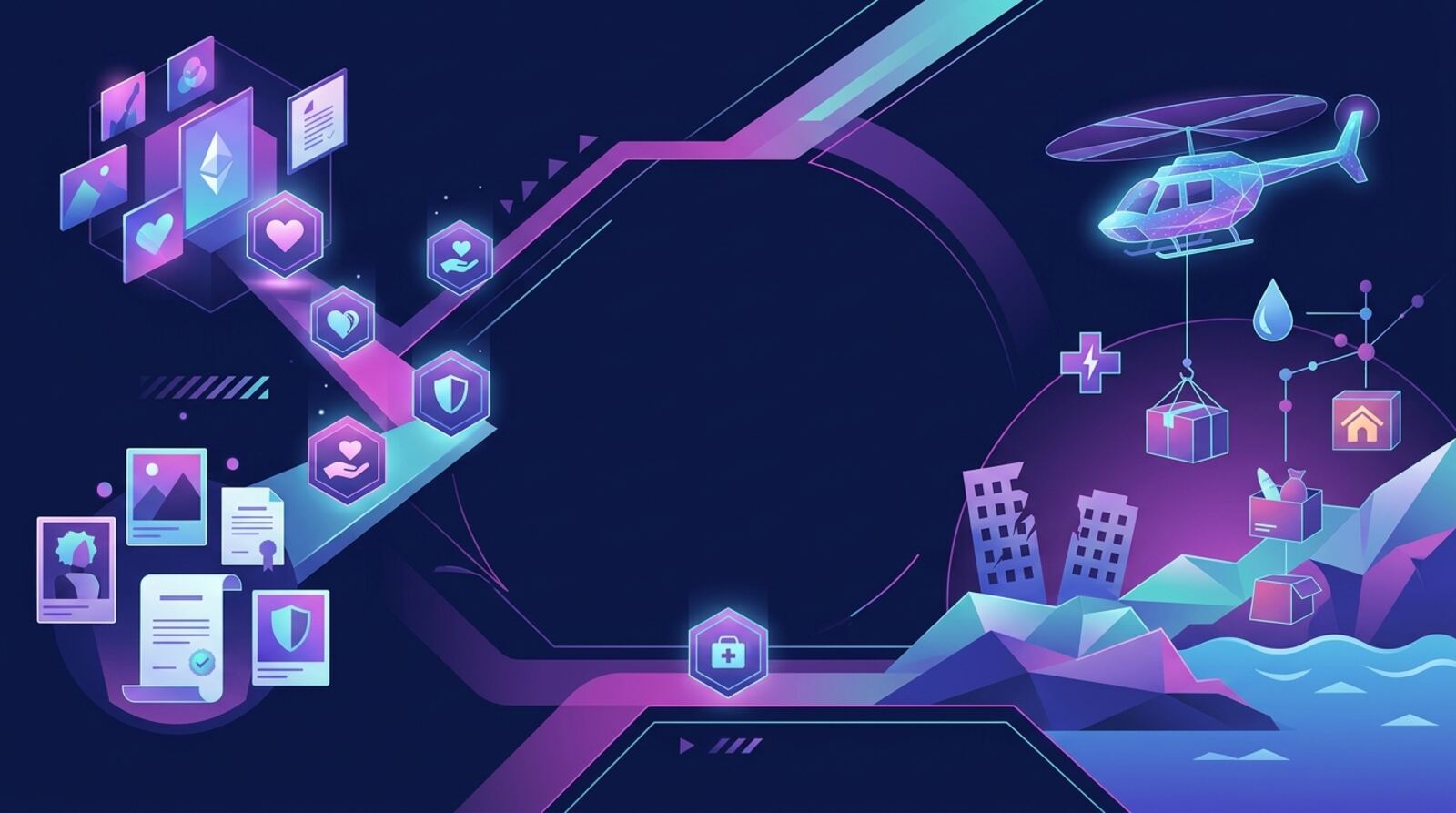
NFT charity fundraising uses a non-fungible token, a unique record on a blockchain, as the product that a donor buys, mints or bids on. The money raised is meant for a cause such as disaster relief, humanitarian aid, animal rescue or medical care.
The idea is simple. A creator or project makes a collectible, sells or auctions it, and pays a share or the full proceeds to a named nonprofit. The buyer receives a digital item and, in theory, a gift to a cause. In practice, the buyer's money passes through a chain of parties: the artist or project, the marketplace, blockchain network fees and sometimes an intermediary before it reaches the charity.
That chain is the main thing to understand. An NFT can record that a sale happened and what the terms were, but it does not by itself prove where the money went. The transparency comes from the project's published commitments, its wallet records and the charity's own confirmation.
Charity NFTs are not a single product. Some are art collections with a percentage promise, some are one-off auctions run by a museum or a celebrity artist, and some are membership tokens that give access to a community that donates together. Each type carries different risks, covered in the sections below.
The main models behind charity NFT sales
Most charity NFT projects fall into a few broad models. The labels vary, but the structure is usually one of these:
- Percentage of sales: a share of each primary sale goes to a named charity for a set period.
- Donation mint: the price of minting a token is paid to the charity, and the token itself is the receipt.
- Charity auction: a single item or a small set is auctioned, with the winning bid sent to a nonprofit.
- Royalty share: a portion of secondary-sale royalties is directed to a cause.
- Membership model: holders vote on or join donations and grants from a shared treasury.
Each model answers a different question. With a percentage or royalty model, the donation can keep growing as the collection trades, but it also depends on resale activity that may be thin. A donation mint gives a clearer link between the payment and the cause, although the token may have little resale value. Auctions can raise a large sum at once, and they are usually run by a known organisation with a clear beneficiary.
When you read a project's terms, look for the exact model, the exact share or amount, the recipient's name, and whether the commitment is for a fixed period or ongoing. Vague language such as 'a portion of proceeds supports good causes' is harder to verify than a named charity and a stated rate.
A past example: disaster relief sales and what to check now
Charity NFT sales are not new. Around 2022, after a hurricane caused damage in the United States, a fundraising NFT was offered to raise money for the American Red Cross, which provides disaster relief. Press coverage at the time reported the item's listed price and described the sale as a way to support people affected by the storm.
The evergreen lesson from that example is about process, not about any one number. A nonprofit usually confirms a fundraiser through its own channels, and the amount raised is best checked in the charity's published financial statements or announcements, not in the NFT listing. Prices and sales counts on a marketplace change over time, so a figure you read in a news article may already be out of date.
If you are reading about a past charity sale, check three things: whether the charity itself confirmed the sale, whether the project published a final report, and whether the money was received. Many older sales have little follow-up coverage. If you cannot find a closing statement, say so in your own notes rather than assuming the money arrived in full.
The same approach applies to newer drops. Treat an announcement as the start of a process. The useful question is whether the recipient has confirmed receipt, and that answer usually comes from the charity rather than from the marketplace page.
Why the crypto market cycle changes charity NFT results
NFT fundraising goes up and down with the wider crypto market. Coverage in 2024 described NFT activity as having fallen sharply during a prolonged downturn, with some startups trying to bring back the category by pointing to gaming, finance and art uses. Market conditions can change quickly, so check current activity on a marketplace or in market data before judging how well a charity sale is likely to perform.
A downturn affects charity NFTs in two ways. First, fewer buyers means lower primary sales, so a percentage promise may bring in less. Second, secondary royalties can dry up, which weakens any model that depends on resales. A project can still be honest in a weak market, but its donation total will probably be smaller than it was in a busy period.
When a project's promise is built on hype about future resale prices, be careful. A donation that depends on a token rising in value is a different proposition from a fixed gift paid at the time of purchase. Ask whether the charity would still receive something if the collection never traded again.
Readers can check market direction through public dashboards, marketplace activity pages and independent market data tools, and compare the current level with the period when a project launched. Those sources change often, so this guide does not give a figure.
How to verify that a charity really receives the money
Before you give money to a charity NFT, verify the nonprofit side as you would for any donation. The steps below apply in most countries, though the specific registers differ.
- Find the exact legal name of the recipient on the project's official channels and in the terms.
- Confirm the organisation is registered in its country. In the United States, the IRS publishes a searchable database of tax-exempt organisations. Other countries run their own charity registers.
- Check the charity's official website and its recent annual or financial reports for any mention of the NFT project.
- Ask the charity directly, through a contact listed on its own site, whether it has agreed to the arrangement and how funds will be received.
- Look for a transparency statement from the project that lists dates, amounts and the wallet address used for the donation.
- Note whether the project has a history of delivering on earlier commitments.
A project that cannot name its recipient, uses only a generic 'charity' label, or refuses to share proof of transfer deserves caution. Also be aware that some projects use a charity's name or logo without permission. A charity's own channels are the best place to confirm an association.
Write down the transaction details of your purchase and keep copies of the listing and terms. If the project later changes its promise, your records will help you ask the right questions.
What to check on the NFT listing before you buy
Once you have checked the charity, look at the NFT itself. The token's details can reveal important information about how the sale works.
Ask these questions before you buy:
- Which marketplace is the item listed on, and what fees does it charge?
- Is there a creator royalty, and who receives it?
- Is the donation fixed at mint, or does it depend on later resales?
- Is the smart contract publicly viewable on a block explorer?
- Does the project's wallet appear in its own announcements?
- Are there clear terms about refunds, cancellations and what happens if the project closes?
A smart contract is a program that controls the token. You do not need to read code to see basic facts, such as the contract address and the transaction history. Block explorers, which are public tools that show blockchain transactions, let you trace a payment from a wallet to a recipient address. If the project names a recipient wallet, you can check whether it received funds.
Treat any claim of guaranteed returns with suspicion. A charity NFT is a purchase with uncertain resale value, and the donation portion is usually smaller than the headline figure once fees and costs are taken into account. Only spend what you could afford to lose, and make sure the purchase fits your own budget.
Tax and legal points to check, depending on where you live
Charity NFTs are subject to the same legal rules as other digital assets and donations. Those rules differ by country and by the type of organisation involved, so this section gives only a general outline.
Tax treatment depends on who you are, what you bought and where the recipient is registered. A donation to a registered charity may be treated differently from a purchase of a collectible, even if the item was sold for a good cause. Gifts and sales can also raise capital gains questions if you later sell the token. Keep records of purchases, sales and any receipts from the charity.
Rules for fundraising through NFTs can also apply to the project. Some regulators have taken interest in how crypto assets are sold and promoted, and the answer may depend on the token's features. Creators and organisers should seek their own legal advice before running a sale, especially if it targets donors in several countries.
For readers, the practical steps are simple. Check whether the charity is registered where you live. Ask a qualified tax adviser about the treatment of your specific transaction. Read the terms of the NFT carefully, and do not rely on a marketing summary. If you are unsure about any part, pause before buying.
How creators can set up a transparent charity drop
Artists and organisers who want to run a charity NFT sale should plan for transparency from the start. Donors are more likely to trust a project that makes its process easy to verify.
A practical setup usually includes these elements:
- A written agreement with the charity that names the recipient, the percentage or amount, and the period the commitment covers.
- A dedicated wallet for the donation funds, with its address published before the sale.
- A simple public report that lists the date, amount and transaction link for each payment.
- A final statement once the campaign ends, confirmed by the charity.
- Clear terms that explain what happens to unsold items and to any royalties collected later.
Creators can set royalties on many marketplaces, but the available options and enforcement rules vary by platform and by token standard. Check the current settings on the marketplace you use, and state in the terms exactly how royalties will flow to the cause.
It also helps to avoid promising more than the model can deliver. A fixed donation from each mint is easier to explain than a promise tied to future price rises. Keep communications accurate, and correct any mistakes quickly if the amount raised differs from what was first announced.
Risks, scams and how to protect yourself
Charity NFTs can be a legitimate way to fund a cause, but they carry several risks that should be weighed before you buy.
The first is misrepresentation. Some projects overstate their link to a charity or imply a larger donation than they make. The second is impersonation, where a project copies a known charity's name or artwork. The third is that an NFT's resale value can fall to near zero, leaving the buyer with an item worth far less than the purchase price.
Security risks also apply. Scammers often copy real charity drops and send fake links or fake wallet-connection requests. Defensive habits help:
- Type the marketplace or charity address yourself rather than following links in messages.
- Never share your seed phrase or private keys with anyone, including people claiming to be support staff.
- Review what a wallet is asking you to approve before you sign it.
- Use a separate wallet for new projects if you can.
- Revoke token approvals you no longer need, using a reputable tool.
If you already bought a charity NFT, check the transaction on a block explorer, confirm the recipient's statement, and keep your records. If the project goes quiet or the charity does not confirm receipt, you can ask the project in writing and report concerns to the relevant consumer authority in your country.
Choosing causes and projects in practice
Charity NFTs cover a wide range of causes, from disaster response to animal welfare. Some collections are themed around rescue work, and their creators say a portion of proceeds goes to the cause. The same verification steps apply to all of them, regardless of how appealing the artwork or story is.
When you look at a collection, ask whether its cause is tied to a named organisation or only described in general terms. Check whether the creator has a track record in the cause, and whether the project publishes updates. A large mint with little follow-up is a reason for caution, not confidence.
It is also worth comparing charity NFTs with direct donations. A donation made straight to a registered charity usually reaches the cause with fewer intermediaries, and it may be easier to claim tax relief where that applies. An NFT can be a way to combine a collectible with a gift, but it is not automatically a better way to give.
If you still want to take part, set a fixed budget, choose projects that name their recipient and publish proof, and keep your decision separate from any expectation of profit.
Frequently asked questions
Can I get a tax deduction for buying a charity NFT?
Usually not. Donations to nonprofits are generally governed by the rules of the charity's country and the donor's tax situation. Whether you can claim a deduction depends on the recipient's legal status, how the gift was made and your own circumstances. Speak with a qualified tax adviser in your jurisdiction before assuming a gift is deductible.
How do I confirm that a charity NFT project actually sends money to a charity?
Start with the charity's own website and official announcements, then confirm the organisation is registered with the relevant authority in its country. Look for a stated percentage or fixed amount, a timeframe, and a public record such as a receipt or transparency report. If the project will not name the recipient or give any proof of transfers, treat that as a warning sign.
Does buying a charity NFT mean I will make money on it?
Not necessarily. Many charity NFT sales are priced like any other collectible, and the share that reaches the charity can be small or can depend on secondary sales. Trading volume and royalties may also change over time. Decide what you would be comfortable paying if you never resold the item, and treat any resale value as uncertain.
Can royalties from resales go to charity?
Yes. Many NFT marketplaces let a creator set a royalty on secondary sales, and some collections route a share of those royalties to a chosen cause. The royalty rules depend on the marketplace and the token standard, and some platforms have made royalties optional. Check the collection's terms and the marketplace's current royalty settings before you buy.
Which marketplaces are used for charity NFT sales?
Several large marketplaces host charity-linked drops and auctions, including OpenSea, Rarible, SuperRare and Endemic. The right choice depends on the project. Whatever platform you use, confirm the charity link on the project's own channels and check the current fee and royalty settings on the platform itself.
Mentioned in this guide
dApps in this guide
OpenSea is a peer-to-peer NFT marketplace for buying, selling and minting digital collectibles, aimed at collectors, creators and developers.
Rarible is a multichain NFT marketplace whose RARI token governs the protocol, RARI Chain and Foundation treasury, for creators, collectors and token holders.
SuperRare is a curated Ethereum NFT marketplace for digital art and works paired with physical pieces, aimed at collectors and vetted artists.
Endemic is an Ethereum NFT marketplace for digital artists and collectors, offering AI-assisted curation, a creator studio and artist-led collections.
Element Market is a multi-chain NFT marketplace and aggregator for collectors and traders buying NFTs, collectibles and GameFi assets across many blockchains.
Objkt is a non-custodial NFT marketplace on Tezos where creators mint, collectors trade and anyone can make offers on tokens.
Keep reading
Related guides
NFT · Explainer
What Is laCollection? How Museum Art Becomes NFTs in 2026
laCollection is a French technology service that helps museums and cultural institutions issue certified NFTs as digital twins of physical artworks. This guide explains how the model works, what a buyer actually receives, and what to check before buying.
NFT · Explainer
NFT Art That Captures Blockchain History: How It Works in 2026
NFT art can be built to record events from a blockchain, such as a wallet's transfers or a token's ownership path, so the work itself carries a verifiable history. This guide explains how that works, what to check before you buy or display one, and where Everdreamsoft fits into the picture.
NFT · Explainer
Foundation NFT Marketplace: What Its Growth Claims Mean in 2026
Foundation, an Ethereum NFT art marketplace, was taken offline indefinitely on April 27, 2026 after a failed sale. Public reporting do not confirm any recent user growth for it, so this guide explains what happened and how to judge growth claims for any NFT marketplace.
NFT · Explainer
LG Art Lab NFT Marketplace: What Happened and What Comes Next
LG Electronics briefly ran an NFT marketplace on its smart TVs. This guide explains how LG Art Lab worked, why it shut down in June 2025, and what anyone who used it should check now.
NFT · Explainer
Why NFTs Are Taking a Step Back as Big Brands Move In
Brand-led NFT drops from sports leagues, music festivals and messaging apps have drawn attention while overall NFT trading has cooled. This guide explains why that shift is happening and how to judge branded collectibles before you buy.
NFT · Explainer
NFTs 4 Peace: What the Ukraine Charity NFT Drive Was and How to Help
NFTs 4 Peace was a 2022 charity NFT call that asked collectors on OpenSea to bid and support Ukraine. This guide explains what the project was, how charity NFT fundraising for Ukraine worked, and how to check a charity NFT and give safely today.
NFT · Best list
NFTs With Real-World Utility in 2026: Mekaverse and More
Real-world perks separate a few NFT projects from pure collectibles, but the promises vary widely. This guide explains how to test a utility claim, what public records show for Mekaverse and Kaiju Kingz, and which perks are documented.
NFT · Explainer
NFT Your Life With Airwire: What the App Does in 2026
The sources checked for this guide point to AirNFTs, a BNB Smart Chain NFT platform, rather than an app called Airwire. This explainer covers how life-themed NFT apps work, what to verify before connecting a wallet, and how to protect yourself.