NFT · Explainer
Multichain NFT Marketplaces Explained: Reach, Risks and Checks
Multichain NFT marketplaces list and trade tokens across several blockchains at once, which can widen the buyer pool. This guide explains how that works, what the audience-growth claims can and cannot prove, and how to judge a platform before you trade.
By the DappsAtlas editorial team · Updated
What a multichain NFT marketplace actually is
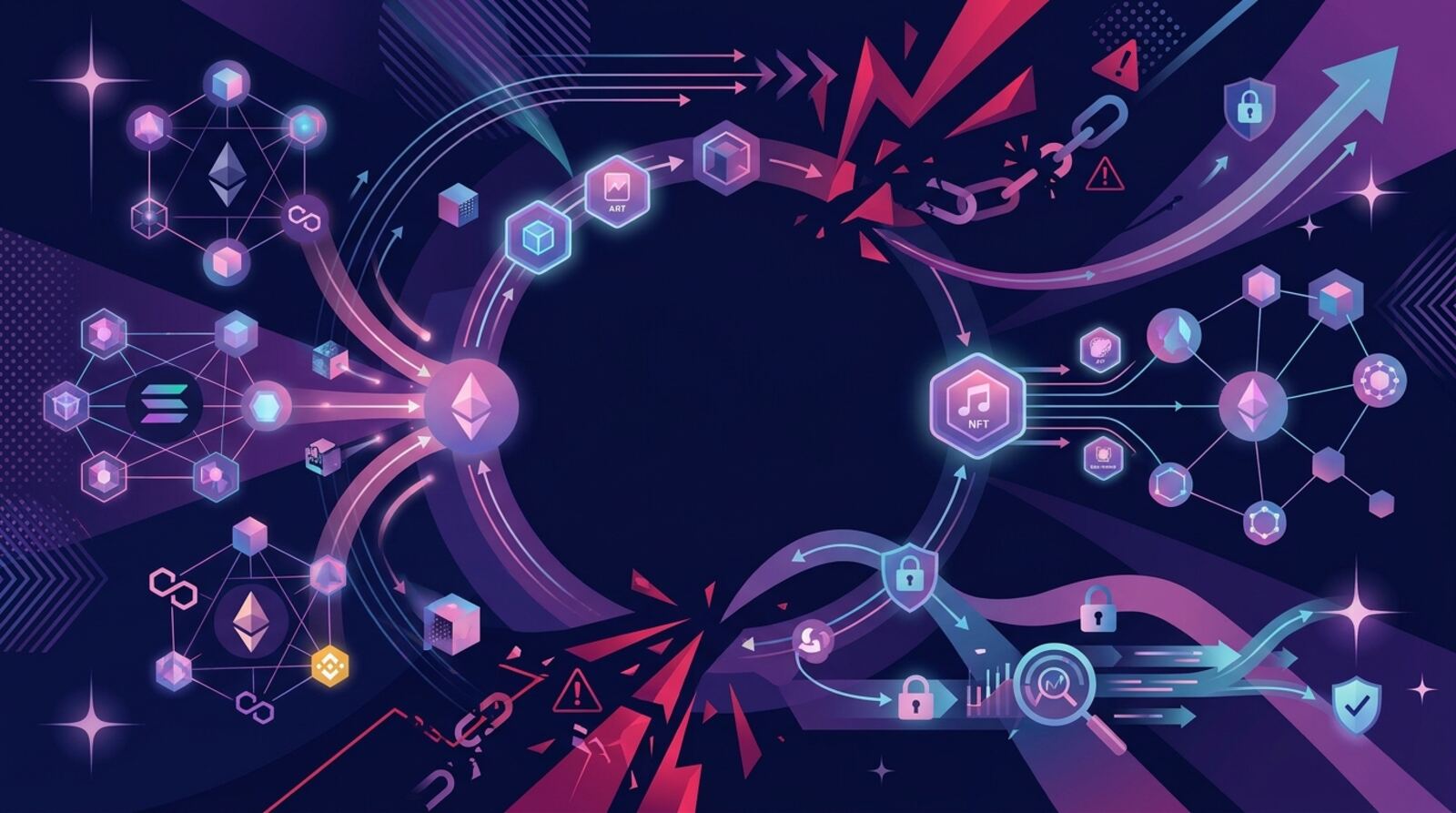
A multichain NFT marketplace lets users list, browse and buy non-fungible tokens on more than one blockchain from a single interface. Each chain has its own wallets, token standards, fee levels and user communities. A marketplace that supports several of them can show a larger inventory and reach people who already hold assets on those networks.
The idea is simple. Instead of asking every buyer to move to one chain, the platform meets them where their assets already are. A collector with tokens on one network and a creator who prefers another can both use the same venue. Some marketplaces go further and aggregate listings from many platforms, so a buyer sees the lowest available price across chains.
The model does not change what an NFT is. Each token still points to a contract and metadata, and ownership is recorded on the chain where it was minted or transferred. What changes is the number of places where that token can be seen, listed and sold.
Why marketplaces expand to more blockchains
Several reasons explain why platforms add chains. Fees differ widely between networks, so some buyers prefer a cheaper chain for small purchases. Gaming and social communities often build on specific chains, and their members may hold NFTs there but not on Ethereum. Creators may also choose a chain for its tooling, its royalty support or its audience.
Supporting more chains can increase the number of listings and the number of wallets able to interact with the platform. That is the plausible mechanism behind claims about wider reach. Yet reach is only the start of a sale. A buyer still needs a funded wallet on the right network, a reason to pick that item and confidence in the seller.
Marketplaces also face costs. Each chain needs its own integration, monitoring and support. Liquidity can be split across networks, which may make prices thinner on each one. A platform that adds chains without strong demand on them can end up with many listings and few trades.
How to read an audience-growth claim
The phrase audience doubled is a headline number, and headline numbers need context before anyone repeats them. The first question is what was measured: registered accounts, connected wallets, unique buyers, monthly active users or trading volume. Each metric tells a different story, and a platform can grow one while another stays flat.
The second question is the time window. A comparison between two short periods can be distorted by a single popular drop or a broader market swing. The third question is whether the growth came from the multichain change itself or from something that happened at the same time, such as a new partnership, a token incentive or a general rise in NFT activity.
The material reviewed for this guide did not include an independent source confirming a specific audience-doubling figure for NFTKey, so no such figure is repeated here. Readers who see the claim should look for the original statement, its date, its definition of audience and any data that backs it up.
Checking a platform before you trade
Before trading on any multichain platform, confirm that the network you intend to use is one the marketplace officially supports. Check that the token you plan to buy is the same asset you expect. Some marketplaces show wrapped or bridged versions of tokens, and a wrapped item may carry different risks or redemption terms from the original.
For each chain, look at how the platform displays prices, whether it charges a platform fee, how royalties are handled and what happens to unsold listings. Read the terms that apply to the network you are using, since they can differ from the main site terms.
Compare results across chains with a block explorer or another independent tool. Verify the contract address before approving any transaction. Mismatched names are a common way to mislead buyers, so rely on the address rather than the collection name.
Bridges and cross-chain transfers
Bridging moves an asset from one chain to another by locking it on the source network and issuing a representation on the destination. Bridges are a common target for attackers because they hold large pools of assets in shared contracts. A bug, a compromised key or a faulty upgrade can cause losses that a single-chain marketplace would not face.
When you move an NFT across chains, use only the bridge the marketplace or the token project names in its official documentation. Start with a small test transfer to see the full process, including the wait time and the final token address. Keep a record of the transaction hashes in case you need support.
Never send assets to a bridge address you found in a direct message, a reply thread or a sponsored post. Phishing sites often copy the look of real bridges and ask for a wallet approval that gives them access to your holdings.
Wallet safety when using multiple networks
Connecting a wallet to a marketplace usually involves signing messages and granting token approvals. An approval can allow a contract to move a specific token, or in some cases all tokens of a type, without a further prompt. Review what each request asks for, and revoke approvals you no longer need using a reputable approval management tool.
Use a separate wallet for NFT trading if you hold other assets, so that a compromised signature cannot reach your main funds. Store recovery phrases offline and never type them into a website or share them with support staff, who will never ask for them.
Be cautious with airdrops, free mints and giveaways that require you to connect your wallet to an unfamiliar page. Confirm the official domain from the project's verified channels before signing. If something feels rushed, step away and check again.
Incentives, liquidity and platform history
Many marketplaces offer fee discounts, rewards or raffles to attract activity. Such incentives can make a platform look busier than the underlying demand justifies. Rewards often depend on continued trading, so they can fade once the programme ends, and the value of any reward token can change sharply.
Liquidity matters for both buyers and sellers. Thin liquidity means fewer offers and wider gaps between buy and sell prices. Check how many active listings and bids sit on each chain for the collection you care about, and whether recent sales happened at prices close to the listing.
Also consider the platform's history. Look at whether it has changed ownership, paused operations or moved its token economics in the past. A platform that has adapted before may do so again, so keep an eye on official announcements from the team.
Legal, tax and practical considerations
Tax treatment, consumer protection and access to trading platforms depend on where you live. Some jurisdictions treat NFT sales as taxable events, and some restrict particular marketplaces or token types. Check your local laws and the rules of your home country before buying or selling, and keep records of every purchase, sale, transfer and fee.
NFT activity also involves risks beyond price. Metadata and images can be hosted off-chain, so an item may lose its visible artwork if the host goes offline. Royalties can change or be optional on some platforms. Read the item's details rather than relying on the thumbnail.
This guide is general information, not financial, legal or tax advice. Seek a qualified professional for decisions that involve significant sums.
A simple framework for choosing a multichain marketplace
Start by defining what you want from the platform. Collectors may care most about trust, curation and provenance. Traders may prioritise depth of liquidity and the lowest fees. Creators may need minting tools and royalty controls. Use that goal to decide which chains and features matter.
Next, make a shortlist of two or three marketplaces that support the chains you use. Compare them on fees, the networks they cover, how clearly they display contract addresses, how they handle royalties, and how responsive their support channels are. Note any dated claims about audience or volume and check them against independent data.
Finally, try a small transaction on the network you use most, then reassess. A multichain platform is useful only if it works smoothly for your own activity. Revisit the decision periodically, because chain support and fee structures can change.
Frequently asked questions
Does supporting more blockchains automatically bring more buyers?
Not on its own. A multichain marketplace can show listings from several networks, but whether more people buy depends on whether those buyers can afford the fees, hold the right wallet and want the items on offer. Audience growth should be measured with trading data over time, not inferred from the number of supported chains.
How can I verify a claim that a marketplace doubled its audience?
Check the official project channels for the statement, then look for independent data such as on-chain trading volume, unique buyers and active wallets across the period described. If the claim cannot be traced to a dated source with a clear method, treat it as marketing until verified.
Are bridges safe to use with NFTs?
Bridged assets carry extra risk because the bridge contract or its operators can fail or be attacked. Use only the official bridge links shown by the marketplace, verify token contract addresses on the destination chain, and move small test amounts first. Avoid any bridge you cannot trace to a clear team and audit history.
Where should I check current fees and activity on each chain?
Start with the marketplace's own help pages and its supported network list, then compare fees, royalty handling and listing depth on each network. Check current figures on the chain's block explorer or a reputable market data site rather than relying on a single headline number.
Is multichain trading risky for beginners?
Yes. Trading NFTs can lose money, prices can drop quickly and some platforms may be unavailable or restricted where you live. Check your local laws before using any marketplace, and only spend what you can afford to lose. This is general information, not financial advice.
Mentioned in this guide
dApps in this guide
OpenSea is a peer-to-peer NFT marketplace for buying, selling and minting digital collectibles, aimed at collectors, creators and developers.
Rarible is a multichain NFT marketplace whose RARI token governs the protocol, RARI Chain and Foundation treasury, for creators, collectors and token holders.
Element Market is a multi-chain NFT marketplace and aggregator for collectors and traders buying NFTs, collectibles and GameFi assets across many blockchains.
OKX NFT Marketplace is a multi-chain NFT trading platform in OKX Wallet that aggregates listings and supports minting, for collectors and OKX users.
AtomicHub is a multichain NFT marketplace for gaming items, collectibles and digital art, centered on WAX and EOS-family chains.
OmniHub is a multichain NFT launchpad for creating, minting and trading digital collectibles across more than forty networks, often at free or very low prices.
Sudoswap V2 is a decentralized NFT marketplace on Ethereum, Base, Berachain and Arbitrum with on-chain royalties and ERC-1155 support, for NFT traders.
NFTX turns NFT collections into vault-backed ERC20 tokens so users can buy and sell NFTs instantly at floor price against a pool.
nReach is a B2B outbound sales platform for Web3 companies, offering a contact database and automated Telegram, email and Slack outreach.
Keep reading
Related guides
NFT · Comparison
NFT Marketplaces Battle for Pole Position: What Changes in 2026
Leadership in the NFT marketplace race depends on which measure you use, which chain you trade on and which collectibles you care about. This guide explains how to read the standings and compare venues on fees, liquidity, royalties and niche fit.
NFT · Explainer
NFT Marketplace Aggregators Explained: How They Work in 2026
NFT marketplace aggregators gather listings from many venues so buyers and sellers can find the best price in one place. The race to lead this category has changed hands several times, so this guide explains how aggregators work, how to judge who is ahead, and how to protect yourself while trading.
NFT · Explainer
OpenSea Acquires Gem: The NFT Aggregator Deal Explained
In April 2022 OpenSea bought Gem, an NFT aggregator that let traders buy across several marketplaces in one transaction. This guide explains what the deal was, why it mattered for experienced traders, and how to check what the tools look like today.
NFT · Explainer
OpenSea Sales Volume Passes $1.8B: What the Figure Means
A headline that OpenSea sales volume has passed $1.8 billion sounds like a single fact, but it depends on the time window, the currency and the data source behind it. This guide explains how marketplace volume is counted, why it can swing sharply, and how to check any figure yourself.
NFT · Explainer
Music NFTs Explained: How They Work and Who Pioneered Them
Music NFTs turn songs, albums and fan perks into blockchain tokens. Here is how they work, what buyers really get, and which artists shaped the format.
NFT · Best list
The Most Expensive NFTs Ever Sold: Top 10 Record Prices
A ranked look at the biggest reported NFT sales, from Pak’s The Merge to Beeple’s record-setting digital art and rare CryptoPunks. The figures are historical sale prices, not estimates of what these NFTs are worth today.
NFT · Explainer
How Music Works on the Blockchain: A 2026 Explainer
Blockchains have been used to sell music, split royalties and reward listeners since about 2020. This explainer covers how those systems work, what they have and have not delivered, and what to check before you spend money or time on them.
NFT · Best list
Most Expensive Land in the Metaverse: Record Sales and Prices Today
A handful of virtual parcels sold for millions during the 2021 land rush, but prices have since fallen sharply. This guide ranks the record sales, explains what land costs now and shows how to check real prices.