Web3 gaming · Review
Crusaders of Crypto Review: Dungeons, NFTs and Rewards Explained
Crusaders of Crypto is a blockchain roguelike where players run dungeons and may earn NFT and token rewards. This guide explains how the dungeon loop works, what NFTs do inside the game, and what to check before you spend money.
By the DappsAtlas editorial team · Updated
What is Crusaders of Crypto?
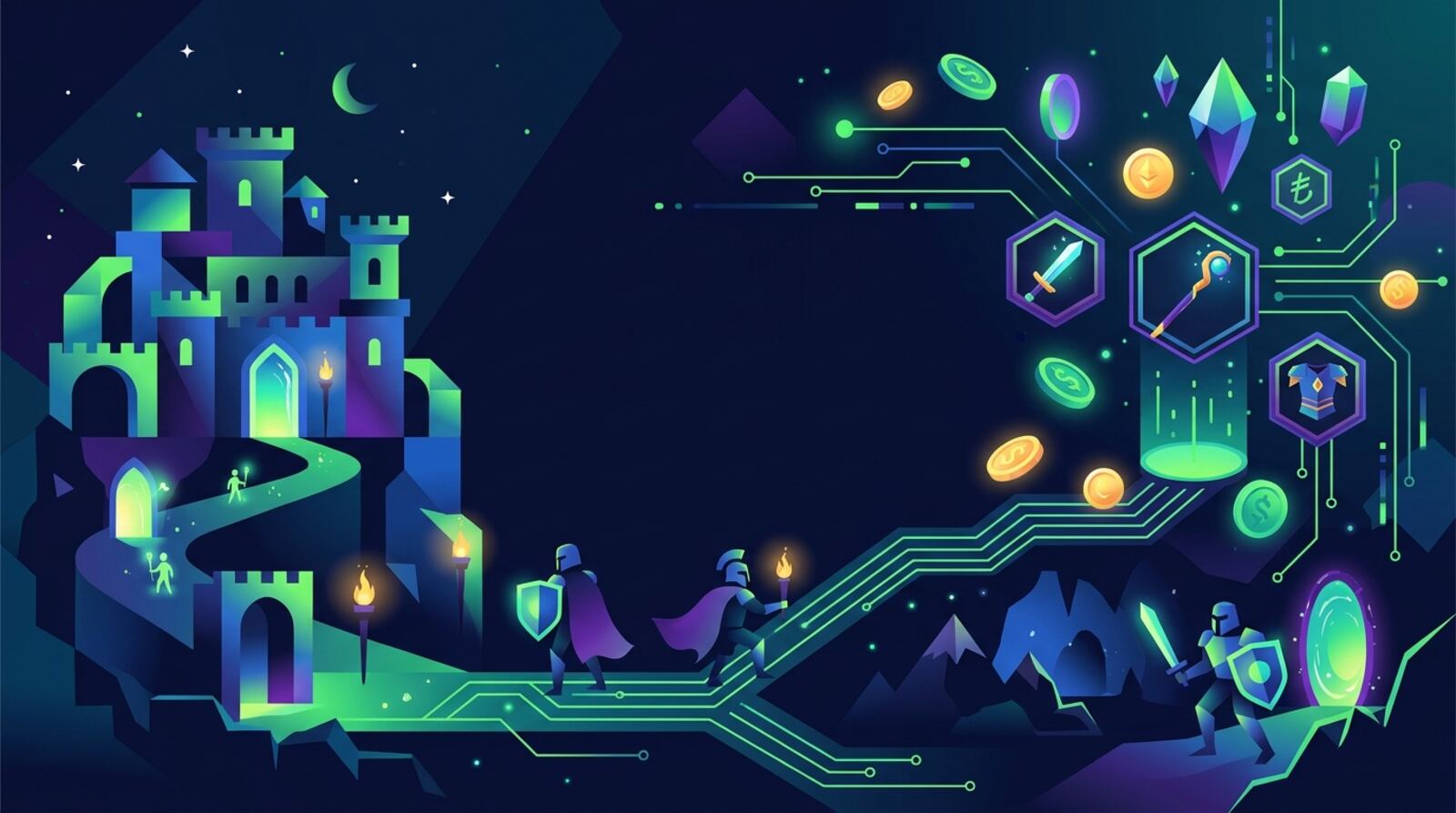
Crusaders of Crypto is a blockchain roguelike, which combines two ideas. A roguelike is a genre where each dungeon run is different, resources are limited, and a defeat usually ends the run so you start again. The blockchain layer adds digital assets, so some items or characters can exist as NFTs. An NFT is a token recorded on a public ledger that proves who owns a specific digital item.
Current public descriptions present the game as a roguelike on BNB Chain where players can earn BNB, the native token of that network. Treat this as a starting point rather than a promise. Features, reward rules and supported wallets can change, and the developer's official channels are the authority on what the game offers today.
The main appeal is straightforward: run dungeons, build a stronger roster, and collect or trade the digital items the game supports. Whether the NFT side is worth your time depends on how the game is designed, how active its market is, and whether you still enjoy the core gameplay with no financial reward. This review looks at the loop, the economy and the checks you should run before committing money.
How does a dungeon run work?
A typical roguelike dungeon run follows a loop worth understanding before you spend anything:
- Choose a hero or party and enter the dungeon.
- Move through rooms or floors, fighting enemies and collecting items.
- Make choices that shape the run, such as which upgrade or path to take.
- Face a boss or final encounter.
- Either clear the dungeon or fall, which usually ends the run.
Because runs are randomized, the same plan does not always work twice. Strong play tends to come from reading enemy patterns, managing health or resources across floors, and knowing when to take a risk and when to retreat. Players who enjoy the genre often find that learning these decisions is the real fun, while the rewards are a secondary reason to return.
When you test any roguelike, notice whether each run feels fair. Ask whether losses teach you something, whether the game explains its systems clearly, and whether progress carries over in a way that makes the next run feel different. These questions matter more for a blockchain game than for a typical one, because the gameplay has to hold interest on its own if the token economy changes.
What do NFT heroes actually give you?
In blockchain games, an NFT usually represents a hero, weapon, pet, cosmetic or other item. Because each NFT has a unique identifier, the game can track who owns it and, in many designs, let owners trade it. What you own is a token that points to an item in the game's system. It is not the same as owning the game's code, its servers or its future.
Before you buy or mint any NFT, check three things. First, is the item needed to play, or is it optional? Second, what does the item do in the game, and does that effect change with updates? Third, where can it be sold, and how deep is the market? A rare-looking item with few buyers can be hard to sell at any useful price.
Also check which contract the game uses and whether the address is published on the official site. Scammers often copy the names of popular games and send fake links. Confirm any contract address through official channels, and treat unsolicited messages offering free heroes as suspicious.
How do rewards and winning work?
In this kind of game, winning usually means clearing a dungeon, reaching a milestone or ranking well in an event. Those outcomes can unlock in-game items and, in some designs, tokens. It helps to separate two types of progress. In-game progress, such as a stronger hero or a better item, affects how well you play. Token rewards are a separate matter, because they depend on the game's reward rules and on market conditions.
Reward rules are set by the developer and can change. A reward schedule that looks generous at launch may be reduced later, and a token's market price can fall far below what you paid to play. Public information in current public reporting describes the game as one where players can earn BNB, but no payout is guaranteed for any player or any period.
If you want to judge the rewards, look at the official reward documentation, recent patch notes and the team's communication about changes. Be cautious of any source that promises fixed returns or treats earnings as certain. A useful test is to ask whether you would still play if the token paid nothing at all.
What does it cost to play?
Playing a blockchain game usually costs more than the game's price tag. Your total spend can include wallet setup, network transaction fees, the purchase of any NFTs, marketplace fees and the time you put in. Transaction fees on BNB Chain are generally lower than on Ethereum mainnet, but they are not zero, and they can rise when the network is busy.
The table below summarizes common costs and what to check for each one.
| Cost | What it covers | What to check |
|---|---|---|
| Entry or purchase | Access to the game or a starter item | Whether the game can be played without buying |
| Network fees | Recording transactions on BNB Chain | Current fee levels in your wallet before you confirm |
| NFT purchases | Heroes or items with in-game use | Market depth and whether the item is required |
| Marketplace fees | Selling or trading on a platform | The fee schedule shown before you list |
| Your time | Practice, grinding and events | Whether the game is fun without rewards |
Track your spending from the start. Many players find that small costs add up faster than expected. Set a fixed budget and treat it as money spent on entertainment, not an investment.
What risks should you weigh?
Blockchain games carry risks that traditional games do not. The most common ones are these:
- Price volatility: the value of tokens and NFTs can fall quickly and may not recover.
- Shutdown risk: a game can close, pause or change its rules, which can leave items with little use.
- Smart contract bugs: errors in the code can affect assets, and fixes may take time.
- Phishing: fake websites and direct messages may ask for your recovery phrase or a signature.
- Pressure tactics: messages that create urgency to buy or stake are a warning sign.
Defensive habits reduce most of these risks. Never share your recovery phrase with anyone, and do not type it into a website. Bookmark the official site and open it from your bookmark rather than from a search result or a message. Read what you are signing in your wallet, and reject any request you do not understand. Keep only the funds you need for the game in a wallet connected to it, and use a separate wallet for other holdings.
How do you check the game's current status?
Because the game's status can change, check it before you spend money. Start with the official website and the developer's social channels. Look for recent patch notes, a clear roadmap and active responses to questions. A game that has gone quiet for long periods may be a warning sign.
Next, use a public block explorer for BNB Chain to look at the game's contracts and transaction activity. Steady, recent activity suggests the game is still being used, while long gaps may suggest it is not. Explorers are technical, so look for the contract address that the official source publishes and compare it carefully.
Finally, check marketplace activity for the NFTs you are considering. Look at how many listings and completed sales there are, and how prices have moved. Do not rely on a single source. Compare what the developer says, what the chain shows and what active players report, and note where they disagree. If you cannot confirm the basic facts, that is a reason to wait.
Who is it for, and what are the alternatives?
Crusaders of Crypto may suit players who enjoy roguelikes and are comfortable managing a wallet. It is probably less suitable for anyone who needs predictable income, or who would be uncomfortable losing the money they put in. If you mainly want to learn how blockchain games work, starting with a small amount and a short test period is a sensible approach.
If you want similar experiences, several listed options take different approaches. The Beacon is a free-to-play fantasy roguelite with MMO features on Arbitrum and a BCN token. Chainers is a free-to-start browser multiplayer NFT game on a Polygon Edge sidechain. Splinterlands is a blockchain card game on Hive, and Axie Infinity is an NFT creature battler on Ronin with its own token. The Lost Glitches is a Web3 trading card game with RPG progression and PvP battles. Each has its own economy, risks and status, so check each one as you would this game.
The key question is whether you would play the game without any token or NFT reward. If the answer is yes, the blockchain layer is an extra. If the answer is no, the game's real value depends on outside factors you cannot control.
A checklist before you start
Before you start, work through this checklist:
- Confirm the official website, social channels and contract address from official sources.
- Check whether you can play without buying any NFT.
- Read the current reward rules and recent patch notes.
- Set a budget you can lose and stick to it.
- Set up a dedicated wallet and store your recovery phrase offline.
- Review each transaction and signature before you confirm it.
- Decide in advance when you will stop playing.
Responsible play matters. Crypto-linked games can involve financial risk, and some token economies behave in ways that resemble gambling. If you find yourself chasing losses, spending more than planned or feeling pressure to keep playing, take a break and seek support from a trusted person or an organization that helps with problem gambling. Check your local laws before you take part, because rules on crypto assets and reward-based games differ by place. You must be 18 or older to play, or the minimum age set where you live if that is higher.
Frequently asked questions
Is Crusaders of Crypto free to play?
Some blockchain games let you start for free, while others ask for a purchase before you can play. Check the official channels for the current entry model, because the public descriptions available here do not confirm it.
Do I need to buy NFTs to play?
That depends on the game's current rules. Many blockchain games let you learn the core loop before buying anything, but this is a detail to confirm directly with the developer before you connect a wallet or buy an item.
Can I reliably earn BNB by playing?
Rewards are set by the game's design and can change over time. Token value also moves with the market, so no payout should be treated as guaranteed. Only spend what you could afford to lose.
What wallet setup do I need?
Use a wallet that supports BNB Chain and keep your recovery phrase offline and private. Never share it with anyone, including people who claim to be support staff. Confirm the official website address before you connect.
What happens to my NFTs if the game stops running?
If a game closes, in-game items may lose their use and resale value may fall to very little. Before spending, look at whether the team is still publishing updates and whether the game has a clear plan for its community.
Mentioned in this guide
dApps in this guide
The Beacon is a free-to-play fantasy action roguelite RPG with MMO features on Arbitrum, with a BCN token and Season 1 rewards launched in May 2026.
Chainers is a free-to-start browser multiplayer NFT game with farming and missions, running on a Polygon Edge sidechain with a CHU token.
Splinterlands is a blockchain collectible card game on Hive where players battle with NFT cards and earn or stake the SPS governance token.
Axie Infinity is a Ronin-based NFT game where players collect, combine and battle creatures called Axies, with its own AXS token.
The Lost Glitches is a Web3 trading card game with RPG progression and PvP battles, using ERC721 NFTs on Ethereum for card and character collectors.
ImmutableX is a web3 gaming platform on Ethereum whose IMX token covers fees, staking, governance and gas on Immutable zkEVM, aimed at gamers and token holders.
Ronin Market is the NFT marketplace for game assets on the Ronin blockchain, aimed at players and collectors in the Axie Infinity and Ronin gaming ecosystem.
Crypto.com is a centralized crypto exchange and app for buying, trading and spending 400+ coins, with a Visa card, staking and a separate self-custody wallet.
Current is a Sui-based lending protocol with isolated markets and one-click yield multiply, focused on tokenized real-economy yield.
Keep reading
Related guides
Web3 gaming · How-to
How to Play Cradles: Origin of Species in 2026 (Beginner Guide)
Cradles: Origin of Species is a blockchain role-playing game set in a prehistoric world where the environment changes over time. This guide covers setup, safety, the time and entropy system and first steps, and explains where to confirm current access and costs.
Web3 gaming · Explainer
Crypto Raiders and Loot NFTs: How the Integration Worked
Crypto Raiders is often cited as an early play-to-earn game that used Loot NFTs. This explainer covers what Loot is, how such integrations work, how to test the 'first' claim, and how to check the game's current status.
Web3 gaming · Explainer
How Avalanche Subnets Support Next-Generation Blockchain Gaming
Avalanche subnets, which the network now often calls L1s, let a game studio run its own blockchain with custom fees, validators and throughput. This guide explains how that works for games, where the trade-offs sit, and how to check current status.
Web3 gaming · Explainer
ChainFaces Arena: How NFT Upgrades in Battle Work in 2026
ChainFaces Arena is an NFT battle collection where the idea is that your warrior can grow stronger in fights. This guide explains how in-battle NFT upgrades usually work, what the public listings do and do not confirm, and how to check the current rules before you buy or trade.
Web3 gaming · Explainer
Crypto Esports Platforms and Chain Games: A Practical Guide
Crypto esports platforms combine competitive gaming with blockchain assets, tokens and sometimes prize pools. This guide explains the main models, the risks, and how to judge a headline about user growth without relying on one number.
Web3 gaming · Review
Cross the Ages Review: A Web3 Card Game Beyond Hearthstone
Cross the Ages is a web3 trading card game with board-based tactics, elemental mechanics and short matches. This review covers how it plays, how its NFT cards work, how it differs from Hearthstone, and what to check before spending money.
Web3 gaming · Explainer
Crypto Gaming Guide: How Blockchain Games Work in 2026
Crypto gaming covers blockchain games where players can own, trade and sometimes earn from in-game assets. This guide explains how it works, the main game types, how to start safely and how to judge a project before you spend anything.
Web3 gaming · How-to
Cross the Ages Guide: How to Play, Win and Earn
Cross the Ages is a web3 trading card game where cards can be owned as NFTs. This guide covers getting started, building decks, winning more matches and what earning realistically looks like.