NFT · Explainer
Colonize Mars NFT Card Sold for 85000: What It Means in 2026
A single NFT trading card reportedly sold for a high five-figure sum, and the sale itself is a useful lens for understanding how NFT prices form. This guide explains what such cards are, how big sales happen, and how to check any listing before you trust its price or provenance.
By the DappsAtlas editorial team · Updated
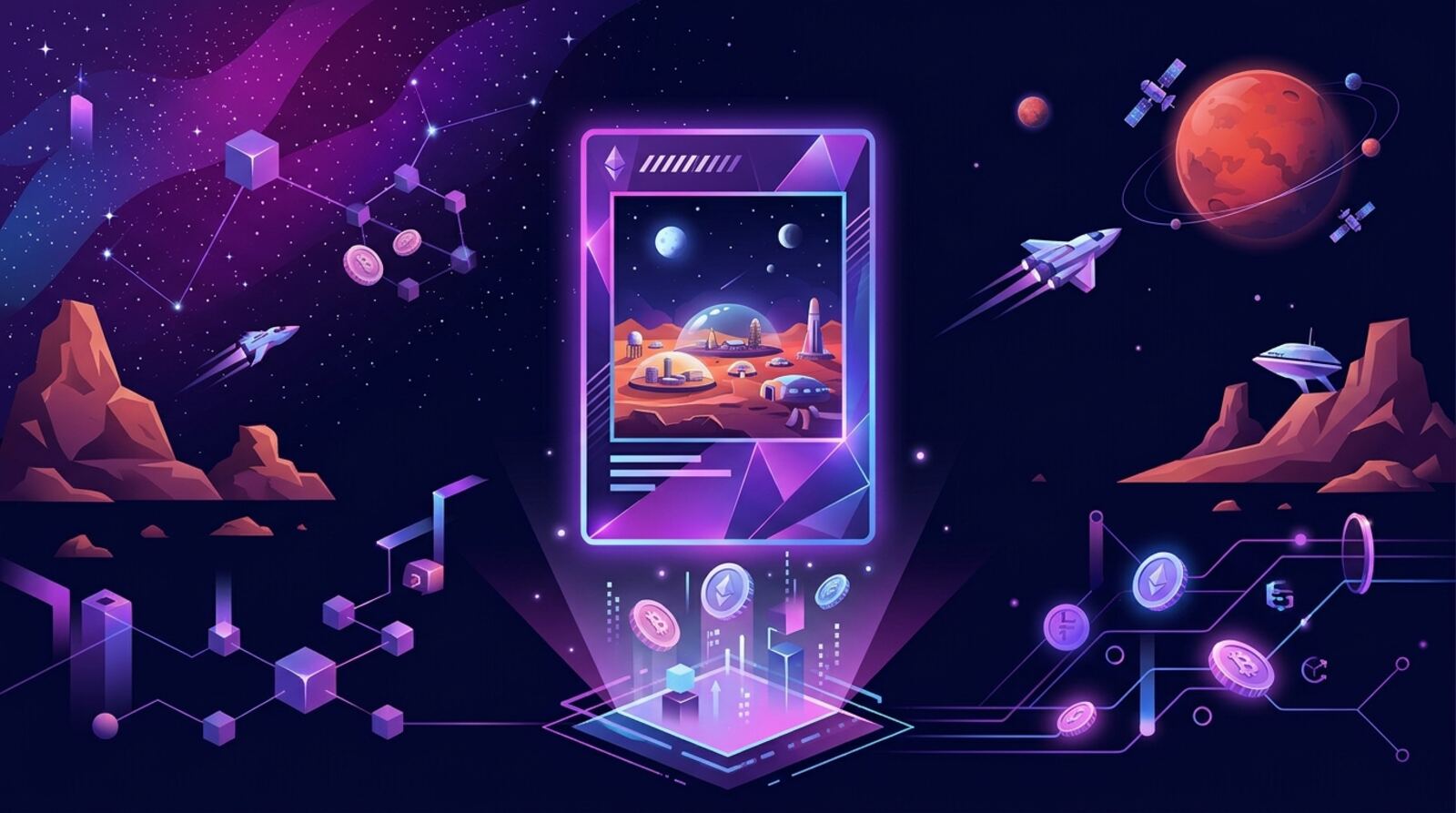
What the Colonize Mars card sale refers to
The figure of 85000 is widely reported as the sale price of a Colonize Mars NFT card. Because public reporting were not available while writing this guide, this article does not confirm the buyer, seller, date, marketplace or payment currency. Treat the headline number as a starting point to verify, not as settled fact.
The useful question for readers is not only 'what did it sell for?' but 'what exactly was sold, where, and under what terms?' An NFT sale is a transfer of a token recorded on a blockchain. The price is usually quoted in a cryptocurrency, and conversion to dollars depends on the exchange rate at the time of the trade. Two reports of the same sale can therefore show different dollar amounts.
A sale like this typically draws attention for three reasons. It is a large number for a digital collectible. It makes a niche category visible to people who had not followed it. And it raises questions about what makes one token worth far more than others in the same series. The rest of this guide answers those questions in general terms so the reasoning applies to any similar sale.
What an NFT trading card is and what gives it value
An NFT trading card is a non-fungible token that represents a collectible card, usually with artwork, a set name, a serial or edition number and metadata such as attributes or rarity tiers. Some cards are purely digital. Others are linked to a physical item held in storage, a grading case or a vault, with the token acting as a title or proof of ownership.
The value of a card depends on several factors working together:
- Scarcity: a low edition size or a single unique token is harder to replace.
- Rarity within the set: rare attributes, first editions or special variants often trade higher.
- Provenance: a clear record of who created the card and who has owned it.
- Community and story: themes, creators and cultural references can attract collectors.
- Condition and authenticity, for physical-linked cards: grading and secure custody matter.
- Liquidity: how many active buyers are willing to pay for similar items.
None of these factors guarantees a price. A card can be scarce and still have little demand, or popular and still easy to replace. When a single sale is far above the typical range, it usually means one or more of these factors aligned strongly for one buyer at one time.
How high-value NFT sales usually happen
High-value NFT trades commonly happen through a few routes. Knowing which route was used helps you judge how much the price reflects open market demand.
The main channels are:
- Fixed-price listings on a marketplace, where a seller names a price and a buyer accepts it.
- Offers, where a buyer proposes a price and the seller can accept or decline.
- Auctions, which can run for a set time and close at the highest bid.
- Private or over-the-counter sales, arranged directly between parties and sometimes recorded only on-chain afterwards.
- Fractional or pooled structures, where many people own shares of one item rather than the whole token.
A sale on a public auction with many bidders is generally a stronger price signal than a private transfer between two wallets that may be controlled by the same person. On-chain records show transfers, but they do not always show whether the parties were independent. Look at whether the sale appeared in a public marketplace feed, how many bids were placed and whether the buyer has a history with the collection.
When reading any report, ask which channel was used. A quoted figure from a closed private deal may not reflect what another buyer would pay on an open listing.
How to verify an NFT listing and its provenance
Verifying an NFT means confirming that the token you are looking at is the one the seller claims, that it sits in the collection you expect, and that the creator or project is who they say they are. The steps below work for most chains.
Start with the contract address. Every NFT collection is governed by a smart contract with its own address. Compare the address shown on the marketplace with the address published by the project through its own official channels. Be wary of collections that copy the name and artwork of a well-known project but use a different contract.
Next, check the token ID and metadata. The token ID identifies the specific item, and the metadata shows the image, attributes and any linked physical details. For physical-backed cards, confirm how the item is held, who holds custody and what grading or inspection records exist.
Finally, review the transfer history. A clean history of mints and sales through known marketplaces is more reassuring than a token that appeared recently with several self-trades. Block explorers for each chain let you view this history directly. Save screenshots of the records you rely on, and remember that marketplaces can change how they display data.
Why some NFT cards sell for tens of thousands
A large sale price rarely comes from one factor alone. Several things usually combine.
First, collectors pay for a specific story or connection. A card tied to a famous theme, creator or cultural moment can appeal to buyers who want to own that connection. This is a matter of perceived meaning, and it can change quickly.
Second, edition size matters. A card with very few copies, or a unique piece, gives buyers a reason to compete. Scarcity alone is not enough, but it removes easy substitutes.
Third, the buyer's motive matters. Some buyers are long-term collectors willing to pay for an item they plan to keep. Others are speculating that a price will rise. Some purchases are intended to set a public benchmark, which can make the price less representative of routine trading.
Fourth, liquidity and fees shape the number. A high ask may reflect the costs of listing, royalties, gas fees and the chance the item will take time to resell. When a single trade sets a new record, it can say more about who was bidding that day than about the item's long-run value.
For readers, the practical lesson is to compare the sale with similar tokens, check how many trades exist and avoid assuming the top price applies to everything in the set.
Digital-only cards compared with physical-backed cards
NFT cards come in two broad forms. Some are fully digital, with the token and artwork existing only on-chain or in decentralized storage. Others are linked to physical objects, such as graded trading cards held in a secure vault.
Digital-only cards depend on the project's continued operation. If the marketplace stops listing the token, the metadata host goes offline or the creator changes the terms, the practical value can fall even if the token still exists on-chain. Ownership of the token is clear, but access to the image and any utility may not be.
Physical-linked cards add custody and redemption questions. Buyers should know who holds the physical card, whether it is insured, how it is stored, whether it can be redeemed for delivery and what fees apply. Some platforms let holders sell the token back to the platform or to other users, which affects liquidity.
Examples of marketplaces that handle these different models include Courtyard, which focuses on vaulted, insured physical collectibles, and Phygitals, which sells packs that can yield vaulted graded trading cards. Each has its own terms, so read them before assuming how a token works.
Fees, royalties and other costs to check
Several costs can change the net result of an NFT purchase or sale, and they are easy to overlook when a headline price is large.
Royalties are fees that a collection's smart contract or marketplace may send to the creator on secondary sales. Support for royalties varies by chain and marketplace, and creators can change the rules, so the amount you pay or receive can differ from what was expected.
Marketplace fees are charged by the platform for listing or completing a trade. These are usually a percentage of the sale price, and some platforms also charge for particular actions.
Network fees, sometimes called gas, are paid to the blockchain for each transaction. They vary with network activity and can be significant for a large number of steps.
Payment currency and conversion matter too. A price in one cryptocurrency can rise or fall against your local currency before you settle. Check the exact amount in the token used for payment, and check the fee breakdown on the marketplace before you confirm.
If you are reporting or recording a sale, keep the transaction hash, the date, the fees and the currency. These details matter for accounting and for any tax obligations in your jurisdiction.
Scams, wash trading and other risks to watch
High-value NFT markets attract scams and fraud, so defensive habits matter more than optimism.
Common risks include:
- Fake collections that copy the name, artwork and branding of a known project.
- Phishing sites that mimic marketplaces and ask you to connect a wallet or sign a message.
- Approval requests that give a contract permission to move your tokens or currency.
- Impersonation through direct messages, fake support accounts or cloned social profiles.
- Wash trading, where the same person trades a token with themselves to create a false price history.
- Illiquidity, where you cannot find a buyer at or near the price you expected.
- Custody risk for physical-backed items, where storage, insurance or redemption terms are unclear.
Defensive steps are straightforward. Type marketplace addresses yourself rather than following links. Review every transaction before signing and revoke approvals you no longer need. Keep your seed phrase offline and never share it. Use a hardware wallet for high-value holdings. Ignore anyone who asks you to move quickly or who offers guaranteed returns.
Nothing here is a substitute for independent research. If you are unsure about a counterparty, step back.
How to check the current status of a sale
Because this guide does not rely on live data, readers should check current information directly. The following sources and steps are the most reliable ways to confirm the status of a sale or collection.
Use block explorers for the chain on which the token lives. Search by contract address and token ID to see the mint, transfers and sale history. Compare the amounts with the currency shown and note the block time.
Check the collection's activity on the marketplace where it trades. Look at recent sales, floor prices and listing counts, and note whether the sales are spread across several buyers.
Read the project's official channels for announcements about the card, its custody, redemption or any changes to its terms. Confirm that the link you use is official by checking it against the address published on the project's own site.
For news coverage of the sale itself, compare several reports and look for the on-chain record they cite. A story that gives no transaction reference is harder to verify.
Finally, note the date you checked. NFT prices and the value of cryptocurrencies can change quickly, so any figure you record should be labeled with the time it was observed.
A practical checklist for buyers and sellers
If you are considering a purchase, a short checklist helps keep decisions grounded. This is general information, not financial or legal advice.
Before buying:
- Confirm the contract address against the project's official source.
- Review the token's full transfer history and recent comparable sales.
- Read the terms for royalties, custody, redemption and any physical component.
- Calculate total cost including marketplace fees, network fees and the currency conversion.
- Decide in advance how much you are prepared to lose, and do not borrow to buy.
Before selling:
- Check whether the buyer pool for similar items is active, not just whether a listing exists.
- Understand how royalties and fees reduce your net proceeds.
- Keep records of the purchase cost and all fees for later reporting.
For any transaction, check your local laws, since rules on digital assets, collectibles and taxation differ across jurisdictions. Speak to a qualified adviser if you are unsure about obligations.
The Colonize Mars card sale shows how a single trade can set a headline figure. Careful verification and clear records are what turn that headline into useful information.
Frequently asked questions
How can I confirm that a reported NFT sale really happened?
Verify the sale on the blockchain instead of relying on a screenshot or social post. Look up the token's contract address and token ID in a block explorer for the relevant chain, then check the transfer history for the sale price, the payment token and the buyer and seller addresses. Marketplace activity pages for the collection can show the same record. If you can only find the price in a headline, treat it as reported rather than confirmed.
Does one high sale mean the whole collection is worth that much?
Not necessarily. A reported sale shows that one buyer agreed to pay a price for one token at one moment. It does not show what the next token in the same series would fetch. Prices in NFT markets are set by very few trades, the buyer may have had personal reasons to pay more, and some sales are between related wallets. Check how many comparable sales exist and how recent they are before using any single figure as a benchmark.
Does buying an NFT card mean I own the artwork and any physical item?
Usually not in the way people expect. In most NFT sales, the buyer receives a token that points to a record on a blockchain, and the image or card file is hosted somewhere else, often on decentralized storage or on the project's server. The buyer owns the token, not the copyright in the artwork, unless the license says otherwise. Read the project's terms, and check whether a physical item is included, and if so who holds it and how redemption works.
What are the main security risks when buying high-value NFTs?
Reputable sellers use transparent listings with contract addresses, clear sale history and identifiable creators. Be cautious of unsolicited direct messages, links from people you do not know, requests to sign approvals for unknown contracts, and pressure to buy quickly. Use a hardware wallet where possible, bookmark marketplaces yourself rather than following links, and never share your seed phrase or recovery phrase with anyone.
Are there legal or tax points I should know before trading NFTs?
Check your local laws. In some places, digital collectibles, trading cards with prize-like pack mechanics or resale activity may fall under specific rules, and tax treatment of gains and losses varies widely. Keep records of purchase price, date, fees and any sales. Speak to a qualified tax adviser or local regulator if you are unsure about your obligations.
Mentioned in this guide
dApps in this guide
OpenSea is a peer-to-peer NFT marketplace for buying, selling and minting digital collectibles, aimed at collectors, creators and developers.
SuperRare is a curated Ethereum NFT marketplace for digital art and works paired with physical pieces, aimed at collectors and vetted artists.
Courtyard is a marketplace and tokenization service for vaulted, insured physical collectibles such as graded trading cards, sold via digital packs.
Phygitals is a Solana marketplace where users open packs to pull vaulted graded trading cards, then hold, trade, sell back or redeem them.
OKX NFT Marketplace is a multi-chain NFT trading platform in OKX Wallet that aggregates listings and supports minting, for collectors and OKX users.
Element Market is a multi-chain NFT marketplace and aggregator for collectors and traders buying NFTs, collectibles and GameFi assets across many blockchains.
NFTX turns NFT collections into vault-backed ERC20 tokens so users can buy and sell NFTs instantly at floor price against a pool.
Sudoswap V2 is a decentralized NFT marketplace on Ethereum, Base, Berachain and Arbitrum with on-chain royalties and ERC-1155 support, for NFT traders.
Common is a non-custodial ZK privacy dapp on Arbitrum and Aleph Zero EVM that lets users shield funds and withdraw to a new, unlinkable wallet.
Keep reading
Related guides
NFT · Airdrop guide
DeGods Season 3 Trading Boost: How to Check Eligibility in 2026
DeGods has been promoting a season 3 trading boost worth about 2.8 million, according to the brief for this guide. This page explains how trading-volume rewards like this usually work, how to check eligibility, and how to protect your wallet while you wait.
NFT · Explainer
OpenSea's $4.5B January Volume: What the Peak Means
OpenSea's January 2022 monthly trading volume is often quoted at about $4.5 billion, a peak that shows how quickly NFT trading can swing. This explainer covers what the figure measures, why sources disagree, and how to check current numbers.
NFT · Explainer
What Real Digital Ownership Means for NFTs in 2026
Real digital ownership means controlling an asset you can keep, move, resell and prove you hold, without depending on one company's servers or terms. This guide explains what that requires, where NFTs fit, and where they fall short.
NFT · Explainer
Rebel Cars NFT Marketplace and RC Token: What to Verify in 2026
Rebel Cars has been linked to a CGI NFT asset marketplace and an RC token, but the public information is fragmented and uneven. This guide explains what can and cannot be confirmed, how to check a token yourself, and how to approach the marketplace with caution.
NFT · Explainer
Tailored Community NFT Marketplaces: How They Work in 2026
Niche NFT marketplaces built around sports fans, physical collectibles, messaging apps and art scenes have grown as general venues compete for attention. This guide explains how they work, where the risks sit, and how to compare them before you buy, sell or mint.
NFT · Explainer
Coinbase NFT Marketplace: What Went Wrong and What to Do Now
Coinbase entered the NFT market with a large existing user base and high expectations, then saw weak trading. This guide explains what happened, what the launch coverage shows, and what holders and buyers should do now.
NFT · Explainer
Cool Cats and Cool Pets MILK Tokens: How Holders Earn Them
Cool Cats and Cool Pets were Ethereum NFT collections whose holders were tied to the MILK token, a reward token that was never a simple investment. This guide explains how the rewards were meant to work, what has changed since, and how to check the current status of MILK and your NFTs.
NFT · Explainer
Coca-Cola NFTs in Decentraland: What Brand Launches Mean in 2026
Coca-Cola's move into Decentraland is a brand activation in a virtual world built on Ethereum. This guide explains how Decentraland NFTs and brand drops work, how to confirm a drop is genuine, and how to claim one without exposing your wallet.