NFT · Review
Blockchain Cuties: A Multi-Chain Case Study for 2026
Blockchain Cuties is a collectible NFT game that has been deployed across more than one blockchain. This review looks at what that choice involved, what it gained and cost, and what it teaches other projects and players in 2026.
By the DappsAtlas editorial team · Updated
What Blockchain Cuties is and why it is a useful case study
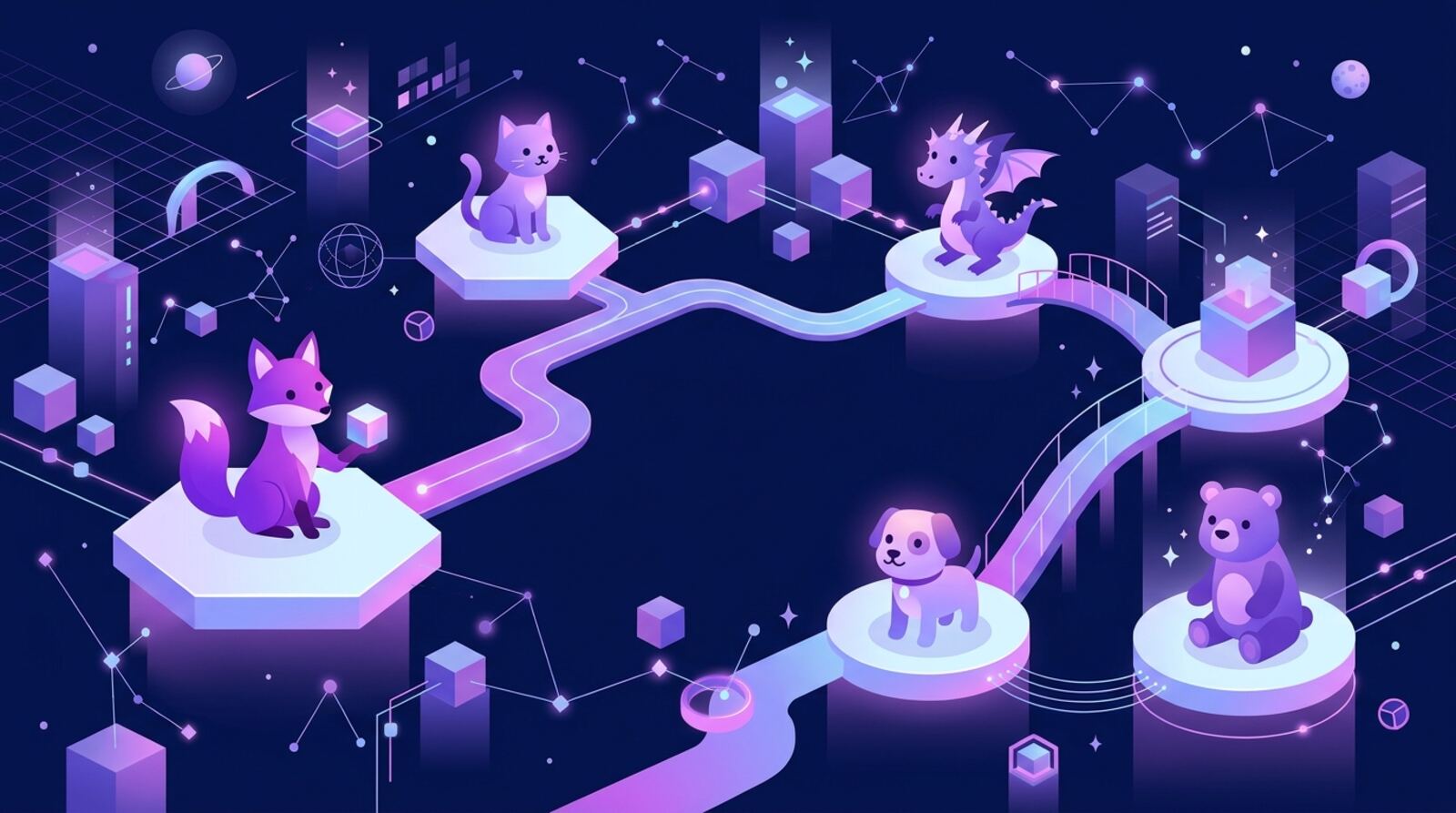
Blockchain Cuties is a collectible NFT game. Players collect Cuties, which are digital animal characters, send them on adventures and trade them with other players. The game sits in the collectibles and NFT gaming category, where ownership of an in-game item is recorded on a blockchain rather than only on the game company's servers.
The project's own knowledge base and community blog describe the game as a collectible adventure game built around these on-chain assets. The knowledge base includes an Ethereum onboarding guide that walks users through setting up a wallet and accepting the game's terms, which shows that Ethereum was an early and documented home for the game.
The game is best understood as a case study rather than a product guide. Its interest for NFT builders and players lies in how the team handled running one game across several networks, and in what that choice meant for the people who own and trade its assets. This review focuses on those questions and avoids claiming specific current figures, which change often and are best checked directly.
If you are new to the project, read the official documentation first. Treat any third-party summary, including this one, as a starting point and confirm the details against primary sources before you commit money or time.
Why a game would choose several blockchains
Deploying a game on more than one blockchain is a product decision as much as a technical one. Each network has its own user base, fee structure, wallet habits and developer tools. A project that sits on only one chain depends on that chain's fortunes. A project spread across several chains can reach more people, but it must support each version properly.
Common reasons projects give for going multi-chain include:
- Reaching players who already hold assets or wallets on a particular network
- Reducing transaction costs for some users during busy periods on a busier chain
- Lowering dependence on one network's technical or market conditions
- Making the game available to communities that prefer a specific ecosystem
Each reason has a cost. Every additional chain means more smart contract work, more testing, more wallet support and more places where a bug or outage can happen. Teams often underestimate the ongoing support burden, which grows with every network added.
Blockchain Cuties is a useful example because its public materials frame the game as a single universe with assets that are not tied to one network. That framing is the core question this review examines: can one game keep a coherent identity when its collectibles live in several places at once?
How a multi-chain deployment works in practice
Multi-chain deployment usually means one of three patterns. The team may run a separate copy of the collectible contracts on each chain, bridge assets between chains, or use a common layer that tracks ownership across networks. Each pattern has different security and usability implications, and public documentation is the best place to see which approach a given project uses.
For a player, the practical questions are simple:
- Which chain does each of my assets live on?
- Can I move an asset, and if so, how and at what cost?
- Which wallet does the game expect me to use on each chain?
- What happens to an asset if I use the wrong network?
Each answer should appear in official guides. If a project cannot give clear answers, that is a warning sign. Ask for clarity in the official community channels before you act.
Bridges deserve particular care. Moving an asset between networks often involves a smart contract that locks the original and issues a representation on the other side. Bridges have been a frequent source of losses across the industry, so only use bridges that the project itself documents, and check the address before approving anything.
Ethereum as an early home and what onboarding looks like
Ethereum is one of the most widely used smart contract networks, and many NFT projects began there. Blockchain Cuties' knowledge base includes an Ethereum onboarding guide, which indicates that the Ethereum experience was documented for new users. Onboarding guides typically cover creating or connecting a wallet, funding it with the network's native token to pay fees, and signing the game's terms.
A new player should expect the following steps in any Ethereum-based game:
- Install a supported wallet from its official source
- Back up the recovery phrase offline and never share it
- Fund the wallet with a small amount of the network's native token for fees
- Connect the wallet to the game's official site only after checking the address
- Make a small test transaction before any larger move
Fees on Ethereum have varied widely over time and depend on network activity. For that reason, this guide does not state a fee figure. Check a current gas tracker or the wallet's fee estimate before you sign a transaction.
Onboarding quality is one measure of a multi-chain project's health. If each chain has its own guide that is kept current, players can make informed choices. If guides go stale, users are more likely to make mistakes.
The trade-offs: liquidity, community and support
Multi-chain projects face trade-offs that single-chain projects avoid. The most visible is liquidity fragmentation. When the same type of asset trades on several networks, buyers and sellers split across markets. A collectible may have a deep order book on one chain and very few offers on another. Prices can differ between chains for assets that are otherwise the same.
Community splits are another cost. Players on different chains may use different Discord or social channels, different marketplaces and different tools. Shared identity becomes harder to keep. The project must work to present one game rather than several separate ones.
Support and development costs rise with each chain. Every network needs testing after game updates, its own wallet integrations and its own troubleshooting. Teams that add chains quickly may spread their staff thin.
Security exposure grows as well. Each new contract, bridge or integration adds an attack surface. Projects that deploy widely should publish audit information, document their contract addresses clearly and respond quickly to reports of problems.
For readers, the lesson is to ask how a project plans to handle these trade-offs. A clear answer in official material is a better sign than a promise of endless growth.
Earning and trading Cuties: what the game offers and its limits
Blockchain Cuties' own search material describes ways players earn within the game, including converting in-game items through a shop-style service called the Pawshop and trading through a market. The general idea is that players can turn in-game value into other value, but returns depend on demand, timing and the cost of moving assets.
Before relying on any earning method, consider these points:
- Earnings from in-game activity are not guaranteed and can fall as well as rise
- Trading an NFT costs time and fees, which can exceed the sale price on a quiet day
- An asset on one chain may be harder to sell than the same asset would be on a larger market
- Prices for game items and NFTs can move sharply within short periods
Treat any game as a leisure activity first. Only spend an amount you could afford to lose entirely. Keep records of what you spent on fees and what you received, because a clear view of costs helps you judge whether a game is worth your time.
Avoid anyone who promises fixed returns, guaranteed profits or private arrangements. Legitimate marketplaces and games publish their rules openly. If a stranger asks you to send assets or funds to another wallet to receive a bonus, stop and verify through official channels.
Lessons for NFT projects considering multiple chains
Several lessons from this case apply to other NFT and game projects that consider multi-chain deployment:
- Decide why each chain is included and measure whether it serves that purpose
- Publish a clear, current list of supported chains and the assets on each
- Maintain onboarding guides for every network, with dates on each update
- Use consistent item identities so that players recognize the same collectible everywhere
- Document any bridge, its contracts and its risks in plain language
- Plan support staffing for each chain before launch rather than after
- Publish audit information and a process for reporting security issues
- Avoid making claims about future value that the project cannot back up
The most useful takeaway is that breadth is not the same as depth. A project on several chains that keeps each deployment well maintained may serve players better than one that spreads thin. The reverse is also true: a single well-run chain can beat a poorly maintained network of many.
For readers evaluating any multi-chain game or marketplace, these same points work as a checklist. A project that answers them clearly in official material is easier to trust than one that offers only marketing language.
Practical checks before you play or trade
Before you play, buy or trade a Blockchain Cuties asset in 2026, work through a short checklist:
- Confirm the official website and documentation addresses from primary sources rather than from search ads or social messages
- Check which chains currently host the assets you care about
- Verify the wallet and network you are connecting before approving anything
- Read each transaction prompt, including the amount and the contract being approved
- Revoke token approvals you no longer need using your wallet's built-in tools
- Keep only a small balance in any game wallet
For marketplace trades, compare fees and check the seller's history where the platform shows it. Use reputable marketplaces, and remember that some third-party sites imitate official ones to capture wallet approvals.
Never share your recovery phrase or private keys. No legitimate game or support team needs them. If you receive unsolicited messages offering help, treat them as suspicious.
If you are uncertain about the legal status of NFTs, games or trading where you live, check local laws and any rules that apply to your account. Some services restrict access by location or require identity checks, and those rules should be followed as written.
How to check the current status of Blockchain Cuties
This review does not state current prices, player counts, chain lists or token values. Those figures change often, and a stated number would be out of date quickly. Instead, use these sources to check the current status of the project:
- The official Blockchain Cuties documentation and knowledge base, including any dated release notes
- The official community channels, reviewed for announcements that are signed or posted by team members
- Block explorers for each chain the game uses, to confirm contract activity and asset ownership
- Your own wallet, which shows the networks and tokens it currently holds
- Public marketplace pages for recent sales, listings and fee terms
If a source is undated, treat it with caution. Look for a clear date on any guide or announcement, and prefer the most recent official update.
For this case study, the stable conclusions are these: Blockchain Cuties has been documented as a game that spans more than one network, multi-chain deployment brings real benefits and real costs, and the project's documentation is the best guide to its current state. Readers who want to learn from the case should focus on how the project explains its choices and handles upkeep, rather than on any single moment of attention or activity.
Frequently asked questions
What does multi-chain mean for a game like Blockchain Cuties?
Multi-chain usually means the same game or collectible system runs on more than one blockchain, with each version using that chain's own wallets, fees and token standards. Players on one chain cannot automatically use assets on another unless a bridge or a separate process moves them. Check the official documentation for the chains a project supports today, since that list can change.
How can I check which chains Blockchain Cuties currently supports?
Start with the official documentation and its onboarding guides. Confirm which chain each asset lives on, which wallet the game supports, and whether any bridge or conversion step is needed. Compare the contract address shown in official sources with the one your wallet displays before approving any transaction.
Are there risks in holding game NFTs on several chains?
Each chain has its own fees, speed, wallet setup and marketplace liquidity. Moving between chains can add steps and cost, and an NFT that sells well on one network may sit unsold on another. Compare the total cost, including gas and marketplace fees, before you move or trade an asset.
Why would a game deploy to several blockchains at all?
Many projects that deploy across chains do so to reach more users, reduce the cost of transactions for some players, and avoid depending on a single network. The trade-offs are split communities, more support work and harder liquidity. Blockchain Cuties is useful as a case study because it shows both sides of this decision.
What security habits matter most when playing a multi-chain NFT game?
Never share your seed phrase or private keys with anyone, including people claiming to be support staff. Approve only the transactions you understand, check the domain of any site you connect to, and keep the amount of funds in game wallets small. Review token approvals periodically in your wallet settings.
Mentioned in this guide
dApps in this guide
Blockchain Cuties is a multi-chain collectible NFT game where players collect Cuties, send them on adventures and trade them, for NFT gaming fans.
AtomicHub is a multichain NFT marketplace for gaming items, collectibles and digital art, centered on WAX and EOS-family chains.
OpenSea is a peer-to-peer NFT marketplace for buying, selling and minting digital collectibles, aimed at collectors, creators and developers.
Element Market is a multi-chain NFT marketplace and aggregator for collectors and traders buying NFTs, collectibles and GameFi assets across many blockchains.
OKX NFT Marketplace is a multi-chain NFT trading platform in OKX Wallet that aggregates listings and supports minting, for collectors and OKX users.
NFT Hive is a WAX blockchain NFT marketplace for buying, selling and creating NFTs, with drops, analytics and bulk tools for collectors and creators.
Common is a non-custodial ZK privacy dapp on Arbitrum and Aleph Zero EVM that lets users shield funds and withdraw to a new, unlinkable wallet.
Keep reading
Related guides
NFT · Explainer
Street Fighter Collectibles on WAX: How Big Drops Work
A Street Fighter collectibles sale on WAX has been described as raising about $3 million in a day. The sources reviewed here confirm an open-trading collectibles program but not that exact total, so this guide explains how such drops work and how to verify the figures yourself.
NFT · Explainer
Hashland NFT Gaming Ecosystem on BNB Chain: A 2026 Guide
Hashland is a play-to-earn RPG with an HC token and hash rate NFTs, and its ecosystem is now associated with BNB Chain. This guide explains how the pieces fit together, what to verify before you engage, and where the main risks sit.
NFT · Explainer
Deep Objects AI Sneakers: How the Idea Works in 2026
Deep Objects is presented as a way for anyone to wear sneakers designed with AI. This explainer covers how projects like it usually work, what owning a design can mean, and what to verify before you spend anything.
NFT · Explainer
Magic Eden and the Race for the Top NFT Marketplace Spot (2026)
In 2022, a dApp trend write-up said Magic Eden was pushing for the top spot among NFT marketplaces. This guide explains what that claim meant, how marketplace rankings are measured, what Magic Eden offers in 2026, and how to check current activity yourself.
NFT · Explainer
Why NFT Mints Sell Out in Minutes: A 2026 Explainer
A headline saying a collection sold out in 30 minutes tells you how quickly the primary supply ran out, not whether the project is sound or whether you can still get in. This guide explains what drives sellouts like that and how to check public sources yourself.
NFT · Explainer
Blockchain Brawlers WAX NFT Sale: What It Is and How It Works in 2026
Blockchain Brawlers is a pro wrestling-themed game on the WAX blockchain, and its NFT sales let players craft Brawlers and Rings to enter gameplay. This guide explains what the sale was, how the crafting system works, what has happened since launch, and how to check the current status yourself.
NFT · Explainer
Blue-Chip NFT Price Drops and the Goblin Town Surge Explained
Headlines that pair a drop in blue-chip NFT prices with a Goblin Town surge usually compress several moving parts into one number. This guide explains what the claim can and cannot show, why blue-chip floors fell in past periods, and how to check any percentage yourself.
NFT · Explainer
Blankos Block Party and Burberry NFTs: What the Collaborations Were
Blankos Block Party is a blockchain game from Mythical Games that has hosted fashion and music tie-ins, including Burberry and deadmau5. This guide explains what those collaborations were, how gaming NFT items differ from collectibles, and how to check their status and trade them safely.