SocialFi and DAOs · Explainer
What Is a DAO and How Does It Work? A Plain-English Guide
A DAO is an online organization that manages shared funds and decisions through blockchain smart contracts and member votes. This guide explains how DAOs work, who holds power, what can go wrong and how to assess one before you join.
By the DappsAtlas editorial team · Updated
What is a DAO?
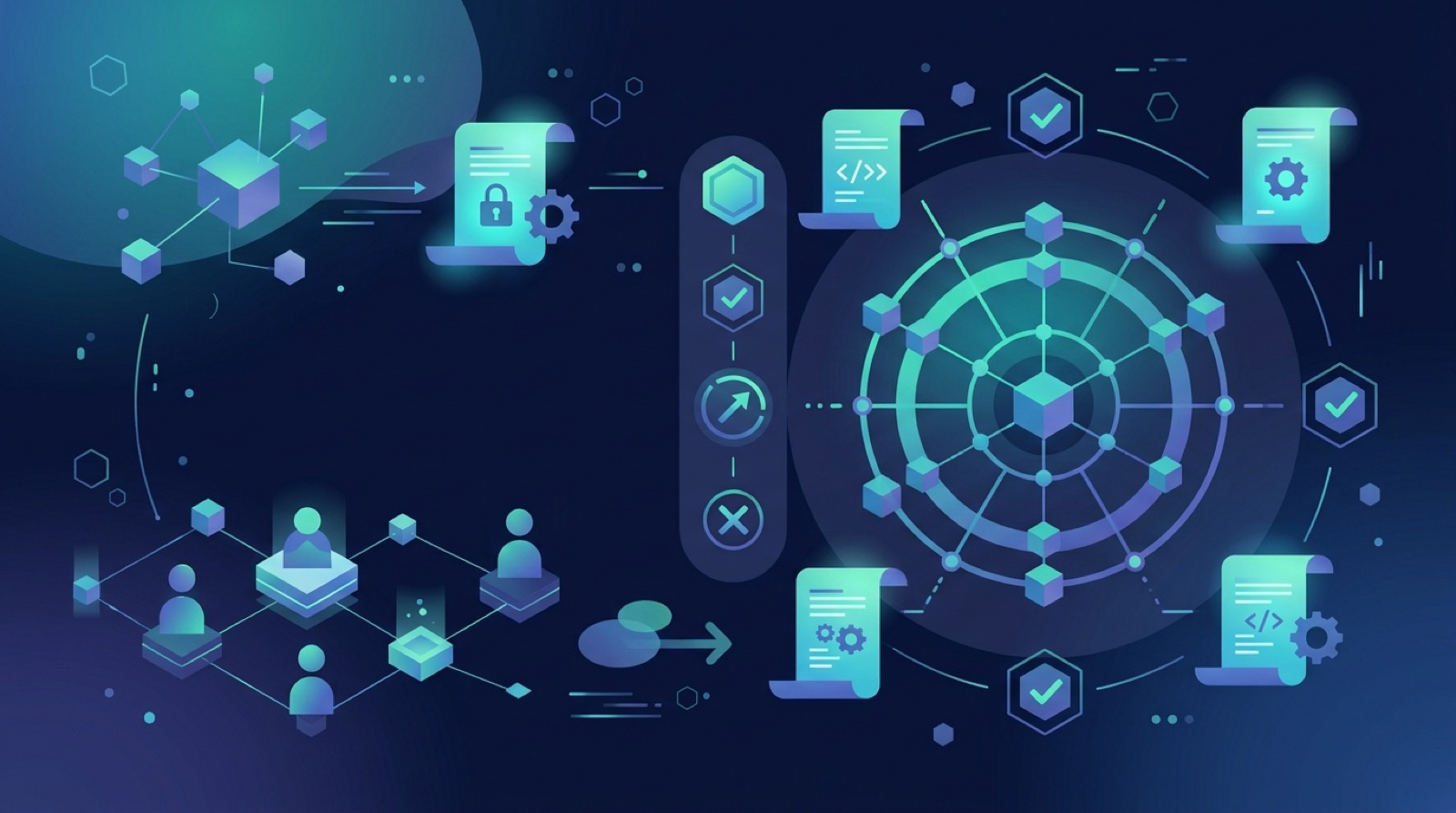
A DAO, short for decentralized autonomous organization, is a group that coordinates money and decisions through rules written into smart contracts on a blockchain. Instead of a board and a chief executive deciding where funds go, members propose and vote, and the outcome is carried out by code or by a small group bound to follow the vote.
Each word in the name points to an idea:
- Decentralized: control is spread across many members rather than held by one owner. In practice, the spread varies widely from DAO to DAO.
- Autonomous: some rules are enforced automatically by software. A contract can release funds only if a vote passes, for example. People still do most of the actual work.
- Organization: there is a shared purpose, a pool of resources and a way to make collective choices.
A useful comparison is a members' club whose bylaws and bank account are published on a public ledger. Anyone can read the rules, see the balance and check how each decision was made. Nobody can quietly change the bylaws unless the rules allow it.
DAOs are used to run lending protocols, fund open-source work, collect art, manage online communities, pool money for shared purchases and coordinate games. What they share is the pairing of a treasury with a governance process.
One point of confusion: "The DAO" was also the name of a specific 2016 project on Ethereum. It is a famous early example, covered later in this guide, but the term DAO now describes a whole category of organizations rather than that one project.
How does a DAO work, step by step?
Although every DAO differs, most follow the same basic cycle. Understanding it makes any specific DAO easier to read.
- Rules are written. Founders define what the organization is for, who can vote, how proposals are submitted and what share of votes is needed to pass them. Some rules are coded into smart contracts, and others live in documents or forum posts.
- A treasury is funded. Money comes from token sales, protocol fees, donations or member contributions. Funds are held in a smart contract or a shared wallet that needs several approvals to move.
- Membership is defined. Members are usually identified by holding a token, an NFT or another on-chain credential. That credential sets who can vote and how much weight each vote carries.
- Proposals are raised. A member suggests a change, a grant, a budget or a new rule. Discussion normally begins in a forum or chat before any formal vote.
- Members vote. Voting takes place on-chain or through a signed off-chain message that is counted later. A quorum and a majority threshold decide the result.
- The result is executed. Approved decisions are carried out automatically by a contract or manually by designated signers, such as a multisignature wallet.
- Everything is recorded. Votes, treasury movements and contract changes are visible on a public blockchain, so anyone can audit the history.
The key difference from a traditional company is that the rules and records are open and enforceable by software, not held privately by management.
What role do smart contracts and the treasury play?
Two technical pieces sit under almost every DAO: smart contracts and a treasury.
Smart contracts are programs stored on a blockchain that run exactly as written. In a DAO they can hold funds, count votes, enforce delays and send payments when conditions are met. Because the code is public, anyone can inspect it, but that also means bugs are public too, and a flaw can be exploited by anyone who finds it.
The treasury is the pool of assets the DAO controls. It may hold the DAO's own token, stablecoins, major cryptocurrencies or NFTs. How the treasury is protected matters more than its size. Common setups include:
- Multisignature wallets: a set number of signers, for example three out of five, must approve each transaction. This is simple and widely used, but it relies on trusting the signers and on securing their keys.
- On-chain governor contracts: funds move only after a successful vote and often after a waiting period called a timelock. This puts voters in charge but is more complex.
- Hybrid arrangements: votes happen off-chain for low cost, and a multisig then carries out the result.
A timelock is worth understanding. It delays execution of an approved decision for a set period, giving members time to notice a harmful change and react before it takes effect.
When you assess a DAO, ask who can actually move the money, whether that can be changed by a vote and what safeguards sit between a proposal and a payment.
How do governance tokens and voting models work?
Voting power needs a rule. The most common approach ties it to a governance token, but several models exist, each with trade-offs.
| Model | How voting power is set | Main strength | Main weakness |
|---|---|---|---|
| Token-weighted | One token equals one vote | Simple, hard to fake with extra accounts | Large holders dominate |
| One person, one vote | Each verified member gets one vote | Fairer weight | Needs identity checks to stop duplicate accounts |
| Quadratic voting | Cost of extra votes rises sharply | Limits whale influence | Vulnerable to many fake accounts |
| Reputation-based | Points earned by contributing | Rewards real work | Can be hard to measure and keep fair |
| Delegated | Holders assign votes to a representative | Raises participation | Power can concentrate in a few delegates |
| Multisig council | A small group decides | Fast and clear | Less decentralized |
A governance token usually grants voting rights and sometimes the ability to submit proposals. It does not automatically give a share of profits, ownership of the project or any legal claim. What a token does depends on the DAO's documentation.
A frequent problem is voter apathy: many holders never vote, so a small group can decide outcomes. Another is the governance attack, where someone accumulates or borrows enough tokens to pass a proposal in their own interest. Delays, quorum requirements and proposal thresholds are common defenses.
No model is perfect. The right question is whether a particular DAO's design fits what it is trying to do and who could realistically control it.
What does the life of a DAO proposal look like?
Most mature DAOs use a staged process so that decisions are discussed before money moves. The names differ, but the stages are similar.
- Idea and discussion. An author posts a draft on the community forum. Members ask questions and suggest changes. Many DAOs require this step before a formal vote.
- Temperature check. A quick, non-binding poll shows whether there is enough interest to continue.
- Formal proposal. The author submits a final text with exact actions, amounts and recipients. Some DAOs require a minimum token holding to submit.
- Voting period. Members vote for a fixed window, often several days. The proposal passes if it reaches quorum and the required majority.
- Delay or timelock. For on-chain proposals, execution waits for a set time so members can review the outcome.
- Execution. The contract or the signers carry out the action, such as paying a grant or changing a setting.
- Reporting. Good DAOs publish updates showing what was delivered for the money spent.
Off-chain versus on-chain voting is an important distinction. Off-chain voting uses signed messages, so it costs members nothing in network fees and encourages turnout, but a trusted party must then apply the result. On-chain voting is binding and automatic, but each vote can cost fees, which discourages small holders.
When reading a proposal history, look at turnout, how often proposals fail, whether dissent is allowed in discussion and whether funded work is followed up.
What are the main types of DAO?
"DAO" covers many different kinds of organization. Grouping them by purpose helps make sense of the field.
- Protocol DAOs govern a piece of software, often a decentralized finance protocol. Members vote on settings such as fees, supported assets and upgrades, and control a treasury funded by the protocol.
- Grant DAOs collect funds and distribute them to builders, researchers or public-goods projects.
- Investment or collector DAOs pool money to buy assets such as digital art or tokens. Rules on how those assets are bought, held and sold are set by votes.
- Social or community DAOs are built around shared interests. Membership can be gated by a token or an NFT and gives access to chats, events and decisions about the community.
- Service or contributor DAOs organize freelancers and pay them for work, acting more like a cooperative.
- Media and creator DAOs let audiences take part in funding or directing content.
- Gaming DAOs manage in-game economies, guilds or game development choices.
The social side of crypto is where many newcomers first meet DAOs. Wallets and apps built around messaging and communities, such as Tomo, which is described as a social crypto wallet available as a Telegram bot, app, browser extension and developer SDK, make it easier to hold the assets and sign the votes that DAO membership requires. A wallet only handles access, though. It says nothing about whether a given DAO is well run.
The label tells you little by itself. Always check what a specific DAO actually controls and who has the final say.
What are the benefits and limits of a DAO?
DAOs offer real advantages, but they also carry limits that are easy to overlook.
Strengths
- Transparency: rules, votes and treasury movements can be checked by anyone on a public ledger.
- Open participation: people from any country can join, contribute and vote without a formal hiring process.
- Credible commitments: when funds can move only through a vote, members do not need to trust one manager's promises.
- Aligned incentives: members who hold tokens or earn reputation have a stake in the outcome.
Limits and risks
- Concentrated power: a few large holders, early investors or founders can outweigh everyone else. A DAO that calls itself decentralized may not be.
- Low participation: most members vote rarely, which makes decisions easy to sway.
- Slow decisions: voting windows and timelocks protect against hasty changes but slow urgent responses.
- Smart contract risk: coded rules can contain bugs, and exploits are usually irreversible.
- Key and signer risk: a treasury controlled by a few keys is only as safe as those keys.
- Legal uncertainty: the status of members, liability and tax treatment varies by place and can be unclear.
- Governance fatigue and conflict: long debates, bribery of voters and disputes between factions are common.
In short, a DAO shifts trust from people in a company to code, token distribution and process. That shift removes some risks and creates others, so each DAO needs to be judged on its own design.
What did the 2016 DAO hack teach the industry?
The best-known early DAO is "The DAO", launched on Ethereum in 2016. It raised a large amount of ether from many contributors to fund projects chosen by token holders. Shortly after the fundraising, an attacker exploited a flaw in its code and drained a significant share of the funds into a separate account.
The event forced a hard choice. After a community debate, most of the Ethereum network adopted a change that reversed the theft, while a minority continued the original chain without the change. This split created Ethereum and Ethereum Classic, which still exist as separate networks.
Several lessons from that episode still apply:
- Code is only as good as its review. Independent audits, testing and conservative design reduce the risk of exploitable bugs, though they cannot remove it.
- Irreversibility cuts both ways. If a contract does what it is told, a mistake can be as permanent as a success.
- Delays help. Waiting periods and withdrawal limits give a community time to react to an attack.
- Governance and code are linked. When something goes wrong, the people involved still have to decide what to do, which shows that no DAO is entirely free of human decision-making.
Since then, DAO tooling has matured, with more standardized governance contracts, timelocks and multisig safeguards. Even so, attacks on DAOs have continued to occur, including governance manipulation and compromised keys, which is why risk checks remain essential.
Are DAOs legal, and how are they taxed?
DAOs sit in a legal grey area in many countries. A DAO can run purely through smart contracts, yet people behind it still live under national laws.
Key points to understand:
- No automatic legal shield. An unregistered DAO may be treated by courts or regulators as a general partnership, which can expose members to shared liability. This depends heavily on the jurisdiction and public sources.
- Legal wrappers exist. Some places, including certain US states and a few other jurisdictions, have created legal forms designed for DAOs. Others use foundations or ordinary companies alongside the DAO to sign contracts, hold bank accounts or pay staff.
- Tokens may be regulated. Depending on how a token is sold and what rights it gives, authorities may treat it as a security or another regulated product. Rules differ by country and change over time.
- Taxes can apply. Receiving tokens for work, selling governance tokens, being paid grants or receiving rewards may be taxable events. Record-keeping matters because on-chain activity is traceable.
- Gambling and financial rules. A DAO that runs a betting product or financial service must follow the local rules for that activity. Those who are under 18, or in places where such activity is restricted, should not take part.
This section is general information, not legal or tax advice. Because rules shift, check current guidance from your own tax authority and a qualified professional, especially if you hold a large stake or take a leadership role.
How can you join a DAO and check it is safe?
Joining a DAO is usually simple. Making sure it is worth joining takes more care.
Basic steps
- Set up a self-custody wallet and secure the recovery phrase offline. Never share it with anyone, including people claiming to be DAO staff.
- Read the DAO's documentation, constitution or governance overview to learn its purpose and rules.
- Join the forum and community chat and watch for a while before acting.
- Acquire the token or credential only if you understand what it does and can afford to lose it.
- Start by voting or commenting on small proposals before you consider delegating or submitting your own.
Checks before you commit
- Who holds the voting power? Look at the token distribution and the main delegates. A few wallets with a majority is a warning sign.
- Who controls the treasury? Find the treasury address on a block explorer and check the signers or the governor contract.
- Is there a timelock? Delays between approval and execution protect members.
- Have the contracts been audited? An audit helps but is not a guarantee.
- How active is governance? Review past proposals, turnout and whether decisions were followed through.
Security habits
- Be suspicious of direct messages offering tokens, support or urgent votes.
- Check every signature request in your wallet before approving it.
- Use a separate wallet with limited funds for experiments.
For current figures such as treasury size, active voters and open proposals, check the DAO's governance platform and a block explorer directly, since these change constantly.
Frequently asked questions
Do I need to own crypto to join a DAO?
No. Many DAOs are open to anyone who holds the right token or NFT, but others require an application, a contribution record or an invitation. Even in open DAOs, holding a few tokens usually gives you very little voting weight compared with large holders.
Is a DAO legally a company?
Not by default. Because rules and funds sit in smart contracts, a DAO can operate without a registered company, but that also means the law may treat members as a general partnership in some places. Some jurisdictions offer DAO-specific legal wrappers. Ask a qualified adviser if you hold a large stake or a leadership role.
Is a DAO the same as a cryptocurrency investment?
Usually, no. A DAO is a way of governing a project, and its token is only one part. Governance tokens may carry voting rights but no claim on profits, and their value can fall to zero. Treat any token as a high-risk asset and read the DAO's documentation first.
Can a DAO lose its money?
Yes. Funds can be lost through smart contract bugs, governance attacks where one party accumulates votes, compromised signer keys or a treasury that is badly managed. Reviewing audits, signer setups and voting history reduces risk but never removes it.
Where can I see what a DAO is actually doing?
Most DAOs publish proposals and voting results on public governance platforms and on a forum. You can also look up the treasury address on a block explorer and see every transaction. Check these sources directly, since participation and treasury sizes change constantly.
Mentioned in this guide
dApps in this guide
Tomo is a social crypto wallet offered as a Telegram bot, app, browser extension and developer SDK, tracked on DefiLlama under SocialFi on Linea.
Common is a non-custodial ZK privacy dapp on Arbitrum and Aleph Zero EVM that lets users shield funds and withdraw to a new, unlinkable wallet.
Everything is an early beta DeFi protocol that merges a Curve-style AMM, oracle-less lending and limit orders into one contract per token pair.
Keep reading
Related guides
SocialFi and DAOs · Review
What the Mirandus AMA Taught Us: 9 Lessons for SocialFi and DAO Q&As
Public reporting we could check did not document a Mirandus AMA, so this guide separates what can be verified from what cannot and gives a method for drawing lessons from any SocialFi or DAO AMA.
SocialFi and DAOs · Explainer
Celebrity Crypto Wallets Explained: Inside Crypto Hollywood
Famous people hold crypto on public blockchains, which makes their wallets easy to watch and easy to fake. This guide explains how celebrity wallets are identified, what they show, and how to avoid the traps around them.
Web3 gaming · How-to
Getting Started in Symbiogenesis: A Plain-Language Guide
Symbiogenesis is a biology idea, not a game, token or crypto product, so this guide covers the concept itself. It explains the core claim, the evidence behind it and a practical reading path for beginners.
SocialFi and DAOs · How-to
How to Build a Data Union and Sell Data for Crypto
A data union pools many people's data, licenses it to buyers and splits the revenue by rules written in advance. This guide covers the design, legal groundwork, technical options and pricing steps for building one, and the checks to run before joining one.
SocialFi and DAOs · Explainer
What Is Contribute2Earn and How Does It Help Communities?
Contribute2Earn is a way of rewarding people for useful work in a community, rather than for buying in or holding a token. This guide explains how these programs usually run, where they help, and what to check before you take part.
SocialFi and DAOs · Explainer
How Social Media Platforms Are Moving Into Web3 in 2026
Large social networks and smaller startups are testing blockchain features such as creator tokens, portable profiles and tipping wallets. This explainer covers what web3 social means, why platforms are experimenting, where the risks sit, and how to judge a web3 social app before you join.
SocialFi and DAOs · Explainer
What Is Governance in the dApp Ecosystem? How It Works in 2026
Governance is how a dApp or DAO makes decisions about its rules, treasury and upgrades, and in many projects it is run through governance tokens and on-chain votes. This guide explains how that works, where it breaks down, and how to take part with care.
SocialFi and DAOs · Explainer
Web3 Grants and Developer Funding: How It Works in 2026
Web3 grants are non-dilutive funding from foundations, DAOs and protocols for people building open-source tools, apps and research. This guide explains the main models, who funds what, how to apply, and how to avoid common traps.