Token · Explainer
What Are Oil-Backed Crypto Tokens?
Oil-backed crypto tokens can represent a claim on stored oil, track an oil price, or simply use oil as a theme. Learn how to tell these models apart, what rights a token may provide, and what to check before buying.
By the DappsAtlas editorial team · Updated
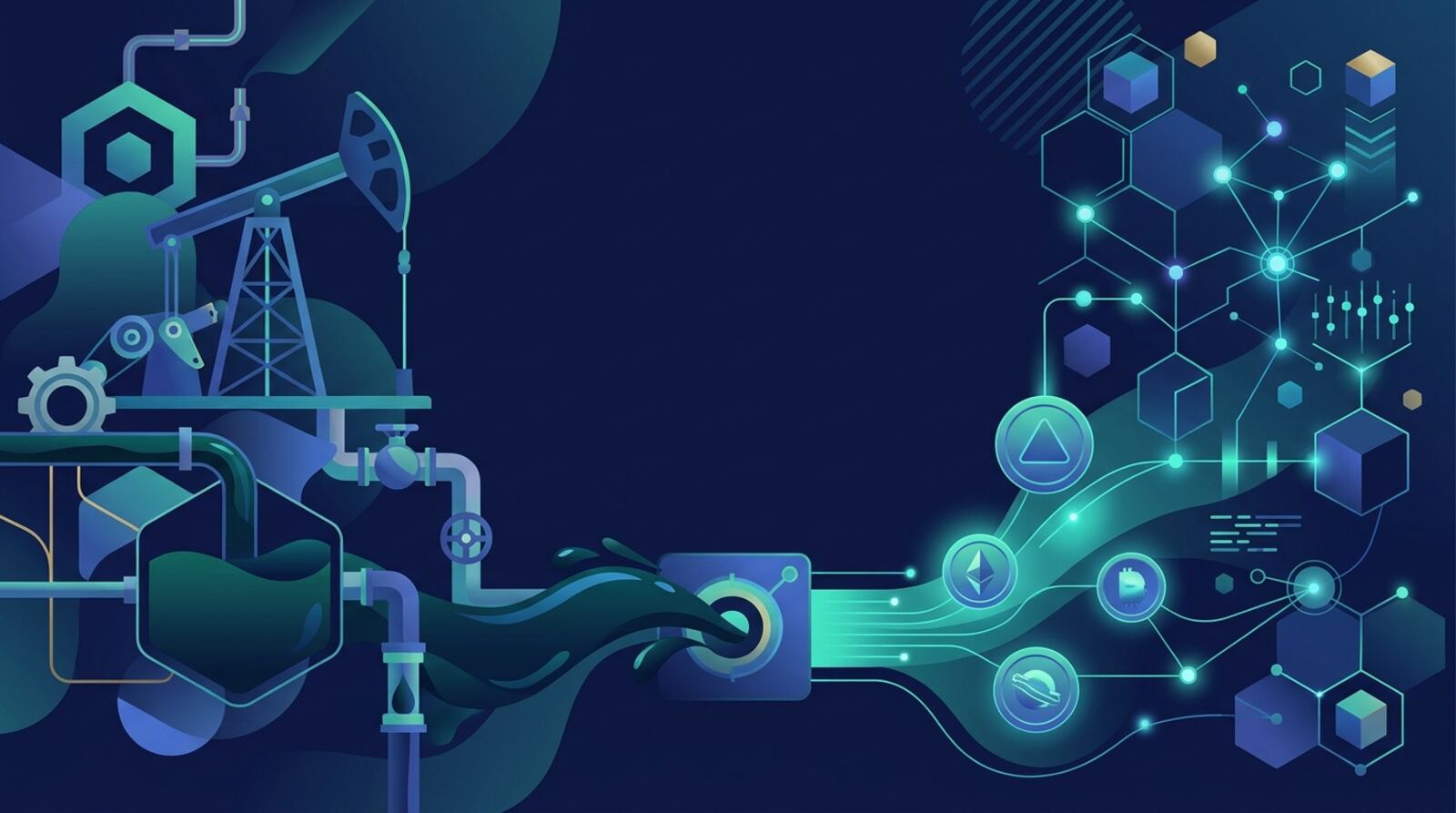
What is an oil-backed crypto token?
An oil-backed crypto token is a digital token whose issuer says it has a connection to oil. That connection can mean very different things: a claim on a quantity of stored crude, exposure to an oil price, or simply an oil-related name and theme. The label alone does not establish that any oil exists or that token holders own it.
A token can be issued on a public blockchain and transferred between compatible wallets, while the oil it refers to remains in tanks, pipelines, or other off-chain infrastructure. The blockchain records token movements; it cannot, by itself, confirm that the physical commodity is present, insured, legally controlled, or available for delivery.
The key question is therefore not just “Is this token oil-backed?” Ask what backing means in the issuer’s legal documents. Does each token represent a defined quantity of oil? Is it only designed to follow a benchmark? Can holders redeem it, and under what conditions? A clear answer separates a commodity claim from price exposure and from a token that merely borrows oil’s branding.
What kinds of oil tokens are there?
Oil-related tokens generally fall into three categories. The first is a physical-reserve token: its issuer claims that a defined quantity of oil is held in reserve for token holders. This model depends on custody, title, reserve verification, and the legal rights attached to each token. A token that represents a claim is not necessarily the same as direct ownership of a barrel.
The second is a price-tracking token. It aims to reflect a crude-oil benchmark or other oil-related reference price, but may use collateral, trading strategies, or an issuer’s pricing mechanism rather than a matching stock of physical oil. The token may provide market exposure without giving holders a right to take delivery.
The third is an oil-themed or oil-linked crypto asset. It may have a name, marketing story, or index connected to energy, but no documented claim on reserves and no dependable method for matching crude prices. Some on-chain projects describe themselves as reserve indexes rather than direct claims on stored oil. These categories can overlap, so read the token terms instead of assuming the project fits neatly into one box.
How do oil tokens work?
In a physical-reserve model, an issuer creates tokens and says each one corresponds to a specified amount of oil held by a custodian. The issuer must explain how tokens are issued, how reserves are measured, who has legal title, and what happens when tokens are redeemed or destroyed. Independent inspections or attestations can help check quantities, but they do not automatically prove that holders have enforceable ownership rights.
A price-tracking model may instead use an oracle, a collateral pool, or a trading arrangement to connect the token’s value to an oil benchmark. An oracle supplies external price data to a smart contract. The contract can use that data to calculate values or trigger actions, but it does not prove that reserves exist or that the price feed is accurate in every condition.
In both models, there is an off-chain and an on-chain side. The blockchain can show token supply and transfers; company records, contracts, custodians, and auditors govern the physical or financial backing. If those parts do not fit together—for example, if the maximum token supply is unclear or reserve reporting is hard to verify—the claimed backing may be weaker than the marketing suggests.
How closely do oil tokens track crude prices?
Oil prices usually refer to a particular crude benchmark, grade, location, and delivery period, not to a single universal price for “oil.” A token that follows a benchmark needs to state which one it uses, how it calculates the token price, and whether the reference is a spot price, a futures contract, or another measure. Differences in grade, storage, transport, and contract expiry can all affect the relationship.
Even when a token has a stated target, its market price can move away from that target. Trading may be thin, exchanges may have different prices, and buyers may demand a discount if redemption is difficult or issuer risk is high. Fees, market closures, oracle delays, and trouble accessing the underlying reserve can widen the gap. There is no automatic guarantee that arbitrage will close it.
A token can also have a different return from holding crude exposure over time. Futures-based strategies may be affected by the cost of rolling contracts, while a reserve token may incur storage, insurance, and administration costs. Compare the token’s stated pricing method with the oil benchmark it claims to follow, and check how often its price and reserve information are updated.
What might an oil token be useful for?
An oil token may offer a way to represent a commodity-related claim digitally, transfer it on a blockchain, or include it in certain crypto trading and custody systems. If a token has clear terms, reliable reserve controls, and usable redemption, it could make a specific oil-related exposure easier to divide or transfer than a physical delivery contract. Those benefits depend on the actual product, not on tokenization by itself.
Some traders may value the ability to trade outside traditional commodity-market infrastructure. But access to a crypto wallet does not necessarily mean access to a liquid or well-regulated market. A token may trade on only a few venues, have limited buyers, or require eligibility checks. Transfers can also be restricted by issuer controls, smart-contract permissions, or local rules.
Oil tokens are not automatically a hedge against inflation or a safer alternative to volatile crypto assets. Their value can be exposed to both oil-market movements and crypto-market conditions. A token may fall because crude prices decline, because the issuer is distrusted, or because the market for the token dries up. Consider the specific purpose you want it to serve and whether the token’s legal and trading features actually match that purpose.
What are the main risks of oil-backed tokens?
The main risk is backing risk: the oil may not exist in the quantity claimed, may not be independently checked, or may be subject to other claims. Even verified reserves do not settle whether a holder owns the oil, has a claim against the issuer, or is only an unsecured creditor if the issuer fails. Read the legal documents for the exact rights and the process for resolving disputes.
Other risks include redemption risk, if minimum quantities, fees, location limits, or eligibility rules make delivery impractical; price risk, if the token does not track the stated benchmark; and liquidity risk, if there are too few buyers to exit at a fair price. Custodian failure, fraud, sanctions, regulatory action, and operational problems can affect access to the asset or the token.
There are also blockchain-specific risks. A smart-contract bug, compromised administrator key, frozen contract, or wrong network transfer can cause loss or restrict movement. A token may depend on a small number of exchanges or an oracle that can fail or be manipulated. These risks are separate: a technically sound token can still lack physical backing, and a genuine oil reserve does not prevent a blockchain or market failure.
How can you check whether an oil token is genuinely backed?
Start with the issuer’s primary documents. Look for a precise definition of what one token represents, the legal entity responsible for it, the governing law, token supply rules, and any restrictions on transfers or ownership. Confirm whether the holder has a direct property right, a contractual claim against the issuer, or no claim to oil at all. If these points are vague, treat the backing claim cautiously.
Then examine reserve evidence. Identify the custodian, the storage locations, the type and grade of oil, and how frequently an independent party checks the reserves. Find out whether reports cover the full outstanding token supply and whether they describe other liens or claims. A marketing statement, a screenshot, or an issuer’s own dashboard is not equivalent to a complete independent audit or attestation.
Finally, test the practical mechanics. What are the minimum redemption amount, fees, delivery locations, processing time, and eligibility requirements? Can the issuer pause redemption, freeze tokens, or change terms? Check the contract address through the issuer’s official channels, review who can upgrade or pause the contract, and confirm that the market has enough trading activity for your intended use. Do not rely on a ticker or a single price page to identify a token.
How should you approach buying and holding an oil token?
If you decide to acquire an oil-related token, first establish what you are buying and whether you are permitted to buy it where you live. Read the issuer’s terms, check its verified contract and supported network, and confirm that a trading venue actually lists that exact asset. Similar names and tickers can refer to unrelated tokens. Avoid sending funds to an address supplied through an unsolicited message or an unofficial listing.
Consider the full cost of holding and exiting. There may be trading spreads, network fees, issuer charges, redemption costs, or limits on when you can trade. Check whether the token can be withdrawn to a self-custody wallet and whether the issuer can freeze or blacklist it. If you use a wallet, protect its recovery phrase offline and confirm the network before signing a transaction. A transfer to the wrong contract or chain may not be recoverable.
Keep records of purchases, sales, redemptions, and fees. Tax treatment depends on your country and the legal structure of the token; a commodity-linked token may not be treated like a physical commodity or a standard cryptocurrency. Rules for securities, derivatives, commodities, and financial promotions can differ by jurisdiction and may change. Check local laws and consult a qualified tax or legal professional when necessary.
Are oil tokens a substitute for other oil investments?
Before using an oil token, compare it with the exposure you actually want. A commodity fund, a regulated futures product, or a direct commodity-market account may have clearer rules and reporting, but each has its own fees, eligibility limits, and risks. Buying a physical barrel is usually a logistics and storage problem rather than a simple retail investment. A token may be easier to transfer, yet still depend on an issuer and off-chain custody.
For each option, compare the reference price, ongoing costs, liquidity, legal rights, and access to redemption. Ask whether you need ownership of an asset, exposure to price movements, or simply a way to trade. If you only want price exposure, a token that claims physical backing may add issuer and custody risks without providing a useful redemption right. If you need actual oil, check whether the token’s delivery terms are workable for your location and quantity.
The safest general rule is to treat “oil-backed” as a claim to investigate, not a guarantee. A credible product should explain its asset, reserves, legal structure, price method, fees, redemption, and failure procedures in plain terms. If important details are missing or cannot be independently checked, do not assume that the token is equivalent to oil or that its price will follow crude.
Frequently asked questions
Are oil-backed tokens backed by physical oil?
Not necessarily. Some tokens claim to represent oil reserves or provide a redemption right, while others only track a price or use oil as a theme. The token’s documents and enforceable terms matter more than its name.
Can I redeem an oil token for barrels of oil?
No. A token may track crude prices without giving holders any claim to barrels, and even a stated redemption right may have conditions or minimum quantities. Check who holds the oil, how reserves are verified, and whether you can legally redeem your specific token.
Does an oil-backed token always follow the oil price?
Not reliably. A token’s price can differ from crude benchmarks because of trading liquidity, market hours, fees, issuer risk, and the token’s particular design. A close peg is not guaranteed unless the mechanism is credible and works under stress.
Are oil tokens and oil-themed crypto coins the same thing?
No. A token’s ticker or branding does not prove that it is backed by oil, and different projects can use the same ticker. Verify the issuer, blockchain contract, legal terms, and reserve evidence before interacting with a token.
Are oil-backed tokens regulated?
They can involve commodity, securities, derivatives, or other rules depending on the structure and where you live. Check local law and the issuer’s eligibility rules; a token being available on a blockchain does not make it legal or accessible to everyone.
Mentioned in this guide
dApps in this guide
Crypto.com is a centralized crypto exchange and app for buying, trading and spending 400+ coins, with a Visa card, staking and a separate self-custody wallet.
Keep reading
Related guides
Token · Explainer
Axie Infinity SLP and AXS Tokens Explained for 2026
SLP and AXS are the two tokens in Axie Infinity, and they do different jobs. This guide explains what each one is, how players earn and spend them, how breeding links them, and what to check before you buy or hold either token.
Token · Best list
Best Blockchain Gaming Tokens in DeFi: A 2026 Guide
Gaming tokens power play-to-earn games, metaverse land and in-game economies, and many trade on the same DEXes used for DeFi. This guide explains how to compare them, where to check current data, and the risks to weigh before buying.
Token · Explainer
Dragon Coin Explained: Tokens, Risks and How to Check
“Dragon Coin” is not one uniquely identifiable cryptocurrency. Several unrelated tokens and in-game currencies use similar names, so the network, ticker and contract address matter before you assess or buy one.
Token · Best list
Metaverse Tokens in 2026: What They Are and How to Evaluate Them
Metaverse tokens are crypto tokens tied to virtual worlds and their economies. This guide explains the main types, names some well-known examples, and sets out how to check a project and its risks before you trade.
Token · Explainer
What Are Privacy Coins? How Monero and Zcash Work
Privacy coins use cryptography to limit what outsiders can learn from transactions. Learn how their designs differ, what privacy they do—and do not—provide, and which practical and regulatory risks to consider.
Token · Explainer
What Are ERC-20 Tokens? How Ethereum Tokens Work
Learn what ERC-20 means, how these Ethereum tokens work, how to check and use them safely, and why network compatibility matters.
Token · Explainer
What Does Bitcoin Halving Mean? How It Works
Bitcoin halving is a scheduled cut to the amount of new BTC miners earn for adding blocks. Learn how the reward changes, when the next halving is expected, and why the event does not guarantee a price move.
Token · Explainer
What Are Decentralized Cryptocurrencies? A 2026 Guide
Decentralized cryptocurrencies use networks of computers to record and verify transactions without relying on one organization to run the ledger. But decentralization is not all-or-nothing: control can still be concentrated in the software, infrastructure, or people around a coin.