NFT · Explainer
What Are CryptoPunks? A Simple Explanation for 2026
CryptoPunks are 10,000 pixel-art characters that launched on Ethereum in 2017 and became one of the best-known NFT collections. This guide explains what they are, how they work and what to check before buying.
By the DappsAtlas editorial team · Updated
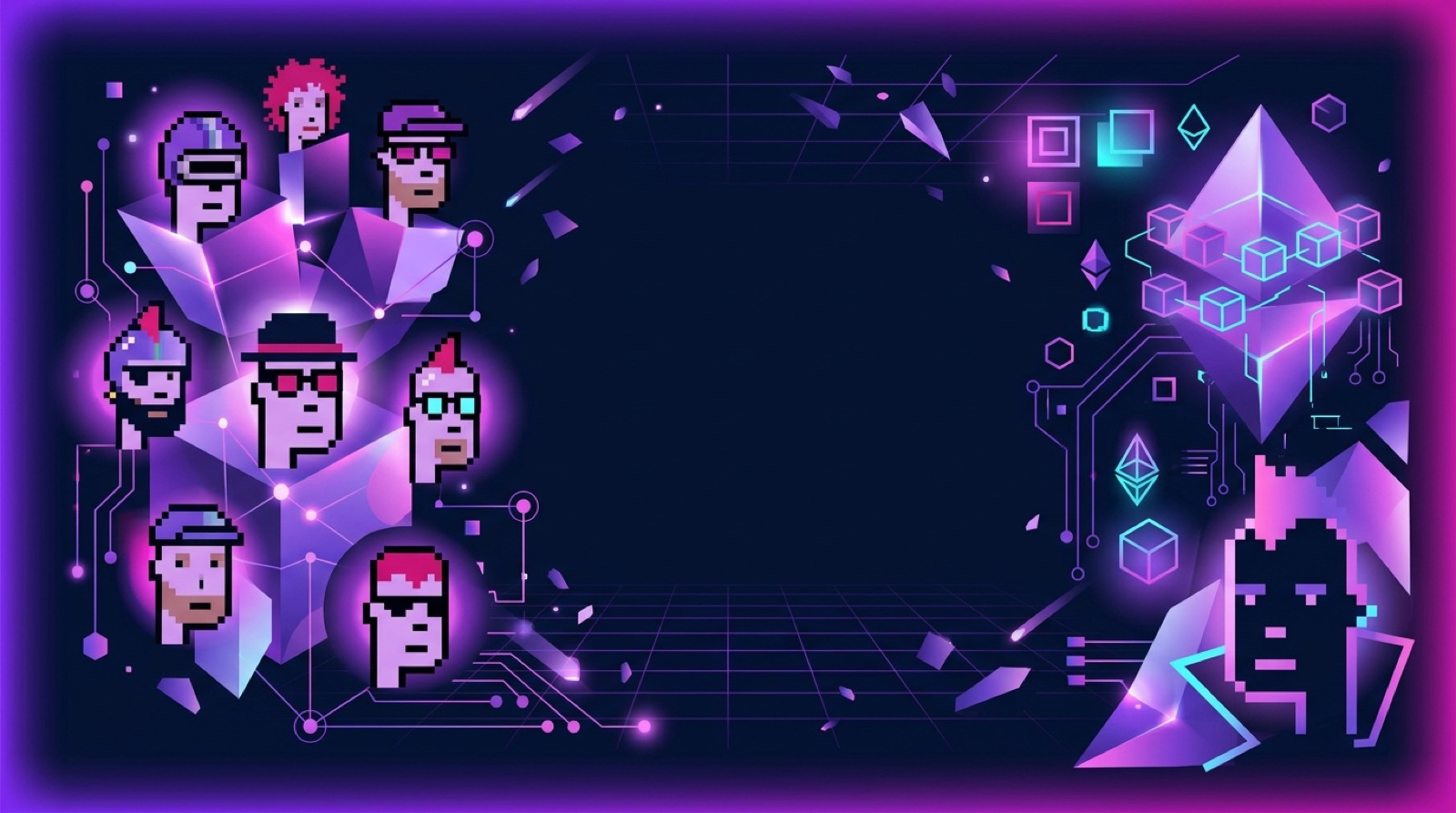
What are CryptoPunks?
CryptoPunks are a collection of 10,000 small, pixel-art characters. Each one is tied to a unique token on the Ethereum blockchain, and whoever controls the wallet holding that token is the recorded owner.
The images are 24 by 24 pixels, drawn in a blocky 8-bit style. They show faces looking straight ahead, with different hair, hats, glasses, earrings, pipes and other details. No two are identical.
The simplest way to think about a CryptoPunk is as a numbered digital collectible with a public ownership record. Anyone can look up a punk's number and see which wallet holds it and every past transfer. Unlike a normal image file, which can be copied endlessly, only one wallet is the recognised owner of each punk.
A few points are worth knowing from the start:
- The collection is fixed at 10,000. No more can be created.
- Each punk has a number from 0 to 9999.
- Punks are traded between wallets, usually through NFT marketplaces or the marketplace built into the original contract.
- Owning a punk is a collecting and status choice. It does not pay income or give any ownership stake in a company by itself.
CryptoPunks are often described as one of the earliest NFT projects, and they are widely seen as a starting point for the modern NFT market.
Who made CryptoPunks and when?
CryptoPunks were created by Larva Labs, a small software studio run by Matt Hall and John Watkinson, and launched in June 2017. The characters were generated by an algorithm that combined different traits, rather than drawn one by one.
At launch, anyone with an Ethereum wallet could claim a punk for free, paying only the network transaction fee. The creators kept a portion of the collection for themselves, and the rest were claimed by the public. NFTs were not a mainstream idea then, and the project was an experiment in digital ownership.
The project later grew far beyond that origin. Interest in NFTs surged in 2021, and early punks became widely known collectibles. In 2022, Yuga Labs, the company behind Bored Ape Yacht Club, acquired the CryptoPunks brand and intellectual property from Larva Labs. Rights and stewardship of the brand can change, so check the official CryptoPunks site for who currently holds them and which license terms apply.
The history matters for one practical reason: the original contract was written before today's NFT standards existed, which affects how punks work with wallets and marketplaces.
How do CryptoPunks work on Ethereum?
A CryptoPunks smart contract on Ethereum keeps a record of which address owns each of the 10,000 punks. Transferring a punk means updating that record, and the blockchain makes the change public and permanent.
The contract also includes a basic marketplace. Owners can offer a punk for sale at a set price, and buyers can place bids, all within the contract itself. Many people instead use general NFT marketplaces, which make browsing and comparing easier.
There is one technical wrinkle. The punks contract predates the ERC-721 standard, which most NFT tools now expect, and the CryptoPunks project is often credited as one of the inspirations for it. Because of this, a wrapped version exists. Wrapping places a punk in a separate contract and issues a standard NFT in its place, which can then be used with ERC-721 tools. The wrapped token is not the same thing as the original punk, and the original sits locked in the wrapping contract while the wrapped token exists.
The image data was originally stored off-chain, with the contract holding a fingerprint of the full image set. The artwork was later put on-chain by the creators.
What types of CryptoPunks exist, and what makes one rare?
Punks fall into a few types, and the type is one of the main drivers of how rare a punk is.
| Type | Number in collection |
|---|---|
| Male | 6,039 |
| Female | 3,840 |
| Zombie | 88 |
| Ape | 24 |
| Alien | 9 |
On top of type, each punk has attributes such as hats, glasses, hair styles, facial hair, pipes and earrings. Some attributes appear on thousands of punks, while others appear on only a handful. Number of attributes also varies: some punks have none, and a very small number have many.
When collectors talk about a rare punk, they usually mean one with a rare type, an uncommon attribute, or an unusual combination. Rarity ranking tools and collection explorers list how many punks share each trait, which is useful for comparing one punk with another.
Rarity does not guarantee a high price, and a trait that people like can matter as much as a statistically rare one. Check current sales for a specific trait rather than relying on rarity alone.
Why are CryptoPunks famous?
CryptoPunks matter mainly for what they did early and for how the market treated them afterward.
- Early NFT history. They launched in 2017, years before NFTs reached a mass audience, and are regularly cited as a foundational NFT project.
- Influence on standards and design. The project helped inspire the ERC-721 token standard and the idea of using characters as profile pictures.
- Cultural status. Many collectors treat owning a punk as a signal of being an early participant in the NFT scene, and punks are often used as online avatars.
- Art-world attention. Museums and auction houses have taken an interest in the collection as part of the history of digital art.
These are reasons for the collection's reputation, not guarantees of future value. NFT markets are volatile and thin, which means a punk can be hard to sell at a price you expect. Prices for the collection have moved widely over time, so check current market data rather than relying on a figure from an article.
What do you actually own if you buy one?
Owning the token proves you control that specific punk on the blockchain. It does not automatically give you copyright over the artwork or the right to use it however you want. Those rights depend on the license published by the current rights holder.
The license terms have been changed and clarified at various points in the project's history, so do not rely on old summaries. Before you plan any commercial use, such as selling merchandise featuring your punk, read the current terms on the official CryptoPunks site.
It also helps to separate three things people often confuse:
- The token, which is the blockchain record of ownership.
- The image, which anyone can view or copy as a file.
- The license, which sets out what the owner may do with the artwork.
Buying a punk transfers the first. The third comes from the rights holder's published terms. Owning the token does not stop others from saving the image, but it does make you the recognised owner on-chain.
How can you buy CryptoPunks safely?
A CryptoPunk purchase involves real money and permanent transactions, so a few defensive habits matter.
- Verify the collection. Fake collections and lookalike listings are common. Confirm the official contract address on the project's own site and match it to the listing.
- Use a wallet you control. Keep recovery phrases offline and never share them. Consider a hardware wallet for valuable assets.
- Be careful with signatures. Read every wallet prompt. Approvals that give a site permission to move your NFTs can be abused, and you can review and revoke approvals with token-approval tools.
- Ignore unsolicited offers. Direct messages, surprise airdrops and urgent deals are common scam methods.
- Check current data yourself. Prices, floor values and sales volumes change quickly. Use marketplaces and NFT analytics sites for up-to-date figures.
- Only spend what you can lose. NFT prices can fall sharply and may be hard to sell.
If you are only curious, you can browse the collection, look up individual punks and read their sales history without buying anything. This is general information and not financial advice.
Frequently asked questions
What is a CryptoPunk in simple terms?
A CryptoPunk is a token on the Ethereum blockchain linked to one of 10,000 pixel-art characters. Each token is unique, and the wallet that holds it is its owner. Owning one is like holding a digital collectible whose ownership record is public.
Who created CryptoPunks?
Larva Labs, a software studio founded by Matt Hall and John Watkinson, created them and launched the collection in June 2017. The brand and its intellectual property have since changed hands, so check the official CryptoPunks site for who currently runs it.
How many CryptoPunks are there, and which are rarest?
The collection has 10,000 punks. The rarest types are Aliens (9), Apes (24) and Zombies (88). The rest are human-looking male and female characters. Rarity also depends on accessories, and fewer punks with a given trait generally means a rarer one.
Does owning a CryptoPunk give me the copyright?
Not automatically. Owning the token proves ownership of that specific punk on the blockchain, but the rights to the artwork depend on the license terms published by the current rights holder. Read those terms before using a punk commercially.
How much does a CryptoPunk cost?
Prices change constantly and depend on the specific punk's traits. Check recent sales and floor-price data on NFT market trackers and the marketplaces that list the collection. Treat any single quoted figure as out of date quickly.
Are CryptoPunks safe to buy?
Be careful. Fake collections and lookalike listings are common, and NFTs can lose value or become hard to sell. Verify the official contract, use a wallet you control, and never spend money you cannot afford to lose. This is general information, not financial advice.
Keep reading
Related guides
NFT · Explainer
Alexis Ohanian, Serena Williams and CryptoPunks: What Is Verified
Alexis Ohanian has spoken publicly about his admiration for Serena Williams, and outlets have reported that he collects her trading cards. The CryptoPunks detail is not supported by the sources reviewed here, so this guide separates what is documented from what still needs checking.
NFT · Explainer
Why Beeple and CryptoPunks Dominate Top NFT Sales Lists
A few artists and one collection account for most of the biggest NFT sales ever recorded. This guide explains why Beeple and CryptoPunks keep appearing, where cat-themed NFTs fit in, and how to check the current rankings yourself.
NFT · Explainer
Christie's Nine CryptoPunks Auction: What Was Sold and Why
Christie's sold nine CryptoPunks in 2021, and the total is widely reported as about $16.9 million, not $169 million. This guide covers what was sold, why it mattered, and how to read Punk prices today.
NFT · Explainer
CloneX vs CryptoPunks: Who Leads the Top NFT Sales?
CryptoPunks and CloneX often sit near the top of NFT sales charts, but where a collection lands depends on how the ranking is measured. This guide explains the difference, what drives sales for each collection, and how to check current figures yourself.
NFT · Explainer
What Are Curio Cards and Why Do They Matter for NFTs?
Curio Cards are an early Ethereum art NFT collection that people often cite as one of the first of its kind. This guide explains what they are, why they still come up in NFT history, and how to check ownership and listings safely.
NFT · Explainer
What Are Blue-Chip NFT Collections? A Plain-English Guide for 2026
Blue-chip NFT collections are the best-known, most widely held NFT projects, judged on track record, trading depth and community. This guide explains what the label means, how people assess it, and the risks that still apply.
NFT · Explainer
What Are Doodles NFTs? A Plain-English Guide for 2026
Doodles is a 10,000-piece Ethereum avatar collection known for its pastel, hand-drawn look. This guide covers what it is, what holders get, how to buy one safely and what to check before spending anything.
NFT · Explainer
What Are Bitcoin Ordinals NFTs? A Plain Guide for 2026
Bitcoin Ordinals are a way to attach images, text and other data to individual satoshis, the smallest units of bitcoin, so they can be owned and traded like NFTs. This guide explains how they work, how they differ from NFTs on other chains, and what to check before you buy or send one.