NFT · Explainer
What Are Ape NFTs? Collections, Ownership and Risks
Ape NFTs are digital collectibles featuring ape or monkey characters, but the label covers many projects with different creators, blockchains and rights. Learn how Bored Ape Yacht Club fits in, what an NFT actually gives you, and how to assess a collection before buying.
By the DappsAtlas editorial team · Updated
What is an ape NFT?
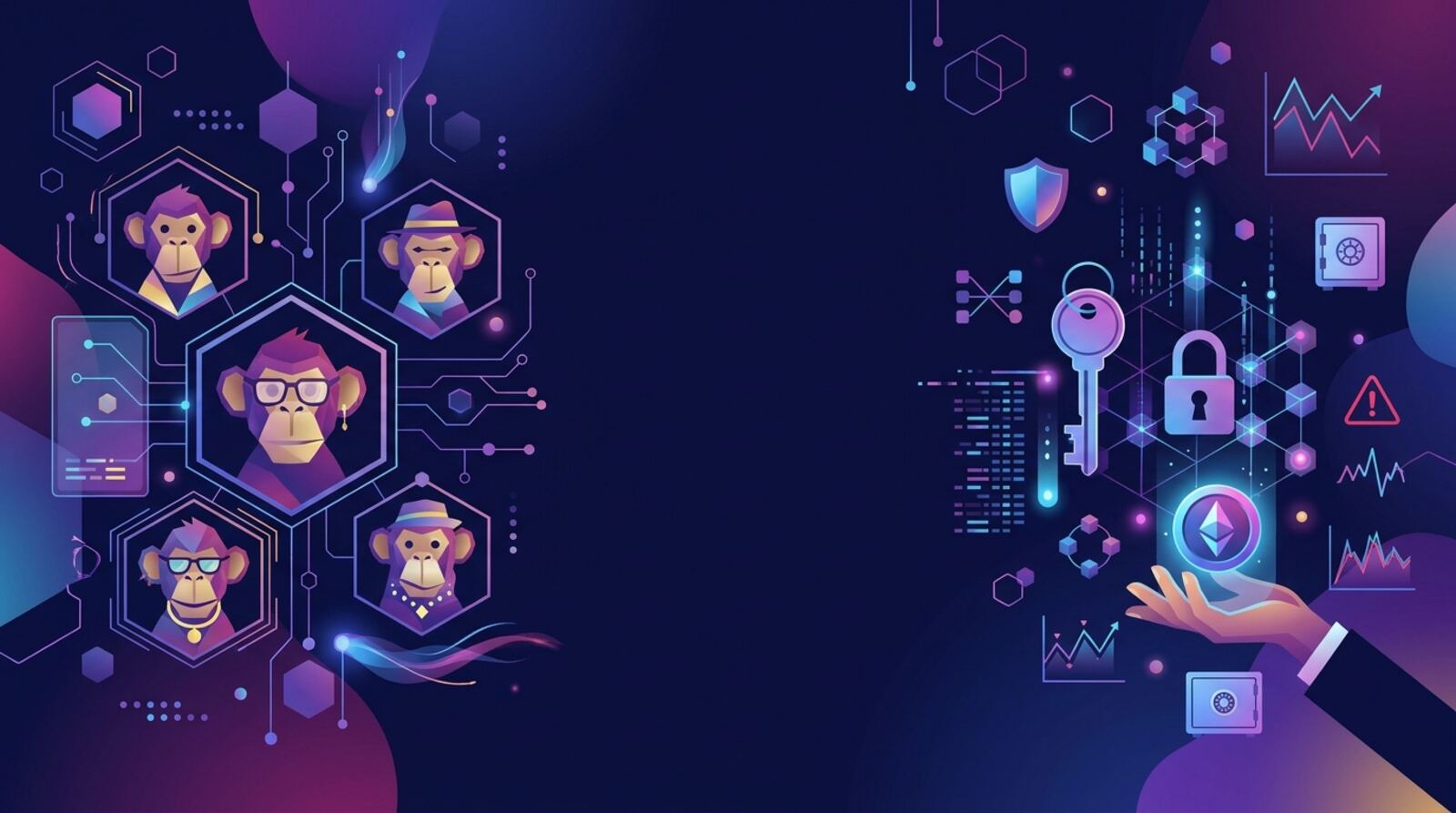
An ape NFT is a non-fungible token associated with digital artwork or a collectible depicting an ape or monkey character. “Ape NFT” is a broad description, not the name of one single collection or a guarantee that a project is connected to a famous brand.
Each token is intended to be distinct from other tokens in its collection. Artwork may vary by background, clothing, expression or accessories, and some projects assign different traits to different items. The token’s blockchain record can identify its collection and token number, while the image and descriptive data may be stored separately.
The best-known example is Bored Ape Yacht Club (BAYC), an Ethereum NFT collection created by Yuga Labs. Its 10,000 illustrated ape collectibles helped make profile-picture NFTs widely recognizable. But many other projects use ape imagery, and they can differ in creator, quality, community, technical setup and licensing.
So when someone says “ape NFT,” ask which project and which token they mean. The picture alone does not establish who made it, whether it is authentic, what rights come with it or whether it has an active community.
What is Bored Ape Yacht Club?
BAYC is a specific collection of 10,000 profile-picture NFTs on Ethereum, rather than a synonym for every ape-themed collectible. Each Bored Ape is represented by a distinct token, with artwork assembled from combinations of visual traits. Owners can display the image, trade the token or use it in ways permitted by the project’s terms.
The collection became prominent during the growth of profile-picture NFTs, where holders used collectible images as online avatars and joined project communities. BAYC also became the starting point for a wider ecosystem of related projects. One related collection is Mutant Ape Yacht Club (MAYC), which features mutated ape characters and is a separate collection with its own tokens.
A well-known collection name does not remove the need for basic checks. Look at the token’s contract address and collection details, not just the image or a seller’s label. Scammers can copy artwork, create lookalike collections or send misleading offers that use familiar names.
The collection’s fame also does not set a reliable value for any individual token. Traits, seller expectations, buyer demand and broader market conditions can all affect listings and sales. Treat historical visibility as context, not a promise of future interest or resale value.
How do ape NFTs work?
An NFT is a blockchain token with a unique identifier. In an ape collection, the token is associated with a particular item and its metadata, which may describe traits and point to an image. The token is not necessarily the image file itself: artwork and metadata can be stored elsewhere, depending on how the project was built.
If you buy an ape NFT, the transaction updates the blockchain record to show that the token is held by your wallet. A wallet is controlled using private keys or a recovery phrase. Whoever controls those credentials can generally authorize transactions, so keeping them private is essential. A marketplace account or a screenshot of an ape is not, by itself, proof that you own the token.
On Ethereum, BAYC tokens use the ERC-721 token standard, which is commonly used for unique NFTs. Other ape projects may use different standards or blockchains. That affects which wallets and marketplaces can display or trade the token, and which network fees apply.
Before interacting with a collection, verify the network and contract address using the project’s official channels. A copied image can look identical to the authentic artwork while representing a different token. Check the token’s on-chain details before signing a purchase or transfer.
What rights come with owning an ape NFT?
An NFT purchase generally transfers a token to your wallet; it does not automatically transfer every right associated with the artwork. Copyright, commercial use, merchandise, adaptations and public display may be governed by the creator’s license, the project’s terms and applicable law. The rules may differ between collections and can change, so review the current terms for the exact project.
Some NFT projects have offered holders permissions to use their individual artwork commercially, while others limit use or provide no special license. Do not assume a right offered by one collection applies to another. Also distinguish a project’s stated policy from rights that may exist under local copyright law.
An NFT can offer community participation or access to project activities, but those benefits are not guaranteed merely because a token exists. They may depend on current project rules, eligibility criteria, a separate account or continued operation of a service. Benefits can be changed or discontinued.
Before buying, find out what the project says about personal and commercial use, whether permissions apply only while you hold the NFT, and what happens if you sell it. If a use is important—such as making products or using an ape in a business—get clear legal guidance rather than relying on a seller’s claim.
Why do people buy ape NFTs?
Some collectors buy ape NFTs for the artwork, online identity, community affiliation or interest in a particular creator. Others may be drawn to a project’s events or other stated benefits. These are possible motivations, not guaranteed outcomes: a community can become less active, and a promised or existing feature may not continue.
A token’s price is also not a measure of the value of its image or a reliable prediction of what someone else will pay later. NFT prices are shaped by supply, demand, attention, liquidity and broader crypto-market conditions. A high asking price is not proof that buyers are willing to pay that amount; completed sales are more informative, though they still do not guarantee a future sale.
There is no universal “ape NFT utility.” Check what the specific collection currently provides and whether access is verifiable. Be cautious of claims that a token guarantees income, investment returns, exclusive access forever or a certain resale price. A collectible can lose demand or become difficult to sell.
If you are considering a purchase, decide whether you would still want the NFT if its resale price fell sharply and any associated perks disappeared. That question helps separate interest in the collectible itself from assumptions about future profits or benefits.
How can you check and buy an ape NFT?
Start by identifying the exact collection and blockchain. Search for the collection through the creator’s official channels, then compare its contract address with the one shown by the marketplace. Do not rely on a search advertisement, direct message or a copied profile image as proof of authenticity. Fake collections often imitate popular names and artwork.
On a marketplace such as OpenSea, inspect the collection page, token number, seller, price, transaction history and any displayed verification information. Verification badges can help, but they are not a substitute for checking the project’s official contract address. Review whether the listing is a fixed-price sale or an offer, and check the final transaction details in your wallet before approving it.
Account for the full cost. This can include the sale price, blockchain transaction fees and any marketplace charges shown at checkout. Fees and network conditions can change. Never share a recovery phrase or private key to complete a purchase; a legitimate marketplace does not need them.
If you are new to NFTs, learn how your wallet handles approvals and transfers before using it. Confirm that you are on the intended network and understand the transaction you are signing. If any detail differs from what you expected, stop and verify it before proceeding.
What are the risks of ape NFTs?
Ape NFTs carry substantial risks. Prices are volatile, and an NFT can fall in value or have no willing buyers when you want to sell. A collection’s past popularity does not ensure continuing demand. Marketplace listings show what sellers are asking, not necessarily what buyers will pay, and thin trading can make a quoted price misleading.
There are also project and technical risks. A team may stop maintaining its website or community, promised features may not arrive, and image or metadata hosting choices can affect how the collectible is displayed. A wallet can be compromised, or a buyer can be tricked into signing a transaction that transfers tokens or grants permissions. Blockchain transactions are generally difficult or impossible to reverse.
Treat promotional claims with care. Celebrity attention, online chatter, roadmaps and claims of exclusive future benefits do not guarantee value. Do not borrow money or risk funds needed for essentials to buy a collectible. Consider whether the NFT’s price, fees and possible loss fit your budget.
Use a separate wallet for higher-risk interactions if appropriate, keep recovery credentials offline and never approve a transaction you do not understand. Check local tax rules as well: buying, selling or receiving digital assets may create reporting obligations depending on where you live.
How do you avoid fake ape NFTs and wallet scams?
Ape artwork is easy to copy, so a convincing image does not prove that a token is genuine. Scammers may create fake collection pages, impersonate project staff, send unsolicited NFTs or offer a deal that requires signing a suspicious wallet transaction. They may also use lookalike account names and misleading links.
Use the project’s official channels to confirm the correct marketplace and contract address. Type or select the marketplace’s official app or site yourself rather than following an unsolicited message. Check the token’s blockchain record and collection identity before buying. If the seller’s token belongs to a different contract, it is not made authentic by using the same name or image.
Never provide your recovery phrase, private key or remote access to your device. A request to “verify” a wallet by revealing its recovery phrase is a theft attempt. Read wallet prompts carefully, especially requests to approve token transfers or broad permissions. Disconnecting a wallet from an app does not necessarily revoke permissions already granted; use the wallet’s or network’s established tools to review and revoke unwanted approvals.
If an offer seems unusually cheap or urgent, pause. Verify claims independently and ask a knowledgeable person before signing if the transaction is unclear. No collectible purchase is worth surrendering control of your wallet.
How should you evaluate an ape NFT’s value?
To compare ape NFTs, assess the specific project rather than treating the whole category as one market. Check who created the collection, whether its official contract is clearly published, what its license says, and whether its stated features are active. Look for transparent information about the artwork, metadata, supply and any ongoing development.
For a token’s trading context, review completed sales and current listings on the same collection and network. Consider how recently sales took place and how many different buyers and sellers are involved. A single high sale or a high floor listing can distort the picture. “Floor price” usually means the lowest current listing in a collection; it is not a guaranteed sale price, a valuation of every token or a promise that you can sell at that level.
Traits may influence collector interest, but rarity tools and labels do not establish objective value. Confirm how a rarity score was calculated and whether the project’s metadata is correct. Compare like with like, including token traits and sale timing.
Before making a decision, write down what you are paying, what rights or benefits you expect, and what evidence supports those expectations. If the answer depends on guaranteed appreciation or claims a seller cannot verify, reconsider. Do not treat an NFT as a dependable investment or a substitute for diversified financial planning.
Are ape NFTs still relevant, and what should you do next?
Ape NFTs remain a recognizable part of NFT culture, with BAYC as the most prominent example and MAYC as a related but distinct collection. The important point is that the category is not a single product: individual projects have separate creators, contracts, licenses and communities. Their prices and activity can change, so use current collection listings and completed sales rather than relying on old price claims.
If you are exploring ape NFTs in 2026, begin with the collection’s official information and confirm its contract before interacting with a marketplace. Check the current license, understand the fees and wallet transaction, and avoid assuming that online popularity means lasting utility or resale demand. If a project does not clearly explain its rights, ownership details or token setup, treat that uncertainty as a reason to pause.
You can also decide that owning an ape image is not worth the cost or risk. Viewing a collection, learning how NFTs work or following a project does not require buying a token. If you do choose to collect, spend only what you can afford to lose and keep control of your wallet credentials.
The clearest answer to “what are ape NFTs?” is simple: they are a visual category of blockchain collectibles, not a promise of access, copyright, profit or a functioning community. Those details depend on the particular project and must be checked individually.
Frequently asked questions
Are all ape NFTs Bored Ape Yacht Club NFTs?
No. Ape NFTs are a broad category of collectibles featuring ape or monkey imagery, made by many different projects. Bored Ape Yacht Club is one specific collection within that category.
Does owning an ape NFT give me copyright?
The NFT records ownership of a particular token, but it does not automatically transfer copyright or grant unlimited use of the artwork. Check the project’s current license and terms to understand what you can do with the image.
How much does an ape NFT cost?
There is no single set price for ape NFTs. Prices vary by collection, token traits, seller and market conditions, so check current listings and recent sales for the specific collection and token.
How do I buy an ape NFT safely?
You need a compatible wallet and enough funds for the purchase price and any network fees. Before buying, confirm the collection’s official contract address and review the token, seller, transaction details and applicable license.
Can I resell an ape NFT?
An NFT can be resold if a marketplace supports it and a buyer is willing to pay, but resale is not guaranteed. Prices can fall, trading can be thin, and fees may reduce what you receive.
Mentioned in this guide
dApps in this guide
OpenSea is a peer-to-peer NFT marketplace for buying, selling and minting digital collectibles, aimed at collectors, creators and developers.
Ethereum PFP NFT collection of up to 20,000 Mutant Apes from Yuga Labs, spun off from Bored Ape Yacht Club, for collectors and community members.
Keep reading
Related guides
NFT · Explainer
Loot NFTs Explained: The Complete Guide for 2026
Loot is a set of 8,000 text-only NFT item bags launched in 2021 that became a base layer for games and derivative projects. This guide explains what a Loot bag contains, how the project spread, and how to buy, check and trade one safely.
NFT · Explainer
Bored Ape NFTs and Limited Edition M&M's: How Brand Collabs Work
In August 2022, Mars paired a small run of M&M's gift jars with Bored Ape Yacht Club NFTs through the KINGSHIP brand. This guide explains how that kind of collab worked, what owners received, and how to check for newer limited drops safely.
NFT · Explainer
Eminem and the Bored Ape Yacht Club: What Ownership Means in 2026
Eminem's reported ownership of a Bored Ape brought attention to the Bored Ape Yacht Club. This explainer covers what that kind of ownership does and does not mean, how to check holdings yourself, and what buyers should understand before purchasing.
NFT · Explainer
Fractionalized NFTs and Bored Ape 3D Characters: A 2026 Guide
Fractionalized NFTs split one token into tradable pieces, and the Bored Ape 3D character reports are easy to overstate. This guide explains the mechanics, what the public record shows about Bored Ape projects, and how to check any new claim before you act on it.
NFT · Explainer
What Are Bitcoin Ordinals NFTs? A Plain Guide for 2026
Bitcoin Ordinals are a way to attach images, text and other data to individual satoshis, the smallest units of bitcoin, so they can be owned and traded like NFTs. This guide explains how they work, how they differ from NFTs on other chains, and what to check before you buy or send one.
NFT · Explainer
Whale Alerts Explained: What a $690,000 CryptoPunks Buy Means
A single whale alert can make a large NFT purchase look like a trading signal, but it is only one wallet's transaction. This guide explains how to read these alerts, verify them on-chain, and judge what a CryptoPunks price really tells you.
NFT · Explainer
What Are Blue-Chip NFT Collections? A Plain-English Guide for 2026
Blue-chip NFT collections are the best-known, most widely held NFT projects, judged on track record, trading depth and community. This guide explains what the label means, how people assess it, and the risks that still apply.
NFT · Explainer
WAX and Topps Trading Cards: What the 2020 Partnership Means
In 2020 Topps chose the WAX blockchain for digital collectibles, a move that is easy to confuse with physical wax packs. This guide explains what was announced, how the idea worked, and how to check what is still live today.