Web3 gaming · Explainer
Vulcan Forged NFT Lending in Play-to-Earn: How It Works (2026)
Vulcan Forged has been linked to NFT lending in its play-to-earn ecosystem. This guide explains how NFT lending works in these games, what the public record shows so far, and what to check before lending or borrowing any asset.
By the DappsAtlas editorial team · Updated
What Vulcan Forged is and what the lending news refers to
Vulcan Forged is a gaming studio, NFT marketplace and ecosystem built around its PYR token. Its marketplace lets people buy and sell NFTs tied to game assets, and its documentation describes a set of partner games that use those assets.
Over time the project has announced features aimed at its community. One example is a planned trading platform called Vulcan-X, which was announced for launch in March 2025 with a stated plan to use trading fees to buy back PYR.
NFT lending is a separate kind of feature. It means the holder of an NFT lends it to another player, or uses it as security for a loan. In return the borrower usually pays a fee or shares in in-game rewards. The headline about lending is short, but the details that matter are the eligible assets, the fee split, how the asset is held during the loan, and what happens on default. Those details are normally published in separate documentation.
The sources available for this guide do not include a clear launch notice, written terms or live figures for an NFT lending product from Vulcan Forged. Treat any lending claim as something to verify in the project's own channels. The rest of this guide explains how such a feature normally works, what it could mean for each side and how to check it.
What NFT lending means in play-to-earn games
Play-to-earn games reward players with tokens and often with NFT items such as creatures, characters, land or equipment. Some of these items are costly, so a new player may not be able to afford the entry cost even when the game itself is free.
NFT lending tries to match two groups. Owners who hold assets they are not using can earn a return from them. Players who lack the assets can join in and earn rewards without a large upfront purchase.
The model has existed in several forms. In Axie Infinity's early years, for example, a common arrangement was a scholarship, where an owner lent creatures to a player who then shared the rewards with the owner under agreed terms. Guilds and managers often took a role in organising these arrangements.
The model carries real trade-offs. Borrowers get access without capital, but they depend on the game staying active and the reward token holding enough value to pay a fee. Lenders receive income, but they accept that the borrower may use the asset in ways they do not control, and that the asset's market value can fall while it is out on loan.
When you read about lending in any game, the core question is simple: who holds the asset, who earns the rewards, and what happens if one party stops meeting the agreement.
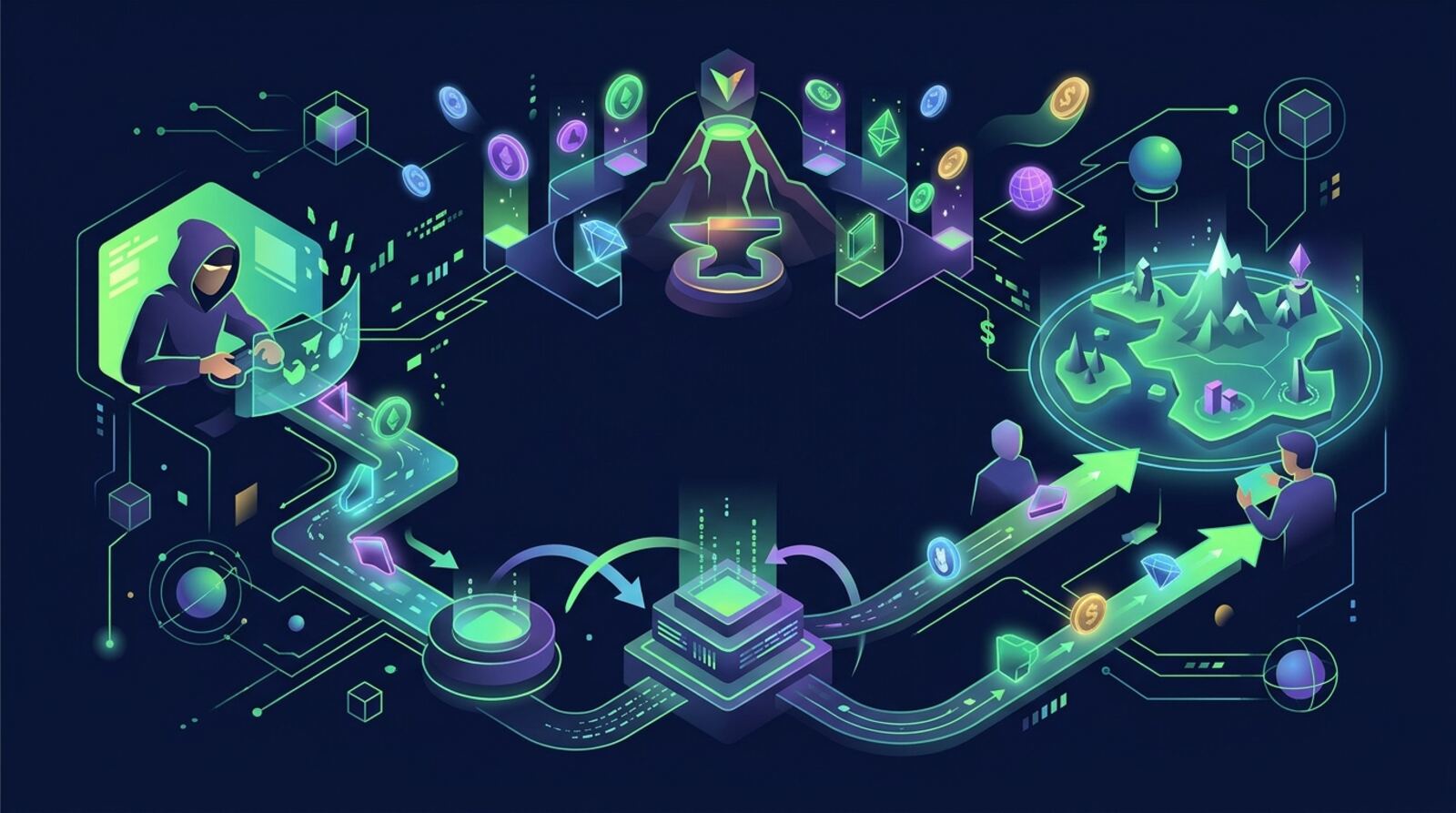
How a typical NFT loan works step by step
Lending arrangements differ, but many follow a similar sequence. Knowing the stages helps you spot where the risks sit.
- The owner lists an eligible NFT and sets the terms, including the fee or revenue share and the loan length.
- The borrower reviews the terms and agrees to them, often by signing a transaction from their own wallet.
- The asset is either transferred into a contract that holds it, or the borrower is granted temporary use rights, depending on the design.
- The borrower plays the game and earns rewards during the loan period.
- The platform or contract splits rewards according to the agreed terms and sends the owner's share.
- When the loan ends, the asset is returned to the owner or the rights expire.
- If the borrower fails to pay or breaks the terms, the agreement may allow the owner to claim collateral or stop access, depending on the rules.
Each stage can go wrong. The fee might be paid in a token whose value drops during the loan. The contract might have a bug. The game might change its reward rules. A seller might list an asset they do not control. Read the terms for each step rather than relying on a summary.
Who gains and who takes the risk in NFT lending
Lending affects each party differently. The table below sets out the main roles and the points to check for each.
| Role | What you typically gain | Main risk to check |
|---|---|---|
| Lender (asset owner) | Fee or share of rewards from assets you would otherwise leave idle | Borrower misuse, falling asset value, the asset being stuck or locked during the loan |
| Borrower (player) | Access to a game or asset without buying it outright | Reward rates falling, losing access if the owner ends the arrangement, fees paid in a volatile token |
| Platform or guild (if any) | Fees or a cut of rewards for matching parties and handling payments | Terms that are unclear, conflicts between the platform and users, or a platform that stops operating |
Lenders should ask whether the asset is held by a contract or merely lent by trust, and whether they can recall it. Borrowers should ask how earnings are measured and paid, and what they lose if they stop playing.
In any arrangement, check whether the reward token is paid to you directly or first passes through a platform. The timing of payouts matters, especially if your fee is set in a token that can move sharply in value.
What the public record shows about Vulcan Forged so far
The sources available for this guide give a partial picture of Vulcan Forged. They are useful for context, but they do not confirm how a lending product would work.
The documentation describes the Vulcan Forged marketplace as a place to buy NFTs using PYR, with step-by-step guides for purchasing. It also describes a broader studio and ecosystem with a number of games and applications, and the team has described a figure of several million dollars in trading volume in older material.
A 2023 article describes a model in which authority nodes run by partner projects can airdrop NFT rewards or LAVA bonuses to PYR delegators. That is a reward design, not a lending product, but it shows the project has used token-linked incentives for holders.
In January 2024 the team announced a web3 gaming competition with six games and a prize pool described as 30,000 dollars in PYR. Event prize pools are one-off and do not show the terms of a long-term lending feature.
Taken together, these items are context, not confirmation. A reader who wants to know whether lending is available, what fees apply and how defaults are handled should look for dated announcements, written terms and documentation from the project itself, and treat secondary write-ups with caution.
What risks should you check before lending or borrowing NFTs?
NFT lending in games carries risks that are separate from ordinary trading. The most common ones are below.
- Collateral value: the asset may lose market value while it is on loan, and the agreed collateral may be worth less than the amount owed.
- Reward volatility: fees paid in a game token can fall sharply, so the return may shrink even if the game keeps running.
- Game design changes: developers can change reward rates, asset stats or access rules, which can break the economics of a loan.
- Smart contract issues: a bug or exploit in a lending contract can lock or drain assets.
- Counterparty risk: a borrower may default, or a platform may stop operating or change its terms.
- Scams: fake lending pages, impersonation of team members and requests to connect wallets to unknown sites are common in this space.
Security habits help. Never share your seed phrase or private keys. Check the address of any contract before approving it. Be wary of messages that create urgency, promise guaranteed returns or ask you to move assets quickly.
If a claim sounds too good to be true, assume it may be wrong until you have confirmed it through the project's official channels.
How to verify a lending feature before you use it
If you are considering a lending feature, work through a short checklist before you commit any asset or token.
- Confirm the feature is live. Look for a dated official announcement and check that the product page is reachable from the project's own channels.
- Read the written terms in full. Note the fee, the split of rewards, the loan length, what counts as default and how disputes are handled.
- Find out who holds the asset during the loan. Is it transferred to a contract, or does the borrower get temporary rights? Can the owner recall it early?
- Check the reward token. Find out where it trades, how liquid it is and whether the fee is paid in it or in another asset.
- Review the security setup. Confirm which contract you will approve, and check that it matches the official documentation.
- Test with a small amount first, if the platform allows it, and keep records of every transaction.
- Decide your exit rule in advance, including what you will do if the game changes its rules.
The point of the checklist is not to find a perfect feature. It is to make sure you understand the terms, the risks and the people you are dealing with before money or assets move.
Legal, tax and eligibility notes to check first
Lending and rewards can carry legal and tax consequences that depend on where you live. Rules on digital assets, gaming rewards and lending income vary by country and sometimes by state or region, and they change over time.
Things to consider include whether your activity is treated as a sale, a loan, income or a service; whether rewards count as taxable income when received; and whether you need to keep records for each transaction. Some jurisdictions also have specific rules for crypto platforms and for gaming tokens.
Availability can also depend on where you are located. Some platforms restrict access by country or by age. If you are asked to verify your identity or confirm where you live, do so only through the official platform and never try to get around those requirements.
Before lending or borrowing, check your local laws and speak with a qualified adviser if the amounts are significant. This guide is general information, not legal or tax advice.
Other play-to-earn models to compare
If you want to understand how lending and rental models work in practice, several games and marketplaces in the wider play-to-earn space offer useful reference points. Look at them for the structure of their economies rather than for any promised returns.
Axie Infinity is one of the best-known play-to-earn games and its history includes scholarship-style lending. Ronin Market is a marketplace for game assets in the Ronin ecosystem, which can help you understand how asset listings and pricing work. Splinterlands is a blockchain card game where NFT cards and a governance token shape the economy.
Alien Worlds is a community-built play-to-earn metaverse where players mine tokens and NFTs, which shows how resource-based rewards operate. TokenTrove is a community-run marketplace for game assets on Immutable zkEVM, and ImmutableX covers fees and staking on that network.
Pixels is a web3 farming game with a token and guild features that show how team-based play and staking can fit together. Illuvium is a franchise of NFT games with its own governance token and asset-based gameplay.
None of these examples guarantees a return. Compare the terms, reward rates and risks of each one, and check current figures in the games and marketplaces themselves.
Frequently asked questions
Has Vulcan Forged launched NFT lending?
Not from the sources available for this guide. They describe the marketplace, the PYR token, a planned trading platform, and past community events. They do not give lending terms, rates or a confirmed launch date. Check Vulcan Forged's official documentation and announcement channels for the current position.
What happens to my NFT if I lend it?
Your NFT or game asset is held as security or lent to another player. Depending on the design, the borrower pays a fee, a share of earnings, or both. Some models use a smart contract that holds the asset until the loan is repaid. Others rely on a platform to match parties and handle payments.
Are lending earnings taxable?
Yes, in many cases. Token rewards and sales of game assets may be taxable depending on where you live, and lending income can be treated differently from trading gains. Speak with a qualified tax adviser in your jurisdiction and keep records of every transaction.
How can I protect myself before using a lending feature?
Ask whether the feature is live, read the written terms, find out who holds the asset during the loan, and confirm how defaults and disputes are handled. Check that the links you use come from the project's own official channels and never share your wallet seed phrase or private keys with anyone.
Is play-to-earn lending a safe way to earn?
Not necessarily. Some play-to-earn lending models are run by guilds or third-party platforms, and the terms vary a lot. Read the contract or platform rules, understand the fee split, and only use what you can afford to lose, as token prices and game economies can change quickly.
Mentioned in this guide
dApps in this guide
Axie Infinity is a Ronin-based NFT game where players collect, combine and battle creatures called Axies, with its own AXS token.
Ronin Market is the NFT marketplace for game assets on the Ronin blockchain, aimed at players and collectors in the Axie Infinity and Ronin gaming ecosystem.
Splinterlands is a blockchain collectible card game on Hive where players battle with NFT cards and earn or stake the SPS governance token.
Alien Worlds is a community-built play-to-earn metaverse on WAX where players mine and play to earn TLM tokens and NFTs.
TokenTrove is a community-run NFT marketplace for blockchain game assets on Immutable zkEVM, built for gamers and collectors.
ImmutableX is a web3 gaming platform on Ethereum whose IMX token covers fees, staking, governance and gas on Immutable zkEVM, aimed at gamers and token holders.
Pixels is a web3 farming and exploration game with a PIXEL token, guilds and ecosystem staking, aimed at gamers who are comfortable with wallets and token risk.
Illuvium is a franchise of interconnected NFT games from Illuvium Labs, including Arena and Overworld, with the ILV token for governance.
Immutable zkEVM is an EVM-compatible blockchain for web3 games from Immutable, aimed at game studios and players, with an IMX token.
Keep reading
Related guides
Web3 gaming · Explainer
Immutable X and Play-to-Earn Gaming: What the Push Really Means
Immutable X is one of the most visible infrastructure providers for web3 games, but it is not a single game and has not replaced the play-to-earn model. This guide explains what it does, what the 'takeover' idea gets right and wrong, and how to check current activity yourself.
Web3 gaming · Explainer
Vulcan Forged Play-to-Earn Ecosystem: How It Works in 2026
Vulcan Forged is a gaming studio and blockchain ecosystem built around the PYR and LAVA tokens. This explainer covers how its play-to-earn model is meant to work, what its funding history does and does not tell you, and what to check before you stake, buy or play.
Web3 gaming · Explainer
Why Some Game Tokens Hold Up in a Market Dip
A game token that holds its price during a sell-off may have real use behind it, or it may just have thin trading. This guide explains how to tell the difference and what to check before you buy or play.
Web3 gaming · Explainer
WAX and the 42% GameFi Share Claim: What It Means
A single figure of 42% for WAX's share of GameFi is only meaningful once you know what is being counted, over what period, and from which source. This guide explains how to test the claim and what WAX's game ecosystem looks like in practice.
Web3 gaming · Explainer
Vulcan Forged Frenzy Pass Explained: What Wider Access Means
The Vulcan Forged Frenzy Pass announcement is about giving more players access to a Web3 game feature. This guide explains what a pass like this usually does, how to check its terms, and what to verify before you buy or trade one.
Web3 gaming · Explainer
VulcanVerse AMA at DappDays: What It Covered and What to Know
VulcanVerse was a metaverse game set in a Greco-Roman world, and its AMA at a DappDays event in August 2022 was one of the event's recorded highlights. This guide explains what that session covered as far as public sources show, how to tell it apart from an unrelated VulcanVerse gamebook series, and how to check the project's current status.
Web3 gaming · Explainer
How Vulcan Forged Boosts Affect LAVA Play-to-Earn Rewards
Vulcan Forged uses boosts, multipliers and NFT badges to change how much LAVA a player earns from gameplay. This explainer covers how those boosts work, what the LAVA migration to Elysium changed, and what to check before spending money.
Web3 gaming · Explainer
Vulcanverse Beta and PYR Token: What to Know in 2026
Vulcanverse is a Web3 game whose beta and its PYR token have drawn attention at the same time. This guide explains what a beta stage means for a game token, what public sources do and do not confirm, and how to check public sources before you spend money or time.