Web3 gaming · Explainer
Illuvium Explained: 3D Monsters on the Blockchain in 2026
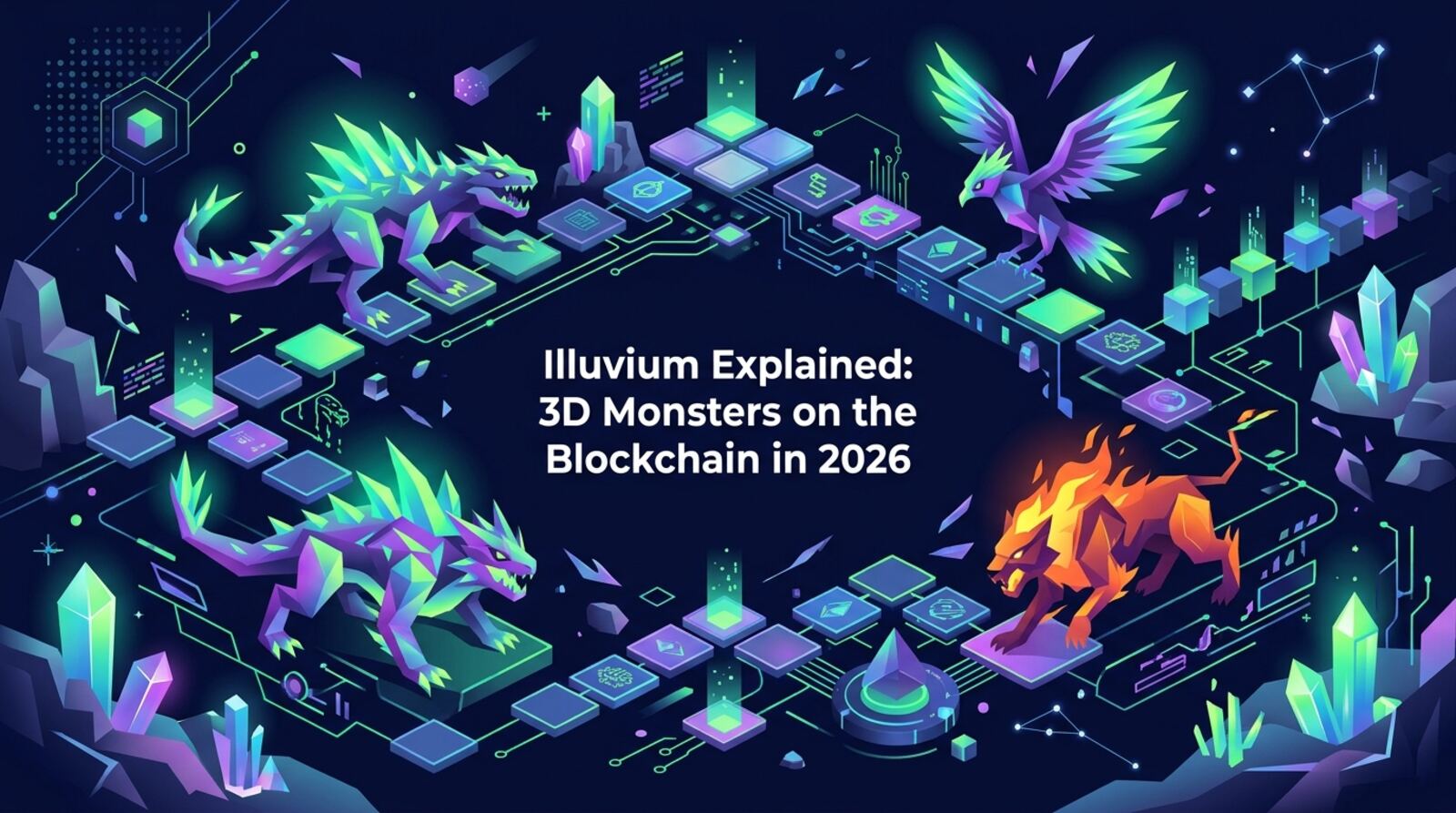
Illuvium is a blockchain gaming franchise built around Illuvials, 3D creatures that players capture, train and battle as NFTs. This guide explains what the creatures are, how the connected games fit together, and what to check before you spend any money.
By the DappsAtlas editorial team · Updated
What Illuvium is and why it gets attention
Illuvium is a blockchain gaming project from Illuvium Labs. Its core idea is a shared fantasy world where players capture, train and battle creatures called Illuvials. The creatures are 3D models, and each one can be held as an NFT, which is a unique token recorded on a blockchain.
Early coverage of the project described it as a mix of familiar game ideas. One early description compared the creature collecting to Pokemon and the battles to auto-battling games such as Teamfight Tactics. Early articles also mentioned a decentralized autonomous organization, a decentralized exchange and DeFi features, which were planned as part of the wider ecosystem.
It helps to think of Illuvium as a franchise rather than a single game. Several titles are set in the same universe and are meant to connect through shared assets and the ILV token. Because the project has changed over several years, the best way to understand it today is to separate what the original vision was from which products are live now.
The short version: Illuvium is a set of connected blockchain games built around collectible 3D creatures that are owned as NFTs. Whether a given game is available, which chain it uses and how it charges players can change, so each claim in this guide should be checked against the official sources before you act on it.
How the 3D monsters, called Illuvials, are made
Illuvials are the creatures at the centre of the franchise. They are designed as 3D fantasy monsters with distinct looks, types and abilities. The models are built in Unreal Engine, a widely used real-time 3D engine also common in mainstream console and PC games. Early public descriptions of the project described Unreal Engine 4 as the base for the visuals.
This matters for a simple reason: most blockchain games use flat 2D art or simple 3D, because heavy 3D assets are costly to render and store. Building on a mainstream engine lets the team produce detailed creatures, animations and environments that look closer to traditional games than to many earlier crypto projects.
However, visual quality does not guarantee gameplay quality or long-term value. A creature can look impressive and still be hard to use in practice if the game around it has few players, slow updates or unclear rules. When you look at Illuvials, separate three questions: how the model looks, how the creature plays in the game, and how the NFT is supported by the project.
If you are comparing Illuvium with other monster-collecting projects, the same test applies. Look for working gameplay, a clear roadmap and a visible player base, rather than relying on artwork or hype. The Illuvial design is the hook, but the games that use it are what determine whether it is worth your time.
How Illuvial ownership works with NFTs
In Illuvium, each Illuvial is an NFT. An NFT is a token on a blockchain that records ownership of one specific item. When you own an Illuvial NFT, the record of that ownership is held on the blockchain and tied to your crypto wallet address, not to a company account alone.
Ownership is useful for trading and for proving you hold an asset, but it does not automatically mean the game will keep working as you expect. The NFT depends on the game's rules, its servers and the continued support of the project. If the game is changed, paused or shut down, the practical value of the creature can change too.
Practical steps help here. Know which wallet holds your assets and which network they are on. Keep a record of your transaction history. Do not assume that a creature sold on a marketplace is a verified official asset until you have checked its contract address against the official project information.
Also remember that NFT prices move. Some people buy creatures because they want to play, others because they hope prices will rise. Neither is a guarantee. Treat any Illuvial as a risky purchase that can lose value, and avoid borrowing money to buy one.
The main Illuvium games and how they differ
Illuvium is best understood as a group of games rather than a single product. The franchise includes several titles, and public descriptions of the wider project have named Arena and Overworld as main parts of it. Some listings also describe Illuvium Zero as a separate land-based game in the same universe.
Illuvium Arena is described in published material as an auto battler. In that style of game, you build a team and set up positions and items, and the battle plays out with limited direct control during the fight. This makes it closer to strategy and team-building than to a fast action game. Check the current Arena documentation for its supported platforms and rules.
Illuvium Overworld is described as a third-person open-world RPG. Players explore the world, capture Illuvials, craft items and take part in the game's economy. Open-world RPG play is a different experience from auto battling, so the two products suit different types of players.
Illuvium Zero is described as a land-based city-building and resource game. Land NFT owners can mine resources and use Illuvial skins, according to available listings. Because each title may launch, pause or change at a different pace, confirm which versions are live before you decide which one to try.
What the ILV token does and what to check
The ILV token is the governance token associated with Illuvium. In blockchain projects, a governance token is generally used to vote on proposals about how the project or its ecosystem is run. The exact voting powers, eligible actions and treasury rules are set in the project's own documentation, so read those rather than relying on summaries.
Tokens like ILV can also have trading value, which means their price can rise or fall sharply. Price is not a measure of whether a game is good or whether the team will deliver. A token can have a large market price and still have limited practical use, and the reverse can also be true.
When you look at the token, check a few things. First, confirm the official contract address from the project's own channels. Second, look at the current supply and distribution using a reputable block explorer or the project's published data. Third, read what the token is supposed to do in the games you plan to play.
Never buy ILV because someone promised a return. Be wary of anyone who offers guaranteed profits, tells you to move funds to a new site or pressures you to act quickly. Those are common signs of fraud in crypto markets, and a legitimate project will not need you to rush.
Which blockchain and layer Illuvium uses
Illuvium's games have been linked to Immutable X, a layer that runs on top of Ethereum to handle NFT trading and game transactions with lower fees and faster confirmation than Ethereum alone. Public material has also described Immutable zkEVM in relation to the same ecosystem. This is one reason the project is often discussed alongside other Immutable-based games.
A layer is a separate network that handles transactions and then records results on a main chain. It can make actions cheaper, but it adds another system you need to understand. You may need to bridge assets between networks, and each bridge has its own steps and risks.
Before you use any Illuvium product, confirm which network your assets are on. Check the official documentation for the current supported chains, and make sure your wallet is set to the correct network. Sending assets to the wrong network can lead to lost funds or assets that are hard to recover.
For this reason, a good habit is to write down the network name, the contract address and the official source for each asset. If an Illuvium guide you find is older than the game's current documentation, trust the documentation. Infrastructure changes are common in this sector and are one of the easiest things to get wrong.
How to get started with Illuvium safely
If you want to explore Illuvium without rushing, follow a simple path. The steps below assume you are starting from zero and want to understand the project before you spend anything.
- Read the official Illuvium website and its documentation for the games you are interested in.
- Confirm which games are currently live, on which platforms, and whether a free version exists.
- Set up a reputable crypto wallet, write down your recovery phrase on paper and store it offline.
- Check which network the game uses and add it to your wallet using the official details.
- Fund the wallet only with an amount you are prepared to lose, and keep most of your assets elsewhere.
- Make your first purchase, if you choose one, from a source the official project points to, and verify the contract address before you confirm.
- Keep records of every transaction, including the date, amount and network.
New players often skip step two and buy an NFT before they know whether the game suits them. Playing a free mode, where one is offered, is a low-cost way to learn the rules first. If there is no free option, consider watching gameplay from official sources before committing funds.
Risks and security basics for Illuvium players
Blockchain games carry risks that are different from those of ordinary games. The most direct risk is financial: NFT and token prices can fall to nearly nothing, and some assets become hard to sell. Plan on the basis that you may lose the entire amount you put in.
Security risks are just as important. Scammers often impersonate official accounts, create fake marketplace listings or send messages that look like support. Never share your recovery phrase or private key with anyone, including someone who claims to be from the project. A real support team will not ask for it.
Be careful when you connect your wallet. Approving a site can give it permission to move certain assets. Only connect to official addresses, read the permission request, and disconnect or revoke approvals you no longer need. Use a separate wallet for playing if you hold larger amounts elsewhere.
Also consider the project risk. Games can change their rules, economies can be reset, and teams can change their plans. Keep up with official announcements, but treat any single promise with caution. Diversify where you can, and do not treat in-game assets as savings.
How to check Illuvium's current status
Illuvium's history includes several phases, from early announcements and land sales to later game launches. Because products and platforms have changed over time, a useful habit is to check what is live today rather than relying on what was promised or sold in the past. Earlier coverage can be valuable for background but may describe features that were planned and not delivered, or that have since changed.
To check current status, look first at the official Illuvium website and its documentation. Then check the game's own launch notes, patch history and supported platform list. For on-chain details, use a block explorer to confirm the contract addresses and transaction activity linked to the assets you care about.
You can also compare news from several independent sources. If coverage disagrees with the official documentation, go with the documentation and treat the difference as a question to resolve. Pay attention to dates on every article, since blockchain gaming moves quickly.
When you are ready to act, make the decision on the basis of what you can verify: that the game is live, that you understand the network, and that you have a clear reason to own the asset beyond price. If any of those points is unclear, wait and keep learning. Waiting costs little, while acting on incomplete information can be costly.
Other blockchain creature games to compare
Illuvium sits within a broader group of blockchain games, and several titles that people compare with it share similar ideas. If you like collecting creatures, the Monsters name is used by several blockchain monster games, so check which project you are looking at before you engage. Chainmonsters is a monster-catching RPG that links to the Flow blockchain for tradable creatures and items, which makes it a useful comparison for players interested in the same genre.
Axie Infinity is another well-known creature-based game built on Ronin, with its own token. Splinterlands is a collectible card game on Hive that uses NFT cards and a governance token. Both are useful for comparing how blockchain creature and card games handle ownership, rewards and token design.
When you compare games, use the same checklist for each. Look at the gameplay first, then the platform, then the token and asset model, then the risks. A game that is fun and easy to understand is often a better starting point than one that is mostly about the token.
If you are only interested in Illuvium's art and world, you may also find it useful to read about the Immutable platform, since many of the same tools and networks are used across the ecosystem. Understanding the infrastructure makes it easier to judge any project in this area, including Illuvium.
Frequently asked questions
What is Illuvium in simple terms?
Illuvium is a franchise of connected blockchain games from Illuvium Labs. Its best-known feature is Illuvials, 3D creatures that players capture, train and battle. Illuvials are represented as NFTs, so ownership is recorded on a blockchain rather than only on the developer's servers.
Which blockchain does Illuvium run on?
Illuvium's public materials and third-party descriptions have pointed to Immutable X for its NFT layer, and some descriptions also mention Immutable zkEVM. Because chain support can change, confirm the current network in the official game documentation and in your wallet before you buy or transfer anything.
Do I have to pay to play Illuvium?
Not necessarily. Some Illuvium games are free to start, but NFT Illuvials and some items are bought or traded with crypto or other tokens. Read each game's current terms, check whether a free mode exists, and only spend what you can afford to lose.
What is the ILV token used for?
ILV is the governance token associated with the Illuvium project. Holders can typically take part in governance decisions, and it is used across the ecosystem. Check the official documentation for its current utilities, supply details and how it is traded, since these can change over time.
How do I avoid scams when dealing with Illuvium assets?
Start with the official Illuvium website and its linked documentation, then confirm the network and contract details yourself. Use a reputable wallet, keep your recovery phrase offline, and be cautious of unsolicited messages, fake sale pages and offers that ask you to connect your wallet to an unknown site.
Where can I check whether Illuvium is still active?
Because game availability, supported chains and token details change, look at the official Illuvium channels, the game documentation and a current block explorer for the relevant contracts. Treat older guides, including early articles about the project, as historical context rather than current status.
Mentioned in this guide
dApps in this guide
Illuvium is a franchise of interconnected NFT games from Illuvium Labs, including Arena and Overworld, with the ILV token for governance.
Illuvium Overworld is a third-person open-world RPG on the IMX blockchain where players explore, capture Illuvials and craft items.
Illuvium Zero is a land-based city-building and resource game in the Illuvium universe, where land NFT owners mine resources and Illuvial skins.
ImmutableX is a web3 gaming platform on Ethereum whose IMX token covers fees, staking, governance and gas on Immutable zkEVM, aimed at gamers and token holders.
Chainmonsters is a multiplayer monster-catching RPG on Steam, iOS and Android with Flow blockchain integration for tradable creatures and items.
Monsters cannot be reliably identified as a specific crypto project; its purpose and official website are unconfirmed.
Axie Infinity is a Ronin-based NFT game where players collect, combine and battle creatures called Axies, with its own AXS token.
Splinterlands is a blockchain collectible card game on Hive where players battle with NFT cards and earn or stake the SPS governance token.
Immutable zkEVM is an EVM-compatible blockchain for web3 games from Immutable, aimed at game studios and players, with an IMX token.
Keep reading
Related guides
Web3 gaming · Explainer
Why Oasis Network Fits Blockchain Games, and Where It Falls Short
Oasis Network is built around confidential computation and EVM compatibility, two features that can suit certain game designs, especially those with hidden information. It is not automatically the best chain for every game, and this guide explains the trade-offs to weigh.
Web3 gaming · Review
Talking Blockchain Games with Dark Country: A 2026 Review Guide
Dark Country is a title readers ask about when they want blockchain games with strong dialogue and story. This guide explains how to review a talk-driven blockchain game, what could not be verified here, and what to check before you connect a wallet.
Web3 gaming · Best list
BNB Chain Games in 2026: What to Check Before You Play
Public sources here do not confirm which BNB Chain games are currently the most active, so this guide explains how to verify that yourself, how to tell the difference between a live game and a hype page, and which free games in our catalog run on other chains.
Web3 gaming · Explainer
Chainmonsters Demo Launch: What Happened and What to Check in 2026
Chainmonsters is a monster-catching RPG that has moved from a 2020 Kickstarter to alpha builds, mobile versions and a Steam presence. This guide explains what a demo launch can and cannot show about user growth, and how to check claims like a doubling of users in seven days.
Web3 gaming · Explainer
Illuvium ILV Governance and Staking: A 2026 Guide
ILV is the governance and utility token of the Illuvium gaming ecosystem. This guide explains what holders can do with it, how staking works, and what to verify before committing tokens.
Web3 gaming · Explainer
Is HyperSnakes on Tron? What the Tron 2 Claim Means
Players often ask whether HyperSnakes is the only game on the Tron network, or the only game tied to a 'Tron 2' release. Public reporting do not confirm either claim, so this guide explains what the name can refer to and how to check a game's chains yourself.
Web3 gaming · Explainer
Illuvium Explained: The NFT Game and Its Alien World
Illuvium is an Ethereum-based fantasy game universe built around collectible creatures called Illuvials, NFT land and a token called ILV. This guide explains how its parts fit together, what to check before you spend anything, and where it sits among web3 games.
Web3 gaming · Review
Hypersnakes Review: How the Blockchain Snake Game Works in 2026
Hypersnakes is a Slither.io-style multiplayer snake game that adds play-to-earn crypto rewards across several blockchains. This review explains how it plays, how its reward model works in principle, and what to verify before you spend time or money on it.