Airdrop and rewards · Explainer
How Crypto Faucet Games Work: Rewards, Payouts, and Risks
Crypto faucet games offer tiny rewards for simple gameplay or tasks, but the advertised balance may not be withdrawable crypto. Learn how rewards, payouts, and risks work before you play.
By the DappsAtlas editorial team · Updated
What is a crypto faucet game?
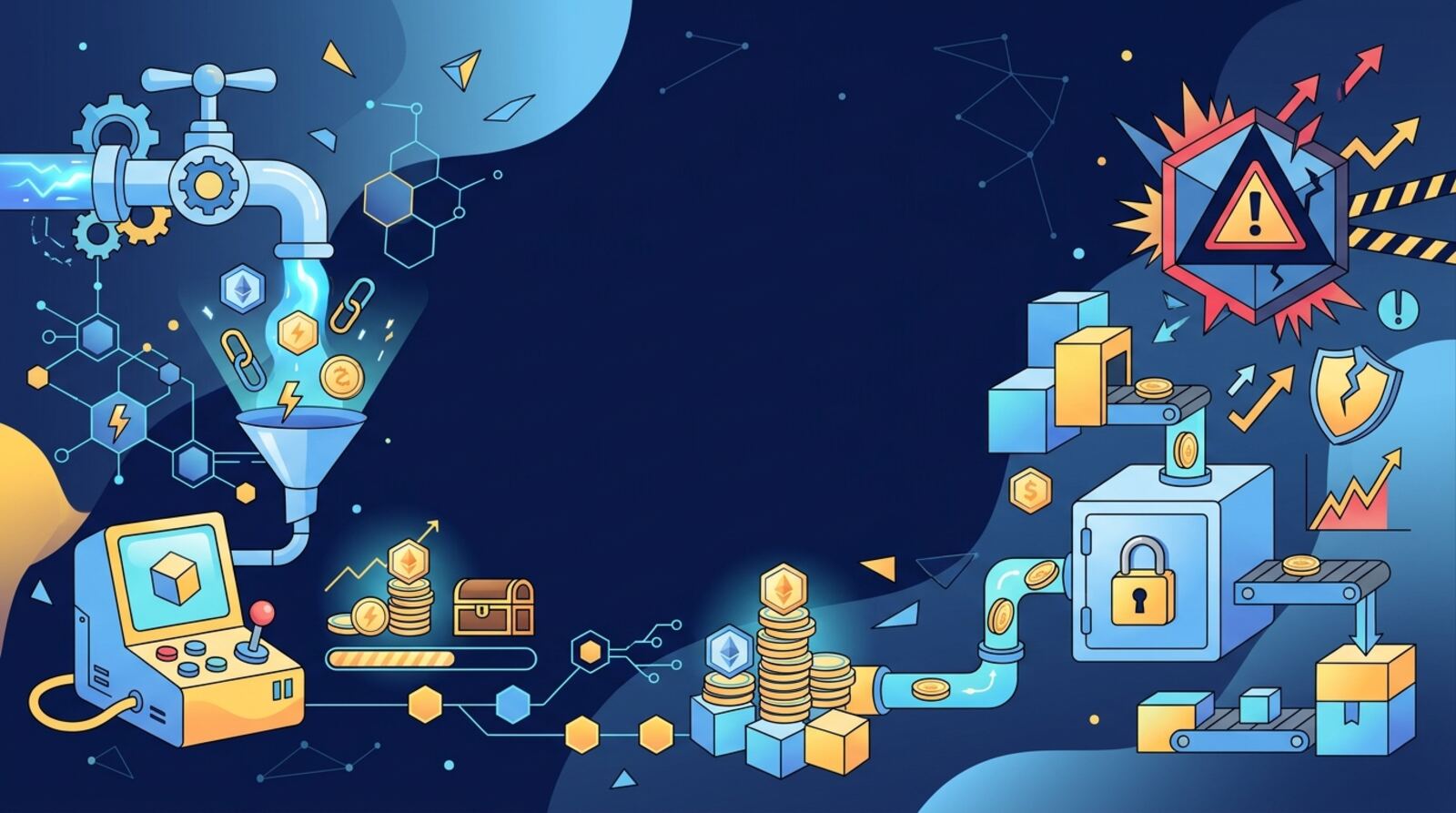
A crypto faucet game is a website or app that offers small cryptocurrency rewards for playing a simple game or completing related tasks. The name comes from the idea of a tap that releases a little at a time: rewards are usually small, not a reliable income. Activities may include answering questions, spinning a wheel, playing an arcade-style game, viewing ads, or completing a captcha.
The term is also used loosely. Some platforms let you earn a real, withdrawable crypto balance; others award points, tickets, or in-game credits that may never convert into crypto. A game might show a token amount on screen while requiring you to reach a minimum balance before you can request a payout. That distinction matters more than the game’s graphics or the size of its advertised prize.
Faucet games are different from testnet faucets, which distribute test tokens for trying blockchain software. Test tokens are not real money and generally cannot be exchanged for cryptocurrency. They are also different from a conventional crypto casino: a faucet game may be free to play, but if it asks you to wager value on an uncertain outcome, gambling rules and risks may apply.
How does a faucet game pay rewards?
The basic process is straightforward. A platform attracts users with small rewards, records activity against an account or wallet, and makes eligible payouts according to its own rules. The player might complete a game round, solve a captcha, watch an advertisement, or perform another task. The platform then credits a balance, often after checking for duplicate accounts, automated play, or other activity it prohibits.
That balance may be held in one of two broad ways. With a custodial setup, the operator keeps the crypto and shows you an internal account balance; you rely on the operator to process withdrawals. With a wallet-based setup, an on-chain transaction may send tokens to an address you control. Some services combine the two: rewards accrue off-chain first and are sent on-chain only after reaching a threshold.
Read the rules before starting. Look for eligibility limits, reward conditions, withdrawal minimums, supported tokens and networks, payout schedules, and any verification requirements. A “claim” button does not necessarily mean a payment has been sent. If a platform does not explain how balances become withdrawable funds, treat its reward claims as unverified rather than assuming the displayed amount is yours to spend.
What kinds of rewards and tasks are common?
Reward systems vary, but most fit a few common patterns:
- Play-based rewards: Complete rounds, reach a score, or finish a level to receive a small credit. The game may limit claims by time, score, or daily allowance.
- Task-based rewards: Solve captchas, view ads, answer questions, or try an app. The reward may depend on whether the platform confirms the task was completed.
- Chance-based rewards: Spin a wheel, open a digital prize, or enter a draw. A prize is not guaranteed, and the stated maximum is not the typical outcome.
- Referral rewards: Invite another user and receive a bonus if they meet conditions. Check whether the bonus is one-time, recurring, or locked until the new user acts.
A platform can use more than one model. It may also award points rather than crypto and set a conversion rate that can change or be restricted by its terms. In some games, a “multiplier” or streak increases potential rewards but also encourages longer play; it does not make future payouts certain.
Compare the amount you can actually withdraw with the time and personal information required. A headline prize or token balance is less informative than the payout rules, the odds for chance-based features, and the net amount after fees.
Where do faucet game rewards come from?
Free rewards still have to be funded. A faucet may use advertising income, sponsorships, referral arrangements, or a promotional budget to cover small payouts. Some platforms may also rely on in-game purchases or other revenue. The exact funding model is not always disclosed, so do not assume that every game earns enough to honor every advertised reward.
The small size of individual payouts is part of the model. Operators may set daily claim limits, minimum withdrawal balances, or fees so that processing tiny transactions is practical. If the reward is held in an internal account, the platform may wait until you request a withdrawal or cross a threshold before sending an on-chain transaction. Network fees can take a meaningful share of a very small payment.
A faucet’s economics can change. An operator may alter reward amounts, pause withdrawals, discontinue a token, or close the service under its terms. A reward shown in a game is not the same as a guaranteed payment, and a token’s exchange value may fluctuate or be difficult to verify. Before spending substantial time, check whether the platform states who operates it, how rewards are funded, and what happens to balances if the service ends.
How do withdrawals and wallets work?
Start by identifying what you are actually being paid. Points, promotional credits, test tokens, and cryptocurrency are not interchangeable. If the reward is crypto, confirm the token name and network from the platform’s official rules, then check whether it can be withdrawn to a wallet you control. A token with a familiar name may still be an unrelated asset, and sending it on the wrong network can cause a loss.
Next, work out the withdrawal conditions. Check the minimum amount, processing time, fees, eligible countries, identity checks, and whether the balance can expire. Find out whether the platform deducts a fee from the payout or expects you to pay a separate charge. Never send extra crypto to “unlock,” “verify,” or release a reward unless you have independently confirmed a legitimate, clearly documented process; requests for advance payment are a major warning sign.
If using a self-custody wallet, keep your seed phrase and private keys secret. A real support agent does not need them. Consider using a separate wallet for unfamiliar services and do not approve transactions you cannot understand. If you connect a wallet, inspect what permissions or transaction you are being asked to approve. Disconnecting a wallet later does not undo an on-chain transaction or revoke every token approval.
What are the main risks and scam warning signs?
The main risk is that the advertised reward may not turn into a usable payout. A platform can impose a high minimum, change its terms, reject accounts under its rules, or stop operating. A custodial balance also depends on the operator remaining solvent and willing to process withdrawals. Do not treat a screen balance as money in your own wallet until a transaction has arrived and you have checked it on the correct network.
Watch for common scam signals: promises of guaranteed high earnings, pressure to deposit first, requests for a seed phrase, fake support accounts, downloads from untrusted sources, and fees demanded to release a “prize.” Be cautious with sites that hide their operator, provide unclear withdrawal terms, or use countdowns to rush a decision. A logo or testimonial does not prove a service is trustworthy.
There are also privacy and device risks. Captchas and ad-supported games may collect personal or usage data; read the privacy policy and avoid giving information that is not needed. Do not install unknown browser extensions or mobile apps just to claim a small reward. Use a unique password, enable account security features where available, and keep your device and browser updated. Never risk funds you cannot afford to lose.
How can you evaluate a faucet game before playing?
A faucet game can be a low-stakes way to learn how a platform’s claim or withdrawal process works, but only if you treat the reward as uncertain and protect your information. Use this checklist before playing:
- Confirm what the reward is. Is it withdrawable crypto, an in-game credit, points, or a test token?
- Read the payout rules. Find the minimum, fees, timing, supported network, and conditions that can invalidate a claim.
- Check the operator. Look for clear contact and company information, consistent terms, and a credible explanation of how the service is funded.
- Protect accounts and wallets. Use a unique password; never share seed phrases or private keys; avoid signing unfamiliar transactions.
- Calculate the real return. Consider time, data requested, fees, and the possibility that you will not reach the withdrawal threshold.
- Stop if the rules shift. Do not deposit money or recruit others just to recover time already spent.
For a first test, avoid connecting a wallet or sharing sensitive personal information unless it is necessary and you understand why. If you do request a payout, verify the transaction details and destination rather than relying only on a success message. Keep records of the platform’s terms and your transactions if you need them for tax or dispute purposes.
Are faucet games gambling, and what rules apply?
Some faucet games include betting, randomized prizes, or casino-style features. In that case, they are not simply free reward tasks: you may be risking money or crypto for a chance-based outcome. The platform’s use of the word “faucet” does not change the nature of the activity. Check the local laws where you are physically located and confirm that the operator accepts users in your jurisdiction. You must be at least 18, or the higher legal age required where you live. Do not try to bypass location restrictions, age checks, or identity verification.
Understand the game’s rules before taking part. Check whether a free balance can be wagered, whether a deposit is required, how odds are disclosed, and whether withdrawals have separate conditions. Never assume that a free credit can be withdrawn as cash. If you choose to gamble where legal, set a strict limit and stop when you reach it; do not chase losses or borrow to play.
Even a non-wagering faucet game can involve financial and privacy risks. Keep personal spending money separate, avoid depositing funds to increase a tiny reward, and take a break if play starts feeling compulsive. If you are unsure whether a feature counts as gambling where you live, do not use it until you have checked the applicable rules.
Are crypto faucet games worth your time?
Crypto faucet games still exist as small-reward promotions, but the idea of earning meaningful income by playing simple games is generally unrealistic. Their practical value is better judged by transparency and convenience than by a large advertised prize. Some users may find them entertaining or use them to learn how accounts, claims, and crypto withdrawals work. Others may decide the time, data collection, and payout restrictions are not worth a tiny or uncertain reward.
Before signing up, answer three questions: Can you identify what the reward actually is? Can you find clear rules for receiving and withdrawing it? Are you comfortable with the information and permissions the service requests? If any answer is no, skip the game. A legitimate service should not need your seed phrase, require an unexplained deposit, or promise that a small task will reliably produce substantial returns.
If you do participate, start without depositing, keep expectations low, and verify any withdrawal in your own wallet. Remember that crypto values can change, fees can exceed small payouts, and a platform balance can disappear if an operator closes or refuses a withdrawal. Treat faucet rewards as optional entertainment or a modest promotion—not as guaranteed income, investment returns, or a dependable route to an airdrop.
Frequently asked questions
Can you make meaningful money from crypto faucet games?
Usually, no. Many faucet games pay tiny amounts, impose minimum withdrawal thresholds, or deduct network and service fees. A displayed balance is not proof that you can withdraw it.
Do faucet games pay directly to a crypto wallet?
Some faucet games credit a custodial account on their own platform, while others send funds to a wallet you control. Check who holds the balance, which network is used, and whether you can withdraw before depositing or sharing wallet details.
How can you tell whether a crypto faucet game is a scam?
A legitimate faucet should explain its reward rules, withdrawal minimum, fees, and supported networks. Be wary of requests for your seed phrase, payment to release a reward, or promises of guaranteed large returns.
Are crypto faucet games legal?
It depends on your location and on how the game works. If it involves wagering, chance-based prizes, or other gambling features, check local laws and the operator’s eligibility rules first. You must be 18 or older, or meet the higher legal age where you live.
Is a faucet game the same as a testnet faucet?
A faucet game generally offers small rewards for gameplay or simple tasks. A testnet faucet distributes valueless test tokens to help developers and users try blockchain applications; those tokens are not cash or real cryptocurrency.
Mentioned in this guide
dApps in this guide
Crypto.com is a centralized crypto exchange and app for buying, trading and spending 400+ coins, with a Visa card, staking and a separate self-custody wallet.
Keep reading
Related guides
Airdrop and rewards · How-to
How Crypto Faucets Work: Claims, Payouts and Safety
Crypto faucets offer small crypto rewards for simple actions such as solving a CAPTCHA or completing a task. Learn how payouts work, what faucets cost you in time and fees, and how to check one safely before connecting a wallet.
Wallets and tools · Explainer
How Crypto Credit Cards Work: Credit, Rewards, and Risks
A crypto credit card may mean a conventional credit card that pays rewards in cryptocurrency, or a card that lets you borrow against crypto. Learn how purchases, repayment, fees, and risks differ from crypto debit and prepaid cards.
Crypto gambling · Explainer
TrustDice Review: Games, Faucet and Risks in 2026
TrustDice combines a crypto casino, sportsbook, provably fair in-house games and a six-hour faucet. This guide explains how to assess its features, withdrawals, fairness claims, licensing and risks before you deposit.
Airdrop and rewards · Explainer
Crypto Airdrops Explained: How They Work in 2026
A crypto airdrop is a free token distribution to eligible wallets. This guide covers why projects run them, how eligibility works, how to claim safely, and how to handle tax and scams.
Airdrop and rewards · How-to
How Crypto Airdrops Work: Eligibility, Claims, and Safety
A crypto airdrop distributes tokens to selected wallets, either automatically or through a claim process. Learn how projects set eligibility, how to claim safely, and how to judge the risks and costs before taking part.
Airdrop and rewards · Airdrop guide
How to Claim Avastars Art Tokens Safely in 2026
Avastars is an Ethereum NFT collection with its own AVASTR token. This guide explains how to confirm whether an art token claim is genuine, how to claim only through official channels, and how to protect your wallet while you do it.
Airdrop and rewards · Review
Galxe Review: Quests, Credentials and Web3 Reputation
Galxe is a Web3 quest and credential platform where projects hand out badges, NFTs and token rewards for completing tasks. This review explains how it works, what it is good for, and where the risks are.
Airdrop and rewards · Airdrop guide
How to Claim the B2M Airdrop on Polygon Through Bit2me
Bit2me's B2M token distribution on Polygon has a claim process that depends on your account status and wallet setup. This guide explains how to confirm eligibility, claim safely, and avoid the scams that usually target token distributions.